Honolulu Zoo Elephants Are Healthy, Active And Loved
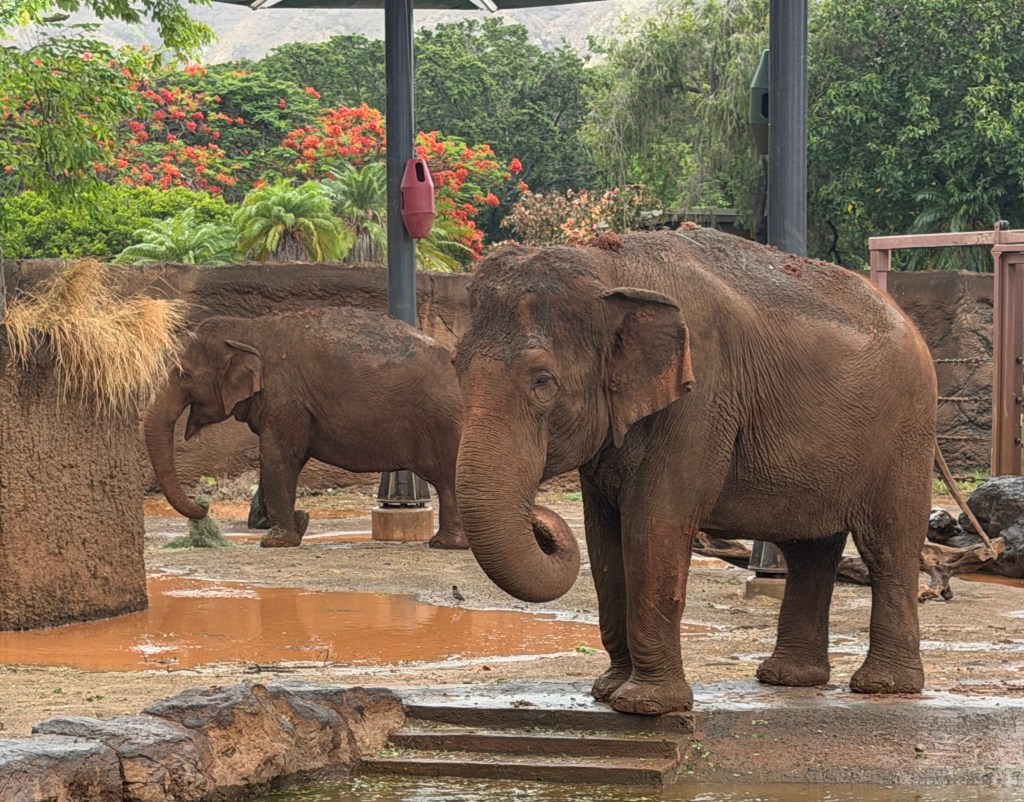
Mari and Vaigai have also developed strong bonds with the people who care for them.
September 28, 2026 · 4 min read

About the Author

A recent Community Voices article raised a number of concerns about the care and well-being of Mari and Vaigai, the Honolulu Zoo’s two Asian elephants.
Unfortunately, the article included several assertions about their health, behavior and daily care that do not accurately reflect the facts or the decades of experience of the professionals who know these elephants best.
As director of the Honolulu Zoo, I believe it is important to provide the public with an accurate picture of Mari and Vaigai’s lives. Their health and welfare are not abstract issues to us but instead are the focus of our keepers, veterinarians and staff every single day.

Ideas showcases stories, opinion and analysis about Hawaiʻi, from the state’s sharpest thinkers, to stretch our collective thinking about a problem or an issue. Email news@civilbeat.org to submit an idea or an essay.
The welfare of our two precious Asian elephants has been and will remain one of the highest priorities of the Honolulu Zoo. Our keepers and veterinarians work tirelessly to care for their physical and mental health.
Dr. Peter Leimgruber, a leading scientist on Asian elephant behavior, has used satellite collars to study the movement of wild Asian elephants. His research has found that where food and water are plentiful, Asian elephants in the wild typically walk between one and four miles a day.
At the Honolulu Zoo, monitoring of Mari and Vaigai has shown that each regularly walks between three and four miles a day within our elephant habitat that is inspected and accredited by the Association of Zoos and Aquariums to meet their high standards for elephant care and welfare.
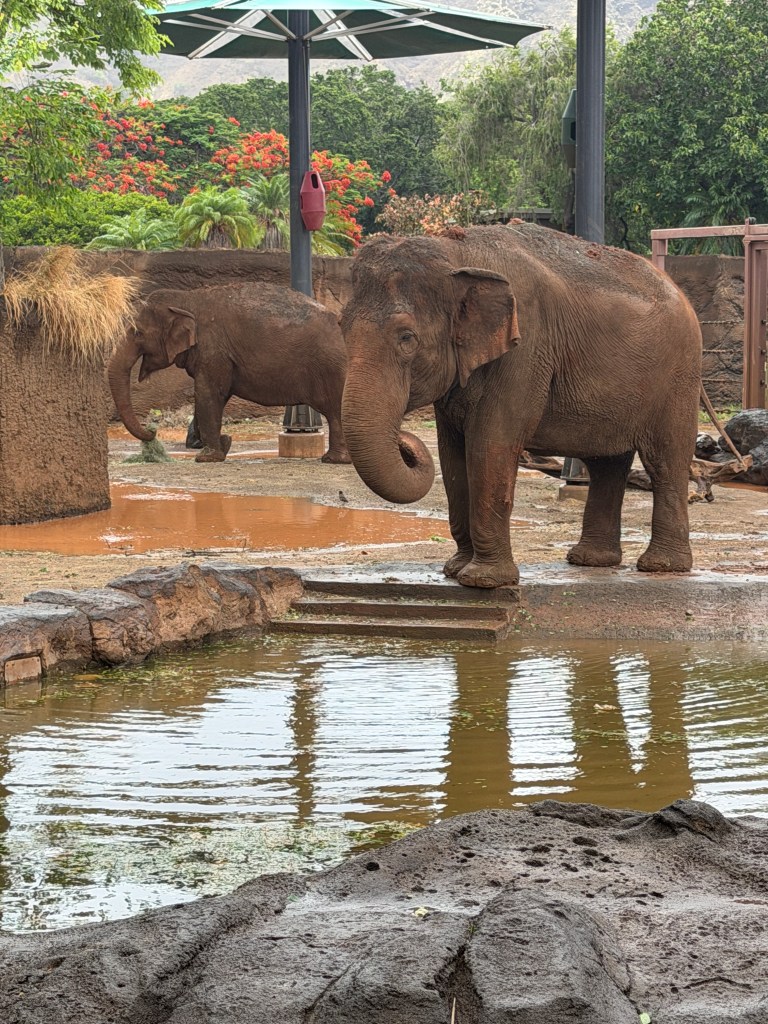
Just as important as their freedom to move between their barns and yards 24 hours a day is how they spend their days. Neither Mari nor Vaigai displays negative stereotypical behaviors. They participate in enrichment activities and engage in natural behaviors such as mud bathing, moving logs, grazing, browsing and drinking clean, fresh potable water that is accessible 24 hours a day.
Their relationships with their keepers and care staff are also an important part of their welfare. Mari and Vaigai, in addition to caring deeply for each other, have also developed strong bonds with the people who care for them, built over many years through trust and positive reinforcement.
Their primary keeper, Malia, has cared for them together at the Honolulu Zoo for nearly 35 years. That trust has practical benefits for their health.
The Honolulu Zoo operates under a fully protected-contact system, meaning Mari and Vaigai always have the choice to participate in activities or medical care. Their relationships with their keepers allow us to voluntarily check their weight, perform foot care and blood draws and other medical procedures that might otherwise require anesthesia. Research has also linked strong keeper-elephant relationships with lower stress responses in elephants.
Mari, now 51, has lived in Honolulu since 1982, while Vaigai, 40, arrived in 1992.
As Mari has aged, her care has evolved with her. She is on her final set of teeth, an important consideration for aging elephants. We chop her hay and provide chewable foods to make it easier for her to eat and maintain proper nutrition and weight. Mari has mild arthritis and Honolulu’s warm year-round climate is particularly beneficial for an older elephant with arthritis.
Mari and Vaigai have been part of the Honolulu Zoo family for decades.
Suggestions have been raised about moving Mari and Vaigai from the Honolulu Zoo. Any decision involving the relocation of an elephant, particularly a geriatric elephant, must put the animal’s health and welfare first.
Studies have shown that moving an elephant over the age of 50 long distances is a critically high-risk operation with starkly higher mortality rates. That is a risk we cannot ignore when considering what is best for Mari.
Mari and Vaigai are healthy, active and deeply beloved. They live in an accredited habitat, receive professional veterinary care and enrichment, and have long-standing relationships with experienced keepers who understand their individual needs and behaviors.
I understand why people care so deeply about elephants. We share that concern. Mari and Vaigai have been part of the Honolulu Zoo family for decades, and we have an enormous responsibility to them. Their health, safety and quality of life will continue to guide the decisions we make about their care.
 Sign up for our FREE morning newsletter and face each day more informed.
Community Voices aims to encourage broad discussion on many topics of community interest. It’s kind of a cross between Letters to the Editor and op-eds. This is your space to talk about important issues or interesting people who are making a difference in our world. Column lengths should be no more than 800 words and we need a photo of the author and a bio. We welcome video commentary and other multimedia formats. Send to news@civilbeat.org. The opinions and information expressed in Community Voices are solely those of the authors and not Civil Beat.
Read this next:

Local reporting when you need it most
Support timely, accurate, independent journalism.
Honolulu Civil Beat is a nonprofit organization, and your donation helps us produce local reporting that serves all of Hawaii.
ContributeAbout the Author