

How Trump’s Economic Policies Are Roiling Hawaiʻi’s Economy
Economists struggle to predict the fallout, while tourism, construction and retail businesses seek their own paths through upheaval.
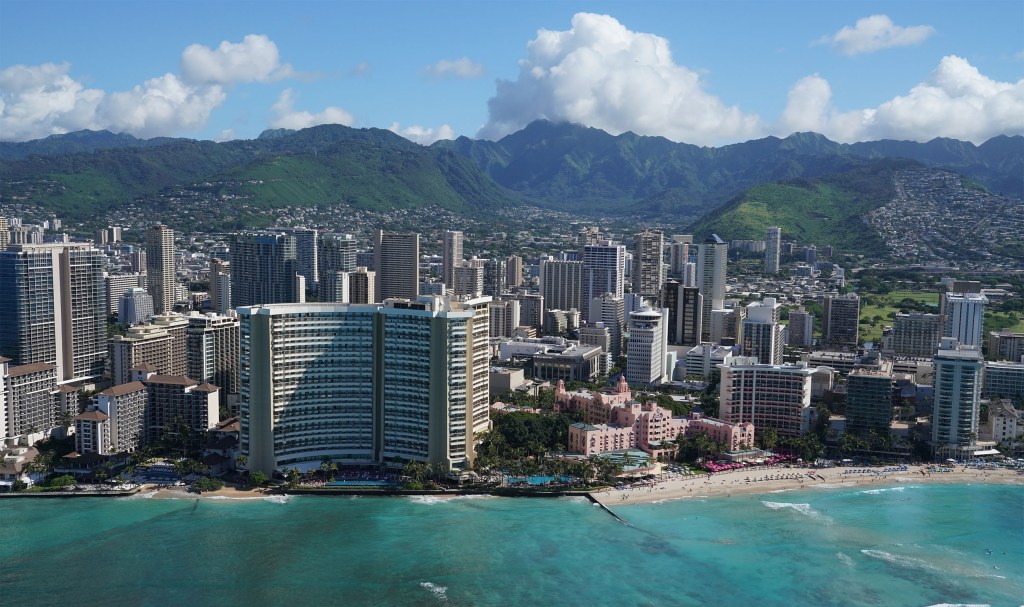
The chaotic first two months of the Trump administration leave Alvin Wong, director of sales and marketing for the 1,300-room Waikīkī Beach Marriott Resort and Spa, with a dizzying array of uncertainties.
A suddenly imposed ban on travel by federal employees has left hotel rooms unexpectedly empty. Strong markets for Hawaiʻi tourism, including Canada, are caught up in President Donald Trump’s escalating trade war. And a drop in the stock market over the last few weeks, Wong fears, may turn would-be domestic tourists into penny-pinchers.
Asked what of this most keeps him up at night, Wong said, “Everything.”
“I’ve been waking up at 3 a.m. every night,” he said.
The uncertainties created by Trump’s economic policies are confounding economists as well as business people like Wong. On Wednesday, the state Council on Revenues, which predicts state tax revenue for government budgeting purposes, made only modest adjustments to forecasts of state general fund tax collections for the next six years.
But the council’s economists admitted Trump’s barrage of new policies and cost-cutting initiatives had in many cases left them stumped about the likely impacts.
Earlier this month, for instance, the University of Hawaiʻi Economic Research Organization predicted Hawaiʻi could lose 2,200 federal workers because of Trump-mandated job cuts. But UHERO’s executive director Carl Bonham, who also serves on the Council on Revenues, noted on Wednesday that a federal judge had temporarily halted at least some of the layoffs.
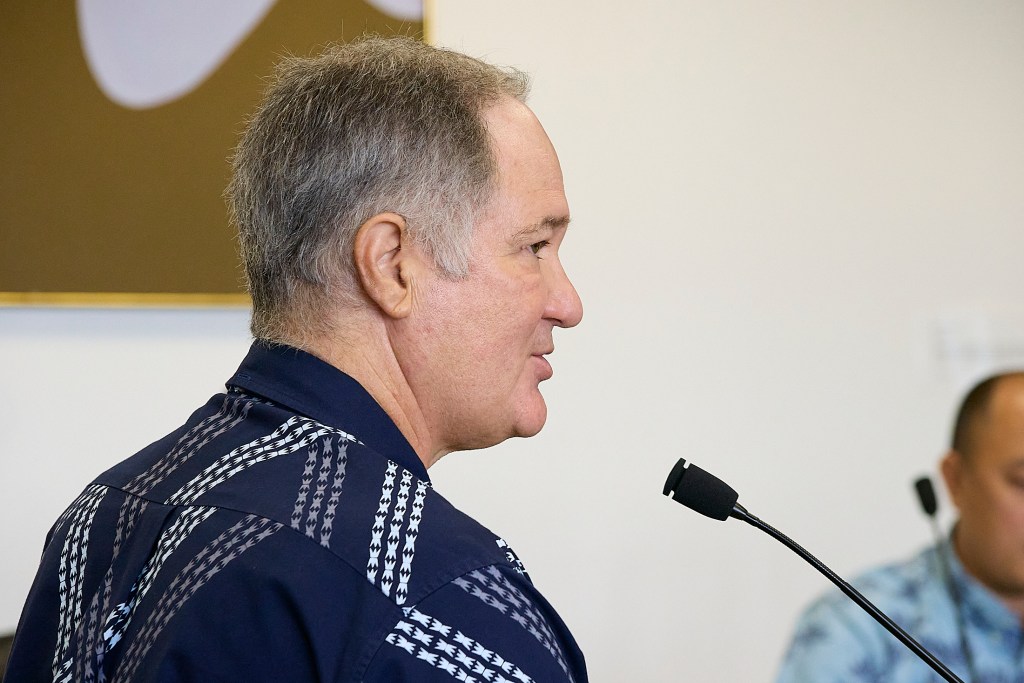
“Some of them, I think, are still happening,” Bonham said during last week’s meeting. “But we don’t have hard data.”
The breadth of Trump’s sweeping policies, his tendency to quickly change direction or reverse announcements, and aggressive legal pushback by states and other groups combine to make a muddled economic picture for businesses that seek certainty.
Take, for example, the president’s latest trade war target: French wine and Champagne, and other spirits from the European Union. He’s calling for a 200% tariff.
So now wine and liquor stores face unknowns.
Gabriel Picard, who heads the French Federation of Exporters of Wines and Spirits, told The Associated Press that 200% tariffs would be “a hammer blow” for the sector.
“Not a single bottle will continue to be expedited if 200% tariffs are applied to our products. All exports to the United States will come to a total, total, halt,” Picard said in an interview with the AP. “With 200% duties, there is no more market.”
Tokuda: People ‘Feel Like Slush’
The situation is especially bewildering to people throughout Hawaiʻi who rely on federal grants. On Thursday, approximately 100 faculty and staff from the University of Hawaiʻi system tuned in for a virtual town hall meeting hosted by U.S. Rep. Jill Tokuda and the University of Hawaiʻi Professional Assembly, a union for faculty and staff.
Tokuda said she’s heard from more than 100 constituents who have lost their jobs because of federal cuts, and she said she’s worried about a loss of grant money for UH. Even Native Hawaiian programs once thought to be safe are at risk, Tokuda said.
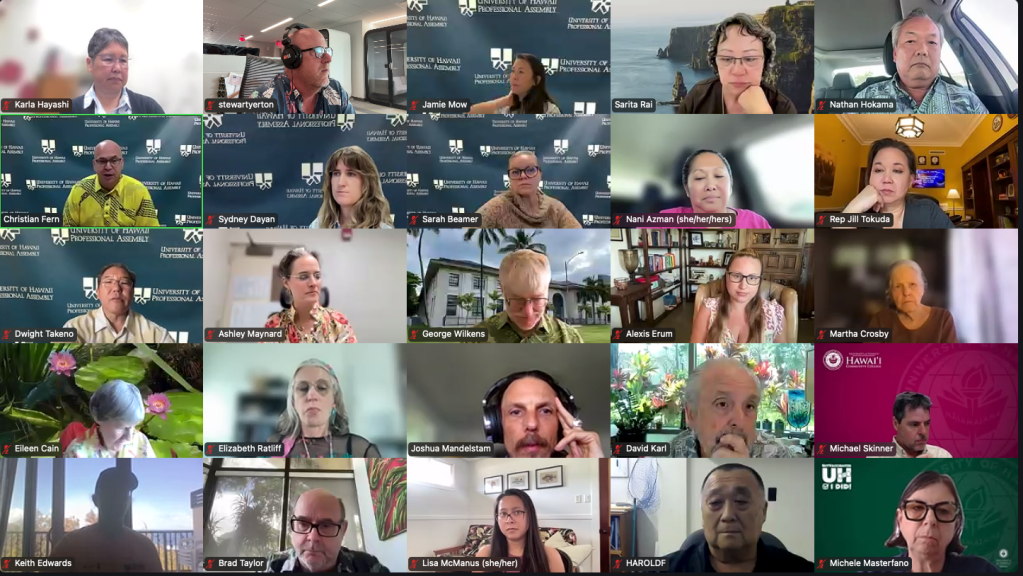
“That’s all out the window in terms of anything being protected,” Tokuda said.
The uncertainty is a strain for people like Jen VanderVeur, who manages grants to address climate change issues for the University of Hawaiʻi’s Sea Grant program. During the Zoom call, VanderVeur described a cycle of grant funding being frozen, then unfrozen, only to be frozen again.
“In the end, you just feel like slush,” Tokuda said.
Hotels Hit By DOGE Travel Ban
Industries immune from federal job cuts are also reeling from orders implemented under Elon Musk’s Department of Government Efficiency. In February, the White House largely banned business travel by federal employees, and agencies have acted quickly to implement the order.
Earlier this month, for instance, the Department of Defense suspended the use of travel charge cards by civilian employees and ordered them to cancel future reservations. Those traveling were told to return home as soon as possible.
It’s caused a massive drop in government travel for Hawaiʻi, said Wong of the Waikīkī Beach Marriott Resort and Spa.
Even with discounted room rates of $202 per night, federal employees traveling to Hawaiʻi for work, especially military personnel, generated reliable cash flow, he said.
With that business suddenly gone, properties are scrambling to make up for the loss, increasing spending for digital marketing, travel ads and online travel agents like Expedia, Wong said.
On top of lost government business, a sharp drop in the stock market in the first few months of 2025 has created concerns about the U.S. leisure travel business, which, up to now, had helped the Hawaiʻi tourism industry weather a decline in visitors from Japan. Prolonged stock losses could make families rethink taking pricey trips to Hawaiʻi until things stabilize, Wong said.
The market rebounded some on Friday after two weeks of losses, Wong noted. “But what about next week?” he said.
In addition, Wong said, Trump’s tariffs and antagonism toward Canada have hardly helped relations with that key market. And the local tourism industry faces other challenges, such as the closing of the Hawaiʻi Convention Center in 2026 for roof repairs, which are weighing on advance bookings.
Steel Prices For Building Are In Flux
Solid local industries like construction also face challenges. Construction work, including the rebuilding of Lahaina, should drive that industry’s employment to a peak of more than 40,000 workers in 2026, UHERO forecast last month.
But it’s not all rosy. The Trump administration’s 25% tariffs on imported steel have developers looking at higher costs while also planning in case the tariffs get lifted. Among them is Christine Camp, chief executive of Honolulu’s Avalon Group, which has a number of projects in the pipeline.

“This is a very tough time because nobody knows how to price everything,” Camp said.
One solution, she said, is to include contingencies in contracts so that if the price of steel or other materials goes up or down, the contract can be adjusted accordingly. Avalon has been discussing this option with its general contractors, she said.
“We’re worried,” she said. “But we have a way forward.”
An additional challenge for construction firms is that they don’t have that flexibility when doing government work, said Glen Kaneshige, president of Nordic PCL Construction Inc. Under government contracting rules, firms can’t go back and ask to change accepted bids, he said. And with material prices in flux due to tariffs, construction companies face a dilemma: Bid too high and risk losing the job, or bid too low and get hammered by rising costs of steel.
“In the government sector, you’re kind of rolling the dice,” he said.
Camp said builders faced similar challenges because of taxes and tariffs. But she said in the past those tended to be limited to certain areas.
“Now,” she said, “it seems the whole world is subject to tariffs.”
Bracing For Impacts of Tariffs On China
Alexis Akiona is facing another of the uncertainties buffeting Hawaiʻi’s economy. Founder of the Honolulu-based clothing brand Lexbreezy, Akiona manufactures many of her products in China, which has been the target of tariffs imposed by Trump.
So far, a 10% increase in tariffs on goods imported from China hasn’t affected Lexbreezy, says Akiona. But she’s unsure what will come next and is trying to prepare for the worst.
One such preparation: Akiona reopened a manufacturing facility in Bali that had closed because of the Covid-19 pandemic, potentially buffering her business from the effects of the tariffs on China.
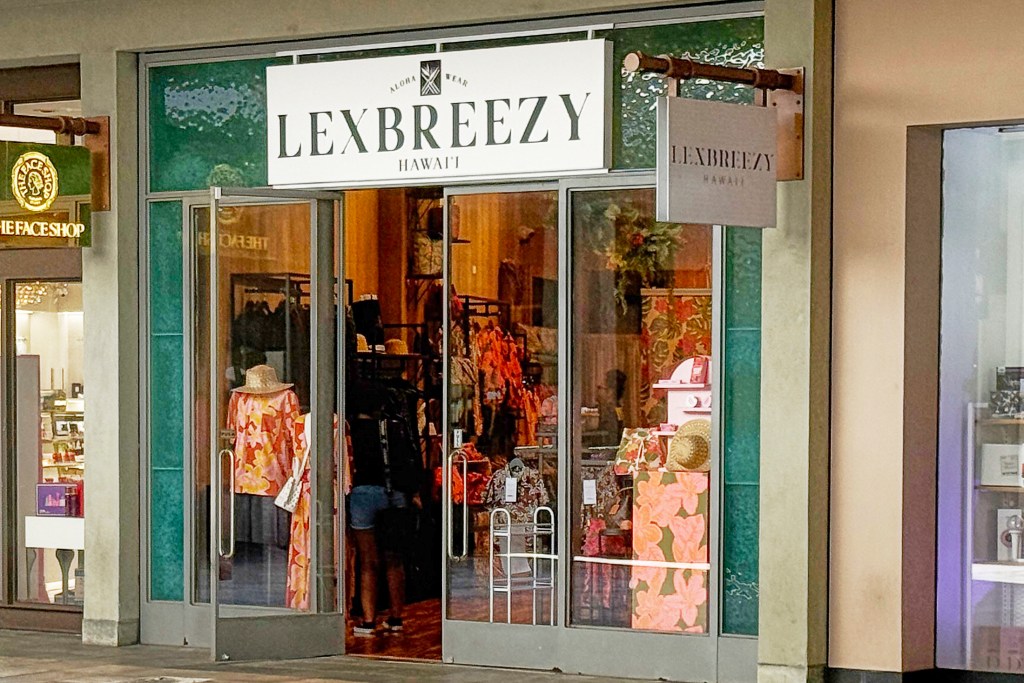
Akiona has already gone from selling aloha wear at the Merrie Monarch hula festival to owning three boutiques on Oʻahu that employ 20 people. “I can’t be scared and not continue chasing the dream,” says Akiona. “I just have to keep on keeping on.”

