

With Hunger Growing On Oʻahu, A Push To Put Food Security To A Vote
The Charter Commission held a first hearing Monday of a proposal to create a food security fund using property tax revenue.
UPDATE: This story has been updated to reflect Monday’s vote.
Against a backdrop of increasing hunger and upheaval in food assistance programs, the Honolulu Charter Commission on Dec. 15 advanced a proposal to use a slice of property tax revenue to create a fund to increase food security for Oʻahu residents.
The proposal, put forward by the Hawaiʻi Foodbank and one of 276 before the commission, calls for directing an estimated $8 million or so a year to food-related programs around the island.
The commissioners unanimous vote starts a months-long process, which includes more deliberation by the commission, that could end in a November 2026 ballot measure.
“We are very encouraged by the commissions’s support of the proposal and look forward to the next steps,” said Amy Miller, president and CEO of the food bank. “The proposed amendment would go a long ways toward ensuring food security and a stronger food system for all Oʻahu residents.”
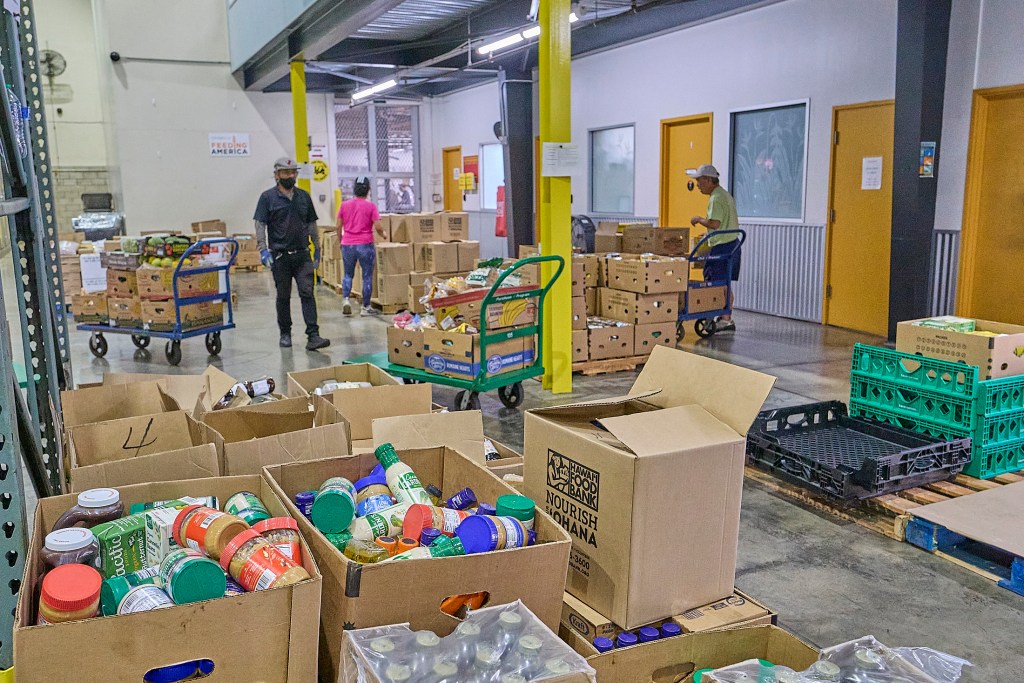
The organization last month released its latest report on hunger in Hawaiʻi, which found that benchmarks of food-related distress are worsening.
One in four of Oʻahu’s roughly 1 million residents are food insecure, meaning they lack access to enough food to live an active healthy life, the report found. Two-thirds of those — about 165,000 people — have very low food security, meaning they’re skipping meals because they don’t have enough money for food.
The food bank is on track to distribute over 25 million pounds worth of food this year, said Elia Herman, the food bank’s director of advocacy, equivalent to what was handed out at the height of the pandemic demand.
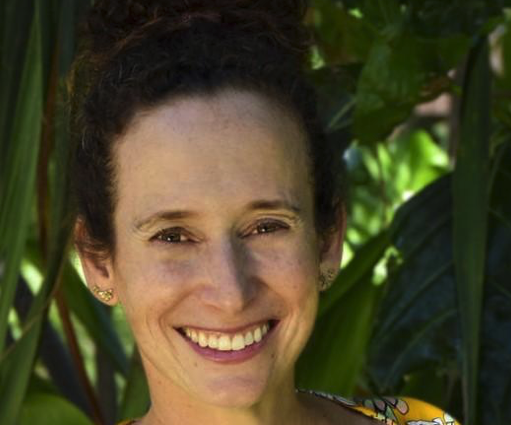
“Right now families are skipping meals. Kūpuna are choosing between food and medicine, our keiki are hungry,” she said. “This is a chance to take care of our families.”
As outlined in the proposal, the fund could support Oʻahu programs ranging from a mobile food pantry operated by the food bank, to organizations that buy and distribute locally grown agricultural products.
It would also be used to plan for and meet food needs during emergencies that disrupt supply chains, which Herman said in an island state that imports 85% to 90% of its food is a matter of when, not if.
Not A New Tax
While other places in the country including Boulder, Colo., Seattle, San Francisco and Berkeley, Calif., have adopted soda taxes for food-related public health initiatives, the Honolulu proposal relies on existing property tax revenue, not a new tax.
Currently, 1.5% of Honolulu’s annual property tax revenue, or about $24 million, goes to three special funds, one for affordable housing, a clean water and natural lands fund, and a climate resiliency fund voters approved in 2024. The food bank’s proposal would increase the tax revenue set aside to 2%, and divide it equally among those three and the food security fund. That way each of the existing funds would receive the same amount as they do now.
“We really saw this as this great long-term funding opportunity to hit all of these buckets,” Herman said, “from emergency preparedness and planning to local food investments to feeding hungry people on this island and putting that all together as this kind of public private partnership.”
Organizations including the Hawaiʻi Alliance for Progressive Action and Hawaiʻi Appleseed Center for Law and Economic Justice have lined up behind the proposal.
The Tax Foundation of Hawaii, a nonprofit that tracks tax issues and has opposed such funds, has a different view. Spending tax revenue is the job of elected officials, said Tom Yamachika, the organization’s president.
“It really is a subversion of the budgeting and appropriation process that is provided for at all levels of government, state and county,” Yamachika said. “That’s why we have council members. That’s why we have legislators to assess the needs of the community and budget accordingly.”
He said the organization’s position was not a reflection of the fund’s aims.
“Our objection is about the process,” Yamachika said. “If we have elected representatives saying that these are budget-worthy items, then that’s fine. Our concern is taking it out of their control.”
A Political Moment, And Growing Need
The food bank’s food insecurity report was based on research conducted before the July passage of the One Big Beautiful Bill, the domestic spending legislation championed by President Donald Trump that aims to cut back the national food stamp program known as SNAP. In Hawaiʻi, SNAP delivers benefits to about 162,000 residents.
Some estimates are that those cuts — primarily achieved through stricter work and eligibility requirements that kicked in in November — could cause 13,000 people statewide to lose at least some SNAP benefits. That would directly impact the Hawaiʻi Foodbank.
“Our objection is about the process. If we have elected representatives saying that these are budget-worthy items, then that’s fine. Our concern is taking it out of their control.”
Tom Yamachika, president, Tax Foundation of Hawaii
“Given the numbers and what we know will be an increase as SNAP cuts come into place, we can’t do it on our own,” Herman said. “We need to partner with the city, with the state. We really see this fund as a critically important step.”
With the specter of SNAP cuts already looming, Hawaiʻi’s level of food insecurity and vulnerability to food supply disruptions was further highlighted by the 43-day federal government shutdown in October and November.
Federal workers whose pay was delayed flocked to food banks. And the state had to step in with cash assistance after SNAP benefits were halted for about two weeks in November.
That may help the proposal garner more support, Herman said.
“I wish it wasn’t so, but I do think it’s on people’s minds,” she said. “We are hopeful that those recent memories, as well as what’s to come, will help the people of Oʻahu … recognize that we can’t look to the federal government anymore to help solve these issues. We really need to look locally and that’s where we’re going to find solutions.”
What The Public Is Focused On
A member of the 2006 Charter Commission — which led to the creation of the clean water and lands and affordable housing funds — said that in his experience there are generally two schools of thought on the commission.
Some commissioners, said Jeff Mikulina, consider it better to “tread very lightly” when amending the charter, which serves as Honolulu’s constitution. Others see the charter proposal window as a rare opportunity for voters to directly shape policy, and to see where the public stands on issues.
In previous deliberations, Mikulina said, “I think what rose to the surface, number one, is things that had a lot of public support. Like, ‘People are talking about this. This is something folks are watching.’”
He said: “Most of us were viewing it through that lens of, ‘What’s the problem we’re trying to solve, and is this the best mechanism to do it?”
“It’s a great conversation to have because this is a real need. How do we provide resources to help those in need?”
Jeff Mikulina, former commissioner, Honolulu Charter Commission
Mikulina, a climate and social impact strategist, wouldn’t hazard a guess about the proposal’s fate, but said, “it’s a great conversation to have because this is a real need. How do we provide resources to help those in need?”
The proposal — #119 — doesn’t stipulate that Hawaiʻi Foodbank would get the funds but that’s the likeliest outcome since it is the state’s largest food support organization and works with hundreds of other groups.
Herman said that if the food bank did end up as the recipient of the annual funding, it could leverage programs it already has in place and work through the more than 200 smaller groups with which it already partners that provide food support programs on Oʻahu.
“We’re really proud of the work that we do, but obviously it wouldn’t have to go to us,” Herman said. “That would ultimately be the decision of the city.”
CORRECTION: A previous version of this story misstated the amount of food the Hawaiʻi Foodbank is on track to distribute this year.
Civil Beat’s reporting on economic inequality is supported by the Hawaiʻi Community Foundation as part of its work to build equity for all through the CHANGE Framework; and by the Cooke Foundation.

