

Confusing Donation Drops Run By For-Profits Targeted By Hawaiʻi Lawmakers
Advocates say the measure will protect people from mistakenly thinking they’re donating to charities.
Drop off some old clothing, furniture or appliances at the big GreenDrop trailer at Mānoa Marketplace, and you might think you’re donating to the American Red Cross. After all, it’s right there on the trailer: the charity’s trademark logo along with a statement: “Your donations (thank you) benefit our nonprofit partner.”
In truth, the donation mainly supports Savers Value Village Inc., a for-profit international retailer that posted $1.7 billion in net sales in 2025. Savers’ chief executive raked in $5.1 million in compensation in 2024, down from $10.1 million the year before. Meanwhile, Savers gave the Red Cross charities only pennies per pound of items donated in Mānoa.
Now Hawaiʻi lawmakers are stepping in. A bill moving forward in the Legislature would require companies like Savers to disclose on their collection bins that they’re actually going to resell donations at their retail stores and pay the charity only a small amount based on the weight of the donation. They’ll also have to disclose that the donations aren’t tax deductible.
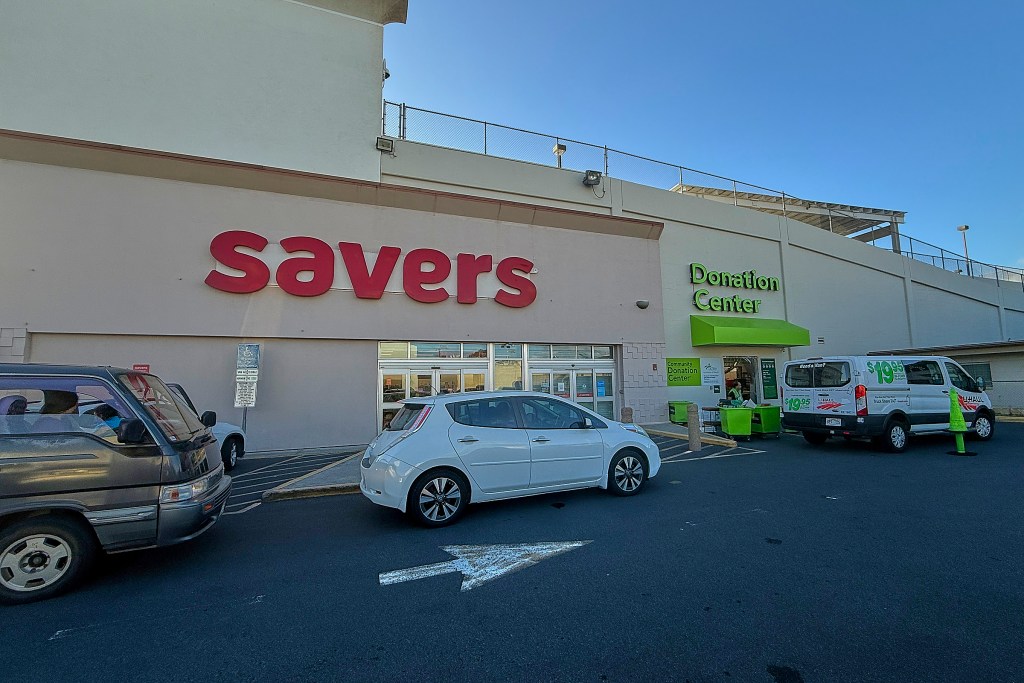
Leaders of Hawaiʻi charities who say their thrift stores are being muscled out by the for-profit giant are applauding the move. One supporter cited previous reporting by Civil Beat, which exposed the issue.
“It’s a critical step forward that would help maintain donors’ trust and ensure no one is in the dark about who their donations benefit,” Katy Chen, president and chief executive of Goodwill Hawaiʻi, testified.
Other supporters include the Hawaiʻi Alliance of Nonprofit Organizations, Big Brothers Big Sisters Hawaii, Aloha United Way and the National Kidney Foundation.
“This will be a real benefit for donors,” said Hugh Jones, a Honolulu lawyer who formerly headed the Hawaiʻi Attorney General’s charities division.
Savers has not testified on the measure. In a statement, company spokeswoman Sara Gaugl said, “GreenDrop drives significant community and environmental impact and is committed to transparency and full compliance with all applicable laws and regulations.”
GreenDrop, which has eight locations on Oʻahu, indeed has taken steps to comply with the law governing charities as it exists today. The company has registered as a charity solicitor in Hawaiʻi, and its drop boxes include fine print saying GreenDrop is a for-profit professional solicitor for the Red Cross. It adds that GreenDrop sells the items in bulk to raise money for the Red Cross. It also says the donations are tax deductible — with the disclaimer “to the extent permitted by law.”

Still, the bill says donors could reasonably believe they were making tax-deductible donations to the Red Cross, not giving their stuff to a for-profit retailer that pays the Red Cross as little as 2 to 5 cents for every pound of stuff people donate.
The GreenDrop-Savers arrangement means, for instance, that when someone buys a hardback book at Savers for $4.99, the Red Cross would get 3 cents while Savers pockets $4.96.
The bill would require GreenDrop operators to explicitly disclose that they resell the donated items at retail stores and pay the charity an amount based on the weight of the goods. Instead of merely saying the donations were tax deductible “to the extent permitted by law,” GreenDrop would have to add that the donations weren’t tax deductible under IRS law.
A key requirement is that solicitors would have to make the disclosures prominently, said Jones, who was the principal author of 2008 legislation that created the reporting and registration requirements for charity solicitors.
The bill would also create stricter reporting requirements for GreenDrop. For most charity solicitors, such as telemarketers asking for cash for a charity, reporting is fairly simple: The solicitor reports how much they raised for the charity in total and how much of that the solicitor received.
The equation becomes more complicated and opaque when the solicitor is asking people to donate goods for the charity, paying the charity a few pennies per pound for the goods, then selling the goods for a profit. Civil Beat has previously reported on the obscurity of Savers’ financial reporting, which Jones said “was loony.”
“They’re in for a rude awakening.”
Honolulu charity law expert Hugh Jones
The bill would require GreenDrop and Savers to clearly say how much they actually donated to charity partners, including the amount per pound of goods donated.
Such requirements will give donors a much clearer picture of how much their donations are going to charities like the Red Cross. It will also make it much easier for the Hawaiʻi Attorney General, which regulates charities, to monitor firms like GreenDrop.
“This gives them more than enough tools to work with,” Jones said.
Hawaiʻi isn’t the only state where government officials have taken a hard look at Savers and GreenDrop.
A settlement agreement with Minnesota’s Attorney General in a 2015 lawsuit required Savers’ disclosures to explicitly state how much it was paying its charity partners per pound of merchandise donated. Regulators in Washington, California and Illinois also have conducted investigations.
A Washington Superior Court in 2019 found that Savers had for years engaged in deceptive practices, including using advertising and marketing “to deceive customers into believing that their purchases in Value Village stores provided a direct benefit to charities.”
It’s not clear why Savers hasn’t publicly weighed in on Hawaiʻi’s proposed bill, which was introduced months ago.
“They’re in for a rude awakening,” Jones said. “Maybe they didn’t understand the bill.”

