

Kaua‘i Ups Funding For Homeless Services, Mental Health, Substance Abuse
The funding is part of the county’s nearly $499 million spending plan for fiscal year 2027.
County grant programs for mental health, substance abuse and homeless services will together receive $1.5 million in additional funding for the fiscal year that begins July 1.
Kaua‘i County Council member KipuKai Kuali‘i described those late additions to the county’s overall $499 million spending plan for next year as “the biggest change I’ve ever been a part of in my 12 years” in office. The full council approved the county budget for next fiscal year on Wednesday after a few months of deliberations.
Fourteen community members implored the council last month to boost funding for homeless services and set aside some of those monies specifically for safe zones, where individuals experiencing homelessness can stay longer term without being swept or cited.
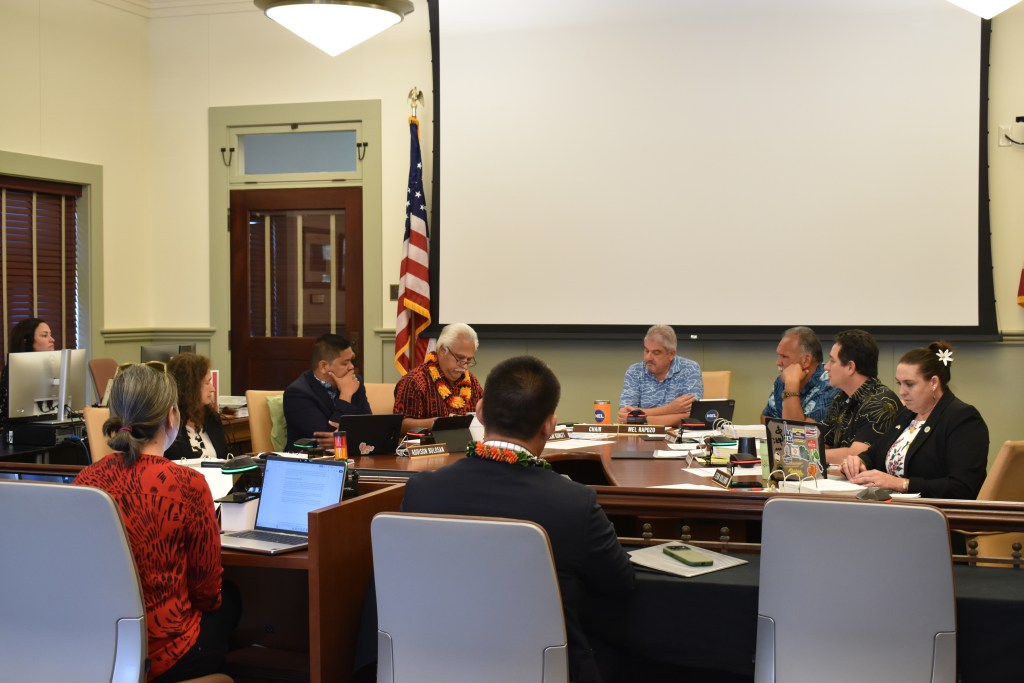
Council member Addison Bulosan said this year’s budget deliberations, which began in March, consisted of the highest level of community engagement and testimony he’s seen during his four years on the council.
“That was a testament to the growing challenges we are facing, but at the same time how the community is rising toward meeting those challenges,” he said at the meeting.
Overall, Kaua‘i’s spending plan for next fiscal year includes nearly $366 million for operations and $133 million for capital improvement projects. That’s about 5% higher than this year’s operating budget, and nearly 2% less for the capital improvement budget.
Throughout this year’s budget deliberations, council members and Mayor Derek Kawakami’s administration were mindful that a new council and mayor will take over in December. Four of the council’s seven seats are open this year, so the council could see a drastic shift in its makeup.
Read More: ‘Pretty Unusual’: Big Changes Are Possible At The Kauaʻi County Council
Much of the capital improvement project budget will go toward projects already underway. Among those are improvements to Vidinha and Hanapēpē stadiums, islandwide playcourt resurfacing, the Kaua‘i Police Activities League sports complex, and others. About $14 million will go toward affordable housing and $36.6 million toward road resurfacing.
“We didn’t try to add new things because it is the mayor’s last budget, so we wanted to just put a nice shiny ribbon on things we’ve already done and pass it on,” said Reiko Matsuyama, the county’s managing director, in an interview with Civil Beat.
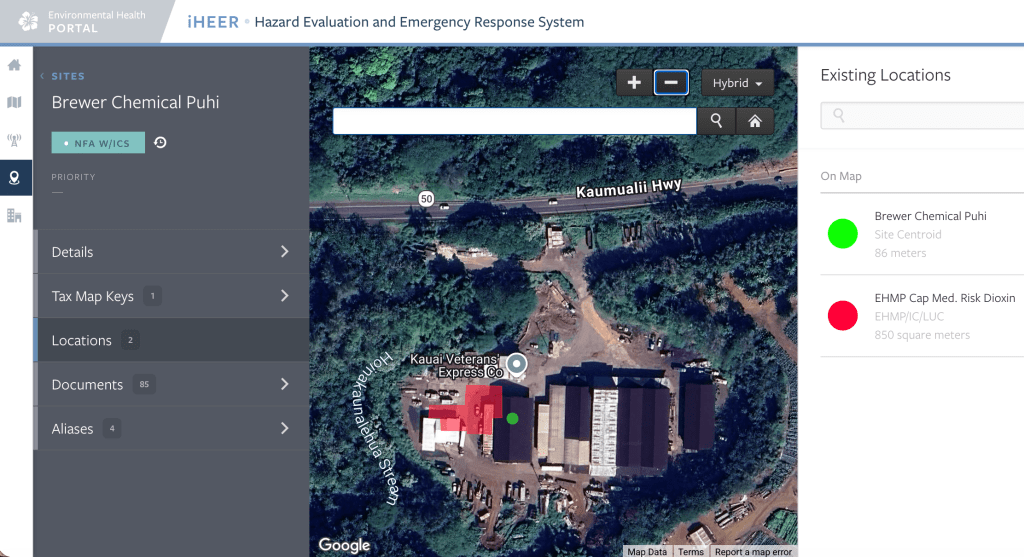
The council axed a $5.2 million request from the administration to purchase a 5.5-acre industrial parcel in Puhi from Kauai Veterans Express Co. The administration planned to relocate its auto shop there.
Council Chair Mel Rapozo led the push to remove it during a May 27 council committee meeting. The site was once owned by Brewer Chemical Corp., and he was concerned about the parcel being listed by the state Department of Health as medium risk for toxic chemical compounds often created during the production of herbicides and other industrial processes.
He and other council members also expressed concerns about the project being added to the mayor’s May supplemental budget submittal and felt like they were rushed to decide.
Matsuyama told council members on May 27 that the administration had originally expected it to take longer to enter into a purchase and sale agreement with the seller. She added that abnormally high levels of contamination were not found in prior environmental reviews of the parcel, but the county planned to do its own study to confirm those findings.
“We wouldn’t buy something that is substantially contaminated that we’d have to do continual monitoring or significant remediation,” Matsuyama told Civil Beat. “Anything like that would be a deal breaker.”
She added that the administration is disappointed that the funding for the acquisition was removed. Wastewater, transportation and logistics personnel were set to get more space there.
“If we lose that parcel there are a number of operations that would be detrimentally impacted,” she said.
The administration could go back to the council after the new fiscal year begins to request the funding via a money bill, but it would delay the acquisition, Matsuyama said. A money bill can take six to eight weeks to go through the council’s process.
Much of the county’s revenue comes from real property taxes — largely from non-owner-occupied residential, vacation rental and hotel properties. During fiscal year 2027, those taxes are projected to bring in about $261 million.
Property tax rates will remain the same for the upcoming fiscal year.
“At the end of the day, the owner-occupied tax class continues to be protected,” said council member Arryl Kaneshiro, who chairs the council’s finance and economic development committee.
Civil Beat’s reporting on Kauaʻi is supported in part by a grant from the G. N. Wilcox Trust.

