Ban Taxpayer-Funded Mailers During Elections, Ethics Chief Says
The Honolulu ethics director says elected officials should not send printed newsletters to constituents within 60 days of elections.
Honolulu City Council members are allowed to spend taxpayer dollars touting their accomplishments in mass mailers, even close to election time when name recognition is a valuable commodity.
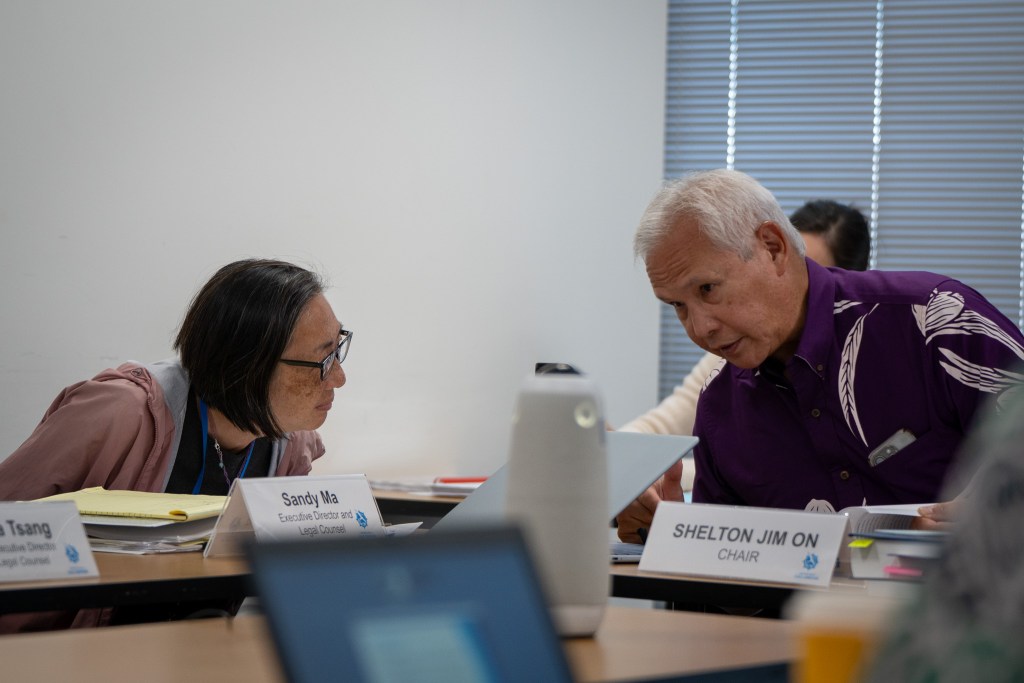
But the Honolulu Ethics Commission’s new director wants to make that practice illegal. A proposal introduced on Wednesday by Honolulu Ethics Executive Director Sandy Ma would ban taxpayer-funded mass mailers within 60 days of elections.
The Honolulu Ethics Commission should clarify what is currently a blurred line between campaign materials and taxpayer-funded information meant for constituents, according to Ma.
“We thought if they allowed themselves — elected officials — to use city resources and city funds, that gave themselves an unfair advantage,” she said.
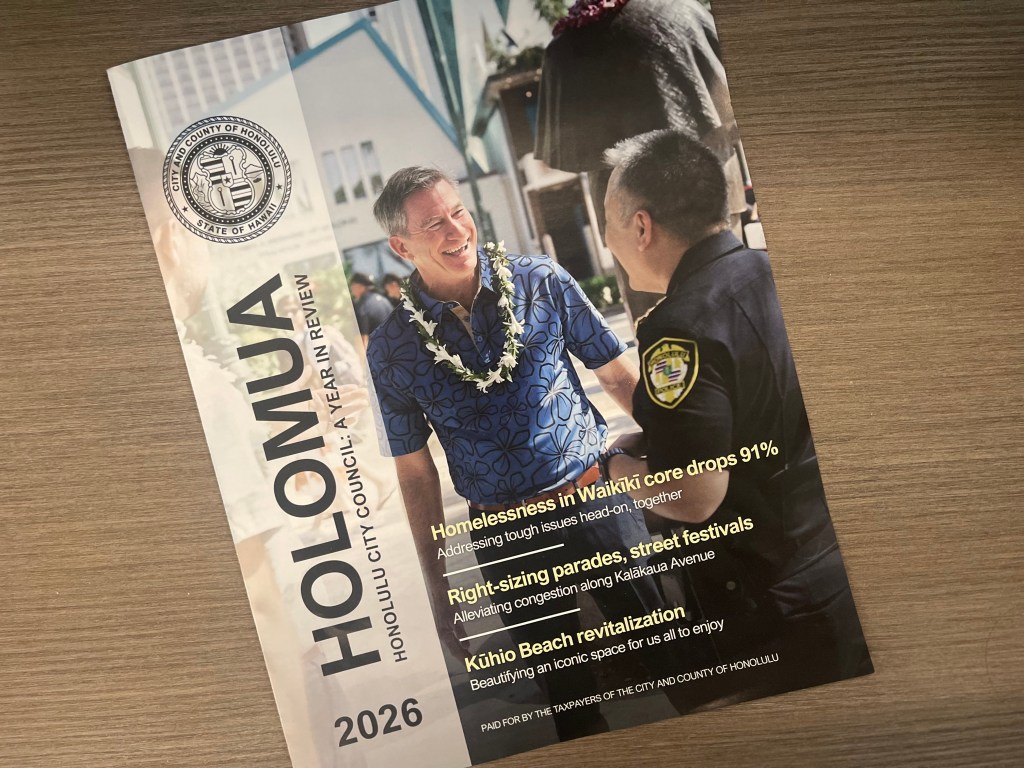
Ma’s proposal came after Civil Beat published a story last month about mailers from Council Chair Tommy Waters, which appeared to push the boundary of legitimate informational distribution. The four-pager featured a large photo of Waters smiling with a police officer and listed ways the councilman is “working for you.” It was sent amid a competitive primary campaign in which Waters was trying to defeat his longtime political rival Trevor Ozawa and two other candidates.
Ozawa ended up winning the top spot in the Aug. 8 primary, and Waters was deemed ineligible due to term limits — a decision he is appealing to the Hawaiʻi Supreme Court.
Incumbents often send newsletters informing constituents about local matters such as road construction and important city phone numbers to have on hand.
But using city resources for communications while they’re campaigning for reelection gives incumbents an unfair advantage over challengers who don’t have access to those same resources, Ma said.
Ban Would Mirror Rule For Congress
There can be a fine line between campaigning and informing constitutents. To reduce confusion, other jurisdictions such as Congress and the Hawaiʻi House of Representatives ban all mass mailers in the runup to election days.
Ma led a brief discussion during Wednesday’s commission meeting about codifying the same ban in Honolulu.
Details remain to be determined. If the restriction is for 60 days before election days, Commissioner David Monk said at the meeting, that would mean incumbents have a roughly one-month period to send mailers between primary and general elections.
The House – which is only in session between January and May – maintains a blackout period between June and November, while Congress’s ban is for 60 days before elections. Ma said in an interview that she drew inspiration from Congress, but that the proposed time period may change.
She said she will work with her staff to finalize language for a draft bill by the end of the year, which then would need to be approved by the volunteer ethics commission before being sent to the Honolulu City Council for consideration.
Codifying the ban would require council members to agree with limiting their own ability to send newsletters, which Ma acknowledged could be a lofty political ask.
In the run-up to the primary election this year, tens of thousands of residents opened their mailboxes to newsletters from their council members, including three other than Waters who were running for reelection. Two incumbents – council members Matt Weyer and Val Okimoto – are running unopposed while council member Tyler Dos Santos-Tam has a challenger.
“I know that’s kind of pie-in-the-sky legislation to propose,” Ma said during the meeting.
But the optics could compel council members to support the measure, University of Hawaiʻi Mānoa political scientist Colin Moore told Civil Beat.
“I think that the members of the council are probably looking for some relatively easy signal to show that they’re embracing good government reforms,” he said.
He agrees with the proposal’s overall aim.
“It seems like a logical fix to me,” Moore said. “I think it’s necessary and appropriate.”
Waters’ office offered council members $20,000 each from council coffers for sending printed mailouts to constituents, an offer most of them took advantage of to highlight their efforts to fix parks or introduce legislation. Many of the mailers included small glossy photos of the council members in their communities, though Waters’ mailer included a full page photo of himself.

Tommy Waters’ mailer shares recent progress made on community issues and applauds local leaders. On the bottom, it says it’s paid for by Honolulu taxpayers. (Christina Jedra/Civil Beat/2026)
Waters defended his use of mailers close to the election in a written statement last month.
“Mailers are a public information tool intended to keep residents informed about district projects, Council actions, public resources, and opportunities to participate in the decision-making process,” he said.
Taylor Ursulum and Aron Dote, spokespeople for Waters, did not provide a statement Wednesday when asked for comment about Ma’s proposed legislation.
Waters Fighting To Stay In Race
Waters’ mailer came as Waters ran in a tight race for reelection against political rival and former council member Ozawa, whose performance against Waters has been neck-and-neck in the past.
Waters was running for a controversial third consecutive term, saying an ambiguity in the City Charter meant that he wasn’t bound by the limit of two consecutive four-year terms. A judge ruled Waters was ineligible to run last month, but Waters hasn’t let that stop him from campaigning.
“We respect the court’s decision and appreciate its consideration of this matter,” he said in the caption of an Instagram video hours after the judge’s ruling, “but I’m not giving up.”
“People are saying they’re still going to vote for us no matter what,” he said in the video, which was filmed outside Kāhala Mall as he and supporters continued signwaving. His name was printed on primary election ballots before he was ruled ineligible, and he ended up receiving the second highest number of votes after Ozawa.
Because of his ineligibility, however, Waters will not appear on the ballot during the general election.
Waters is appealing the court’s decision, and a hearing is scheduled on Tuesday at the Hawaiʻi Supreme Court.
That hearing will also address a lawsuit filed by 40 people who want Waters to appear on the general election ballot, saying that confusion over his eligibility caused a lot of people to vote for him, and their votes should still count.
That lawsuit was filed by a group including frequent testifier and two-time council candidate Natalie Iwasa, former council member Joey Manahan, Waters staffer Kevin Imanaka and neighborhood board chairs for Diamond Head and Waikīkī.
CORRECTION:An earlier version of this story misstated how many times Natalie Iwasa has run for City Council.