Honolulu Council Results: Ozawa And Gregory Head To General Election For Waikīkī Seat
Tommy Waters was the second highest vote-getter but was deemed ineligible after ballots had already gone out.
Trevor Ozawa and Tara Malia Gregory are the top two eligible performers in the race for the Honolulu City Council’s District 4, which encompasses the area between Waikīkī and East Honolulu.
Ozawa received 44% of the vote and Gregory got 15%. That’s according to election results released on Sunday, which included nearly 28,000 votes. Because neither candidate received a majority of votes, both appear set to head to the general election this November. Final numbers are expected to be released on Friday.
Jason Liang, a Democratic socialist candidate, was trailing with just shy of 10% of the vote.
Council Chair Tommy Waters, who currently holds the seat, was actually the second highest vote-getter, with 31% of the vote as of Sunday. But he won’t be allowed to advance in the race unless a court steps in.
Waters appeared on ballots because he had filed to run for reelection. However, a state judge ruled last month that Waters was ineligible to run for a third term, and Acting City Clerk Chadd Kadota said last week that votes for Waters would only be counted to determine whether other candidates received a majority of votes. But Waters has refused to accept the court decision. Vowing to appeal, he continued campaigning and signwaving as recently as Friday.
The result is a stunning shift in what appeared to be a sleepy race as recently as late May. At the time, Waters, the incumbent, was the powerful and well-financed chair of the Honolulu City Council running against two political newcomers.
It was expected he would cruise to reelection without much of a fight. But Waters’ candidacy laid on shaky legal grounds: Despite the City Charter limiting council members to two consecutive four-year terms, Waters was campaigning for a third. He argued that since he took office four months later than usual, his first term didn’t count toward the limit.
Ozawa swooped into the race on the last day candidates could file and sued in mid-June to stop Waters’ candidacy. Ultimately, Judge James Ashford agreed that Waters was trying to overstay his welcome.
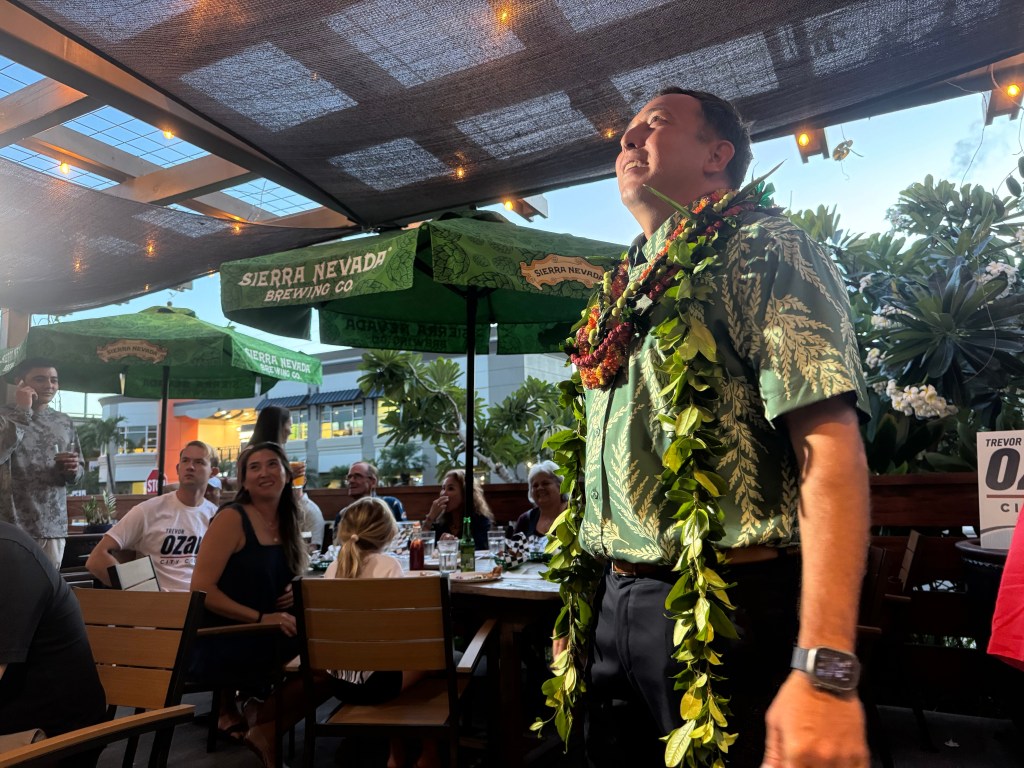
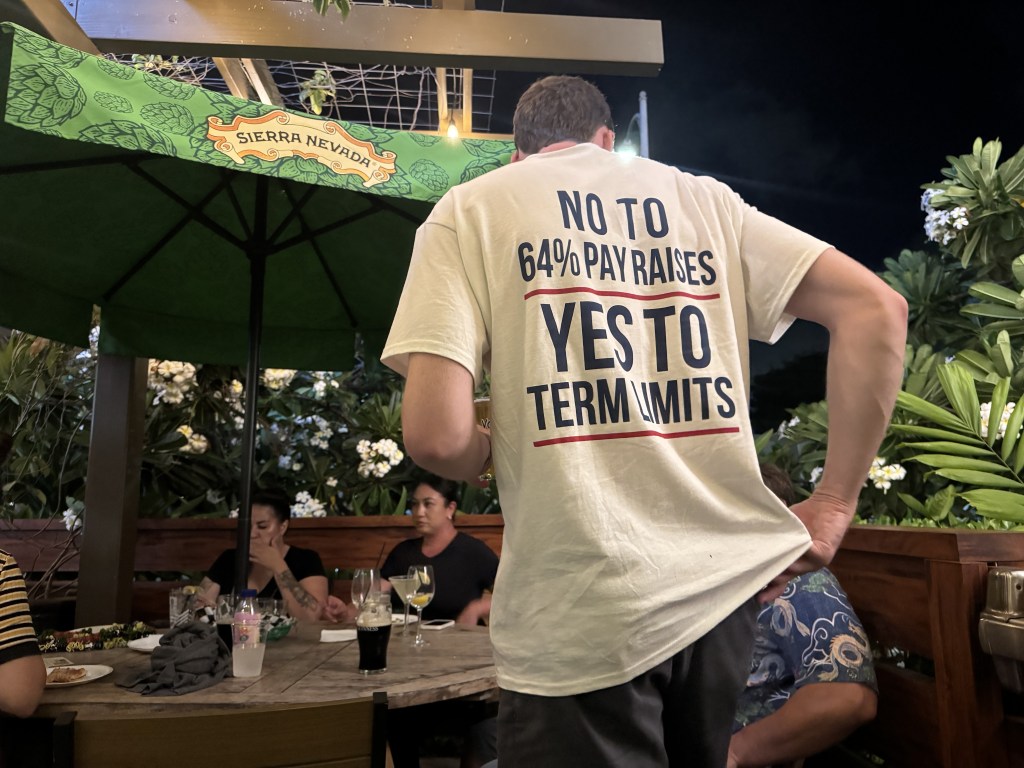
At a primary night celebration at J. Dolan’s in Kahala, Ozawa celebrated with supporters on the restaurants patio with pizza and beer. Children wore Ozawa campaign shirts. Council member Matt Weyer swung by and draped Ozawa with a lei.
“We’re feeling great,” Ozawa said after the first printout of results dropped. “I didn’t have any expectation exactly. I mean, we didn’t know what to expect with everything going on. But again, very happy with the results.”
Waters did not respond Saturday evening to a call and text seeking comment.


A Political Comeback
Ozawa is a former council member who ran against Waters in 2014, 2018 and 2019.
While he edged out Waters by fewer than 50 votes during the 2014 and 2018 general elections, the Hawaiʻi Supreme Court invalidated the results in 2018 after Waters challenged the result, saying some absentee ballots should not have been counted because they came in too late. A new election was scheduled for April 2019, which Waters won.
Much of Ozawa’s campaigning has focused on critiquing Waters, who facilitated a controversial 64% pay raise for himself and other council members in 2023.
“Why does the city government move so quickly when it takes care of itself, but so slowly when we want to get things done for our own lives, and our own families?” Ozawa said to a small crowd of reporters at Honolulu Hale when he filed for candidacy in June.
During his campaign, Ozawa pitched himself as someone more attentive to community needs, including giving more love to local parks and promoting housing development. If elected, he said, his main housing strategy is to encourage the construction of units along the rail line and to reform the Department of Planning and Permitting to make home improvements and renovations easier.

First-Time Candidate Advances
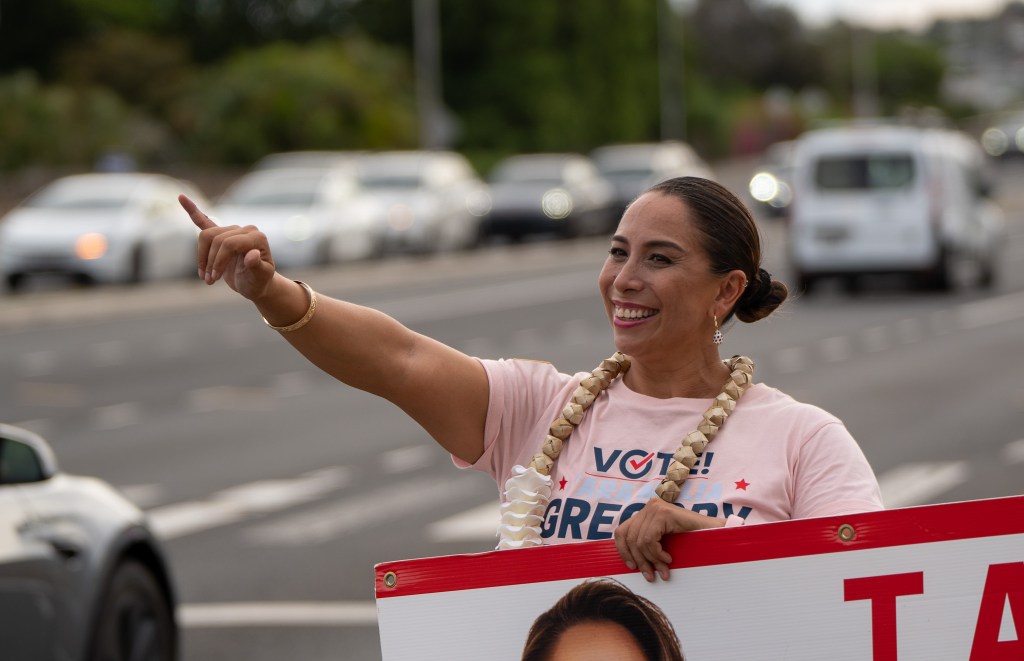
Gregory, a first-time candidate, works for the multilevel marketing company Herbalife and is a frequent attendee at Hawaiʻi Elections Commission meetings, where she has raised questions about Hawaiʻi’s voting integrity and is a critic of Chief Election Officer Scott Nago.
She wants the city to be tougher on crime and is running in large part to reduce government waste, she said. Her oft-repeated mantra is to “audit everything.”
When Republican Rep. Gene Ward died last year, Gregory was one of three names the Republican Party submitted to take his place. While she wasn’t chosen, Gregory said the experience made her consider running for office.
Though she started as a Republican, Gregory said she ultimately lost interest in partisan politics. The City Council seat she is running for is a nonpartisan position.
Gregory, who spent Saturday evening with supporters at a friend’s house in Portlock, said she’s excited to move on to the general election.
She also said said she plans to file a complaint in the state Supreme Court on Monday against Kadota and Hawaiʻi Chief Election Officer Scott Nago, saying they should have figured out how to handle Waters’ candidacy before ballots went out with his name on them.
Officials’ handling of the issue did a disservice to people who voted for Waters before he was ruled ineligible, as well as to people who missed that news, Gregory said.
“So now as an American, according to the Constitution, my right to vote has now been taken away from me,” she said about those voters.
Liang, another first-time candidate, took inspiration from New York City’s Democratic Socialist Mayor Zohran Mamdani. He advocated for free buses and city-owned grocery stores, which he proposed funding by taxing ultra high value commercial and residential properties at a higher rate.
“We were definitely underdogs in this race,” Liang said Saturday evening from Brew’d in Kaimukī, where he had gathered with family and a small group of supporters. “I think with everything considered, I’m proud of the work we did.”
Three other council members’ seats are up for election this year: Val Okimoto, Matt Weyer and Tyler Dos Santos-Tam.
Okimoto and Weyer are running unopposed, while Dos Santos-Tam has only one opponent so is automatically heading to the general in November.