

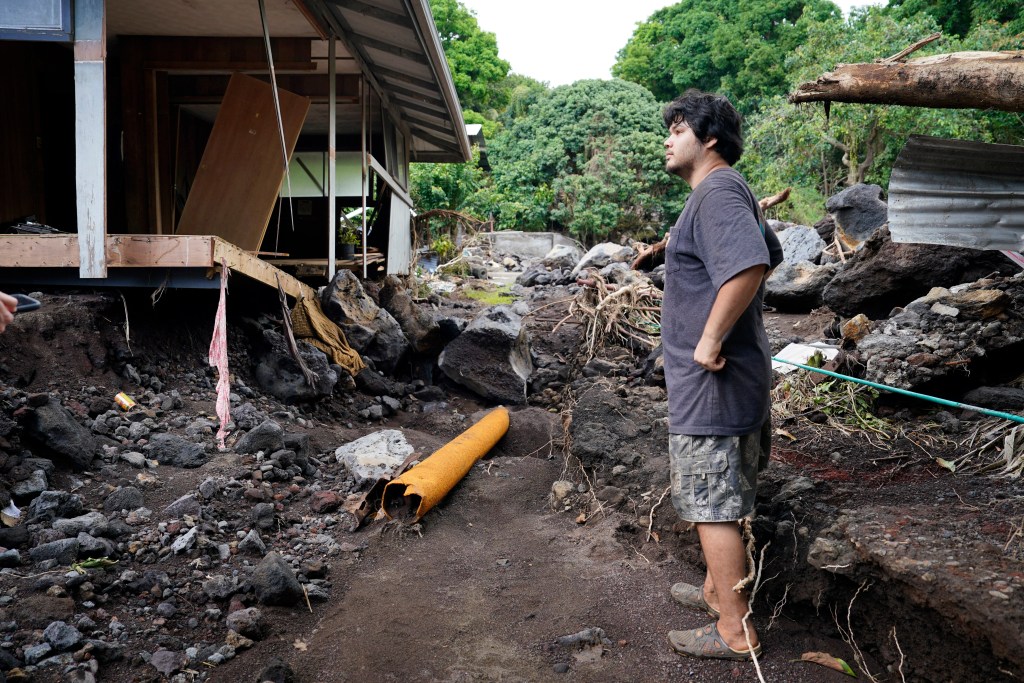
Justin Subica-Kawakami and his family are still sleeping in their cars after Hurricane Lala smashed open their Waiʻōhinu house last weekend on the southern end of the Big Island.
They were at home on Saturday night when boulders began to hit the side of the house. Water from a nearby stream diverted to their yard, carrying a mudslide along with it. Soon they were surrounded on all sides by water.
“There was nowhere we could go,” Subica-Kawakami recalled Tuesday, standing amid the pile of large rocks and rubble that now fills the family’s driveway.
Out front, their macadamia nut orchard is strewn with clothes and other possessions flushed away by the flood. A golf bag wraps around a coffee tree. The family was gearing up for coffee and macadamia season but now the trees are covered in mud, the drum to process nuts is destroyed.
They and their neighbors seem shell-shocked by the overnight transformation that literally uprooted parts of the community. They’re not sure where to turn and afraid to leave their home open to the elements — and potential mischief.
“We’re definitely going to need financial assistance because our macadamia season is over now,” Subica-Kawakami said.
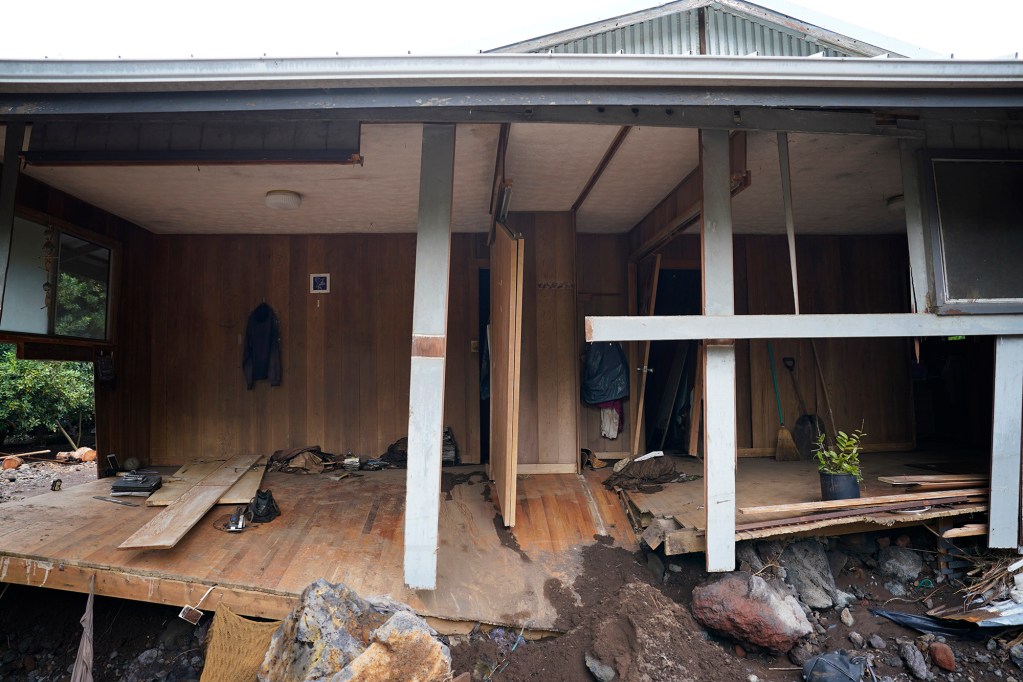
It’s early days but they have yet to receive much help from the county or the state. Marcia Masters, a community organizer, has shown up to offer support, as have members of the church the family attends. “The National Guard offered us five bottles of water,” Subica-Kawakami said.
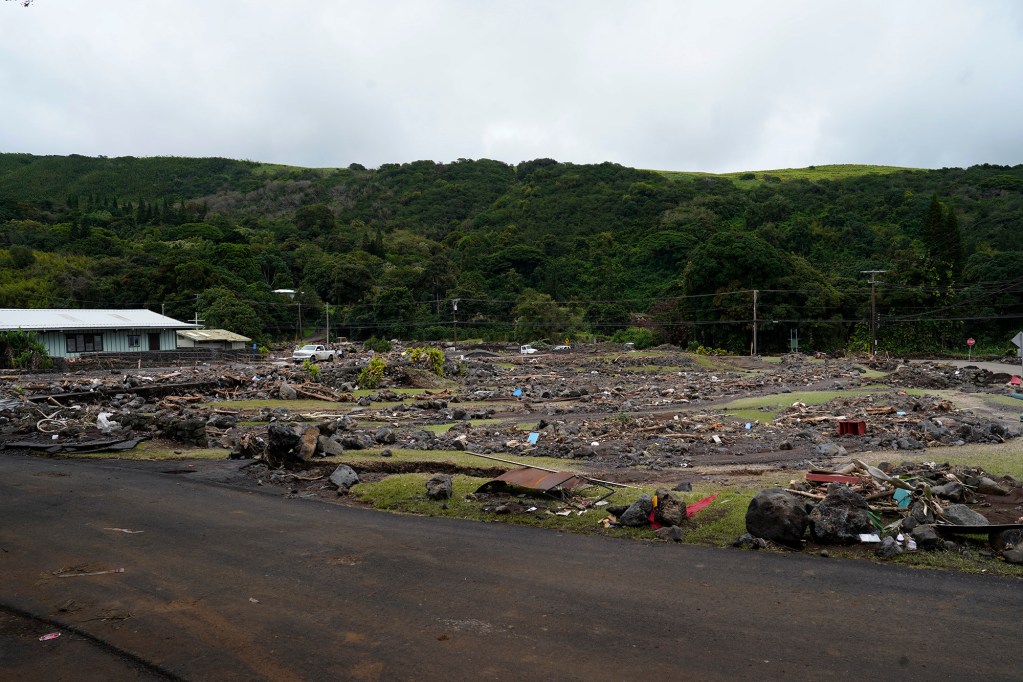
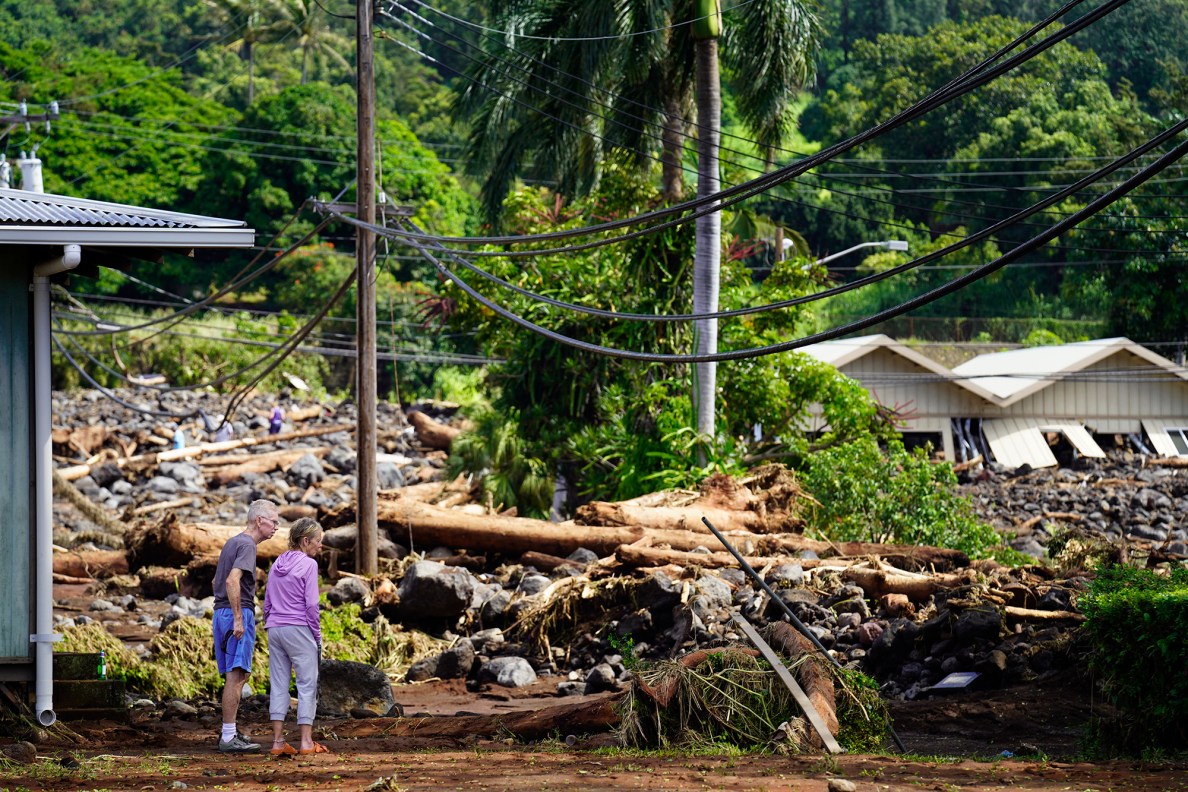
Flooding from Hurricane Lala hurled tons of mud, trees and rocks through Kaʻū neighborhoods over the weekend, piling it up like brown and black snowdrifts, and leaving the hard-hit residents to gather this week to begin the long and costly recovery effort.
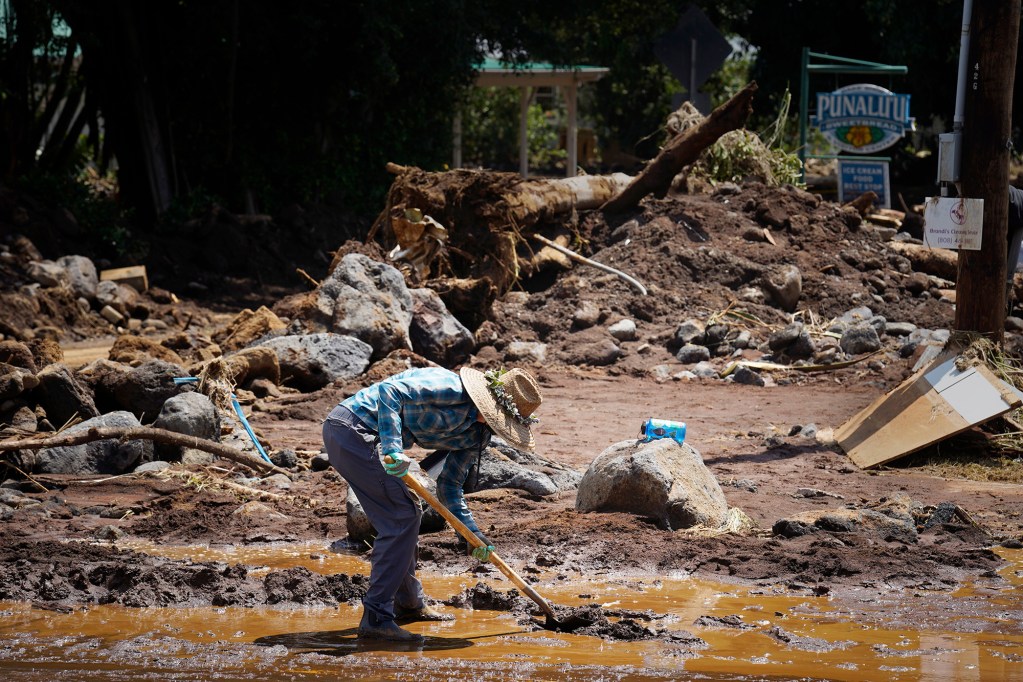
Once the storm passed and roads opened Tuesday, people in the tight-knit, rural town of nearby Nāʻālehu — about 70 miles south of Hilo — stepped up efforts to haul in gasoline and food to share and the heavily damaged Punaluʻu Bake Shop cracked open a shipping container of sweetbread to distribute.
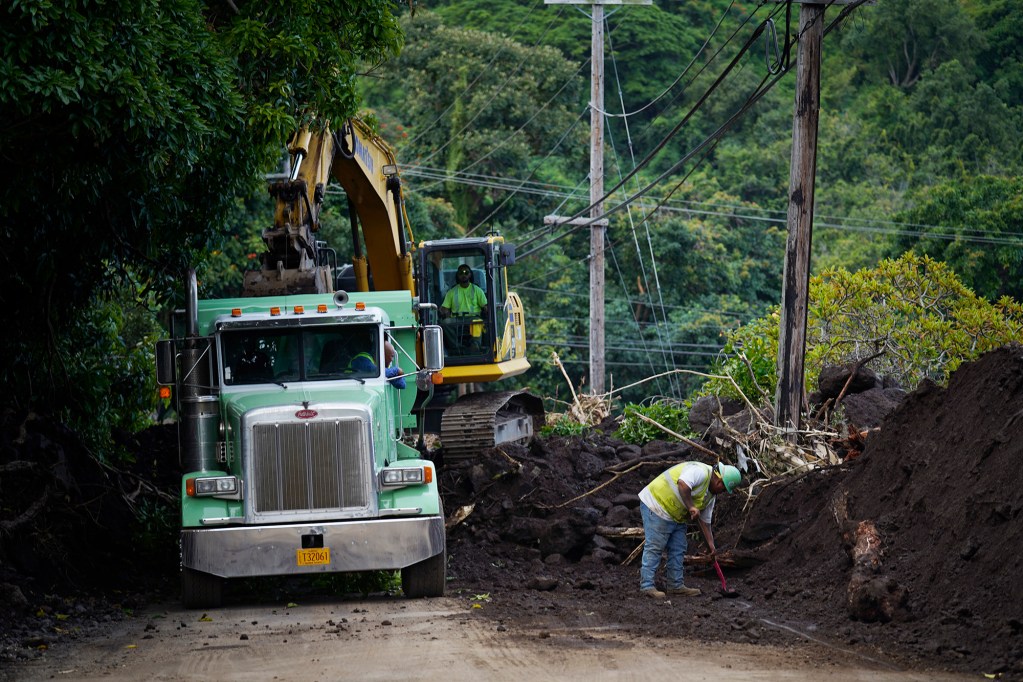
Road workers in neon green and orange vests seemed to be everywhere, digging out, clearing. Local residents were hugging, sharing their stories of survival. Many had walked into town because they were low on gasoline.
But their surroundings remained a grim reminder of what’s happened — and the work ahead.
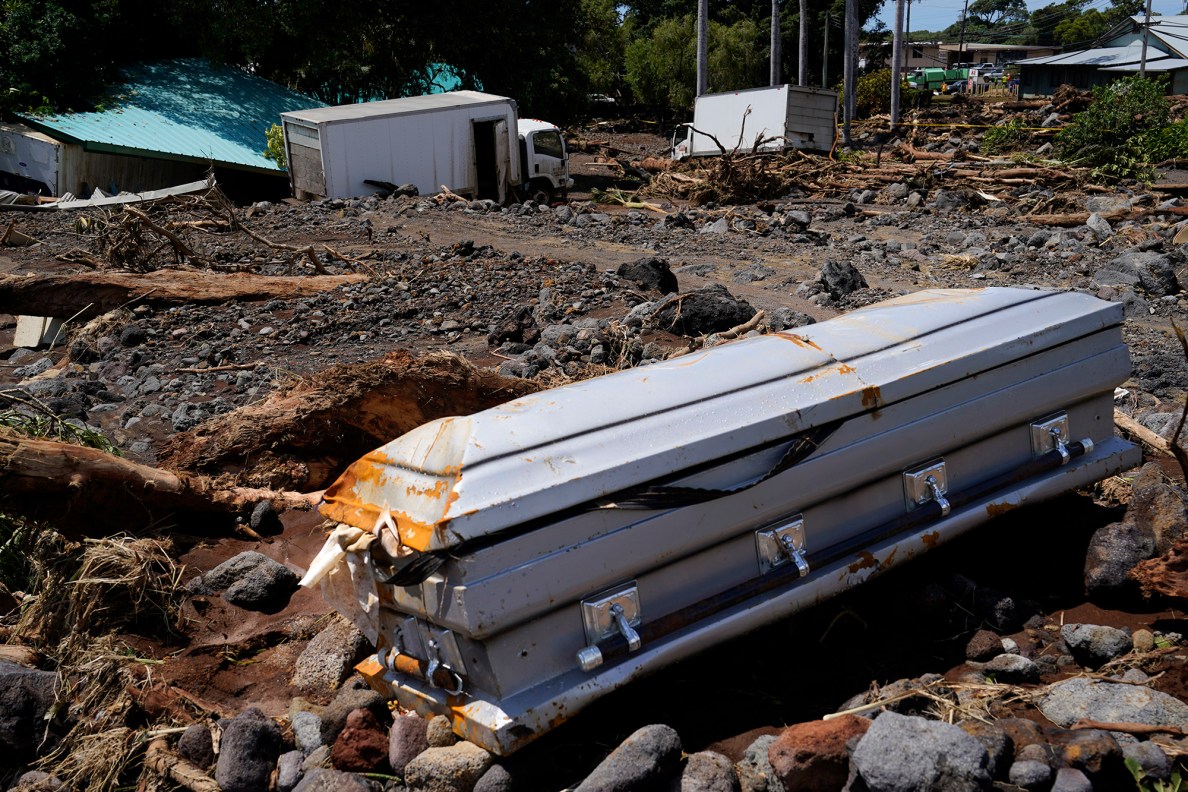
Tombstones and coffins had washed down from the Nāʻālehu Cemetery and were scattered down to Hawaiʻi Belt Road. Material from the cemetery barreled through Kaʻū Auto Repair and Towing, collapsing its roof.
The Nāʻālehu Ace Hardware was heavily damaged by the storm, too, and all of the local businesses were closed. The bake shop had been shuttered ahead of the storm and no employees were hurt, but it was flooded with water, rocks, silt and debris.
Big Island police on Tuesday identified a woman whose body was found in a field in Nāʻālehu on Monday as 93-year-old May Doi, a longtime Nāʻālehu Elementary school teacher. Police said she was last seen on Friday at home on Maia Street in the Nāʻālehu Town Subdivision.
Area residents discovered a second body of an unidentified man in his 60s Tuesday afternoon in a pasture off Highway 11 near the 63-mile marker in the Ka‘ū district, the Hawai‘i Police Department said in a release late Tuesday. Based on the preliminary investigation, the release says, “police believe the death appears to be related to the effects of Hurricane Lala and the extreme weather conditions associated with the storm. Foul play is not suspected at this time.”
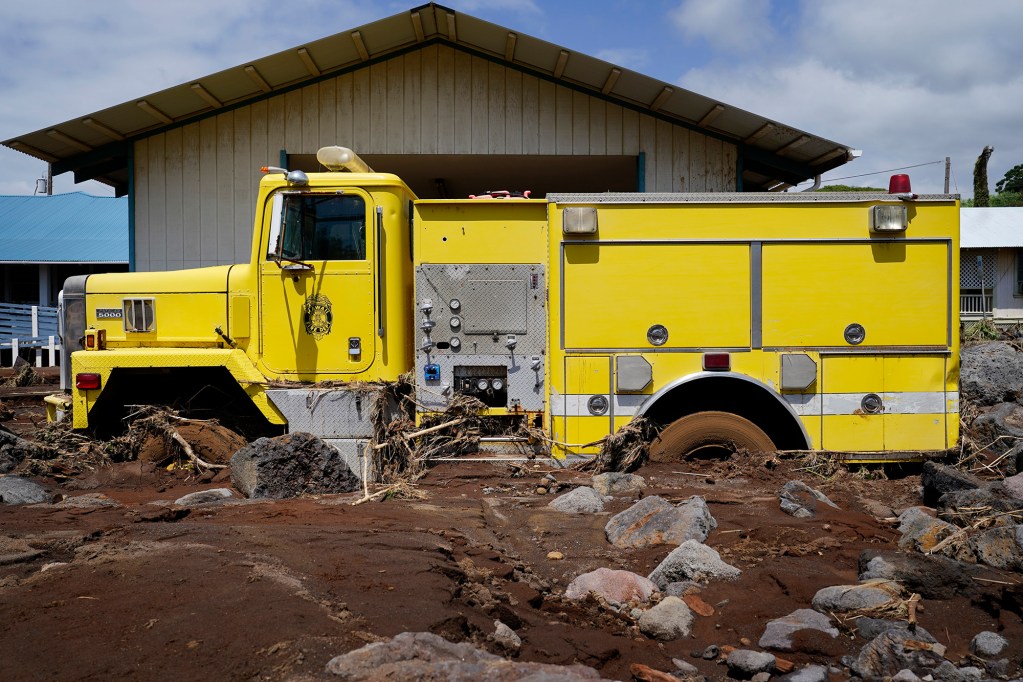
Hawaiʻi County spokesman Tom Callis said by early afternoon on Tuesday that damage reports already had been filed for 263 Big Island homes and 18 damaged businesses. The county fire department used a helicopter to deliver supplies to the rural Kaʻū Wood Valley community where roads into Wood Valley remained impassable.

John Masters, owner of Kaʻū Auto Repair, is running the company his father started in 1989 in an old plantation garage out of his home. Much of the debris ripped up from the Nāʻālehu Cemetery including coffins, headstones and human remains was carried on a river that crashed through the uphill wall of his shop and blasted out the other side.
“It’s a pretty sad sight up there now,” he said. “I’ve been working there since I was 13 or 14 years years old with my dad, you know?”
“Now I’m laying in bed at night like, what’s the next move?”
John Masters, owner of Kaʻū Auto Repair
Masters employs 19 people and has done business with just about everyone in town at one time or another. He estimates his losses from the storm at hundreds of thousands of dollars in equipment, including six vehicle lifts. Masters, 47, was born and raised in Nāʻālehu, and never did move out of the area. “Now I’m laying in bed at night like, what’s the next move?”
“We’re just going to focus on what we have, and not what we had. We’re going to work on what we have today,” he said. “We’re just going to keep serving our community and our island, because they’ve been here for us through it all, you know?”
What he has left is his towing business, and “I think after this, it’s just going to be Kaʻū Towing,” he said. “I don’t have a shop.”
“Tomorrow we’ve got our list of recoveries from insurance companies, we’re going to start that process tomorrow, and then we’ll go from there.”
He guessed that 500 vehicles were caught up in the flooding, including many that were uninsured, and predicted nearly all will be a total loss. “Those cars will be sitting in their yards for a long time.”
“You drive past Waiʻōhinu Park, there’s a Nissan pickup pinned against the stone wall. You go 20 feet past, there’s cars that got washed off the ravine. Go right past that and the next guy’s got three cars pinned against each other in his garage,” Masters said. “You just drive around and look, there’s just damage everywhere.”
Bob Taylor, owner of the Nāʻālehu-based Taylor Built Construction Company, said one home pushed off its foundation ended up in Waiʻōhinu Park while portable toilets in the park floated away. Rocks and debris rushed through buildings adjoining the old two-story Shirakawa Hotel.
“You can’t even get into the property right now,” he said. “It’s all boulders and mud and debris.”
Flood waters also swirled past the 76 gas station on Hawaiʻi Belt Road and surged into a subdivision below the highway, he said, “and then the water went through a bunch of houses in that subdivision, like flooded right through.”
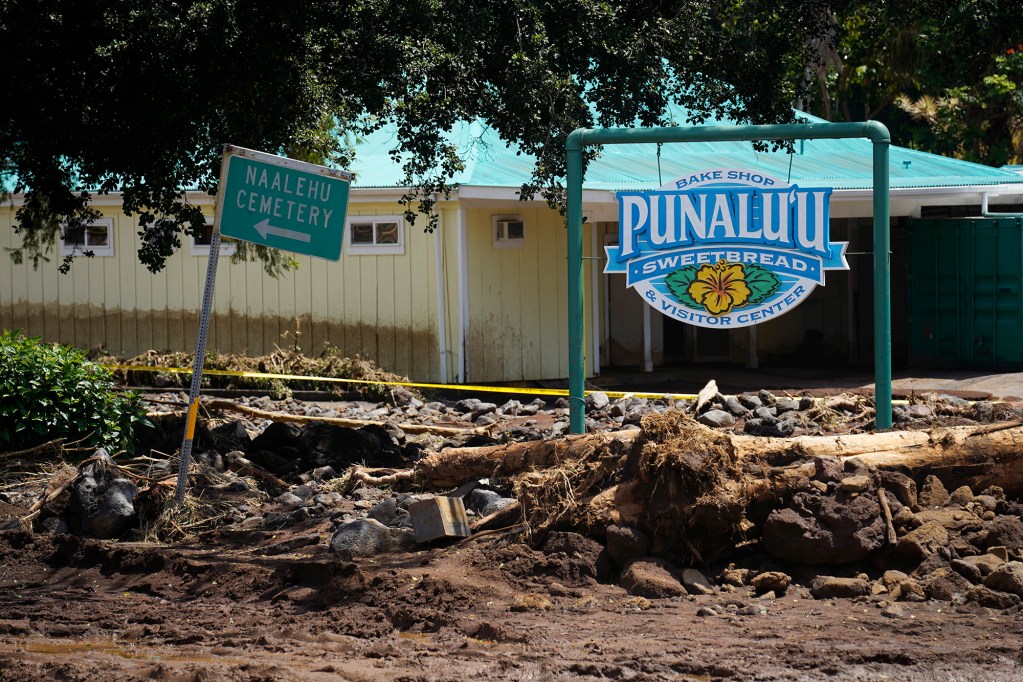
Taylor has worked as a contractor in Kaʻū for 40 years and built much of the Punaluʻu Bake Shop.
“You can see where the water went through all the buildings, and it was like, 4 feet high,” he said “It was mud, rocks water, and full on trees. Full on trees, you know.”
Traditionally the fields up above Nāʻālehu were planted in sugarcane, Taylor said, and the sugar companies maintained a system of drainage into and through ravines and culverts. He has an inkling that what happened later may have contributed to the devastation.
“Over time all that land’s been sold, and a lot of people have done their own idea of grading,” he said, “and I think that’s part of what led to this, was just the manipulation of the terrain over time.”
Reinforcements Arrive
As roads began to reopen on Tuesday, traffic slowed to a stop at times as officials checked cars, allowing in only residents, relatives, friends and others coming to help. Among them were Taylor’s son, who arrived from Hilo Tuesday morning with a load of supplies and equipment after passing through sections of road barely 9 feet wide.
“Everybody’s looking out for each other,” Taylor said.
At the Nāʻālehu Hongwanji Mission, John Masters’ mother, Marcia, has spent the last two days organizing two dozen volunteers at a time as food, water and other supplies came pouring in. Residents from around Nāʻālehu and Waiʻōhinu drove up, and volunteers handed them food, ice and other supplies.
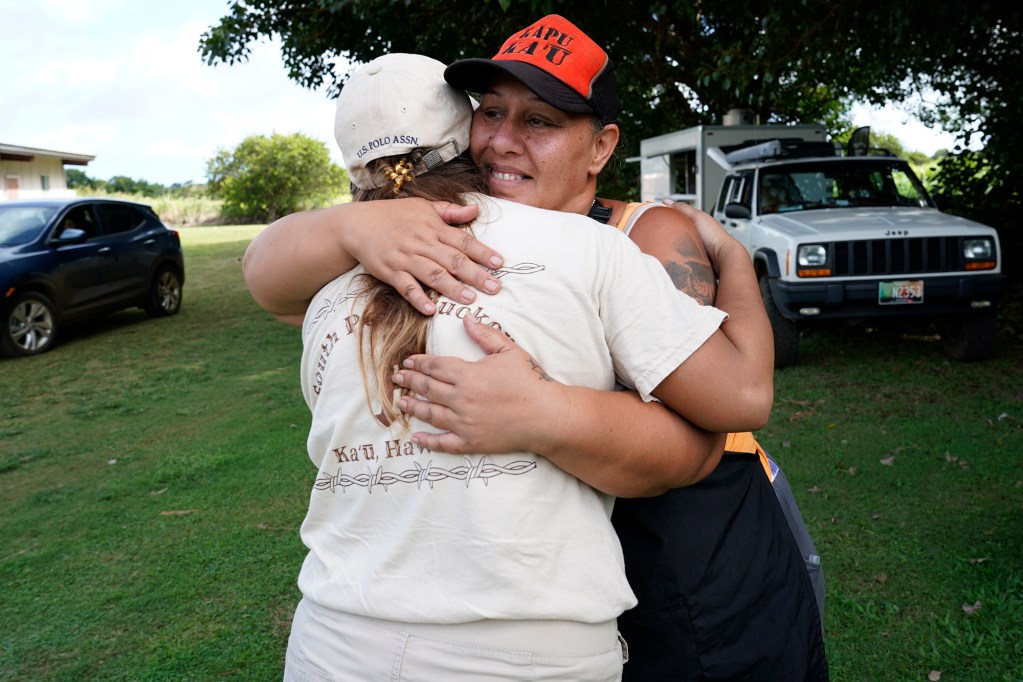
Marcia Masters had coordinated a similar effort during the early months of the Covid-19 pandemic and she has been running a soup kitchen at the mission ever since. Tuesday afternoon, World Central Kitchen turned up with about 500 wraps to hand out.
Jolynn Grimes — whose family lost its home to a mudslide on Saturday, was also there, preparing food out of her food truck throughout the sticky, hot afternoon.
“I have to be here with the community,” she said. “Otherwise I’d just be at home crying.”
Jennifer Carter, program director for Hawaiʻi Island Child and Family Services had driven six hours from Hilo to offer financial support to impacted families. She and her team brought three vehicles packed with supplies.
“Many of us are here from Puna, so we’re currently without power,” Carter said.
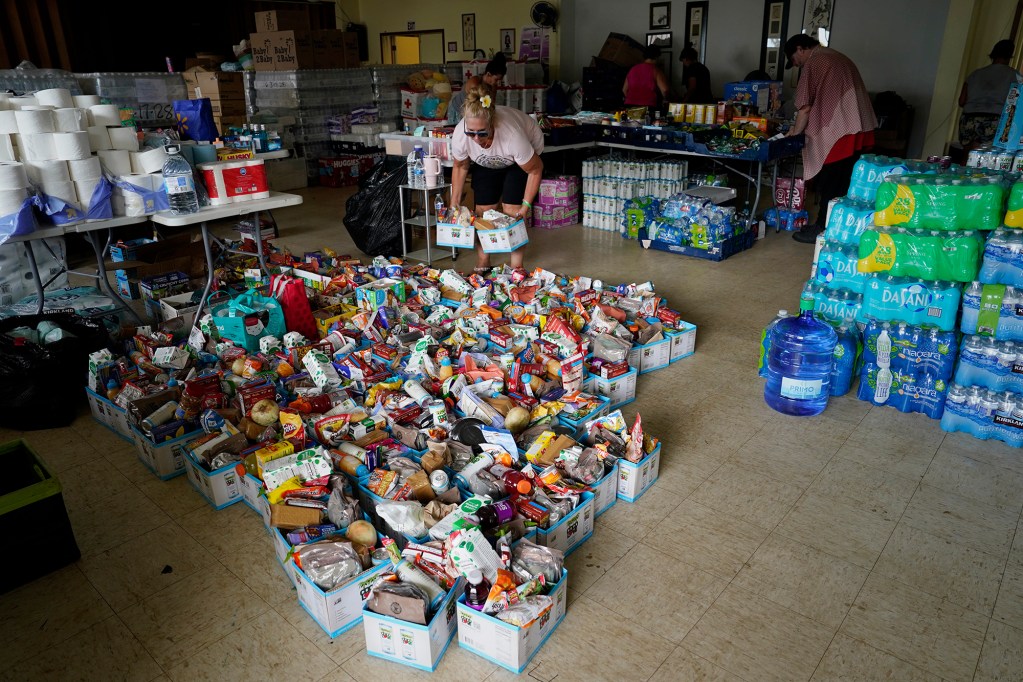
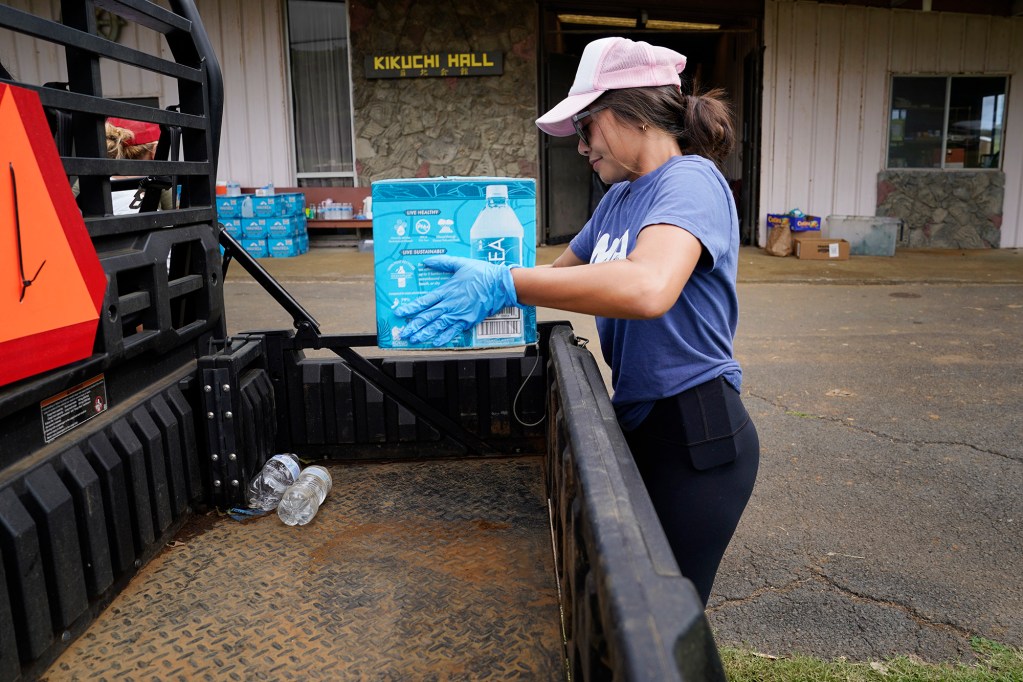
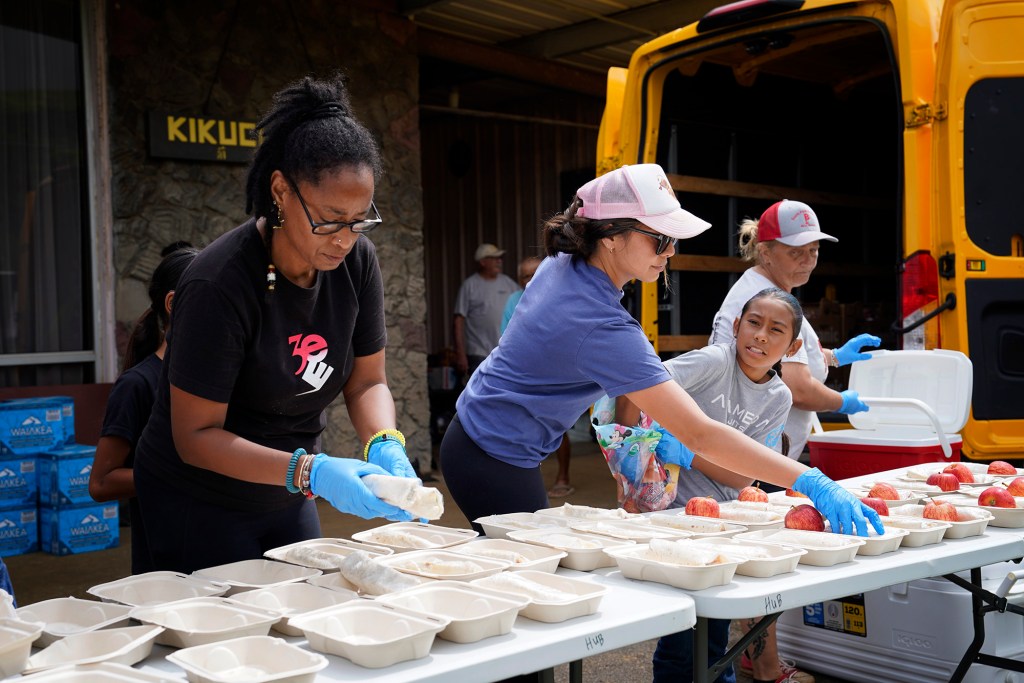
They had provided support for 1,000 families on the Hilo side the day before, but as soon as they heard the road to Nāʻālehu had opened up, they decided to prioritize families in the rural area.
“We just wanted to come out, support our community, and connect them to resources,” Carter said, adding that they were planning to turn around and make the long drive back home Tuesday night.
Michelle Galimba, who represents Kaʻū on the Hawaiʻi County Council, is staying at her parents’ home helping clean up the mess left by a torrent of foot-deep floodwaters that ran through it. Galimba’s home, inland and uphill of the township, was relatively unscathed but her horse stables and animal pens were destroyed.
She had been more worried about wind on Saturday night until it subsided and made way for a torrent of water that overtopped the natural drainage, creating new channels and rockfalls.
“I started hearing new noises outside,” Galimba said. “Then I went out with a flashlight and saw dark brown rivers where there had never been rivers before.”
She couldn’t confirm her family’s safety until the following morning because she had lost cell service. Even as residents are knuckling down, cleaning out the rockfall, debris and mud coating the township, Galimba said there hasn’t been time to process everything, including the death of May Doi.
“There’s just so much that’s happened; that whole thing with the graveyard,” she said. “How do you process that? That’s just so awful.”
Civil Beat reporter Thomas Heaton contributed to this story.
About the Authors
Kevin Dayton is a reporter for Civil Beat. You can reach him by email at kdayton@civilbeat.org.
Help power essential news and information