Three years after deadly wildfires devastated Lahaina and parts of Upcountry Maui, the island remains in the thick of a multibillion-dollar recovery that’s nowhere near complete.
As of Friday, nearly 600 homes have been rebuilt and another 315 were under construction. The county had issued or was processing permits for roughly 1,000 more units, according to county data. And Maui officials were also moving forward with a plan to use $50 million in federal funds to buy out about 10 oceanfront properties.
Many residents continue to express their disappointment in the pace of rebuilding, particularly in Lahaina’s commercial district where lots have been cleared but businesses have not been reconstructed. In some cases, national media has misrepresented the status of recovery by pairing photos from shortly after the Aug. 8, 2023, disaster with recent stories about rebuilding progress.
“My feelings about progress are totally mixed,” said Bern Burkhalter, a retired carpenter and electrician whose Front Street home was destroyed in the Lahaina fire. “I’m thrilled to see the houses come back, but I can’t understand why they can’t also bring back businesses.”
A year from now, Burkhalter said he hopes to see the start of a business district on Front Street. “I hope to see a town coming back with stores and shops and things to do and employment opportunities for people,” he said.
The wildfires caused more than $5.5 billion in damage, destroyed more than 2,200 structures, killed 102 people and displaced nearly 13,000 more. Many survivors found temporary housing in neighborhoods across the island. Others moved into the state and federal emergency housing projects mauka of Lahaina while hundreds of families have relocated off island.
Life Is Slowly Returning To Lahaina
Parts of Lahaina have transformed over the past year.
On the disaster’s second anniversary, only about 45 homes had been rebuilt. Nearly 300 more residential properties were under construction, including several that were still in the very early stages of the rebuilding process. The 3.4-square-mile burn zone was often quiet and still, particularly after construction crews had finished work for the day and returned home.
A year later, the community is showing new signs of life.
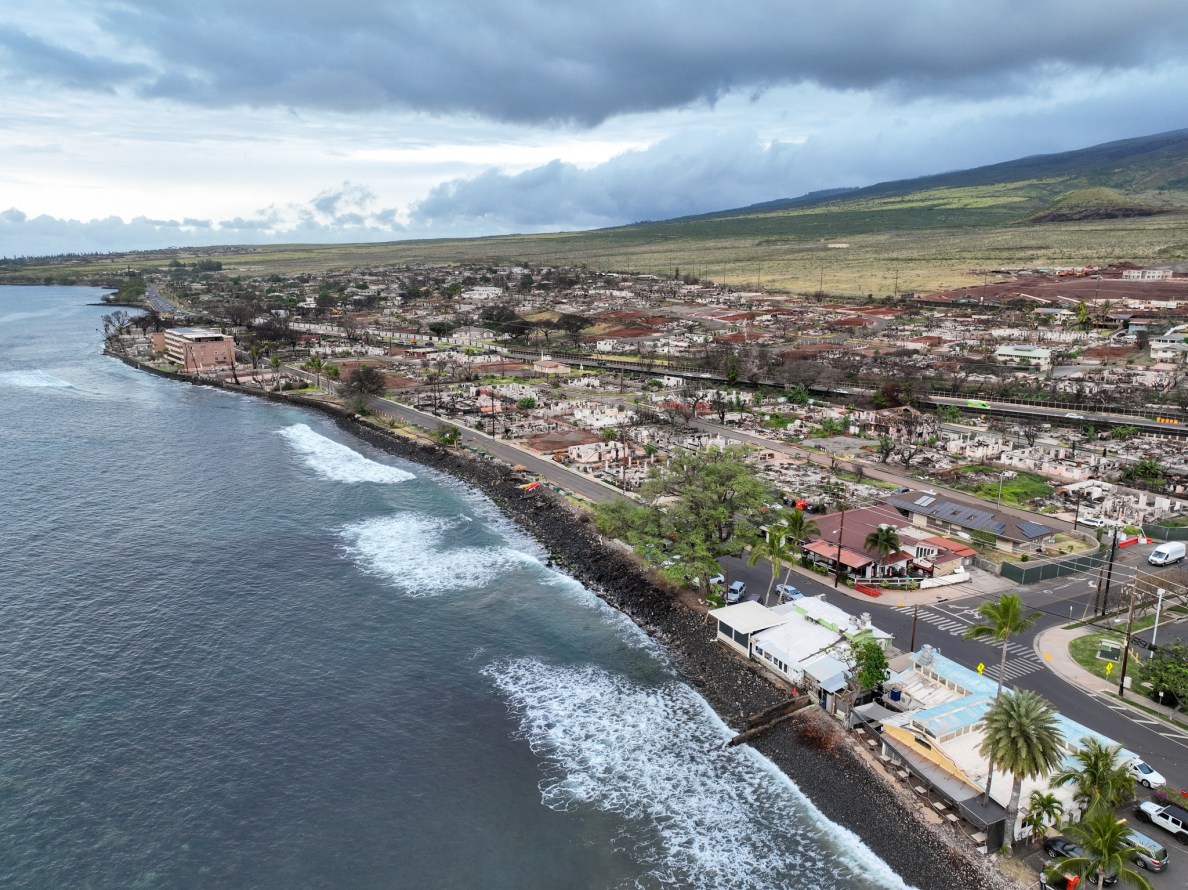
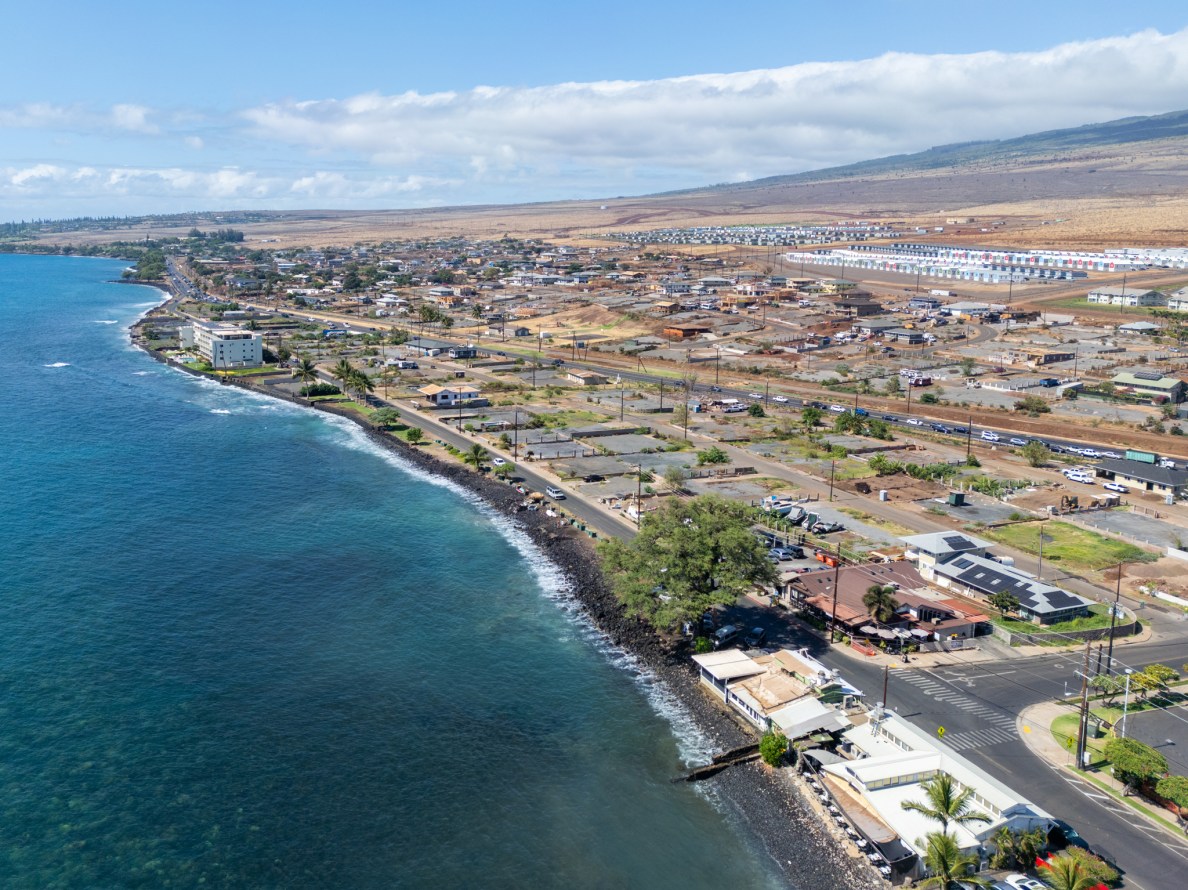
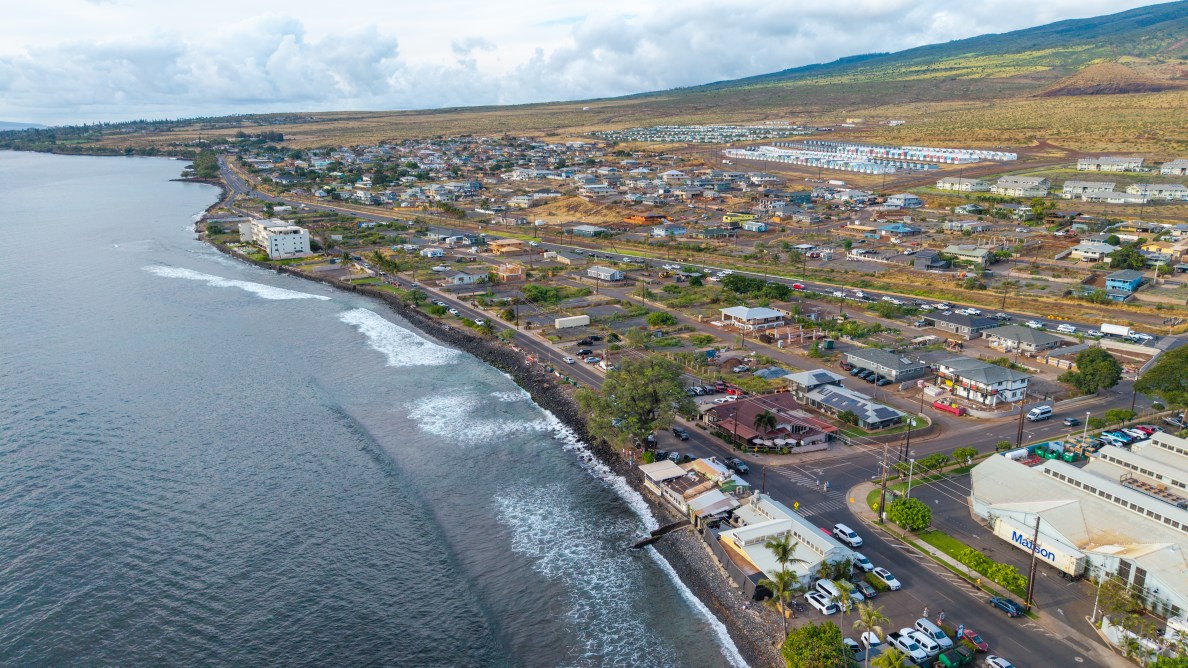
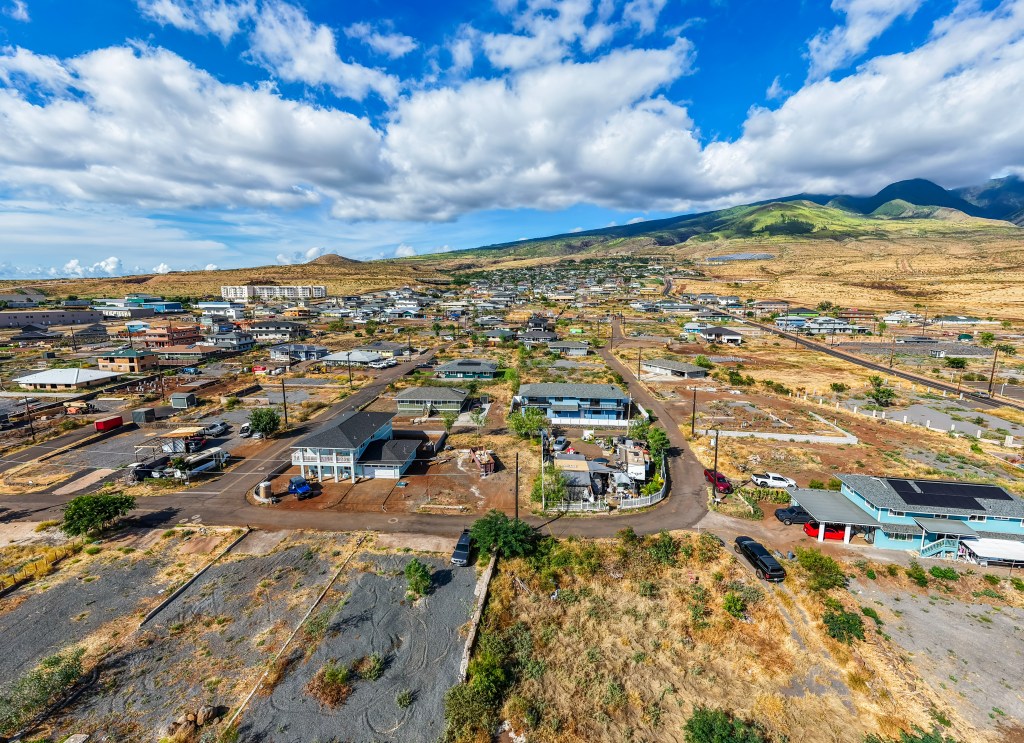
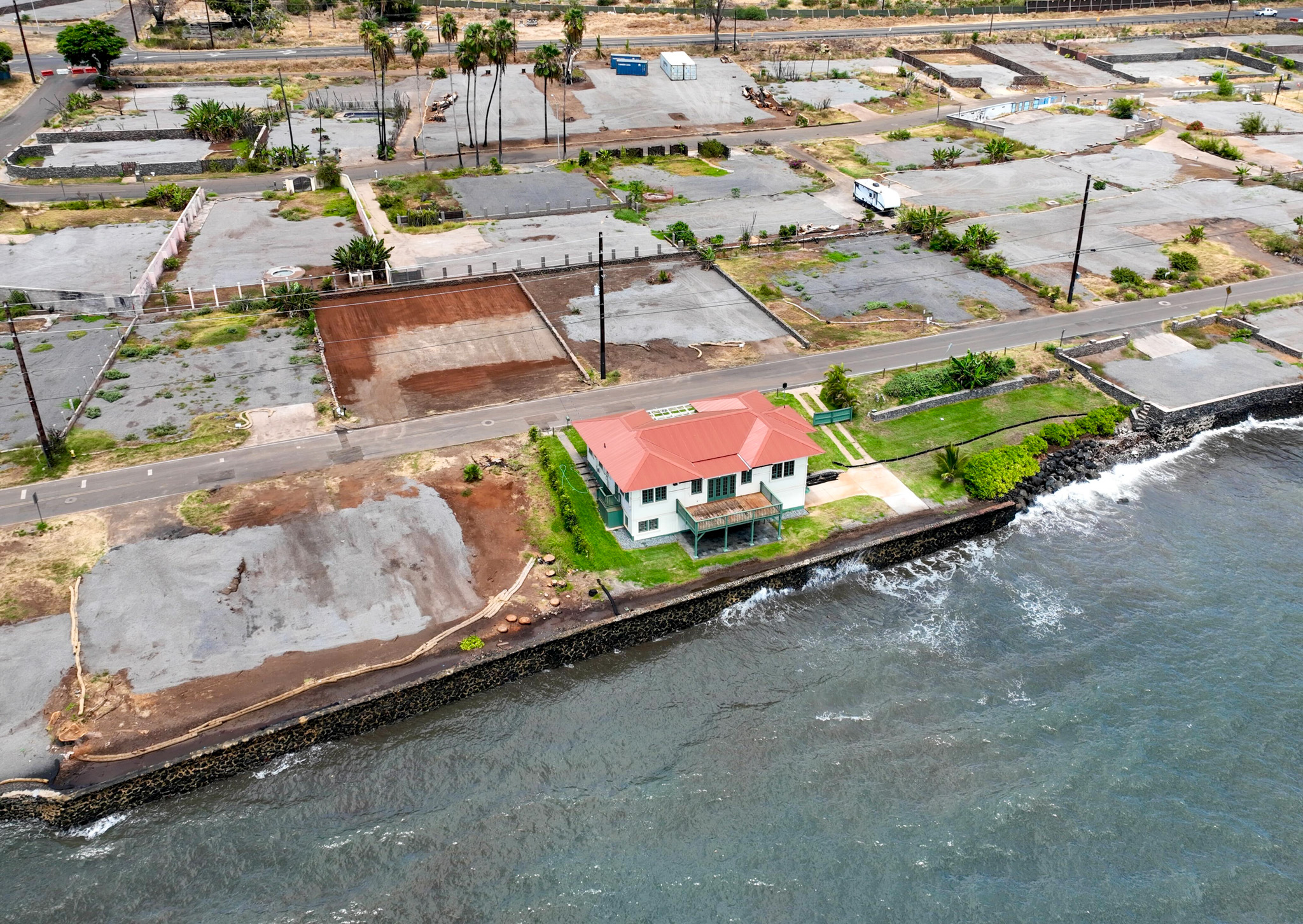
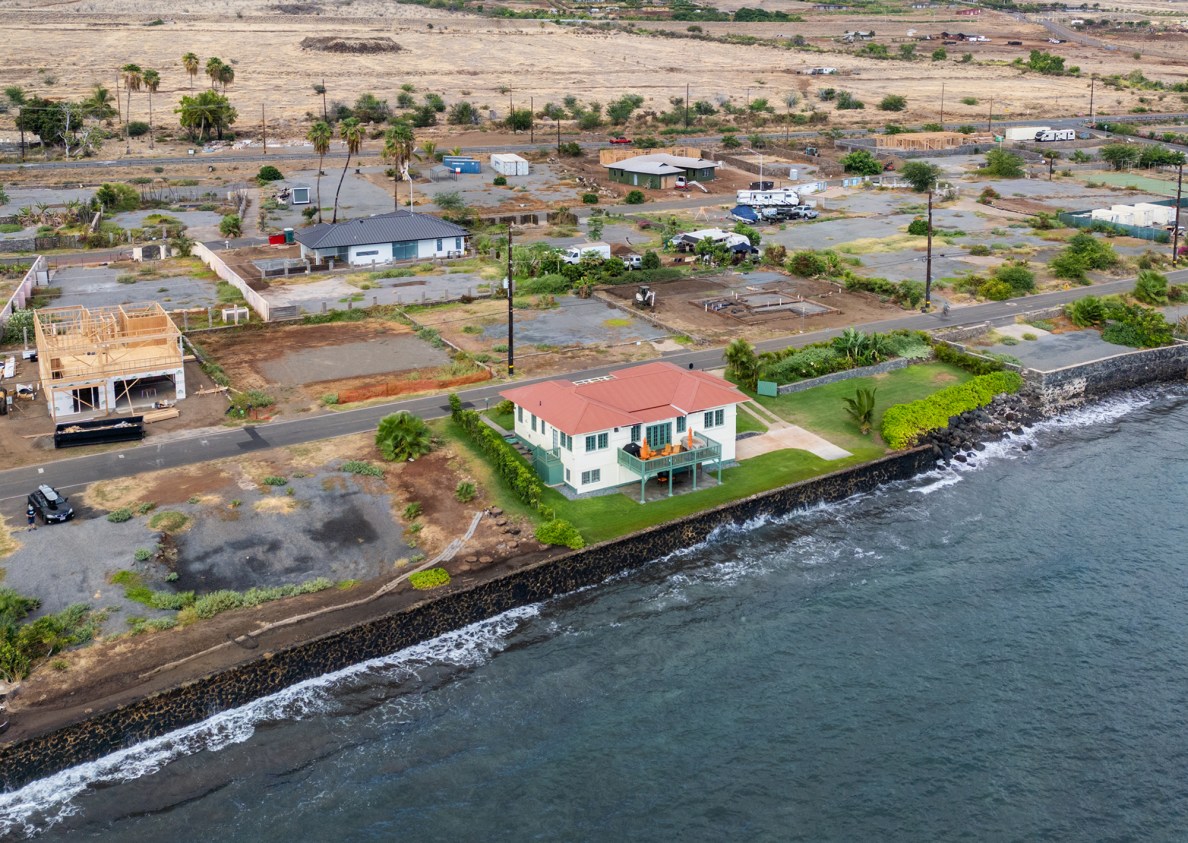
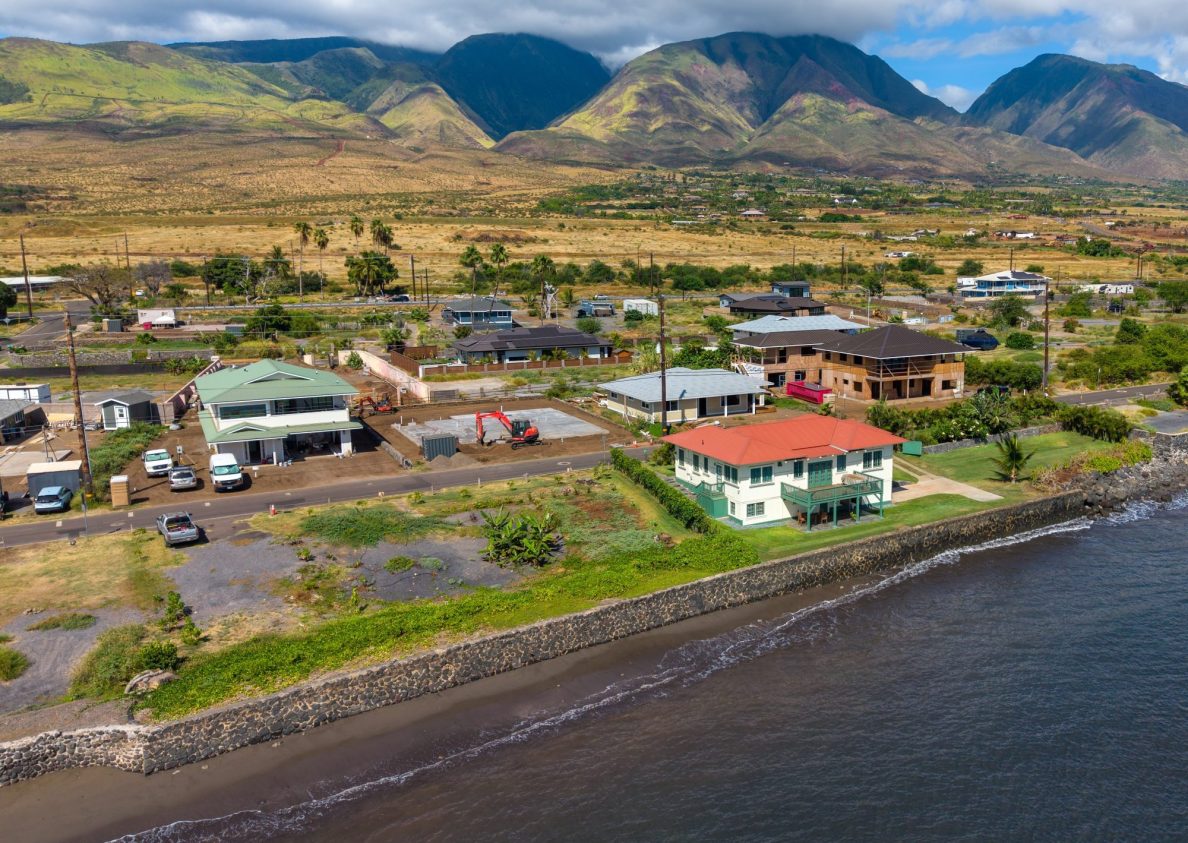
Hundreds of families have returned to the properties where they lived before the blaze. In parts of Wahikuli, Lahainaluna and other neighborhoods impacted by the disaster, there are stretches of streets now lined with rebuilt houses rather than empty gray lots. Some residents — those whose homes survived the fire, or who were among the first to finish rebuilding — have neighbors for the first time in years.
During the day, the sounds of rebuilding — the low rumble of heavy machinery, the steady buzz of power tools and the periodic bang, bang, bang of a hammer — can be heard across Lahaina.
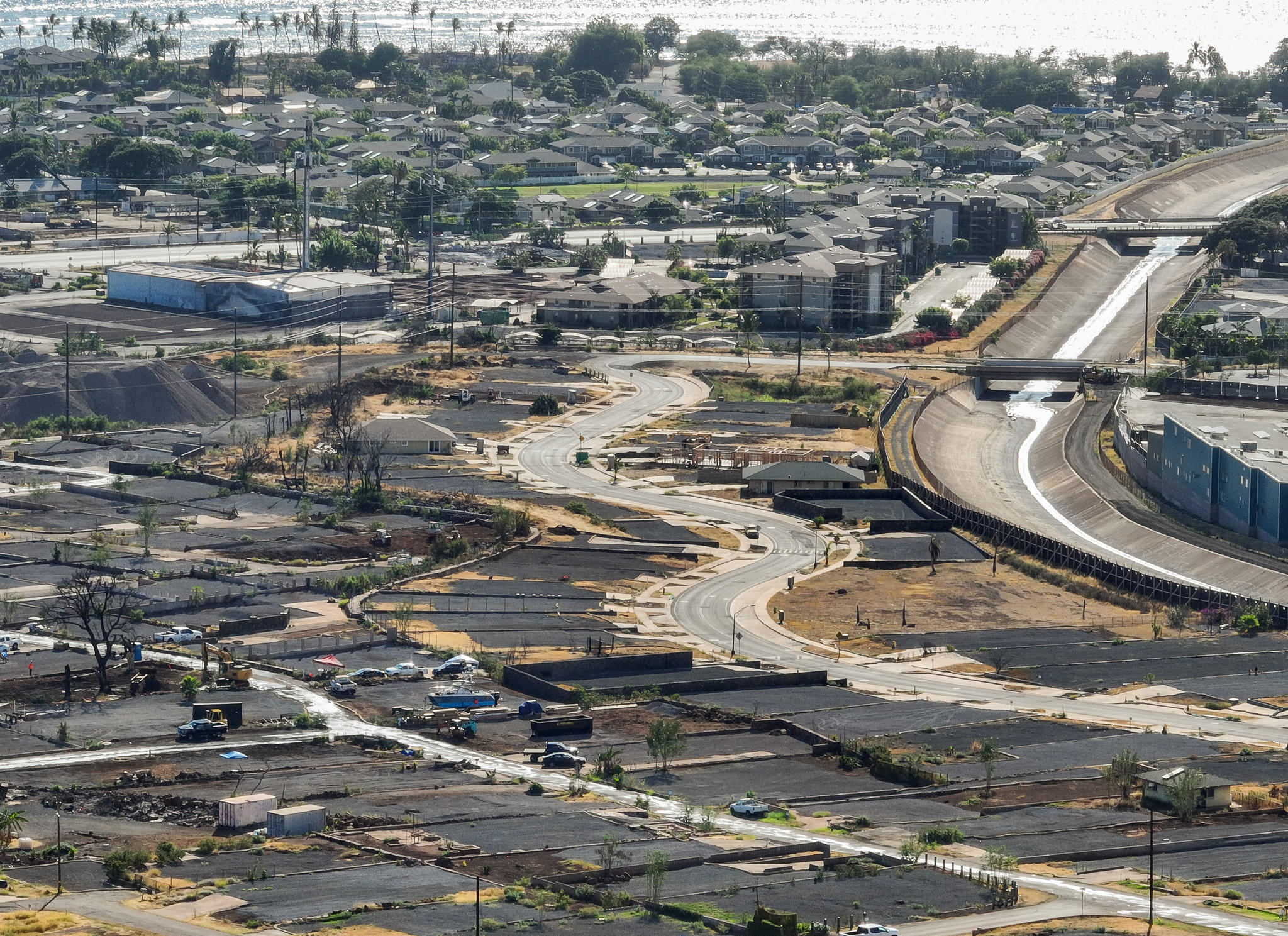
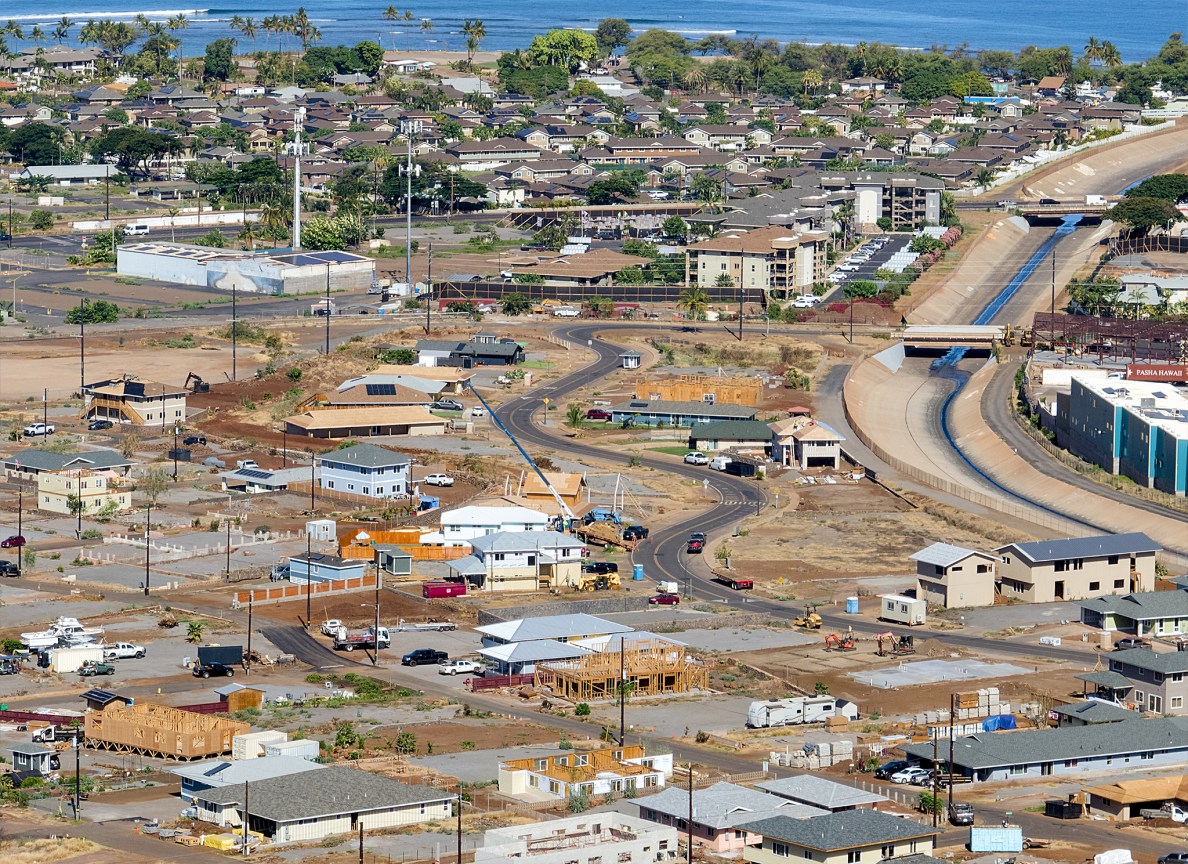
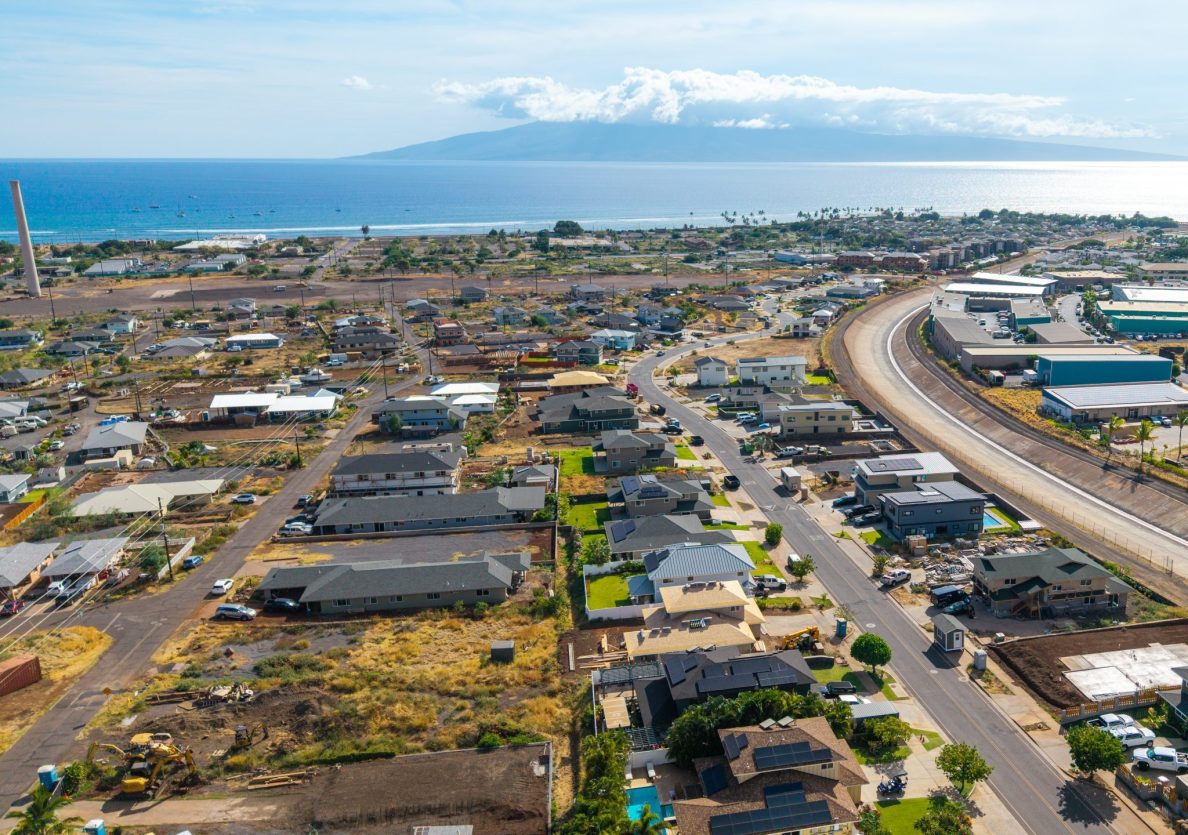
It is slowly becoming more common to see residents tending to their garden, jogging through the neighborhood or taking their dog for a post-dinner walk.
Still, hundreds of families are working their way through the permitting process, and many are unsure whether they will be able to cobble together the funds needed to rebuild. Some residents who once hoped to return to their pre-fire homes have given up, in some cases deciding to leave the island entirely.
Burkhalter said his family was finally approved for a permit and began rebuilding their home on the mauka side of Front Street earlier this year, but the process had been long and frustrating.
“They changed the rules for how they’re dealing with permitting probably four times, and maybe they have it finalized now … but it just seemed very arbitrary and not necessarily community-driven,” he said.
The permitting process for Burkhalter and other property owners was also delayed by bureaucracy and confusion around design guidelines for rebuilding projects in the Historic District, he added. Some property owners on the makai side of Front Street, including Burkhalter’s parents, had given up hope that they would ever return to their oceanfront homes because of the county’s strict rules for rebuilding projects along the shoreline.
“My dad will never get the opportunity to come back and live in his house,” Burkhalter said. “He was too old at the time of the fire, and it’s now no longer going to be viable for him. He is not alone.”
The U.S. Army Corps of Engineers finished clearing wildfire debris from nearly 1,400 residential properties in September 2024, and from about 150 commercial properties in February 2025. The owners of roughly 58% of those properties have finished rebuilding, been granted the permits needed to begin construction or have submitted a rebuilding permit application, according to Mayor Richard Bissen.
Restoring Historic Lahaina Town
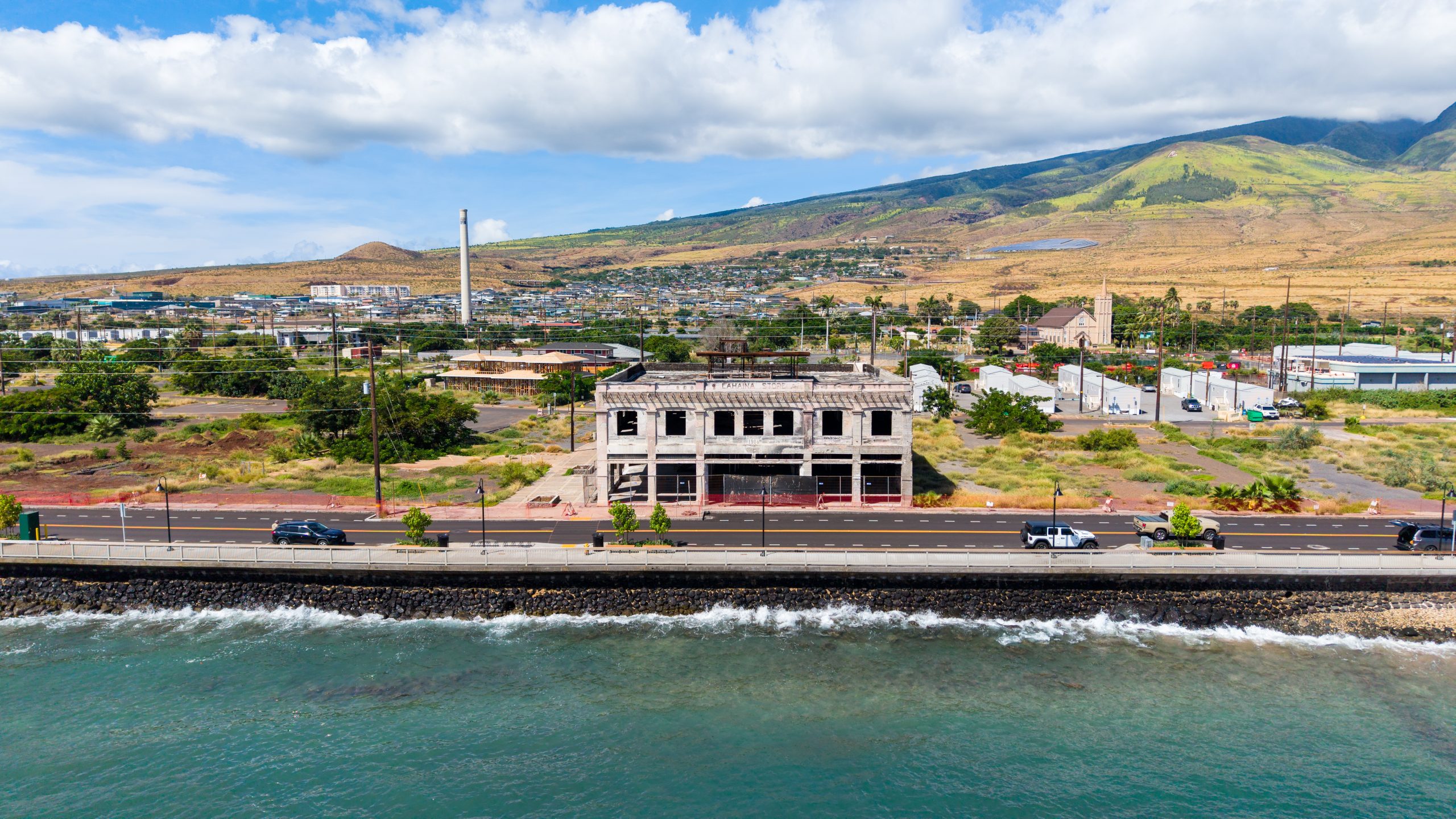
Residents and visitors have criticized the pace of rebuilding in Lahaina’s business district, where none of the businesses that were destroyed have been rebuilt. Front Street — once known for its historic plantation-era architecture, wooden storefronts, second-story balconies and local businesses — is still predominantly lined with graded gravel lots.
However, the past year saw some of the first visible signs of progress.
In December, certain areas along the waterfront and the town’s iconic banyan tree reopened to the public, and tour boats returned to Lahaina Harbor.
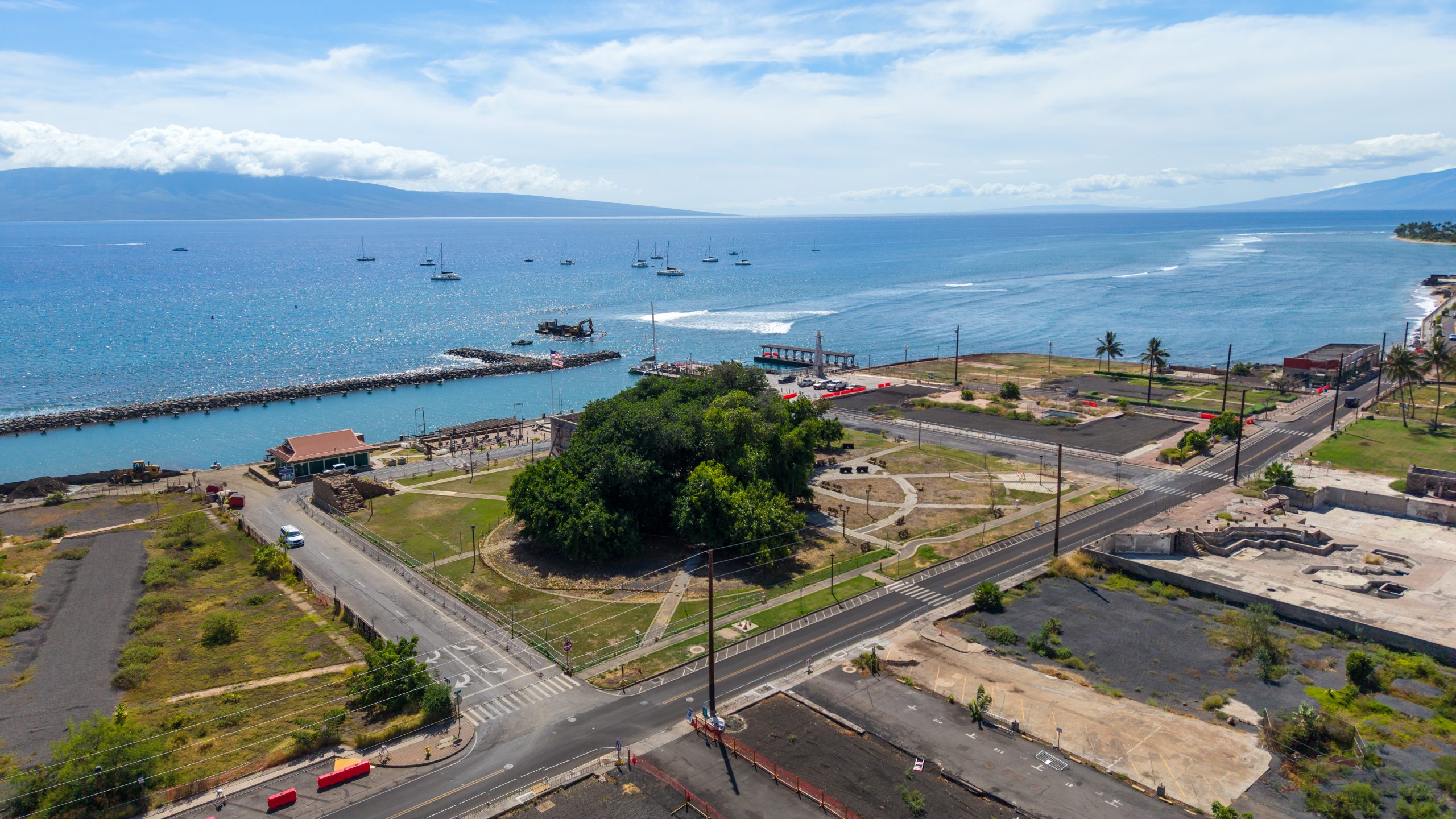
The neighborhood still bears many scars from the inferno. Melted street lamps, scorched concrete and the charred old courthouse remain. In July, thousands of people gathered in the area for “Lahaina Homecoming,” a three-day celebration honoring residents and businesses affected by the fire. The county, in collaboration with local hotels and Hawaiian and Alaska Airlines, flew in 107 Lahaina fire survivors from across the country, according to Daryl Fujiwara, the executive director of Festivals of Aloha.
“It’s all still very traumatic for a lot of them,” Fujiwara said. “This was really about reconnecting people to the place and reminding them about what is really important.”
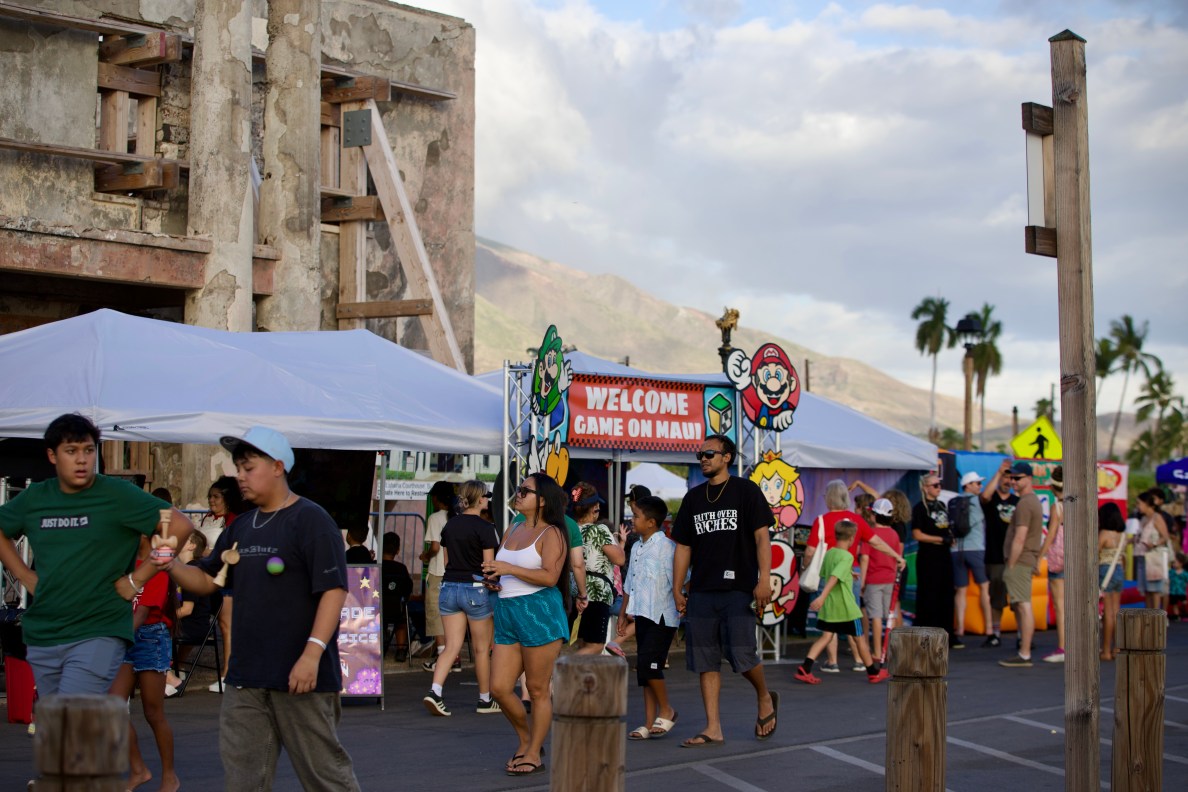
For the first time since the disaster, Front Street was filled with residents dancing to live music and eating dinner from local vendors. All around the banyan tree, there were tents and booths where people could play video games, throw axes and shop at small Maui-owned businesses.
“It was an opportunity for people to go at their own pace… for people to respond in whatever way they needed to,” Bissen said. “There are also all of the good memories that people have of Front Street and their childhood and attending Kamehameha III School and playing along the shoreline there.”
Fujiwara said it was an emotional event for many people.
“Because this is my town and I’m from there, born and raised there, it was really amazing to be there,” he said.
Just north of the marina, the seawall, sidewalk and railings were recently repaired along Front Street, and county workers installed new light poles, benches, bike racks and planters.
Last week, Front Street reopened to vehicle traffic between Pāpalaua and Shaw.

The strictly regulated process for approving rebuilding projects in Historic Lahaina Town has affected the rate of commercial recovery, but local officials said they were working to jumpstart the rebuilding of Lahaina’s economic center.
“From the very beginning, our main goal has been to get people home who want to return to Lahaina, and that has really been what our focus has been,” Bissen said. “But in the last year, there has also been a shift to the commercial properties that are also eager to return.”
Last month, county officials announced five commercial properties were the first to receive historical district approval, the last step before rebuilding permits can be granted, according to Maui Deputy Managing Director Erin Wade. Officials are in the process of reviewing applications for two more commercial properties, and about a dozen are in pre-application consultation. That accounts for roughly a third of the 36 mauka properties that make up the core of Front Street’s business district, she said.
The county is working with the State Historic Preservation Division to streamline the approval process by acknowledging that some permit application items that normally require an archaeological survey were fulfilled during the debris removal process, Wade said.
The first few commercial properties were hitting a few snags as they work their way through the permitting process, Wade acknowledged, but she remained optimistic.
“We’re going to catch some cracks on these first ones and figure out where we’ve got roadblocks,” she said. “We’re going to try to both communicate to the applicant what they need to anticipate, as well as fix some of the process internally to make sure we’re getting things through really smoothly.”
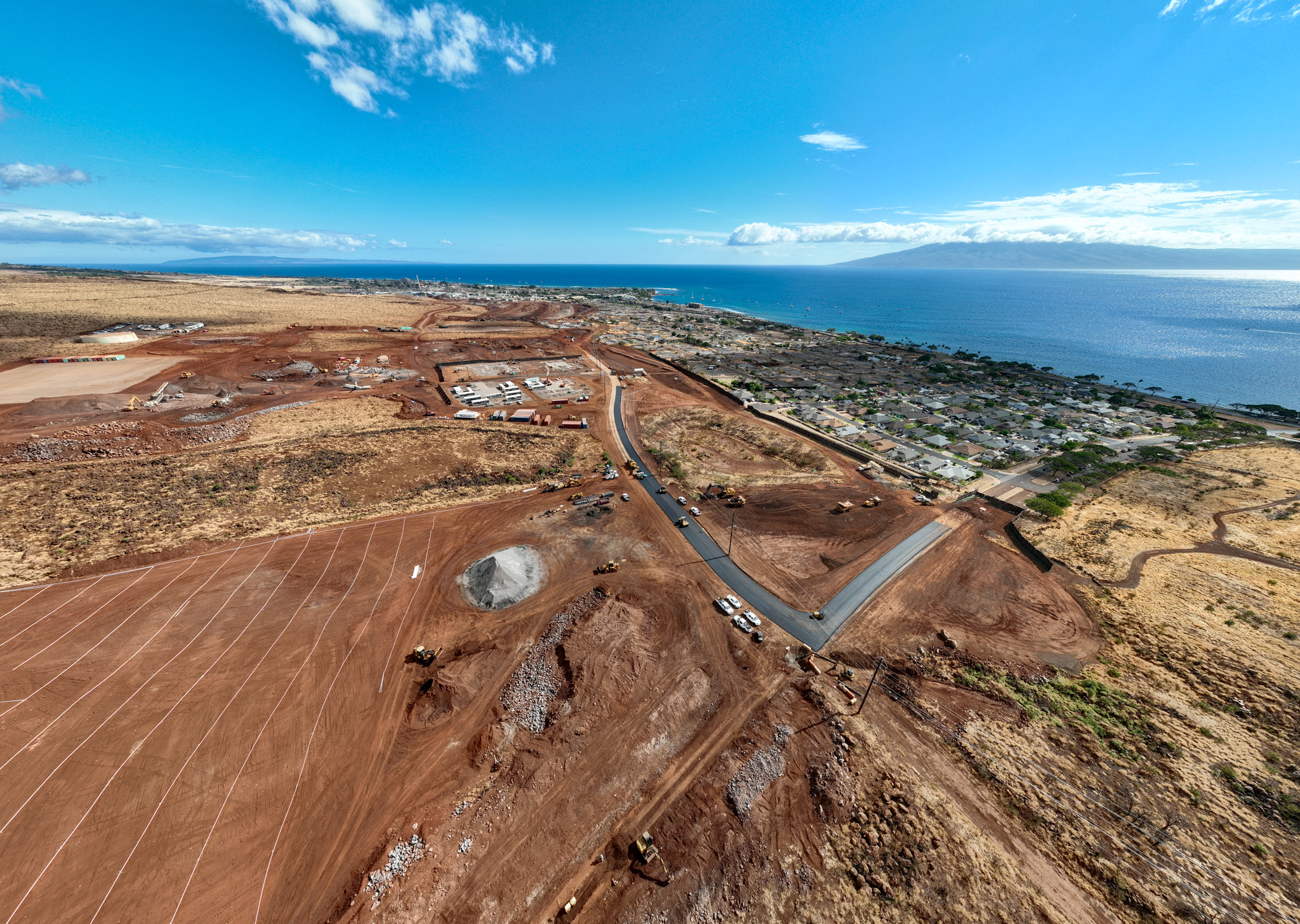
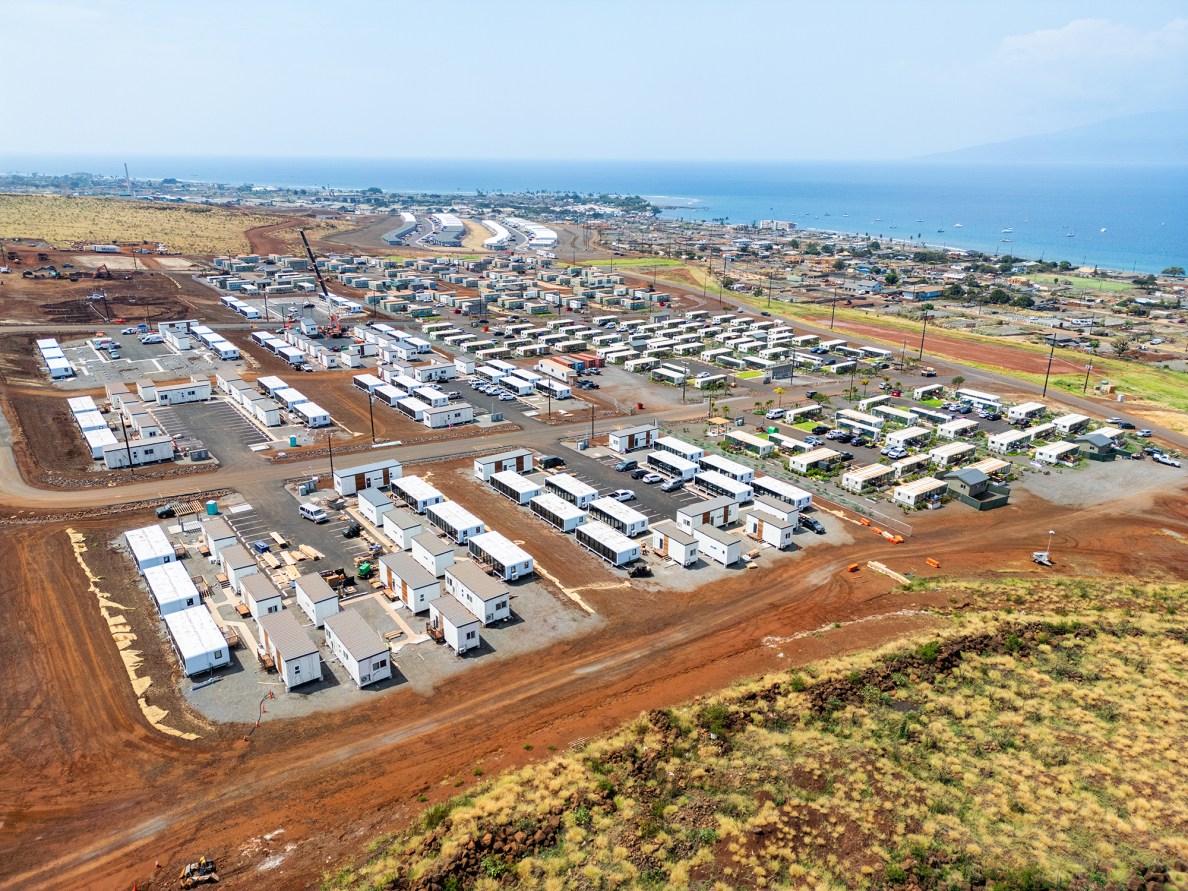
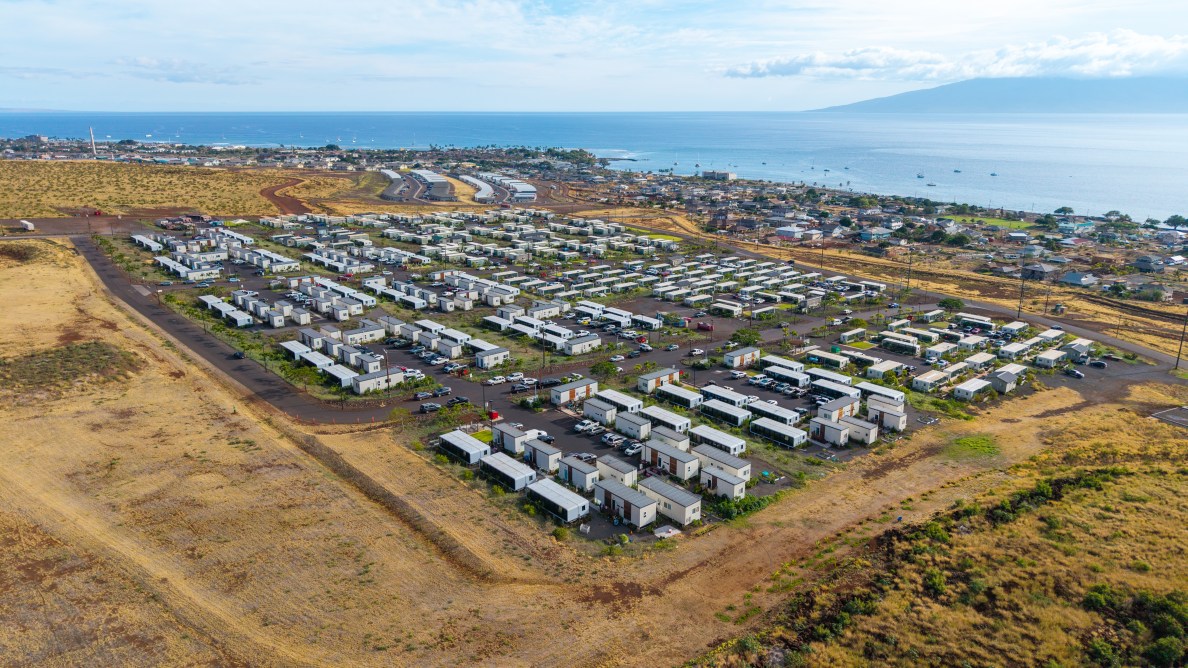
Officials recently announced plans to open a new community gathering space and interim marketplace, called ʻUlu o Lele, at the former Outlets of Maui site. The roughly $8 million marketplace, developed by the nonprofit Hawaiian Council, will have outdoor stalls that can hold 25 to 50 vendors, and it is expected to open as soon as September, according to officials.
The slew of county announcements related to Lahaina’s ongoing recovery preceded the three-year anniversary Saturday as well as the primary election that happens to fall on the same day. Bissen is seeking a second four-year term in a competitive race against Maui County Council member Yuki Lei Sugimura. The two are expected to advance to the November general election.
Regrowth Upcountry
In Upcountry Maui, where more than two dozen homes were destroyed by a wildfire that burned through hundreds of acres, five homes have been completely rebuilt. Permits have been issued for another 11 residential properties, according to data provided by a county spokesperson.
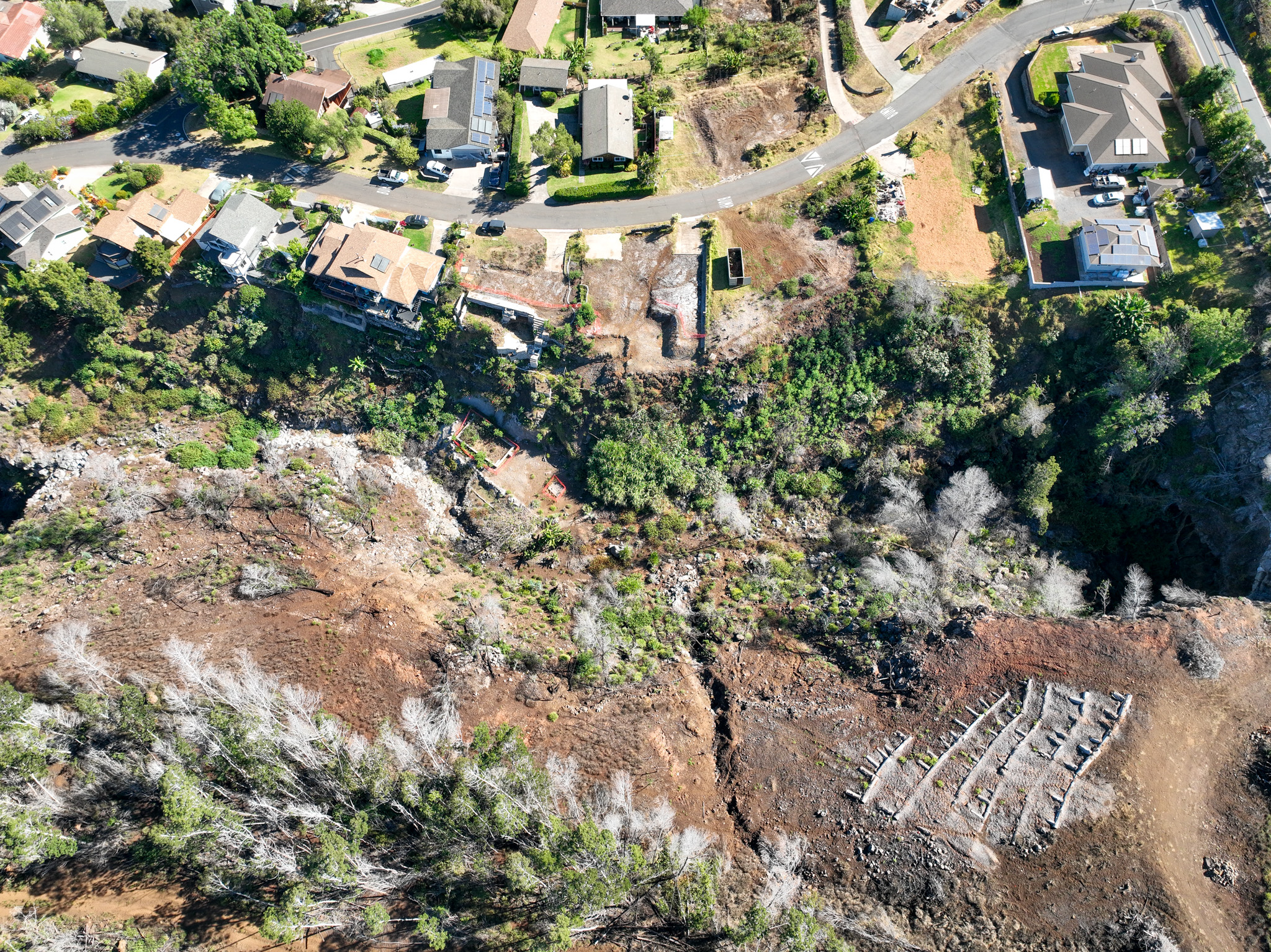
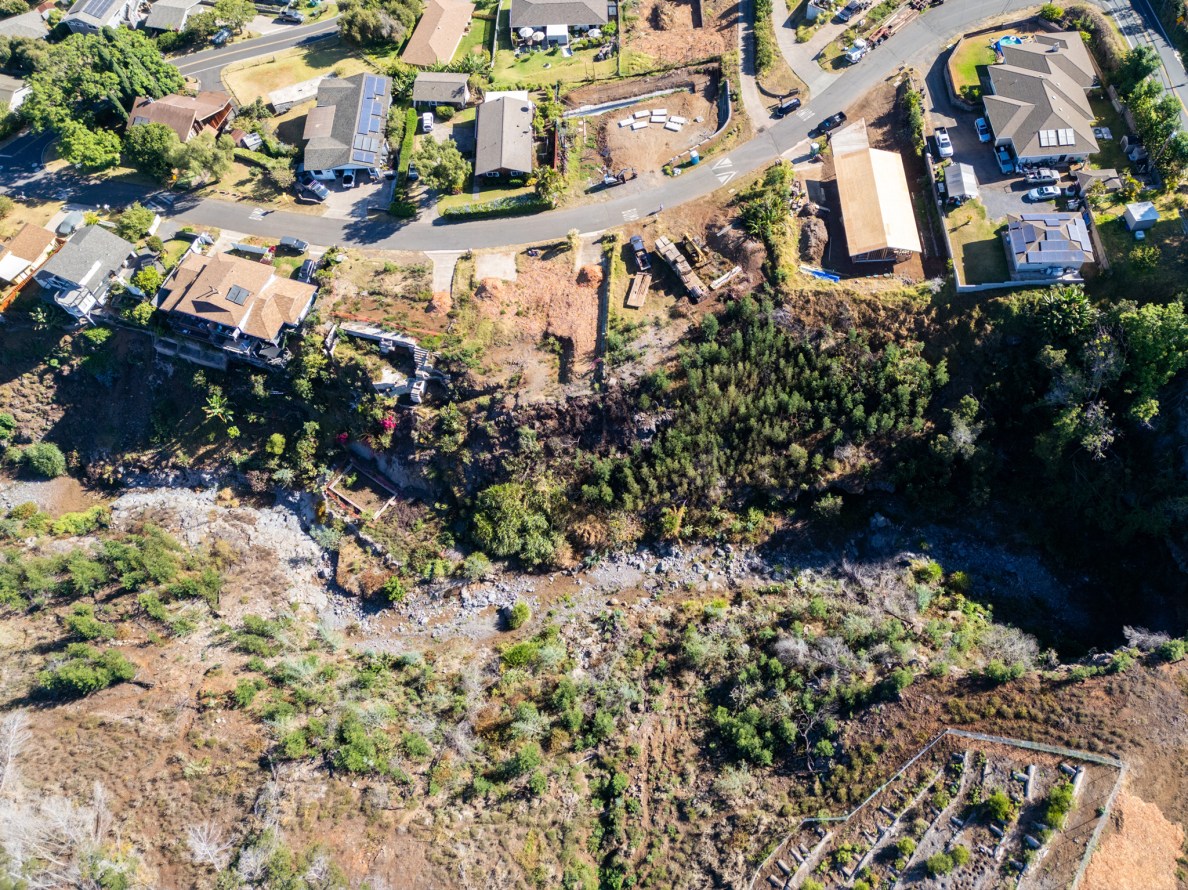
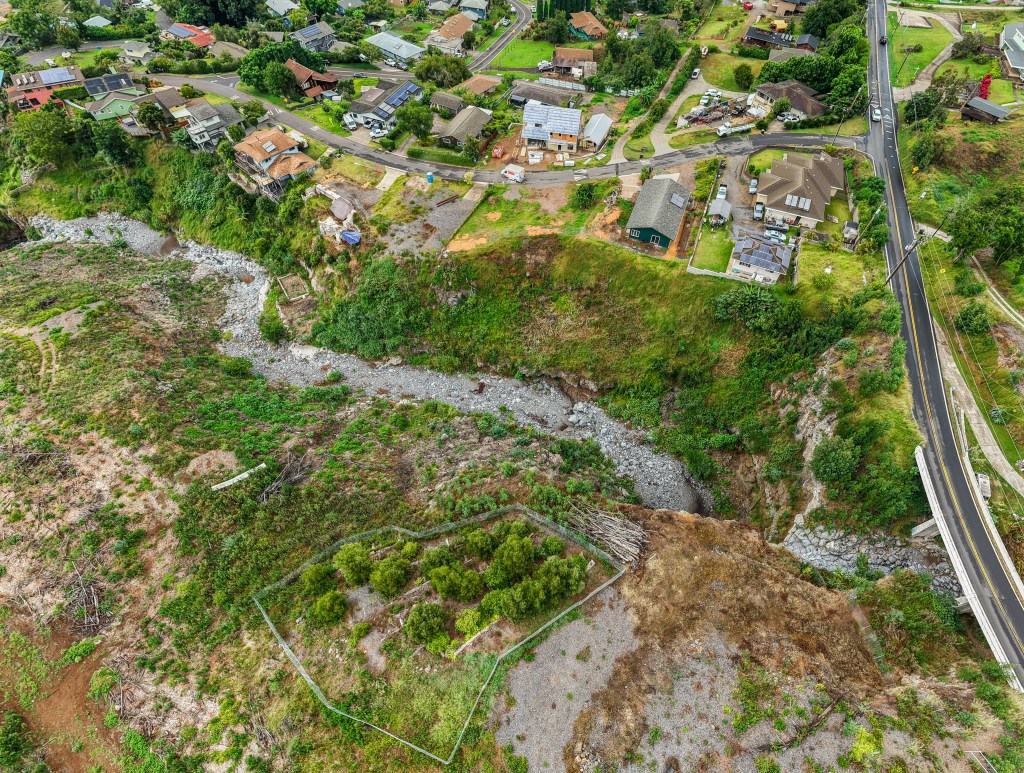
Since the inferno, residents and visitors from other islands and across the country have spent countless hours rehabilitating the landscape. Using heavy machinery, chainsaws, shovels and even their bare hands, the volunteers have removed thousands of highly flammable black wattle trees and other invasive species, and local nonprofit leaders have been working to replace them with native plants.
A Revamped Emergency Response
Maui County’s emergency response system has been revamped since the fires, according to local officials. The Maui Emergency Management Agency staff has nearly tripled — from nine to 25 — over the last three years, and it was recently approved to make six additional hires, according to the agency’s administrator, Amos Lonokailua-Hewett.
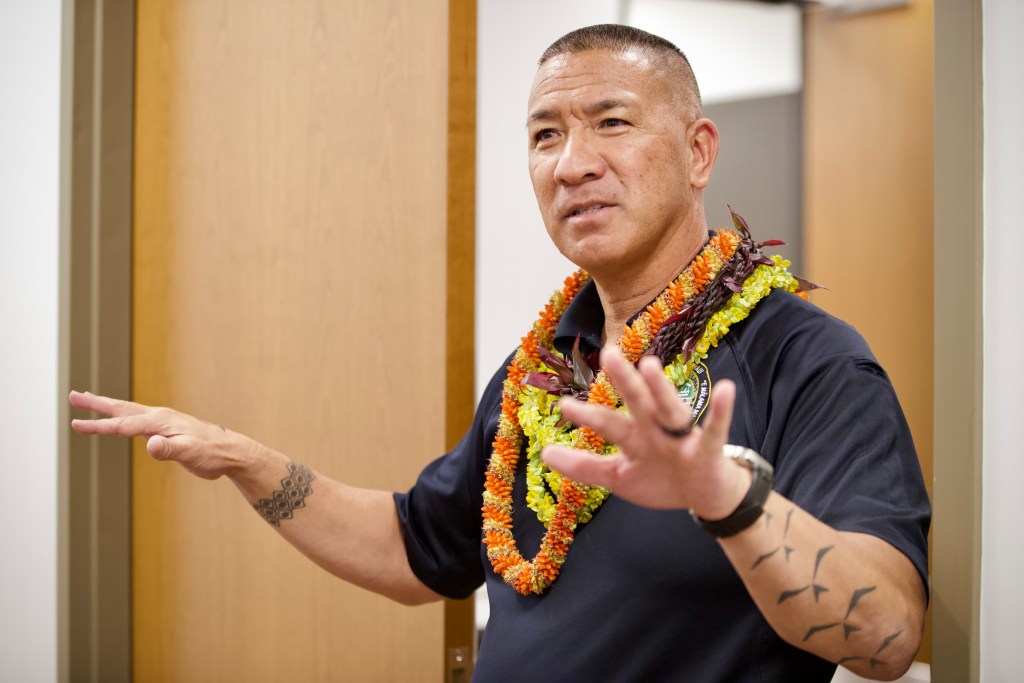

Lonokailua-Hewett and other MEMA staff joined Bissen late last month to unveil the county’s new $24 million emergency operations center in Wailuku.
Bissen described the 9,355-square-foot emergency operations hub as the most advanced in the state, and he said it would dramatically improve the county’s situational awareness before, during and after an emergency like a wildfire or flood.

The space can accommodate up to 198 people during emergency operations, which is nearly four times the capacity of the current center.
“You’ll also notice a lot more breathing room,” Bissen told reporters, comparing the new hub to the decades-old command center in the basement of the county office building. “The magnitude of change is so tangible and so visible.”