Jeta: A Korean American Rapper Has Something To Say About Race
Dumbfoundead’s memoir examines how Asian Americans are often ignored in discussions about race. Hawaiʻi brings a different perspective.
September 29, 2026 · 9 min read

About the Author
It is hardly a revelation that Asian Americans are left out of the race conversation. Even amid the rise of woke culture, national debates over racial inequality have largely been framed through a Black-white lens.
In 2016, Jonnie Park, known by his rapper name Dumbfoundead, watched the 88th Academy Awards with growing fury. For the second year in a row, all acting nominees were white. Host Chris Rock addressed the #OscarsSoWhite controversy by dubbing the ceremony the “White People’s Choice Awards.”
The woke crowd rejoiced. Stephen King later called Rock’s delivery “terrific.”
But the activism took a turn when Rock brought three Asian kids onstage as the accountants who tallied the Oscar votes. Later, Sacha Baron Cohen joked about the lack of recognition for the “hard-working little yellow people with tiny dongs.” The Minions, he clarified.
#OscarsSoWhite was clearly not for Asians.
In response, Park wrote “Safe” and starred in a music video superimposing his face onto white actors in popular films, protesting Hollywood’s whitewashing. The video went viral, bringing an Asian-American perspective to a race conversation that the mainstream media has historically ignored.
“Safe” was just another moment in Park’s advocacy highlight reel.
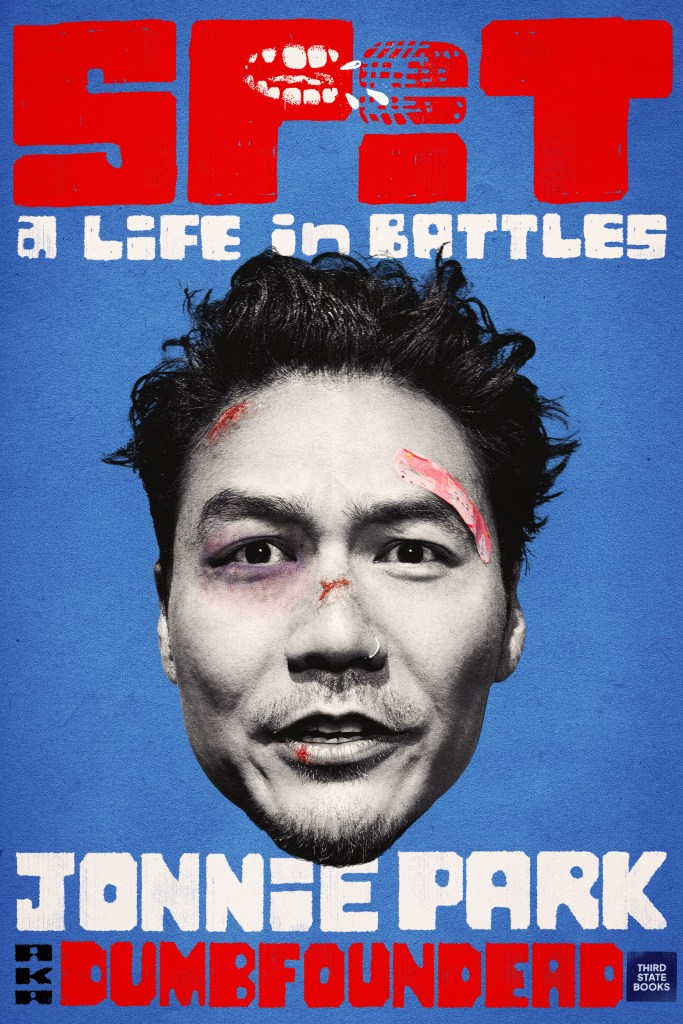
Park has a new memoir, “SPIT: A Life in Battles,” that he will be discussing next week at a Honolulu book event. In it, he takes us back to the beginning. Growing up in Los Angeles’ Koreatown with Korean immigrant parents, Park found respite in battle rap from a home life he says was riddled with poverty, domestic violence and substance abuse.
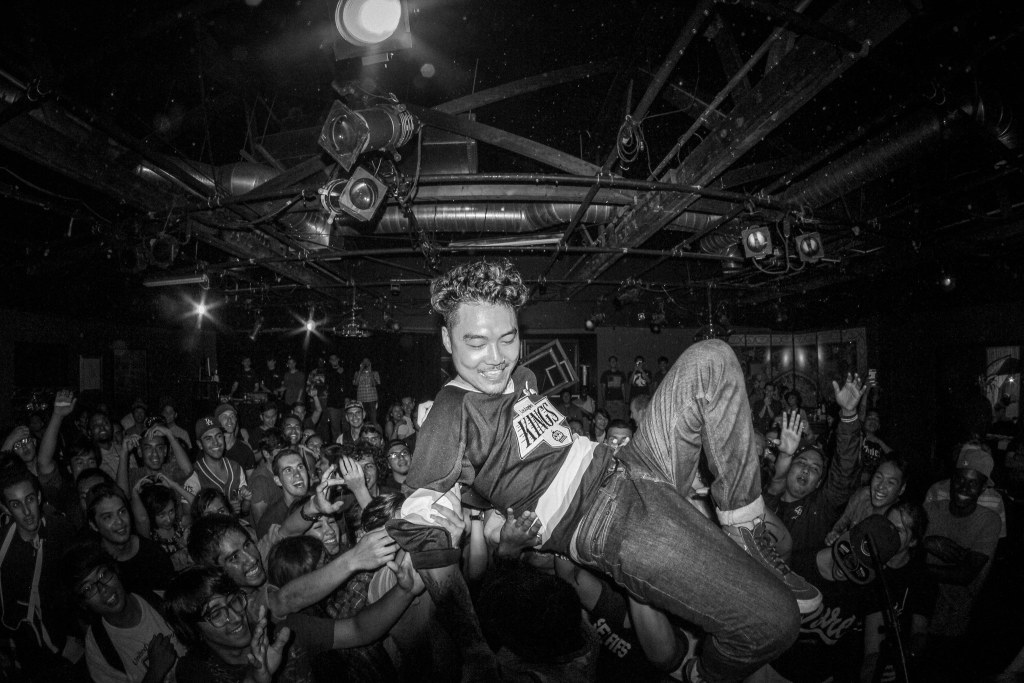
As Dumbfoundead, he took stereotypes hurled at him in rap battles and clapped back with deftly improvised rhymes. His success meant more than international recognition: Park became a hip-hop icon for Asian Americans. He represented us.
But who is “us”?
Racial groups are never a monolith. In Hawaiʻi, the race conversation unfolds differently from the mainland. Here, Asians are not the minority, and belonging is measured by more than race.
Park’s story is only one version of the Asian American experience; Hawaiʻi has another to share.
The Local Rules
The term “Asian American” has never fully taken hold in Hawaiʻi. Before it was coined in 1968, the islands had already developed a collective panethnic identity: local, as opposed to non-local.
Professor emeritus Jonathan Okamura describes the identity as rooted in “an appreciation of and attachment to Hawaiʻi’s land, peoples and cultures.” In practice, being local is less about race than a shared connection to place, culture and community. Local identity also draws a line between “us” and “them.”
Asians are Hawaiʻi’s largest racial group, comprising 36.7% of the population, according to 2025 Census estimates. These communities include descendants of Chinese, Japanese, Okinawan, Korean and Filipino laborers who arrived to work on plantations from the 1850s through the early 1900s.
These workers found common cause under a system dominated by haole plantation owners. Workers speaking different languages spawned Hawaiʻi Pidgin so they could work together. Speaking it today is synonymous with being local. The plate lunch carries that history, too.

Ideas showcases stories, opinion and analysis about Hawaiʻi, from the state’s sharpest thinkers, to stretch our collective thinking about a problem or an issue. Email news@civilbeat.org to submit an idea or an essay.
As Hawaiʻi became dependent on tourism, it strengthened the local identity forged during the plantation era. Many locals continue to work low-paid, low-security service jobs that fuel the industry while outside businesses profit.
That shared identity remains a source of solidarity against those who control Hawaiʻi’s economy.
‘Reverse Racism’ In Paradise
The concept of “haole” may be as foreign to mainlanders as “Asian American” is to locals. The term predates the plantation era, though its meaning shifted from “outsider” to “white outsider.” Some of the more fragile haoles have compared it to the N-word for white people.
One can be a “local haole,” but even those born and raised in Hawaiʻi who embrace local culture can still be treated as outsiders, a tension left over from Hawaiʻi’s colonial past. It is an irony Asian Americans on the mainland may recognize: being born in a place and still being told to “go back home.”

Even the lunchbox tells a different story.
In his memoir, Park describes an almost obligatory experience for Koreans in predominantly white spaces: being bullied over a “stinky” kimchi lunch.
He says he cannot claim that trauma because his parents never packed his lunch. The reference also has little resonance in Hawaiʻi, where kimchi is literally part of local cuisine.
Park writes, “When I defended myself against the tired insults (other Asians) probably heard their entire lives, it was as if I were defending not just myself, but all of them.”
Stereotypes about Asians as “bad drivers” or “pet eaters” do not exactly land in Hawaiʻi, where Asians occupy a culturally dominant position. His rap verses, then, would not necessarily speak to locals in the same way.
Across The Pacific
Regardless of place, immigrant stories tend to follow a similar beat.
While Park grew up in K-Town, artist Lauren Hana Chai was raised by her Korean immigrant grandparents on Oʻahu. Separated by the Pacific, both families found footing in Korean communities thousands of miles apart.

Park alludes to the patriarchal dynamics of Korean society, which Chai saw reflected in her own family’s ties to Old Korea.
Chai shares that her grandparents’ marriage was arranged after her grandfather’s mother died, leaving five children in need of a caregiver. Her grandmother has spent much of her life in that role, oppressed as a “kitchen slave.”
Neither Chai’s grandparents nor Park’s parents speak English, even after decades in the country. Chai and Park grew up speaking Korean at home.
Now a mother, Chai is teaching her son Korean. Her paintings often feature imagery from her Korean heritage, bridging her East and West identities.
Park, too, holds on to both sides of his upbringing, turning his Korean American identity into a superpower.
The Commodification Of Culture
“The ability to tap into both cultures gives you an advantage,” Park writes. “Rather than focusing on how you’re not accepted, you can carve out a unique lane.”
Park is a gyopo, a person of Korean descent who grew up overseas. The Korean music industry has caught on to the appeal of that dual identity. Many major K-pop groups feature a gyopo member who brings the edginess, swagger and a good dose of American individuality.
This commodification of Korean American identity happens quietly behind the scenes, while Korean culture itself has become a global product. That packaging follows a history of cultural suppression.
In 1896, the Republic of Hawaiʻi mandated English as the language of instruction in schools, pushing ʻōlelo Hawaiʻi out of classrooms.
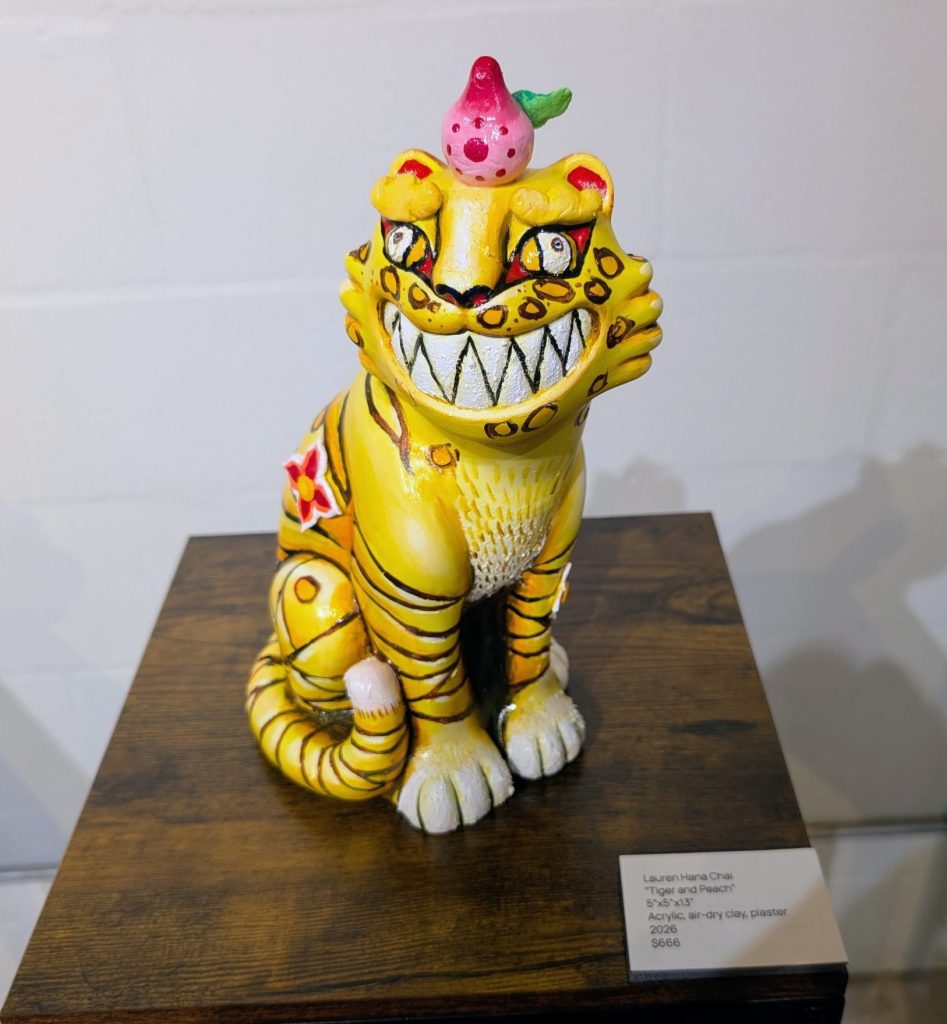
Chai sees the parallel. “I always find ties between Hawaiʻi and Korea,” she says. “When Japan colonized Korea, they wouldn’t let the people speak Korean and forced everyone to learn Japanese. They slaughtered Korean mountain tigers to near extinction, crushing the Korean identity and soul.”
First, these cultures fought to survive. Then, they became valuable enough to sell. Hawaiʻi knows what happens when culture becomes an industry.
K-Town Glory
“No one expected Korea as a small country to explode and become one of the fastest developing countries in the world,” Park shared on a call with me.
I asked how his K-Town community, the largest in the United States, has evolved since his childhood.
What was once primarily a refuge for Korean immigrants has become a tourist destination. But that transformation has not automatically displaced the community.
Park explained that even corporations can struggle to compete with Korean businesses: “There was a Sweetgreen that opened up six months ago. They shut down because no one was going to it. People come to Koreatown for Korean culture.”
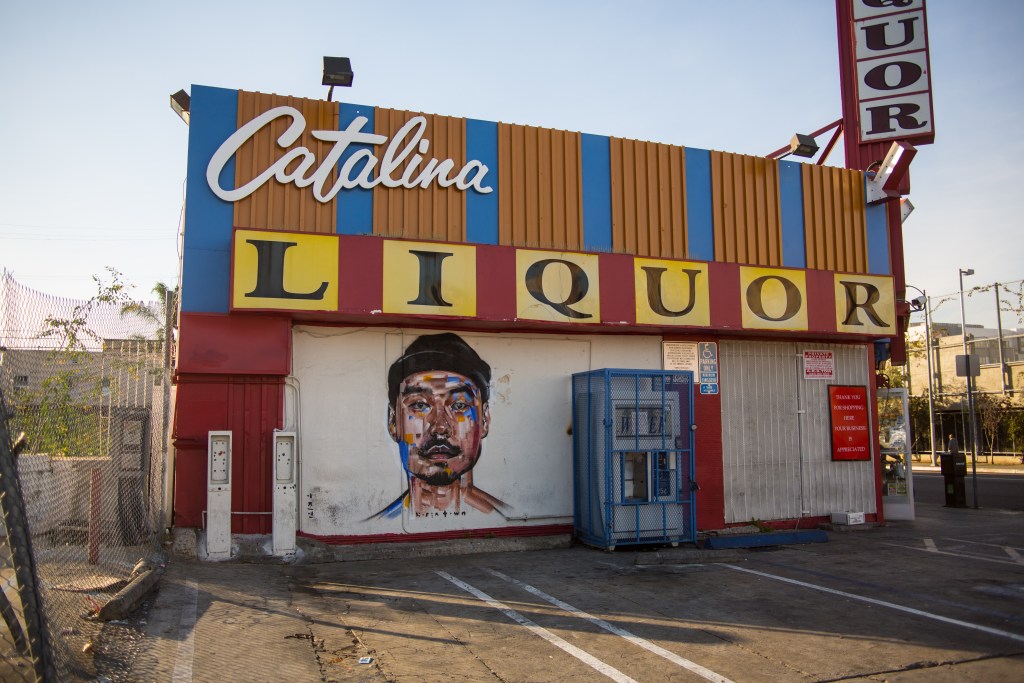
During BTS’s four-day run at SoFi Stadium last month, the BTS ARMY swarmed K-Town. According to Park, most were not Korean, or even Asian. One restaurant advertised itself as “Jung Kook’s favorite KBBQ restaurant” to capitalize on K-pop tourists.
Park warned that cultural commodification can flatten heritage into a shallow performance for outsiders. K-Town has its own identity, history and vibe, distinct from South Korea. When that culture is reduced to the polished image exported through K-pop, the stories of the immigrants who built the neighborhood risk being overwritten.
“Because of K-pop, people think all Korean men are pretty boys with colored hair,” Park said. “My role in the music industry now is to show we’re not a monolith. There could be rough edges and tattoos, too.”
For Park, that flattening also threatens Korean American identity. “There are differences between Korean-Korean and Korean-American. A lot of stuff that’s getting popular in America is really from Korea. ‘Squid Game,’ ‘Parasite,’ K-pop … it’s all imported.”
A Korean American Lens
Park put his life on the page to immortalize his battle rap career, capture a moment in Asian American history and, above all, tell his Korean American diaspora story.
On Saturday, Oct. 3, local fans can hear it firsthand. Park will be at Capitol Modern for a talk story and book signing, moderated by co-author and editor Donnie Kwak. The free event is open to the public with registration on the MORI by Art+Flea website.
Together, Park’s story and Hawaiʻi’s local identity demonstrate that there is no single story of the Asian American experience. And ultimately, what makes it collective is solidarity.
 Sign up for our FREE morning newsletter and face each day more informed.
Read this next:

Local reporting when you need it most
Support timely, accurate, independent journalism.
Honolulu Civil Beat is a nonprofit organization, and your donation helps us produce local reporting that serves all of Hawaii.
ContributeAbout the Author