

This Hawaiian Man Became The Face Of An Anti-Homelands Campaign
David Kalahiki and a neighbor turned to the Pacific Legal Foundation to stay in their homes. Now they are the face of a broader push by conservatives to upend programs serving Native Hawaiians.
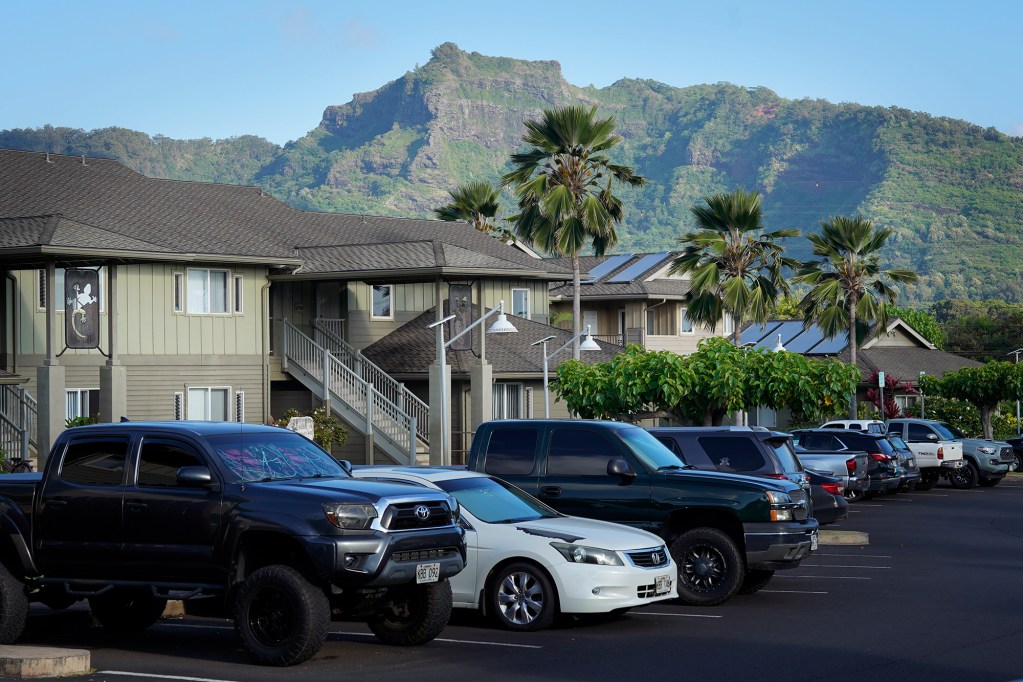
After David Kalahiki’s house burned down on Kauaʻi in the spring of 2024, the 68-year-old moved into a modest apartment in the Courtyards at Waipouli in Kapaʻa. The caregiver and his wife thought it would be a temporary stop while they figured out how to rebuild.
Instead, it became their next crisis.
The Department of Hawaiian Home Lands had purchased the 82-unit housing complex for $44 million in October 2025 as part of a plan to provide rent-to-own apartments to beneficiaries who can prove they are at least 50% Native Hawaiian by blood quantum. For Kalahiki, who is only a quarter Hawaiian, it meant he would have to go.
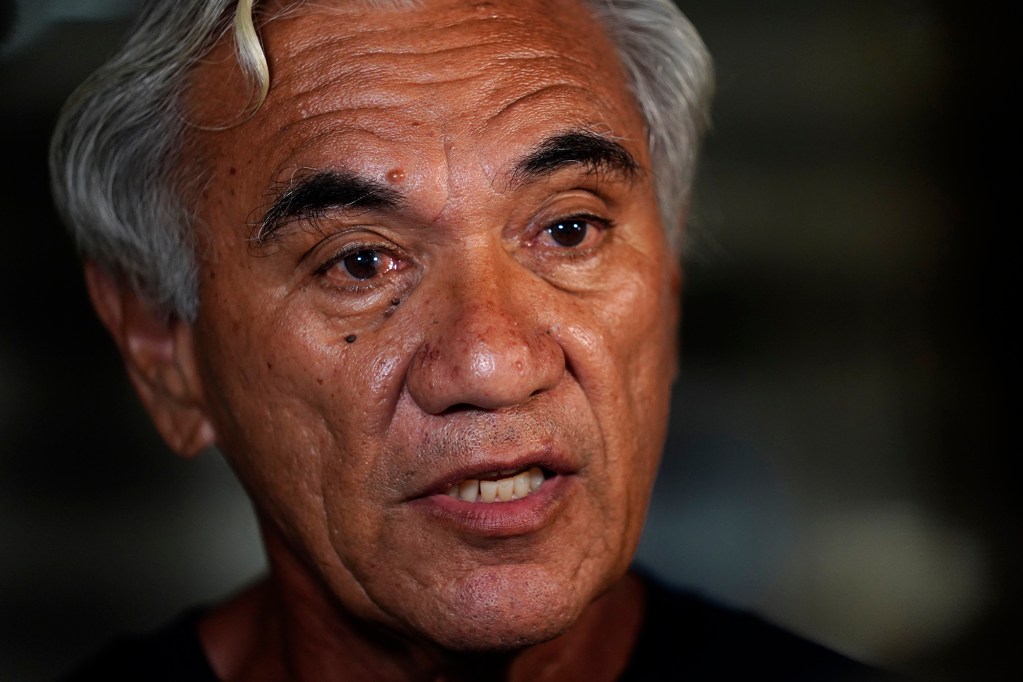
“I felt offended because I’m part Hawaiian and Hawaiian Home Lands is kicking me out,” Kalahiki said while sitting on donated furniture inside his cramped apartment. “It’s not our fault we don’t have enough housing here.”
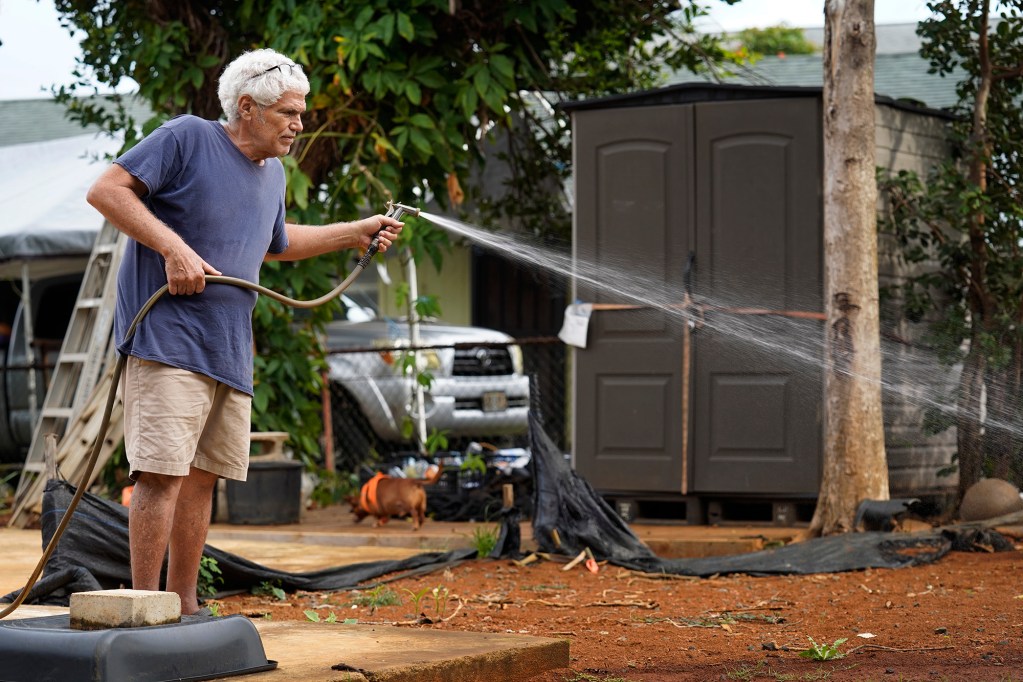
Kalahiki teamed up with another resident, Linda Twitchell, a 68-year-old artist and former software engineer who was also facing eviction in one of the country’s most expensive housing markets. Desperate to avoid homelessness, Kalahiki and Twitchell, who is white, turned to the California-based Pacific Legal Foundation, a right-leaning law firm that agreed to represent them for free.
Since then they’ve become public faces in a national campaign targeting one of the country’s core Native Hawaiian programs. Though they welcome help with their individual predicaments, both say they are uncomfortable being seen as flag bearers for a larger political movement.
For its part, the Pacific Legal Foundation filed a lawsuit in July seeking to block Kalahiki and Twitchell’s evictions, arguing that it’s unconstitutional to remove someone from their home based on ancestry alone.
But while the firm’s attorneys have portrayed the suit as a narrow challenge framed around eviction and bloodlines, they’re also pursuing a companion case, filed in June, that aims to upend the homestead program altogether by abolishing its Native Hawaiian blood quantum requirements. If successful, that lawsuit would open up leases to any Hawaiʻi resident regardless of ancestry, including white people and other non-Hawaiians.
Together, the foundation’s lawsuits mark the latest escalation in the ongoing campaign by conservative and libertarian groups to undermine and dismantle programs and institutions that serve Native Hawaiians.
These groups argue the programs are race-based and violate the rights of people who are not given preferential treatment. Opponents say the Pacific Legal Foundation and similar groups are waging a thinly veiled assault on many programs that promote diversity, equity and inclusion, failing to recognize that Native Hawaiians belong to a unique political class of Indigenous people with a special trust relationship with the U.S. — similar to Native American tribes.
When asked whether they were comfortable with their lawsuit being brought alongside others that challenge the status of Native Hawaiians amid a political environment that is more hostile to Native rights, Kalahiki and Twitchell, who sat beside him in his apartment, were cut off by their lawyer, Noelle Daniel, who was listening in on speakerphone.
“I am going to ask that they don’t comment on these political issues,” Daniel said, “because it is not relevant to them as plaintiffs in this lawsuit.”
Seizing On Anti-DEI Sentiment
The Pacific Legal Foundation, formed in 1973, describes itself as a public interest law firm focused on individual liberties, property rights and limited government. A core tenet of the organization is that the Constitution should be colorblind, and the nonprofit has spent decades litigating cases targeting racial preferences in school admissions, public contracting and employment.
Recently, the firm has expanded its scope of practice, emboldened by President Donald Trump’s two terms in office and the conservative majority he’s imprinted on the Supreme Court, which has given the foundation more clout than ever before.
Since Trump’s election in 2016, Pacific Legal Foundation’s annual revenues have increased nearly threefold from $10 million a year to more than $31 million in fiscal year 2025. While it doesn’t disclose its donors, tax filings from other organizations show a mix of contributions from groups that have a long history of supporting conservative and libertarian causes, including the Charles Koch and Sarah Scaife foundations.
“Distinctions between citizens solely because of their ancestry are by their nature odious to a free people.”
Larry Salzman, Pacific Legal Foundation
In Hawaiʻi, the foundation has been involved in at least 35 cases and has represented a wide range of plaintiffs, including an elderly woman who was fined $600,000 by the City and County of Honolulu for violating its prohibition on short-term rentals, a rum distiller who said the federal Jones Act was hurting his business and, most recently, a Tennessee therapy patient who argues she should be allowed to swim closer to the islands’ dolphins.
But it’s the recent challenges to DHHL and the Hawaiian Homes Commission Act that have garnered the most attention.
The U.S. Congress created the homestead program more than a century ago at the urging of Prince Jonah Kūhiō Kalanianaʻole, a member of the royal family and Hawaiʻi’s delegate to the House of Representatives, as a way to provide reparations to a “landless and dying” people whose kingdom was overthrown by American businessmen. It set aside 200,000 acres for Native Hawaiians, land that today is held in trust by DHHL.
When the Pacific Legal Foundation, representing a white conservative blogger, filed its June lawsuit challenging the constitutionality of the law’s 50% blood quantum requirement, it drew a swift rebuke from political leaders, including Hawaiʻi Gov. Josh Green who said he directed his attorney general to “vigorously defend” the program.
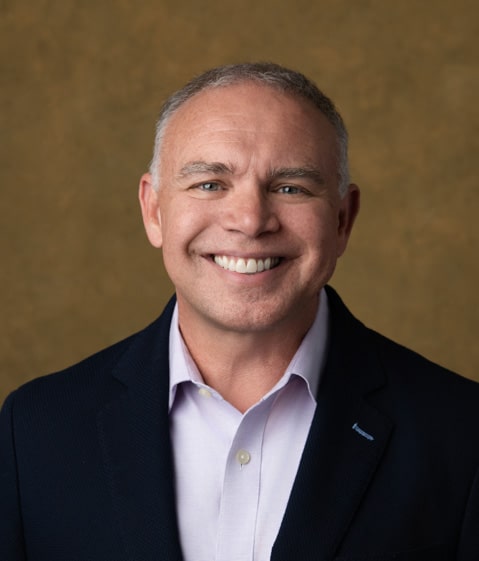
“We will fight this lawsuit with everything we have,” he said.
Kali Watson, Green’s appointed chairperson to the Hawaiian Homes Commission, declined to comment due to the ongoing litigation.
Larry Salzman, the attorney who’s responsible for shaping the Pacific Legal Foundation’s litigation strategy and oversees its Supreme Court docket, framed its recent cases against DHHL as the outgrowth of a broader, long-standing principle: The government should not dole out benefits or impose burdens on individuals based on race or ancestry.
Programs that do so are unconstitutional, he said, because they violate the equal protection clause of the 14th Amendment, which was born out of the Civil War to protect formerly enslaved people, but has increasingly been invoked to challenge affirmative action and race-conscious policies.
“Distinctions between citizens solely because of their ancestry are by their nature odious to a free people,” Salzman said, echoing language from a prior Supreme Court opinion. “That’s ultimately the kind of moral principle that we’re operating under and we think that’s right.”
The Pacific Legal Foundation has “dozens and dozens of these cases” across the U.S., Salzman said, including in Boston and Virginia, where the group has challenged public school admissions policies that its lawyers have argued were race-based and therefore discriminatory.
He also cited a recent lawsuit in California, where the Pacific Legal Foundation is trying to block a San Francisco reparations fund that would provide up to $5 million in lump-sum payouts to eligible Black residents who are descendants of slaves, and another in Houston where the group successfully argued that a municipal contracting program that required certain awards to be set aside for minority-owned businesses was unconstitutional because it discriminated against white people.
Native Hawaiian Status A ‘Live Issue’
The Pacific Legal Foundation has previously challenged the constitutional validity of Native Hawaiian programs and institutions.
In 2000, it waded into Rice v. Cayetano, joining forces with ideological allies such as the Campaign for a Color-Blind America to push for the dismantling of Native Hawaiian-only voting restrictions in elections of the Office of Hawaiian Affairs trustees. The group successfully argued that limiting OHA elections based on ancestry was unconstitutional. In its filings, the foundation’s lawyers maintained that the term “Native Hawaiian” was simply a proxy for race rather than a designation for a distinct Indigenous political class.
Unlike federally recognized tribes that have sovereign treaties with the U.S., the firm’s lawyers said it is “undisputed that there is no Hawaiian or native Hawaiian ‘tribe.'”

The foundation has presented similar arguments in subsequent cases taking on “Hawaii’s unconstitutional racial classifications,” including in 2011 when it urged the Supreme Court to overturn property tax exemptions for DHHL homesteaders, a case the justices ultimately decided to let go.
William Aila, a former head of DHHL under Gov. David Ige, said the Pacific Legal Foundation’s recent lawsuits are part of a coordinated, long-term, national campaign to dismantle protections and programs for people of color. He cited as examples the cases filed by other conservative groups over the past year targeting Kamehameha Schools and a Native Hawaiian medical scholarship program.
The Trump administration, too, has ramped up its targeting of Native Hawaiian programs. The president’s latest budget proposed cutting millions of dollars in funds for DHHL on the argument that “Native Hawaiians are not a tribal nation but a racial group.” On Thursday, the administration proposed stripping private schools and colleges of their tax-exempt status if they provide targeted help to students based on their race, a rule that could affect scores of schools in Hawaiʻi.
These attacks are not new, Aila said, but they are more brazen given that those pursuing them “now believe that they have the right court.”
The lawsuits, particularly those targeting DHHL and the Hawaiian Homes Commission Act, are a deliberate attempt to erase the political status of Native Hawaiians by miscasting it as a racial preference, Aila said. Those arguments ignore the islands’ history, he said, and the fact that Congress first passed the homesteading law more than 100 years ago to make amends for the overthrow and dissolution of the Hawaiian Kingdom
“It’s part of the attempt to erase any history of slavery or anything bad that the current political power in Washington doesn’t think should be taught to American citizens in the future,” Aila said. “Hawaiians, because of the lack of federal recognition, are the low-hanging fruit. They’re going to go after Native Americans and Native Alaskans next.”
From Salzman’s perspective, Native Hawaiian status is still a “live issue.”
“The Supreme Court has not been clear yet,” he said. “That makes it an issue that should go to the Supreme Court at some point to finally resolve.”
‘We’re Just Trying To Save Our Homes’
For now, ongoing court proceedings mean Kalahiki and Twitchell won’t have to pack up and move just yet. Their evictions have been paused until at least 2027 while the litigation plays out. That gives them a temporary reprieve from their worst-case scenarios, whether moving in with their adult children, living out of a car or, in Kalahiki’s case, pitching a tent on the empty foundation slab where his home once stood.
Both insist they support the Hawaiian Homes Commission Act and the idea of homesteads for Native Hawaiians. They said they never intended to undermine the program or be part of a national movement challenging Native rights. After receiving her eviction notice, Twitchell said she turned to the internet to find a lawyer who might help. She contacted nearly 20 firms specializing in civil rights law, she said. The Pacific Legal Foundation was the first to answer.
“I hate the fact that people might think this is an attack on Hawaiian people,” Twitchell said. “It’s not the intention. We’re just trying to save our homes.”
For Kalahiki, the lawsuit carries an even heavier burden. There are nearly 30,000 people on the homestead waitlist, some of whom might die before ever receiving a lease. Kalahiki wants them to be taken care of, but he’s skeptical the Courtyards at Waipouli with its 82 units will make much of a dent in the waitlist.
The question he keeps circling back to is one that’s simpler and more personal than anything that might be decided in the courts: “How much Hawaiian do you really need to be called Hawaiian?”

