

Big Money Continues To Flow In Hawaiʻi Politics As Election Nears
Gov. Josh Green is spending big, according to the latest campaign reports. On Kauaʻi and Maui, money is also flowing in mayoral contests.
You can’t escape Josh Green.
One week before Election Day — it’s Tuesday — viewers are seeing the governor’s political advertisements appearing all over Hawaiʻi’s four main TV stations, cable networks, Facebook and Instagram. “Trusted Caring Leadership,” one ad declares.
It takes a lot of money to pay for all those ads, and the Green campaign spent more than $400,000 from Sept. 27 to Oct. 19, according to the latest Campaign Spending Commission reports filed Monday.

Green is hardly alone in spending big in the latest campaign reports. In Kauaʻi County, Council Chair Mel Rapozo out-raised and outspent his opponent in the mayor’s race, council member Bernard Carvalho Jr., by a wide margin during this period. By a lesser margin, Maui County Council member Yuki Lei Sugimura out-raised and outspent her opponent for mayor, incumbent Richard Bissen.
In Green’s case, his ample war chest illustrates the advantages enjoyed by the Democratic Party of Hawaiʻi, which has controlled the fifth floor of the state Capitol for all but 11 years since statehood in 1959. It also illustrates where the money is coming from, which this year includes an outsize amount from the Carpenters Union.
Green’s latest spending figures come from the $3.9 million that he has raised so far in the current election cycle. And he still has $1.3 million remaining in cash on hand.
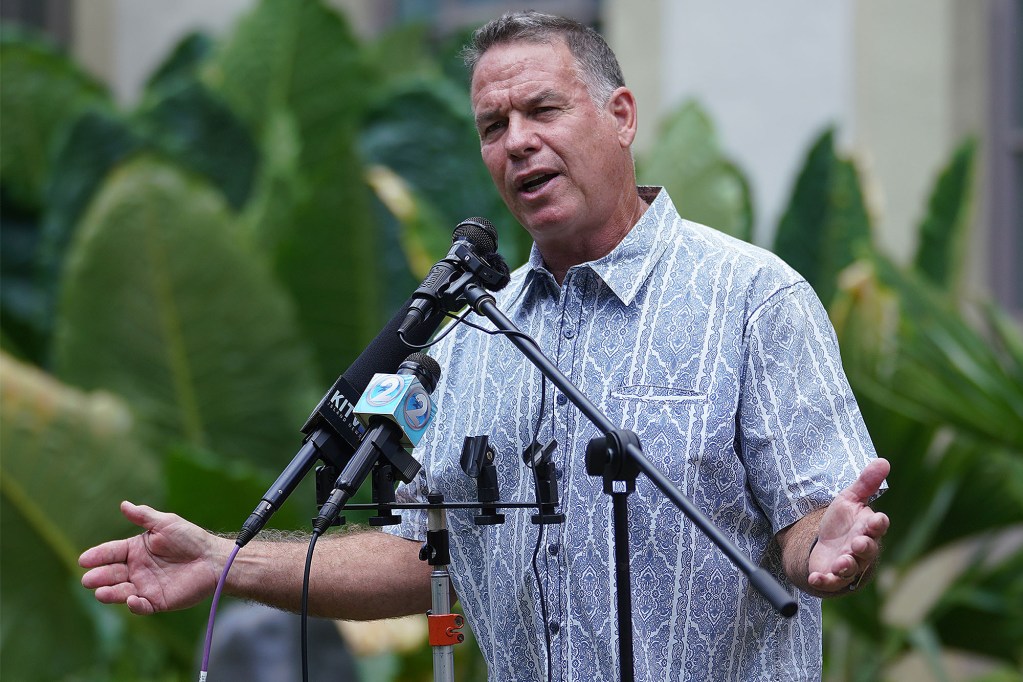
Compare those figures to the $430,800 that Green’s Republican opponent, Gary Cordery, brought in over the same cycle — a 10-to-1 disadvantage. And he has spent nearly all of it and has a surplus of just $3,700.
Maybe you heard a Cordery spot on KWME radio. Or maybe you saw one of his campaign boosted on media posts on Meta.
But chances are you have not seen, heard or read much about Cordery, who has never held public elected office and whose donors are largely unknown. Green won’t even bother to debate him.
Green, by comparison, is generously funded by well-known local executives such as Paul Kosasa of ABC Stores, Scott Seu of Hawaiian Electric Industries, Arnold Martines of Central Pacific Bank and Patrick Sullivan of Oceanit, all of whom contributed to the governor in the past month.
The same glaring contrast in campaign financing and expenditures can also be seen in the latest reports from the lieutenant governor candidates.
Democrat Derek Kawakami, the Kauaʻi mayor, has pulled in $1.3 million in his campaign so far and spent most of it. Major donors include Mark Mugiishi, president and CEO of HMSA, Peter Ho, CEO of Bank of Hawaiʻi, and the Hawaii Operating Engineers Industry Stabilization PAC Fund.
The governor himself has contributed nearly $70,000 to his running mate for media production services, even though Pacific Resource Partnership, representing Hawaiʻi carpenters and contractors, had already dropped more than $2 million on Kawakami’s behalf ahead of the August primary. It came through a super PAC called For A Better Tomorrow.
And what about Daniel Anthony, Cordery’s running mate? He raised a mere $25,800 and his biggest campaign expense was an Alaska Airline ticket to Seattle.
Carpenters Rising
Hawaiʻi voters can’t escape RISE Together Hawaii this election, either, and its vigorous campaign to get a constitutional amendment passed. It, too, is a creation of the carpenters union.
The carpenters and For A Better Tomorrow are still spending heavily on Kawakami, more than $50,000 in the past month for TV and cable ads — even though he and Green have this race in the bag.
As of Monday, For A Better Tomorrow reported raising $8.3 million this election and spending $10.7 million. The money comes from the Hawaii Carpenters Market Recovery Program Fund.
All told, For A Better Tomorrow spent $2.8 million from Sept. 27 to Oct. 17 on dozens of candidates including, as The Sunshine Blog reported Sunday, on Maui County Councilwoman Yuki Lei Sugimura, who is trying to unseat Mayor Richard Bissen.

But that’s a county race. Where the carpenters union has made its most visible campaign is in supporting ConAm No. 2. If approved, it would direct the Legislature to authorize the counties to issue resilient infrastructure for shelter and equity bonds to fund public improvements.
RISE Together Hawaii — it’s a ballot issue committee — brought in $2.4 million this election and spent $2.8 million. (It reported a deficit of $422,000.)
The money for the PAC comes from — again — the Hawaii Carpenters Market Recovery Program Fund but also the Regional Council of Carpenters Political Action Fund, the Hawaiʻi Operating Engineers Industry Stabilization PAC, Stanford Carr Development, the Building Industry Labor Association of Hawaii and Woody Hunt of Hunt Companies in El Paso, Texas.
Where does the money go? For Vote Yes on Question 2 mailers, radio and TV ads.
Kauaʻi Mayor: Rapozo Raising, Spending More
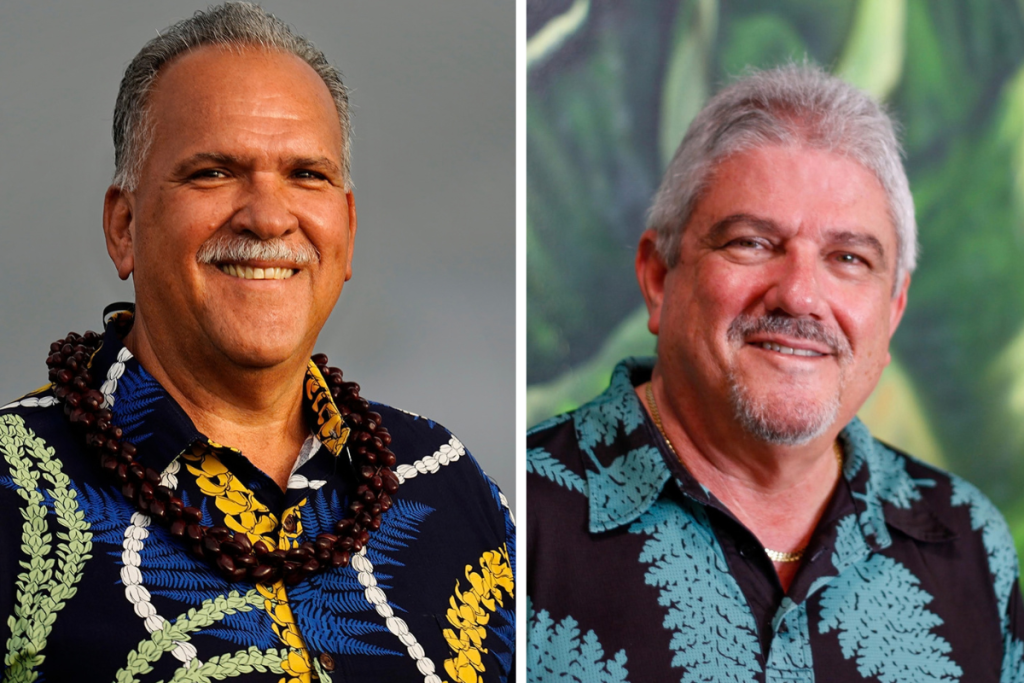
Rapozo, who is making his third run at mayor, hauled in another $39,000 during the most recent reporting period, from Sept. 27 to Oct. 19, and spent nearly $17,000 during the same period.
He had $118,804, including a $10,000 loan to his campaign, on hand at the end of the reporting period.
Rapozo’s largest contributions came from Alec Sou, president of Aloun Farms, Bahman Sadeghi, CEO of Meadow Gold, Steven Hisaka, an Oʻahu attorney, a political fund called HEMEP and the Hawaiʻi Realtors political action committee. Most of his latest contributions came from sources outside of Kauaʻi.
Carvalho, who served 10 years as mayor, raised another $3,500 from Sept. 27 to Oct. 19, and spent $1,577 during the same period. He had $40,983 on hand at the end of the reporting period.
Carvalho’s latest campaign contributions came from Ron Agor, a Hawai‘i architect who donated $3,000 on Oct. 17, and William Harrison, a California-based accountant who gave $500.
Rapozo led the August primary against the five other candidates for mayor with 40.6% of the vote, followed by Carvalho with 30.6%.
Maui Mayor: Sugimura Raising, Spending More

Bissen, who is seeking his second four-year term as mayor, hauled in $115,558 during the most recent reporting period, from Sept. 27 to Oct. 19, and spent just over $122,000 during the same period.
He had $44,145, including $38,000 in loans to his campaign, on hand at the end of the reporting period.
Bissen’s biggest donors this period include Kyle Chock of Pacific Resource Partnership, James Joseph of Tidal Basin, Josiah Nishita, the county’s managing director, Race Randle of Maui Land & Pineapple, former Honolulu Mayor Mufi Hannemann, $12,000 from attorneys from the law firm Lipcon, Margulies & Winkelman, Cinda Thibodeaux of TKH Construction and Roger Dang of the Hawaii Longline Association. He also received numerous small donations from county employees and members of his administration.
Maui County Council member Yuki Lei Sugimura raised another $184,491 from Sept. 27 to Oct. 19, and spent $188,617 during the same period. She had $40,593 on hand at the end of the reporting period including $93,000 in loans to her campaign.
Sugimura’s biggest contributors since the August primary include Oʻahu donors, such as former Honolulu Mayor Kirk Caldwell, engineering firm SSFM International’s Scott Hayashi, Shane Peters of Peters Communications, developer Stanford Carr, Stephen Metter of MW Group commercial real estate firm, and former Alexander & Baldwin executive Meredith Ching.
She also received support from numerous Maui donors big and small, including Debra Arakaki of Compass real estate firm in Lahaina, Castaway Construction & Restoration of Kahului, Sandra Duvauchelle of Lehua Builders, lawyer Clay Sutherland and Garrett MacDonald of SAE Design.


