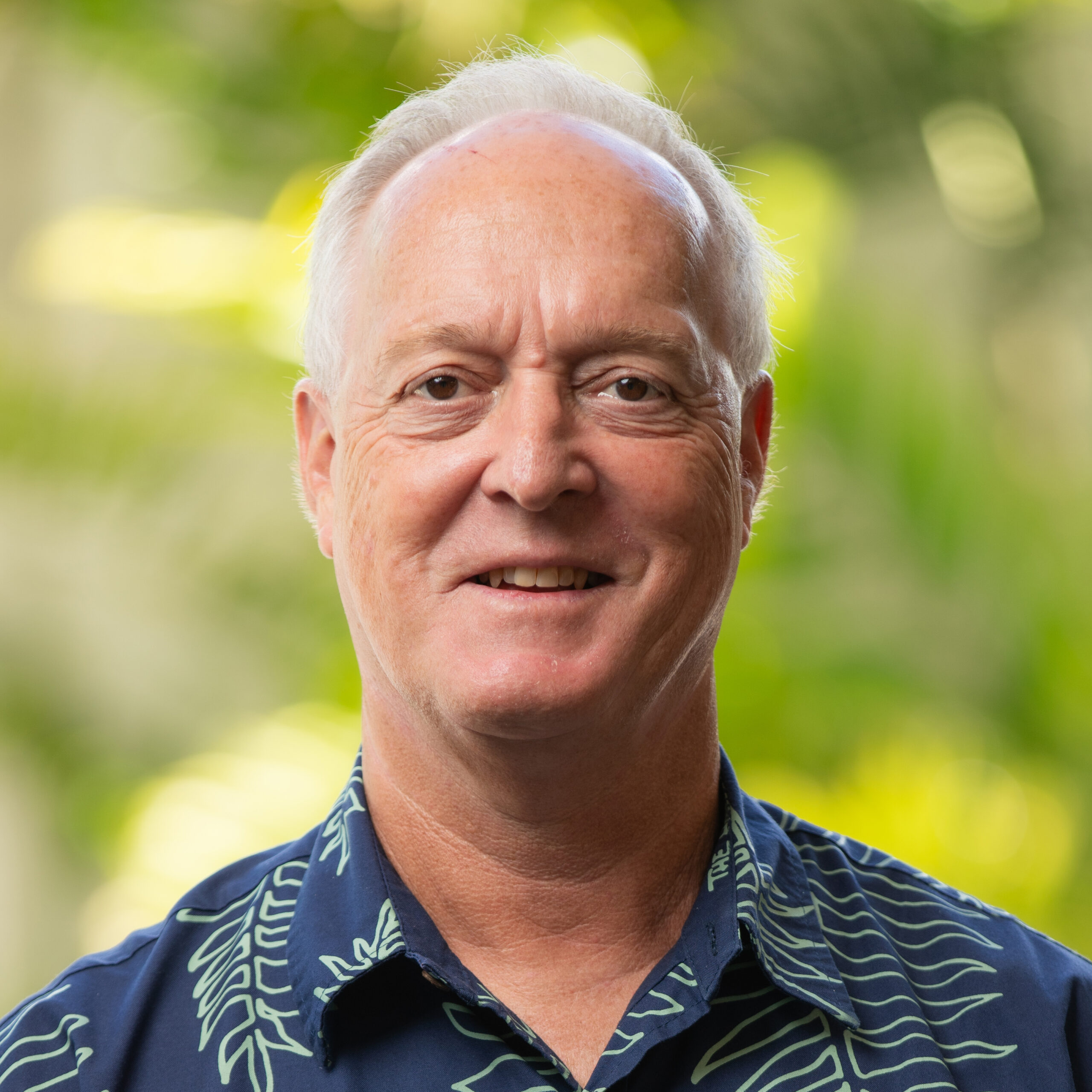
Underdog Gov Candidate Takes On The Democratic Machine — Again
Republican and small businessman Gary Cordery says his children had to move away because they could not afford to stay. He wants to reduce the cost of living.
This year’s election marks the second time Republican Gary Cordery has run for governor in heavily Democratic Hawaiʻi, and once again he seems to be paddling against the political tide.
Cordery, 66, is a general contractor who has never held public office and is not well known to most voters. He is running in a state that has not elected a Republican governor since Linda Lingle won a second term 20 years ago.
He faces Democratic Gov. Josh Green, a physician who is locally famous after spending 14 years in the Legislature, serving four years as lieutenant governor, and winning election as governor in 2022 with more than 62% of the vote. Green faced no serious primary opposition this year, suggesting even Hawaiʻi’s most ambitious Democrats doubted they could beat him.
Green has raised more than $3.7 million in campaign funds this election cycle, which is nine times the sum Cordery has raised. There is no publicly available independent poll data to gauge how the race is going so far, but last week the prediction market Kalshi gave Cordery a scant 3% chance of winning the Nov. 3 general election.
Still, Cordery says he is absolutely certain he can prevail, and any suggestion to the contrary shows “a lack of belief in the people of Hawaiʻi.”
“Honestly, there is great disdain for this administration and the way it has managed the state of Hawaiʻi,” he said. “How we win this is, there was a time only a few iterations ago where you could get by with a state job. You could get by with a nice union job with fringe benefits. That is not true anymore.”

Union members are a major piece of the Democratic political base, but they know “they are also getting crushed, and their families, and their ʻohana, they are also leaving Hawaiʻi,” he said. “They can see — the people are very smart here — they can see the trajectory, and they’re not buying it.”
Cordery has invited Green repeatedly to meet him for a televised debate, via news releases, social media and even certified mail. Green has not responded, Cordery said. That implies the governor, who is known to pay close attention to polling data, is so confident of winning he can ignore Cordery’s calls for a debate.
Given the issues Hawaiʻi must address, including homelessness, the high cost of living and the outbound migration of residents, “how can those things not be debated in the public square?” Cordery asked. “These are the things that are facing the people.”
When asked why Green has not agreed to a side-by-side debate during the campaign, Green campaign spokeswoman Liz Skillin did not respond directly to the question. She said in a statement that “Governor Green will continue speaking directly to the people of Hawaii in the coming weeks — in person, through every available media outlet, and at every opportunity — laying out his vision for Hawaii’s future and his plans to build more housing, reduce homelessness, and make our state more affordable.”
Elections And Protests
Cordery was born in Colorado and grew up in Auburn, California, near Sacramento. He said he went to work in the construction industry as a laborer in 1978, and traveled around the country working on military contracts before moving to Hawaiʻi in 1981. He eventually founded his own construction company called Kingdom Builders, which now has 13 employees.
Cordery’s first run for governor was in 2022, an effort he described as “an act of obedience. God clearly put on my heart that this is what you need to do, this is what I’m calling you to do. So I did that, and we didn’t prevail.”
He finished third in the Republican primary that year behind former Lt. Gov. James “Duke” Aiona and retired mixed martial arts fighter BJ Penn. Cordery filed a series of legal challenges following that election citing technical issues and the process that elevated Green to the governor’s office, but the courts dismissed those cases.
Cordery said he decided to run for governor for a second time this year because of his children. About nine years ago his two daughters and their husbands told him at a family meeting they were leaving Hawaiʻi, and they now live in Utah with Cordery’s seven grandchildren.
“They’re like so many families here, the outbound migration because they simply cannot afford to live here,” he said. “Public policy in this state, a realignment, a recalibrating or changing the trajectory of public policy will ultimately lead to a place where people can afford to stay here in Hawaiʻi.”
He fared better in the GOP gubernatorial primary this year, defeating Hilo businessman Ken Fujiyama handily on Aug. 8 with 36,428 votes, or three times as many as Fujiyama received.
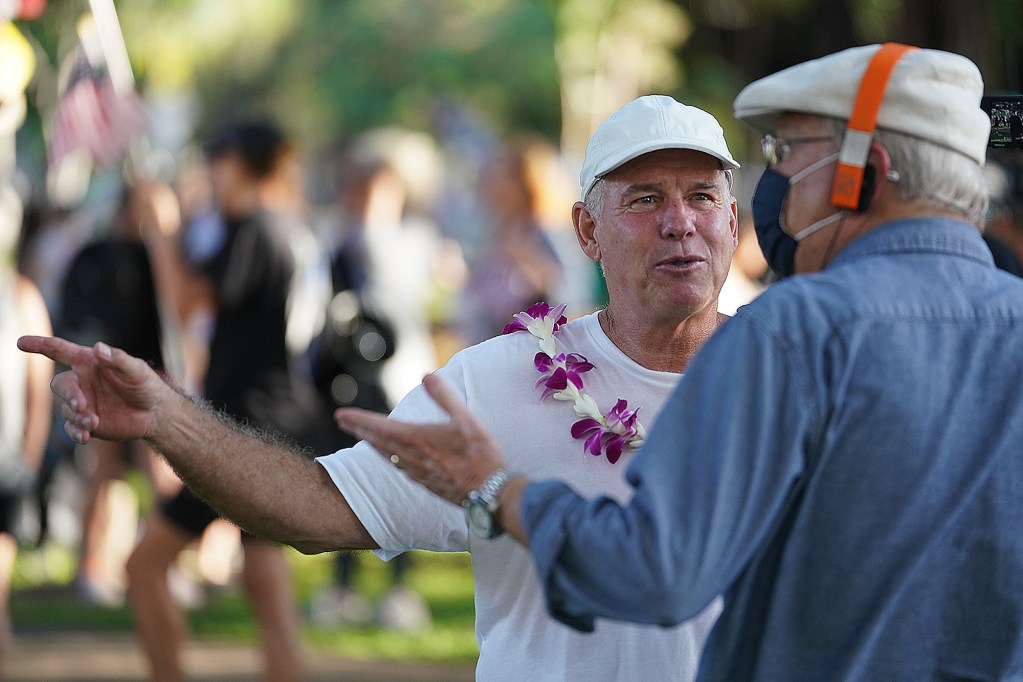
Cordery may be best known for his activities as a co-founder and former director of the Aloha Freedom Coalition, a group that staged protests outside Green’s condominium in downtown Honolulu and elsewhere during the pandemic. Cordery said he resigned as director of AFC before he first ran for governor in 2022, but is still a member of AFC’s board of directors.
The purpose of the coalition was to remind people of their rights, Cordery said, at a time when Green as lieutenant governor was supporting public health policies that closed businesses, kept people from attending church and kept children out of school. The AFC protests were an expression of frustration and were lawful, he said, and the AFC still promotes individual liberty today.
Over the years the coalition has posted controversial material on social media, including suggestions of conspiracies related to the deadly Lahaina wildfire. But Cordery said he was not personally responsible for those posts.

“I didn’t control any of it,” he said. “We had a media team.” The coalition was all about freedom and individual liberty, he said, so commentary was generally allowed unless something was deemed untrue, illegal or defamatory. If material was inappropriate for AFC’s social media content, he said, “we’d ask them to pull it down.”
Cordery’s own social media posts take a strong position against vaccinations, including one early last year that warns parents: “You MUST reject all vaccines, PERIOD.” His adamant position on that issue runs counter to the views of the vast majority of Hawaiʻi residents. Separate polls in the spring of 2021 by the state Department of Health and Civil Beat showed only 9% to 12% of the public said they would refuse to be vaccinated against Covid-19.
Cordery explained last week that “if people want to receive vaccines that is their right,” but he is opposed to any government requirement that people be vaccinated. “People have the fundamental right of full bodily autonomy,” he said in a written statement.
Cordery has also taken a strong public position against abortion, telling the Honolulu Star-Advertiser in 2022 that “if legislation came to my desk as governor to overturn abortion, I would sign it.”
Again, that position puts him at odds with both Green and the majority of Hawaiʻi voters.
Cost of Living, Taxes
Many of Cordery’s other policy positions address voters’ unhappiness with taxes, the high cost of living and recent public corruption scandals.
Cordery criticizes the size and cost of state and local bureaucracies, which he describes as “an ever-increasing government consuming the wealth of an ever-decreasing tax base.”
“People have decided to opt out,” he added, by moving to the mainland.
Cordery declined to identify any particular component of government he would abolish as governor, but said the “climate change agenda” the government has put in place adds to the cost of programs and “needs to be looked at.” More generally, he said downsizing government must begin with greater transparency in spending.
“The government knows its resources, it knows what’s possible, but it doesn’t tighten its belt when needed,” he said.
Cordery has made some specific tax proposals, including a plan to freeze property taxes at the age of retirement for homeowners on their primary residences. He said he hears from elderly people who fear they will lose their homes because they cannot afford to pay their property taxes.
He acknowledged the state constitution gives the counties complete control over property taxes, but Cordery said he will take his idea to the public and promote it before putting legislation together to address the issue.
“We’ll submit that to legislators by enrolling them by showing them how important it is, what a blessing it would be to the state, how it would honor the kūpuna,” he said. He would also need at ask the voters to amend the constitution.

He also supports eliminating the state excise tax on food, which has long been a goal of Hawaiʻi Republicans. Green also promised to eliminate the excise tax on food during the 2022 campaign, but set that idea aside the following year when the Legislature resisted. The Hawaiʻi Appleseed Center for Law and Economic Justice calculates the excise tax on food brings in about $250 million a year for the state.
Cordery also believes Hawaiʻi should have an elected attorney general instead of an appointed AG to help ensure equal justice, which is another idea that would require a constitutional amendment. And he said he wants an “Office of Transparency and Audits” created to audit spending by state departments and determine exactly what that spending has accomplished.
Green last year proposed freezing a series of state income tax cuts lawmakers adopted in 2024 as a way to help balance state budgets in the years ahead, and Cordery called that proposal “irresponsible.” He said the governor should have instead found ways to reduce state spending. State lawmakers eventually rejected Green’s proposed freeze on the tax cuts and left the income tax changes in place with some modifications.
Cordery has also criticized Green for the governor’s extensive use of emergency proclamations, many of which have been used to deal with disasters such as the Maui wildfire, flooding, earthquakes or approaching hurricanes.
Cordery suggests the state should instead be pre-positioning equipment, supplies and crews to address critical transportation and evacuation needs.
“Issuing Emergency Proclamations do not provide for advanced planning,” he wrote in a written response to questions. “This is reactive ensuring unnecessary loss of time and added suffering.”
Cordery said Hawaiʻi residents are being squeezed by misguided policies, and he believes people are inspired by his plans to overhaul state government.
“Great changes throughout history happen when people who didn’t believe all of a sudden recognize that they were empowered to make a difference,” he said. “Great changes — and this state needs a great change.”