Yes, I’m One Of The Honolulu Few – A Bike Commuter
Will Honolulu ever be a bike mecca? In just a few years, New York City has embraced cycling and defied expectations.
October 9, 2026 · 7 min read


About the Author

Why would a newcomer ride a bicycle to work? To start with, it is stupendous exercise and cheap transportation. And as Ernest Hemingway once said, it is the chance to learn about the contours of a place “since you have to sweat up the hills and coast down them.”
For the last few weeks, I’ve been learning the contours of Honolulu, sweating buckets. A month ago, I purchased a new commuter bicycle – along with a helmet and a lock – to assist with my weekday journeys to Civil Beat and back.
Some of my colleagues were astounded. They wondered if my past cycling adventures had resulted in too many concussions. Did I not know how dangerous Honolulu could be for cyclists and pedestrians? Was I not aware of the hills? The humidity? The narrow streets? The few-and-far-between bike lanes? And worst of all – the tourists in their rental cars?
I assured them I was quite aware. Their inquiries gave me a chance to recite all the crazy places I’ve cycled, including Los Angeles, Washington, D.C., Beijing and Hanoi. I still vividly recall the latter in 2004, weaving among a sea of motor scooters, push-cart vendors, pedestrians and other cyclists in possibly the most thrill-seeking spin of my life.

Ideas showcases stories, opinion and analysis about Hawaiʻi, from the state’s sharpest thinkers, to stretch our collective thinking about a problem or an issue. Email news@civilbeat.org to submit an idea or an essay.
Iʻll admit, in Honolulu, the fear factor is real. Many of my colleagues were born here or have lived here for years. At least one sustained serious injury on a bicycle. Others have written about the perils of being a cyclist or pedestrian in a city where the car culture resembles that of Los Angeles.
Three years ago, Civil Beat reporter Marcel Honoré interviewed Honolulu bike commuter David Ho, a University of Hawaiʻi Mānoa professor who happens to be one of my favorite climate scientists. I like Ho partly because he doesn’t just talk the talk, but walks the walk (or bikes the bike). I first became aware of him in 2016 while working as a foreign correspondent in Beijing, where Ho had helped launch a movement to build bicycles made out of bamboo. Because of his inspiration and an instructor he trained, I made a bamboo bike frame.
In Honoré’s interview and video, Ho described exactly what it is like to be a two-wheeled commuter amid so many motorists.
“Every day is different, but it is always an adventure,” Ho said. “There’s always someone pulling out in front of you, or passing you and making a turn right in front of you. So you have to be very alert.”
Yes, there’s a lot happening on these mean streets — including scooters, delivery trucks, buses, stray dogs, feral chickens and impatient Uber drivers, to name a few. But Iʻll say— based on my many years of far-flung cycling – Honolulu motorists score better than many of their counterparts nationwide. On surface streets, many seem attentive, considerate and very neighborly.
Some press on the brakes at nearly all intersections, even when they have the clear right-of-way. That has led to standoffs of politeness between me and motorists that I find charming — and exasperating.
The Road That Brought Me Here
Since this is my first column here, I should introduce myself. I joined Honolulu Civil Beat in mid-August as a deputy editor, overseeing political coverage and columnists, while also helping edit community commentary. I’m a California native – yes, one of those interlopers! My wife and I started making trips to Hawaiʻi in the 2000s. Weʻve always loved it and never thought weʻd have a chance to join this community.
Journalism is a big part of my identity, but cycling is right there, too. And I’ve learned a few things about the two-wheeled lifestyle — enjoying it and surviving it.
In Honolulu and elsewhere, picking your route is crucial. I am lucky to have one that, so far, seems reasonably safe. I live on the edge of Kapiʻolani Park, in the shadow of Diamond Head, which leaves me in awe every morning as I start my ride.
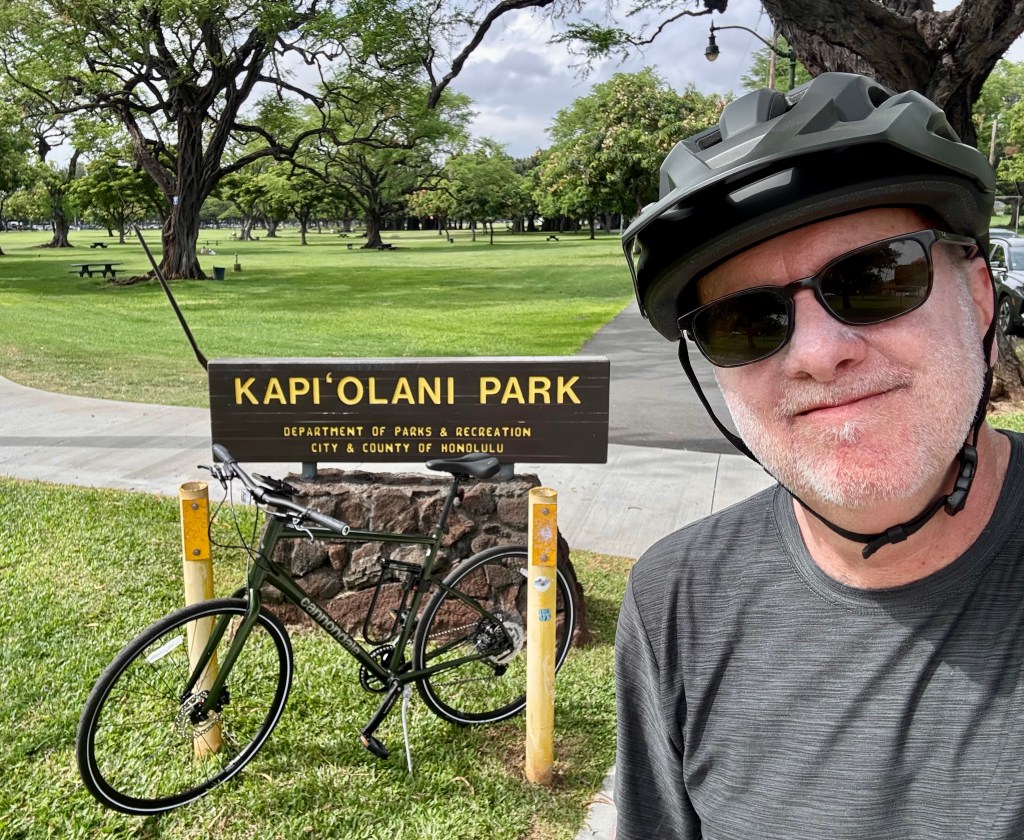
I cycle toward Monserrat Avenue, but do not stay on that road for long, since in the morning it is clogged with school drop-offs. I quickly weave left to Hayden Street, when the big climb arrives. Up I go — and up and up — until I cut over to 10th Avenue. Then I add some more elevation to Waiʻalae Avenue, where I turn right and climb some more until I get to Civil Beat Plaza.
Fortunately, CB has a shower where I can rinse off the sweat and freshen up for work.
I donʻt cycle to work every day. Sometimes I catch the bus.
Even so, I am an outlier. In Honolulu County, a mere 1% of workers bike to work regularly – a figure that has been flat for more than a decade, according to U.S. Census data. Monthly pedestrian counts are increasing, but overall counts of bicycle trips – which include recreational cycling – are also flat, according to sensors maintained by Honolulu’s transportation department.
It doesnʻt help that Honolulu’s Biki bike-share fleet, launched with great promise a decade ago, had shrunk from 1,300 to 478 bicycles by the end of April — victims of vandalism and questionable management.
After a month cycling here, I am far from an expert, but I have theories on why few people commute to work by bicycle.
Three big ones:
- Not enough employers create incentives for their workers to bike to work.
- Honolulu has made some progress on bicycle infrastructure, but the overall system remains designed to accommodate cars and trucks – not cyclists and pedestrians.
- Bicycling and walking can be life-threatening here, and thatʻs hardly an invitation to cycle or stroll. In 2025, 38 pedestrians and seven cyclists perished in traffic incidents statewide.
Monthly pedestrian counts in Honolulu are increasing, but overall counts of bicycle trips – which include recreational cycling – are also flat, according to sensors maintained by the local transportation department.
Eduardo Hernandez, advocacy director of the Hawaiʻi Bicycling League, said Honolulu has “come leaps and bounds from where we were” for bike lanes and other bicycle infrastructure.
“There’s still lots of room to improve,” he said. “But the city has steadily made improvements. They’re slow but they’re steady.”
Hernandez, however, agrees that employers could do much more. Many, he noted, subsidize parking for employees, creating the idea that parking is “free” — even though it is not. Employers pay a steep price for the space needed for cars, but they generally donʻt pay for other options.
“If employers are going to subsidize something like parking, they should think about subsidizing transit or bicycle use,” said Hernandez. “That would help to give people choices and demonstrate that having more people on the roads isn’t really good for Honolulu, where we’re pretty much just choking in traffic.”
Think About The Big Apple
Overcoming skepticism may be one of our biggest challenges. The prevailing viewpoint is that Honolulu is too dense and crowded to ever be bicycle friendly. We are a car town. Get over it.
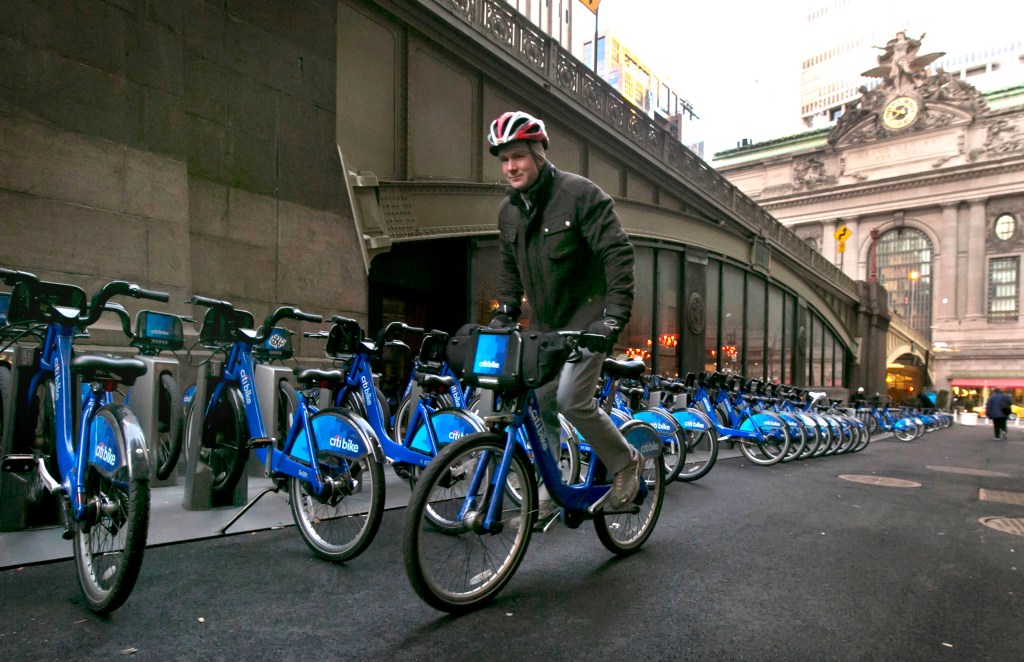
But that mindset ignores the experiences of much bigger and denser metropolitan areas, including New York City, Paris and Washington, D.C.
New York now has more than 1,500 miles of bike lanes, and 28% of adult residents now ride a bike. Between 2010 and 2023, the number of bike commuters in the city increased from 25,000 to 62,000.
Traffic congestion can be a nightmare, here and elsewhere. But it also is an opportunity.
It’s the “Field of Dreams” effect: If you build it for cyclists and pedestrians — and make it safer for them — they will come.
 Sign up for our FREE morning newsletter and face each day more informed.
Local reporting when you need it most
Support timely, accurate, independent journalism.
Honolulu Civil Beat is a nonprofit organization, and your donation helps us produce local reporting that serves all of Hawaii.
ContributeAbout the Author