Honolulu Voters Could Make Impeached Politicians Sit Out
Voters will have the opportunity to make the penalty for impeachment on par with the penalty for being recalled by voters.
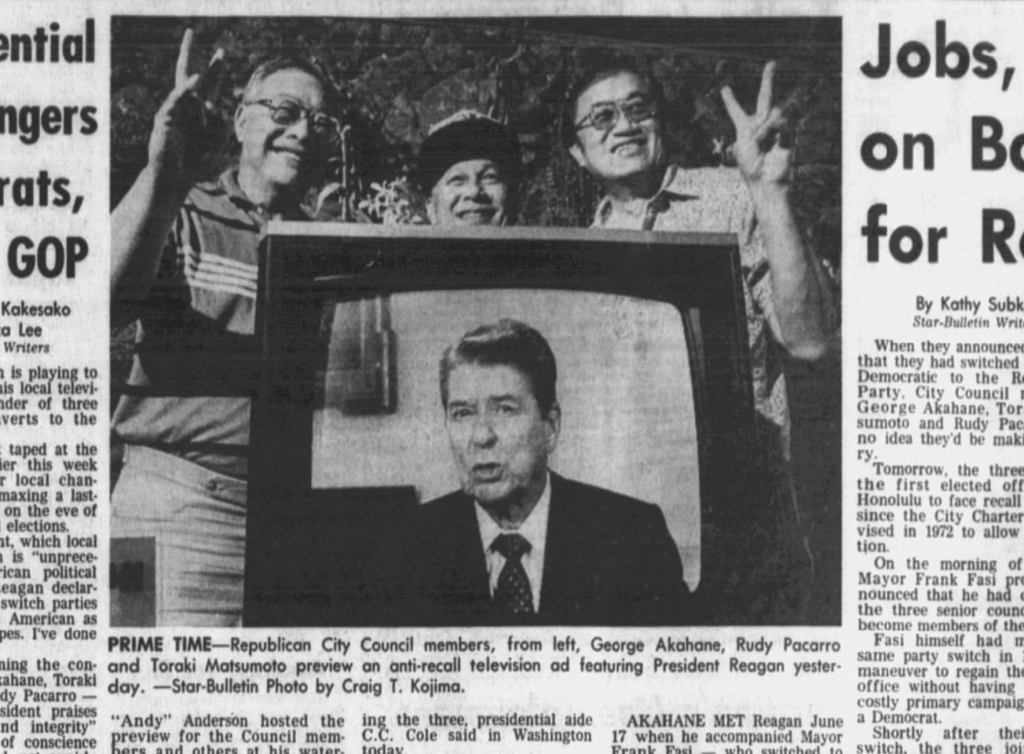
When three Honolulu City Council members switched parties midway through their terms in 1985, voters retaliated by removing them from their posts using the city’s recall process. That, by law, barred the trio from holding elected or appointed city office for two years.
If they had been impeached, however, no such penalty would have existed, and they could have run for election again mere months later. That’s a mismatch that Hawaiʻi law professor David Callies thinks should be cleaned up.
“If anything,” he said, “it should have been reversed.”
Twenty proposed charter amendments will appear on Honolulu voters’ ballots during this fall’s general election. Among them is Callies’ proposal to add a “time out” period for impeached elected officials, preventing them from holding elected or appointed city office for two years after their impeachment. The city charter is essentially the county’s constitution.
Elected officials can be recalled — meaning removed from office — for manini reasons, Callies said, while impeachment requires more serious offenses along the lines of misusing their office and violating public trust. He said the charter’s prescribed punishments should reflect that.
“It just didn’t seem fair,” he said.
Callies, who used to teach at the University of Hawaiʻi William S. Richardson School of Law, said his class on local government sometimes discussed the Honolulu Charter Commission. Now that he’s retired, he said, he had time to submit a couple of proposals of his own. His impeachment proposal was one of roughly 300 that the volunteer commissioners whittled down.
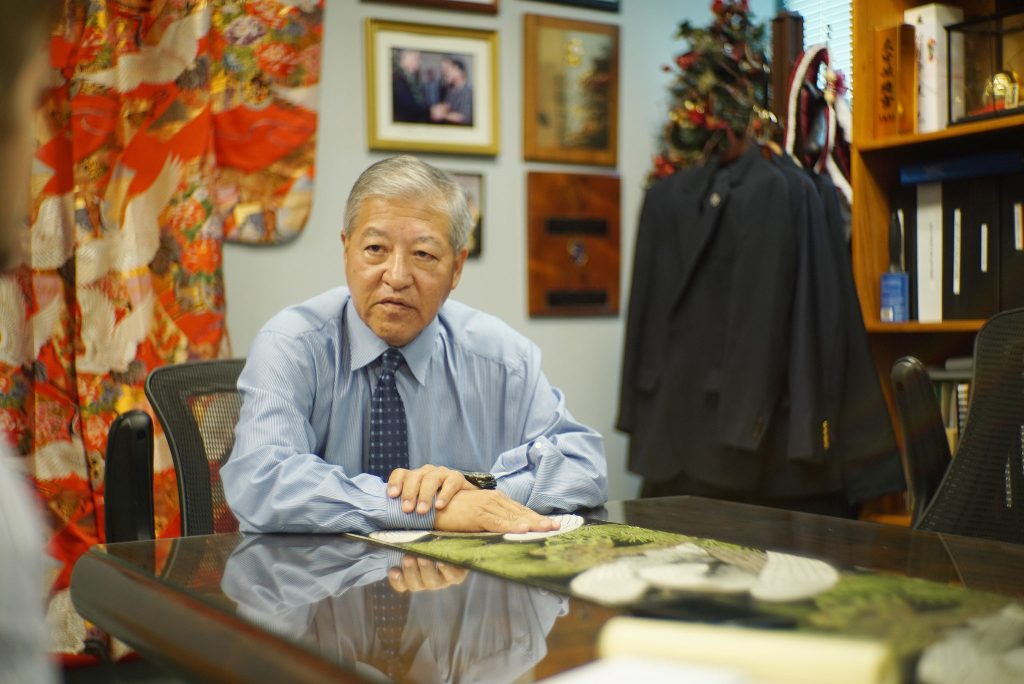
“You can be recalled for something as minor – to me – as changing parties,” Callies said, contrasting it with impeachment’s higher threshold of wrongdoing.
No Honolulu elected official has been impeached in the charter’s over 50-year history. For that to happen, a certain threshold of registered Honolulu voters — the number varies by office — must sign a petition laying out the charges. Hawaiʻi courts then have jurisdiction over hearings on the official’s removal, though additional details are vague in the charter.
There have been two close calls: In 2001, voters submitted an impeachment petition targeting council member Rene Mansho, who admitted to misusing campaign funds and having her council staff work on her campaign during their day jobs. Mansho resigned before the Supreme Court proceeded further.
And in 2018, voters submitted a petition to impeach Prosecuting Attorney Keith Kaneshiro, who had received a target letter from federal investigators as they looked into local law enforcement corruption. The Supreme Court, however, dismissed the petition on procedural grounds. Kaneshiro was later acquitted of federal charges.
Partisan Drama
The recall process is more detailed in the charter. A threshold of registered Honolulu voters — determined by a formula — must sign a petition, which gets submitted to the City Clerk to initiate a recall election.
The three council members who were recalled in the 1980s – Rudy Pacarro, George Akahane and Toraki Matsumoto – had followed the lead of Honolulu Mayor Frank Fasi, a longtime Democrat who switched parties to run as a Republican and unseat Democratic Mayor Eileen Anderson. (Anderson had beaten Fasi during the Democratic primary four years earlier.)
Democratic Gov. George Ariyoshi had been feuding with newly Republican Fasi, Akahane told the Honolulu Advertiser at the time. That prompted Fasi and his managing director D.G. “Andy” Anderson to lobby council members to change parties and present a united Republican front.
Doing so overthrew Democratic Council Chair Patsy Mink, who, with the Democratic Party, led a recall campaign against Pacarro, Akahane and Toraki. All three men were removed from office.
Voters removed Akahane, a notoriously tough and pro-development chair, by a margin of 2-to-1. Pacarro, a “colorful” politician, in the Star-Bulletin’s words — he would begin council meetings by playing taped music from Frank Sinatra and local soft rock band The Krush — lost by fewer than 100 votes. Matsumoto lost a bid to keep his seat by about 1,000 votes.
Less than a decade later, voters amended the charter to make all city elected positions nonpartisan anyway. None of the three recalled council members returned to city office.