

Kaua‘i Wildfire Resilience Bill Has Turned Into A ‘Fight Over Numbers’
Local contractors are putting forward vastly different estimates for how much the bill could increase construction costs.
Disagreement among local contractors over how much new construction standards would increase the cost of building homes is slowing down an effort to make new Kaua‘i homes more resistant to wildfires.
Kauaʻi County Council members at a September planning committee meeting deferred the bill over concerns stemming from a cost estimate submitted by the Contractor’s Association of Kaua‘i at the request of council chair Mel Rapozo. Council members wanted more public input and time to mull over the bill.
The association’s estimate for a key component was four times greater than those local builders provided to the county Planning Department, which drafted the bill with Kaua‘i’s fire and emergency management departments, the Hawai‘i Wildfire Management Organization and national fire scientists, engineers and researchers. The association won’t say who it got its numbers from or how they were calculated.
The bill’s authors say they prioritized affordability, wildfire safety and Kaua‘i’s need for more homes as they created and revised the proposed measures.
“We’ve calibrated this in a manner that can help get more housing and do so in a meaningful way for wildfire resiliency,” said Ka‘āina Hull, Kaua‘i’s planning director, “and now it just seems to be this fight over numbers.”
The bill is not set to take effect until October 2027, but some of its authors worry its passage will continue to be delayed by the cost debates.
The council planning committee will take up the bill again on Wednesday morning. If it passes, it’ll move to the full council for a final vote.
Balancing Wildfire Safety And Costs
Bill 2998’s construction standards require the use of certain materials, such as metal flashings and noncombustible vents, to help prevent wildfire embers from igniting a home.
In general, construction costs on the island are roughly $390 to $500 per square foot, according to the planning department. The bill was expected to increase construction costs by $6.75 to $9.74 per square foot based on estimates from two large Kaua‘i contractors — Unlimited Construction and Shioi Construction — that use union labor and have built several multifamily projects around the island. The association’s estimate, by comparison, was nearly $17 a square foot, plus an extra $40 to $90 a square foot for a key proposed component.
Hull said his department sought estimates from larger contractors because they use higher-priced labor compared with mom and pop contractors. They also tend to have more availability to provide competitive bids.

Lance Delos Reyes, senior project manager at Unlimited, said he included the cost of union labor, project staff, equipment, vehicles, and other necessities to run a job site in the estimate. Those are markups that mom and pop contractors don’t typically have.
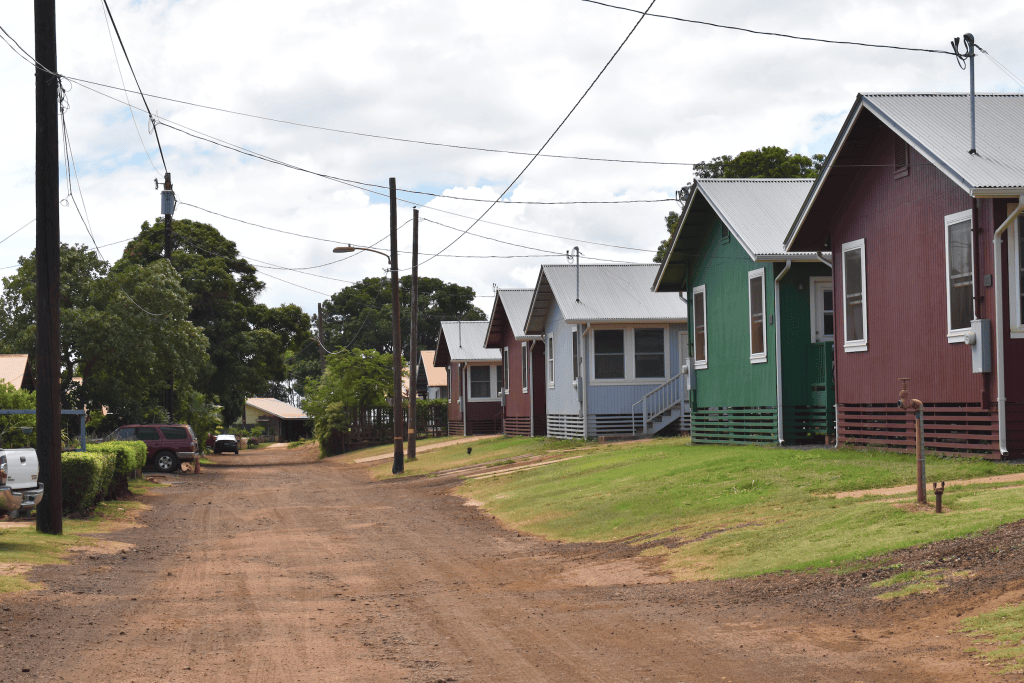
He added that this wasn’t Unlimited’s first time doing a cost study for a wildfire bill. The company did one for a 2025 ordinance requiring that new plantation camp homes be built for wildfire resistance.
Elizabeth Pickett, co-executive director of Hawai‘i Wildfire Management Organization, said it took two years to write the bill currently under consideration. The team used the Insurance Institute for Business and Home Safety’s standards as a starting point to understand which home features contribute to wildfire safety and then adapted them for Kaua‘i.
Every proposal in the bill was evaluated based on its affordability, safety benefits, and whether it could help Kaua‘i still build as densely as the county needs to address its housing shortage. Pickett said if estimates for any components came in too high, the team looked at other measures that would provide the same protection but be more affordable.
Wildfire resilience science typically says that dual-paned, double-tempered glass windows provide the most protection, but they cost an extra $40,000 for a 1,000-square-foot home, Hull said. Swapping that out for dual-paned, single-tempered windows only adds $1,200 to average window costs. The windows work with a 5-foot gravel or concrete band surrounding a new house’s exterior walls to help insulate the structure from fire spread, he said.
“We didn’t stop until it was affordable, practical and totally met the actual needs on Kaua‘i instead of just using some mainland code,” Pickett said.
Doug Green of DoKi Wildfire Solutions, which works with Kaua‘i County on urban wildfire planning, told Civil Beat in an email that if the county had just replicated a mainland wildfire code, such as the International Wildland-Urban Interface Code, the construction cost for a 933-square-foot home would have been 3 to 4 times more costly than Kauaʻi’s proposed requirements.
“Lahaina showed us that in a wind-driven fire, homes burn from embers, and Bill 2998 targets exactly that,” Green wrote in an email. “So the question isn’t whether Kauaʻi can afford a 2 percent cost increase, but whether it can afford to skip it.”
How Much Should Gravel Cost?
Rapozo, who is running for mayor, said he asked the Contractors Association of Kaua‘i to provide estimates because members at an association meeting he attended shared concerns about the low estimates other builders gave the planning department.
The association submitted testimony to the council that put the added cost of the proposed code changes at $16.85 a square foot for a 1,000-square-foot house.
The bill also requires that a 5-foot-wide band of gravel, brick or concrete be placed around a house’s exterior walls. Per square foot, the association said using gravel for that band would cost $40 a foot, and concrete would cost $90.
According to the testimony, the numbers were put together by a team of licensed contractors, private developers building tiny, affordable homes, and an engineer with over 20 years of civil experience with concrete and aggregates.
Karen Taketa, the association’s executive director, said the association stands by its testimony, which did not take a position on the bill, and declined to answer questions about who specifically made up the team and how they put together their estimates.
She said prices in the construction industry fluctuate monthly because of factors like tariffs and the cost of diesel. The association’s written testimony in August said prices for gravel and concrete were roughly 50% lower than what it provided in September.
The 5-foot band and how much it will cost if made from gravel has the biggest difference between estimates. Other builders told the planning department that a band made from gravel ranged from $4.64 to $9.26 per square foot, Hull said.
Unlimited is not a member of the contractors association, but some other builders that provided estimates to the planning department are, including Shioi Construction, Earthworks Pacific, and Pacific Concrete Cutting & Coring.
Green said if the 5-foot band was left out, the difference between the contractors association and other builders’ estimates would be roughly $10 apart per square foot. That’s a normal difference between estimators.
Delos Reyes and Hull said that the association also included unnecessary added costs in its testimony. One example is that the association priced stainless steel wrapped around foundation legs at $5,000 for materials and labor. Most foundation legs are made from concrete blocks, so they’re already non-combustible and don’t need to be wrapped in stainless steel.
The association also priced metal flashing on exterior walls where the walls connect with the ground, decking and roof at $5,000. But for a house with a concrete foundation, metal flashing isn’t needed where the wall touches the ground because the concrete already prevents embers from getting trapped and igniting the house, Hull said.
Building Safer Homes
Rapozo said he doesn’t know why there’s such a big disparity between the various contractors’ estimates.
The costs need to be sorted out, he said, especially if the county may be subsidizing some of the added costs by waiving a fee for new water meters. The waiver was approved by the Board of Water, not the County Council, but Rapozo said he worries about its ramifications when the water department is already struggling financially.
“I support the concept, but I just want to make sure that we know of any consequences, and we don’t want to find ourselves in a place where the unintended consequence is going to hurt our people,” Rapozo said.
Council member Addison Bulosan, who introduced the bill and chairs the council’s planning committee, said he recognizes that any added cost makes building more difficult, but thinks it’s worth it if it means saving lives.

In recent weeks, dry and windy weather caused the county to ask the public to help prevent wildfires as members of the public cleaned up brush and debris from Hurricane Lowell. The county asked the public to avoid burning green waste or storm debris and check for smoldering material before leaving a work area.
“We’re at wildfire risk even more than before, and so I’m even more motivated to help our community do everything possible to be safe,” Bulosan said.
Attend The Next Council Committee Meeting
Time: 8:30 a.m.
Where: Council Chambers in the Historic County Building at 4396 Rice Street, Suite 201, in Līhu‘e
The Meeting agenda is available here and includes instructions on how to submit testimony.
Both he and Rapozo said they were unbothered that the contractors association’s testimony did not specify who put its estimates together and how they calculated them.
But Hull said he would like to see greater transparency of how the association got its numbers.
“Putting an extra $100,000 on the cost of construction of 1,000-square-foot home, I would agree, is not acceptable,” he said. “But the numbers that they’re using in their letter are nowhere near the numbers from actual contractors willing to put bids forward.”
Pickett of the Hawai‘i Wildfire Management Organization said she’s spent her entire career trying to retrofit homes in Hawai‘i for wildfire safety, but revamping existing buildings doesn’t create the same level of safety or scale as constructing homes with added safety measures. She and others also hope that building more wildfire resilient homes may also help homeowners get and keep insurance.
A December study by the Hawai‘i Appleseed Center for Law & Economic Justice found that non-renewals for home insurance policies and insurance premiums in Hawai‘i dramatically increased in recent years. These increases are largely driven by providers pulling out of Hawai‘i because the market is viewed as too risky to cover because of wildfires and other disasters.
“The consequences of not taking action, they’re just immense,” she said, “and we might not have known that we needed to include wildfire safety in generations past, but we know now, and we do not need to continue building unsafe homes.”

