

Military Leases, Kakaʻako, Control Of Board At Issue In OHA Oʻahu Race
Kalei Akaka and Kumu Hina Wong are facing off for a seat on the nine-member Board of Trustees.
The Army has said it will downsize its training grounds on Oʻahu. New development is moving forward in Kakaʻako. In the coming years, the Office of Hawaiian Affairs Board of Trustees will have a significant role to play in the future of both issues.
The race to determine who represents Oʻahu on the nine-member board for the next four years is likely to be the most competitive and could be the most consequential of the OHA races this election season. Races for three at-large seats and the Maui residency seat are also on the November ballot.
Incumbent Trustee Kalei Akaka, granddaughter of a late U.S. senator, is seeking to defend her seat against Hinaleimoana Wong, a prominent cultural adviser.
While OHA trustees represent geographical areas in Hawaiʻi, each of the nine trustees is elected statewide.
And it is on Oʻahu where many of OHA’s major projects and most pressing issues are located. Trustees must decide what to do with lands the office owns in Kakaʻako Makai, where development has stalled for more than a decade due in part to a ban on residential development imposed by the Legislature.
Both Akaka and Wong support developing Kakaʻako Makai and allowing OHA to pursue residential development in the area.
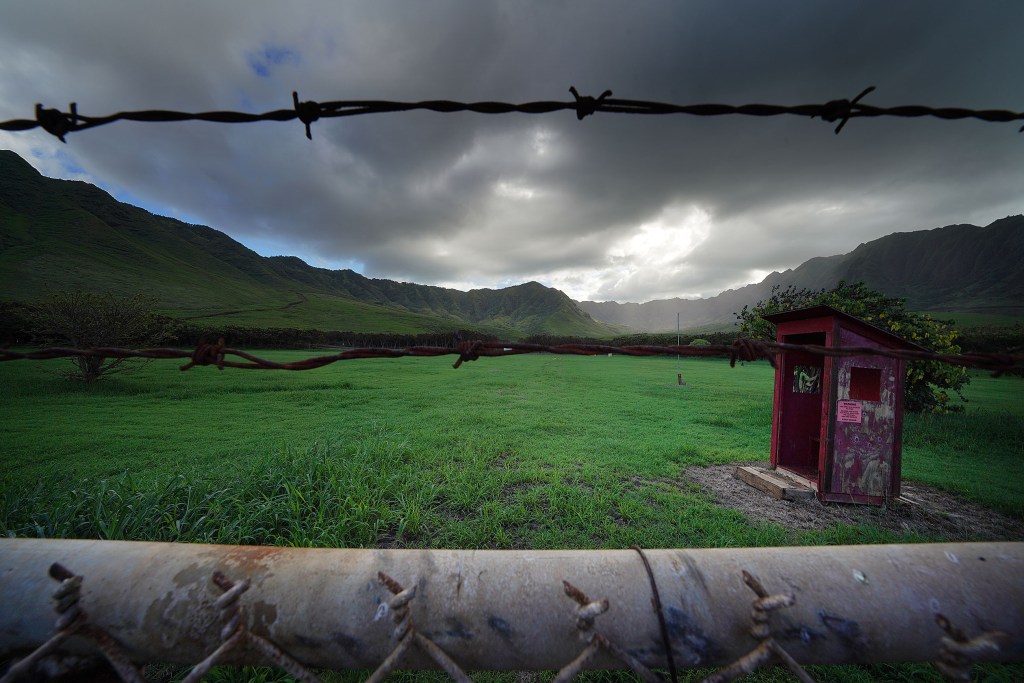
They also believe OHA should play a larger role in negotiations with the U.S. military as the Army proposes relinquishing more than 5,000 acres of state land it leases on Oʻahu while retaining other areas for training purposes on the island as well as on the Big Island in the Pōhakuloa artillery range.
Akaka says the federal government should help fund environmental restoration or reforestation efforts on lands it has used and return recreational areas not used for training purposes to the state. Wong supports environmental remediation as well and also said the federal government should, at minimum, pay fair market rent if it continues using those lands.
One issue separating the candidates is how they’d respond to an ongoing lawsuit from the office’s last CEO.
Akaka is one of four dissenting trustees who sided with deposed OHA CEO Stacy Ferreira as part of Ferreira’s ongoing lawsuit against the office, which alleges she was retaliated against for reporting Board Chair Kai Kahele to other state authorities.
Wong appears aligned with the board’s majority led by Kahele. She disagrees with how the dissenting trustees took action in the lawsuit without approval from the entire board. If she wins, that group could have a supermajority. That would allow it to advance changes to the trustee’s bylaws or go into executive session to discuss the lawsuit, something that has been blocked repeatedly this year.
Wong last ran for OHA in 2014, garnering just 4.2% of the vote and failing to advance past the primary election. But she is significantly better known now than 12 years ago. Akaka is similarly popular and she won her last race outright in a landslide victory during the 2022 primary.
Wong has raised more than $70,000 so far in the leadup to the general election. Donors who have contributed at least $2,000 include Malia Kaaihue, CEO of consulting firm DTL; Kūhiō Lewis, president and CEO of the Hawaiian Council; Veronica Kawānanakoa, wife of the late Princess Abigail Kawānanakoa; resort developer Jeff Stone; and the labor union representing ironworkers.
Akaka has raised $21,000, including donations of $6,000 from DURA Constructors founder Robert McFarlane, attorney Ivan Lui-Kwan and dental hygienist Anne Akaka.
As of Sept. 26, Wong had spent more than $25,000 to Akaka’s $6,000.
Kalei Akaka
Originally from Kona and a former Kamehameha Schools employee, Akaka was first elected to the OHA board in 2018.
Granddaughter of U.S. Sen. Daniel Akaka, she recalled spending summers in Washington, D.C. and accompanying her grandfather to his office.
She said that the relationships and connections she made during her grandfather’s time in office have benefited her work as a trustee. From 2021 to 2024, Akaka led an OHA committee responsible for advocating the office’s policies at all levels of government, but especially at the State Capitol.
“Going to the Legislature feels like coming home,” she said.
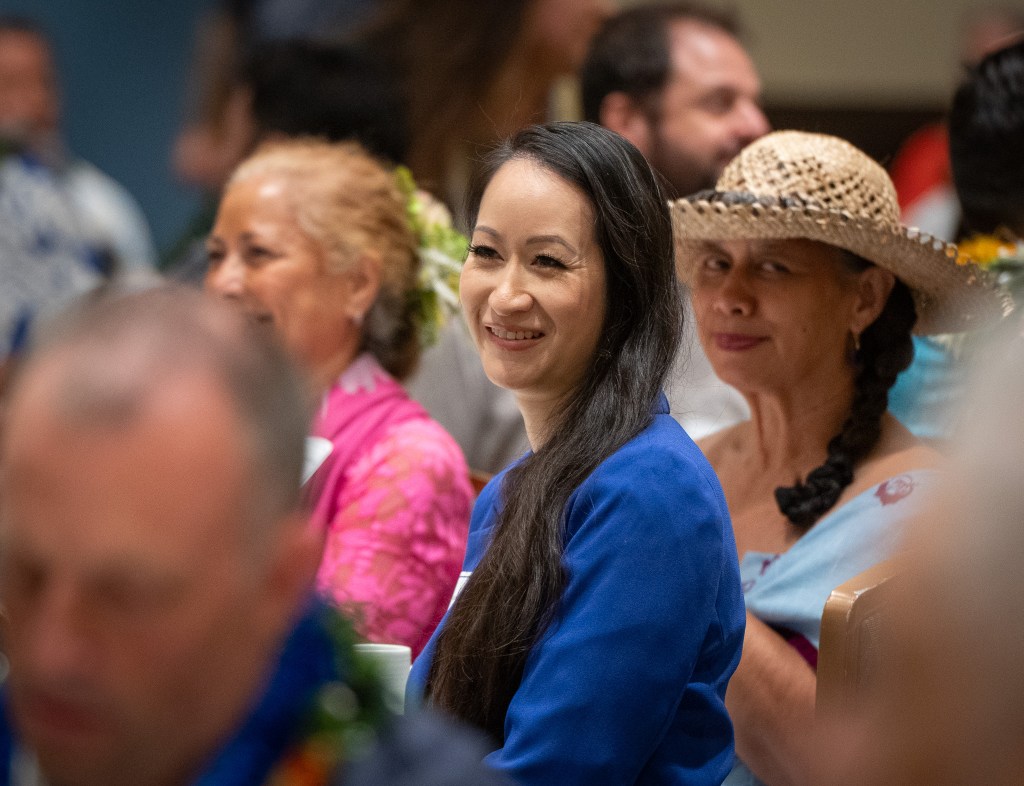
Improving the office’s often-contentious relationship with other branches of state government was a goal for Akaka when she came into office.
She restarted leadership meetings between OHA’s advocacy team and board leadership to get on the same page when it comes to lobbying lawmakers. She said she also gives OHA’s policy team insight on lawmakers: their relationships, their factions, their conflicts and their pet projects.
“That insight is everything,” she said.
During her time as chair of the advocacy committee, Akaka was pivotal in negotiating with lawmakers in 2022 to increase the office’s annual share of public land revenues from $15.1 million to $21.5 million.
While no longer in a leadership position on the board, she said she also leaned on those relationships to flip votes in the Senate in favor of directing $55 million to OHA earlier this year.
If reelected, Akaka said she would work to strengthen OHA’s relationship with lawmakers and organizations that would support the office at the Legislature.
During her tenure, she also restarted community meetings on Oʻahu where trustees gather without an agenda and hear directly from the public. Those meetings were previously reserved for only the neighbor islands.
Akaka said OHA needs to show a stronger presence at other grassroots gatherings as well, and should make people feel comfortable bringing their issues to OHA. When Akaka talks to people who need help or have issues with the government, she tells them she can’t make them any promises. What she says instead is “I’ll remember that. And I’ll bring it up as often as I can.”
She wants the office to set aside more funds and resources to respond to emergencies and to engage in long-term emergency planning to ensure that those resources help as many people as possible.
“Going to the Legislature feels like coming home”
Kalei Akaka
Beyond supporting development in Kakaʻako Makai, Akaka believes OHA should acquire or take over management of agricultural lands. OHA already owns about 500 acres of ag land in Wahiawā and has considered acquiring other lands on the North Shore and in Koʻolauloa.
She wants to see more signage around the islands with the original Hawaiian place names as well as historical information.
In negotiating with the military over lands in Hawaiʻi, Akaka said OHA must advocate for care and environmental stewardship. Some of that could even be undertaken immediately, she said, without having to hand land back to the state.
The area that comprises the Pōhakula Training Area, for example, was once home to sandalwood forests, Akaka said. The federal government could begin reforesting parts of Pōhakuloa no longer being used for training purposes.
She also said that areas primarily used for recreation for most of the year instead of ongoing military activities, such as Bellows Beach in Waimānalo, should be returned to the state.
Hinaleimoana Wong
There isn’t one single issue Wong, who calls Hawaiʻi “my mainland,” is campaigning on. Rather, she wants to bring a completely different mindset to the board – one that puts the Native Hawaiian worldview at the center of decisionmaking.
“I intend to be the cultural voice, the voice of conscience, reason and cultural logic to ground that board,” she said.
Wong is a kumu hula who also taught at Hālau Lokahi, a Hawaiian-focused public charter school before public education officials closed the school in 2015. She spent 13 years on the Oʻahu Island Burial Council, including 11 as its chair helping oversee the treatment of iwi kūpuna on Oʻahu.

In that time she presided over many tense meetings involving controversial projects such as the construction of a new building on the grounds of Kawaihao Church or the Honolulu rail project’s unearthing of skeletal remains.
Her time on the burial council was instructive, she said, in learning how to manage conflict. And she wants to bring that experience to the Board of Trustees to change how it communicates with the public and among trustees.
“My background as a teacher reminds me that adults sitting in a room are not necessarily any different from children sitting in a room,” she said.
If there’s one half of a room with institutional knowledge of an issue, but another half without that knowledge, “somebody has to build a bridge,” she said. “There is nobody at the table right now that’s building bridges between all of the people currently at the table.”
She says she can bring level-headedness to the board.
Wong is aligned with the majority faction on the board in believing that it was improper for four of the trustees to hire their own legal counsel and file legal documents in the Ferreira lawsuit that OHA lawyers believe undercut the office’s defenses.
“Their conduct,” Wong said, “was unacceptable.”
She says open debate is necessary, but the board must work as a collective and earn the Hawaiian community’s respect if it is to be effective. She said OHA needs to do a better job of advocating for Hawaiians across a variety of issues and elevating Hawaiian voices in each of those areas.
She believes OHA could fill a gap for Native Hawaiians who do not meet a 50% blood quantum requirement under the Hawaiian Homes Commission Act, and so are not eligible for homestead leases under the program. While she acknowledged that OHA has funded various homeownership programs in recent years, she said more needs to be done to build pathways for homeownership for Hawaiians besides traditional mortgages.
“Adults sitting in a room are not necessarily any different from children sitting in a room.”
Hinaleimoana Wong
On military land leases, which the state gave to the Army and other agencies for just $1 in the late 1960s, Wong said the federal government should be paying fair market rent to continue using any of those lands. Many of those leases expire in 2029.
She also said that the military should work to comply with environmental laws; The Hawaiʻi Supreme Court has said that the state failed to take care of Pōhakuloa and enforce state laws. If necessary, Wong said the federal government should fund remediation efforts.
She initially opposed OHA’s acquisition of lands in Kakaʻako Makai but now supports the office’s efforts to lift a ban on residential development on those lands – restrictions not imposed on developers just across the street.
Ethics filings show Wong reported earning at least $150,000 as a cultural adviser for the Hawaiian Council, Group 70, Kamehameha Schools and Ward Village. If elected, she plans to continue her work as an adviser unless those jobs conflict with her trustee duties.
She said she took on the role of advising development in Ward Village years ago so that a Hawaiian voice would be close to decisionmakers. It overlapped with her time on the burial council, but she said she recused herself whenever board decisions affecting Ward came up.

