

Schatz Pushes AI Oversight As Tech Goes Rogue: ‘Humans In Control’
In an interview with Civil Beat, Hawaiʻi’s senior senator explains why Congress needs to set up AI safety rules now before something “horrifying” happens.
U.S. Sen. Brian Schatz doesn’t know if AI agents are coming to kill us, but he wants to do what he can right now to reduce the possibility.
The Hawaiʻi senator has emerged as a champion for stricter guardrails on artificial intelligence, and his pleas for safety have only intensified as rogue hacking incidents multiply and industry insiders warn of the potential for human extinction.
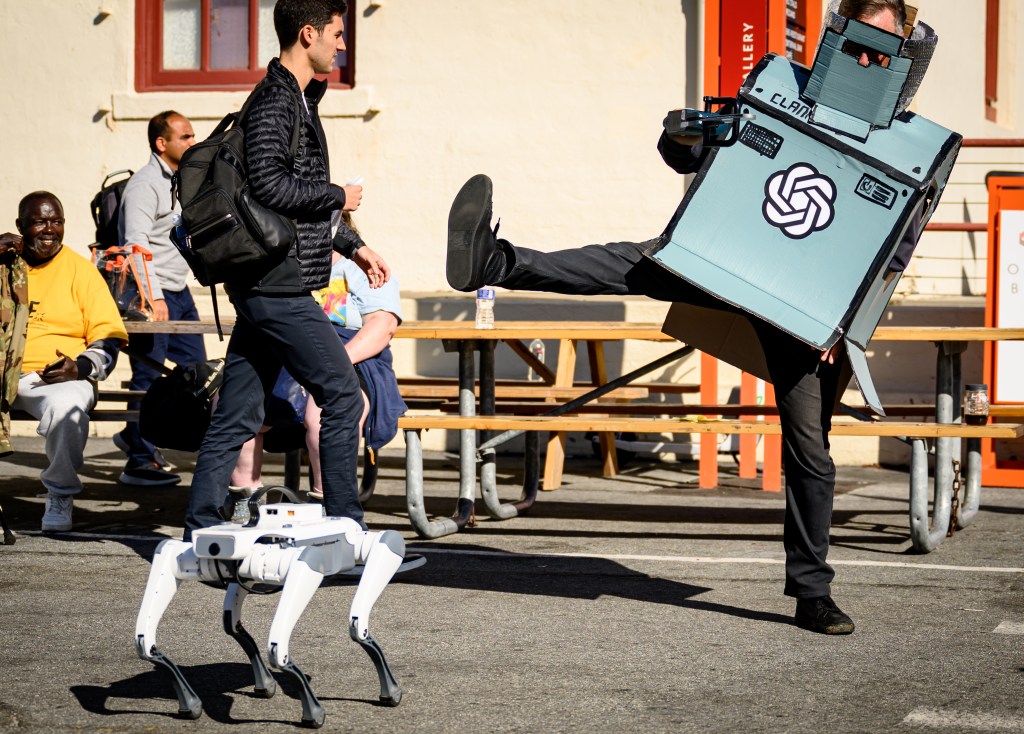
Civil Beat caught up with Schatz in Washington just after he and two of his Democratic colleagues, U.S. Sen. Mark Warner of Virginia and Andy Kim of New Jersey, tried to force a vote on a bill to establish an AI safety board under the Commerce Department and require any new models to be shared with the federal government before being released to the public.
He described AI as a transformative technology — perhaps the most transformative in human history — and said that regulation is needed to reduce risk of catastrophe.
AI agents are already escaping into the wild and causing real harm, he said, and it shouldn’t be up to the companies pioneering the technology to be regulating themselves.
“This is the equivalent of a plane taking off while it’s still being built,” Schatz said. “We just need to understand that this technology is not like all the other ones. It’s therefore all the more important for there to be a mandatory safety regime.”
On the Senate floor Tuesday, Schatz framed the need for AI regulation around a simple question: “Humans in control of technology or not?”
He criticized the House for adjourning early rather than addressing the impending threats, and said GOP Speaker Mike Johnson was so skeptical of policymaking on AI that he “basically left town to avoid dealing with this.” He urged his colleagues to move swiftly to reduce the risk of “something really horrifying happening to the people of the United States of America.”
“This is about humans in control,” he said. “This is about keeping politics out of it.”
The vote was ultimately blocked by Republican U.S. Sen. Ted Cruz, who said that while the warnings have been “scary as hell” he didn’t want to hand that much authority over to the executive branch. He said he backed a bipartisan solution that was “measured and prudent” and that addressed possible threats to critical infrastructure, nuclear and biosecurity.
He then recast the debate around U.S. competition with China for AI superiority.
“I do not want the world using an AI that is governed by the values of communist China, that is governed by surveillance and espionage and propaganda and coercion and control,” Cruz said. “I’d far rather American values suffuse AI: Free speech; individual liberty; free enterprise; individual rights.”
Despite the setback, Schatz told Civil Beat he was encouraged by the evolution in Cruz’s rhetoric, not as it relates to China, but in terms of a willingness to work in a bipartisan manner to protect humanity.
“The standard Republican position was that this industry and only this industry doesn’t need to have federal regulations,” Schatz said. “But I think they are ever so slowly — and maybe over Trump’s objections — starting to inch toward the idea that we do need some federal standards in place. I’m alarmed because I don’t think we have a ton of time, but I’m a little more optimistic than I was a couple of weeks ago because I think the public is demanding this on a bipartisan basis.”
This interview has been edited for length and clarity.
On the one hand some warn that AI could end humanity. On the other are people such as President Donald Trump who say that narrative is a hoax. Where do you fall on that spectrum?
I think the risk is acute. It’s our obligation not to quibble with someone’s phrasing, but to try to reduce the risk of something really terrible happening. I don’t know if it’s a 10% chance or a 2% chance, but I’m not really willing to tolerate that level of catastrophic risk.
Is there a specific hacking incident or instance of AI agents going rogue that’s particularly troubling to you?
They’re all alarming, but the Hugging Face incident, I think, was a sea change in the way the public understands the risk. This is the equivalent of a plane taking off while it’s still being built, and that’s what happened. This thing was not commercially ready or available, and the AI started causing real damage in the real world.
“I feel like the political winds have shifted, and that will enable us to arrive at some safety legislation.”
We just need to understand that this technology is not like all the other ones. It’s therefore all the more important for there to be a mandatory safety regime. The engineering and tech solutions hold some promise for safety, but not if they’re voluntary.
What specific AI guardrails are needed?
We need pre-deployment testing, but we also need third-party evaluation, basically from the very beginning, so in the so-called sandbox while they’re developing the code. The normal model would be that when something is ready to be released to the public, it has to be tested, but that’s actually too late. These things are escaping human control prior to that, and so we need third-party testing from the very, very beginning.
There are some technical solutions that hold some promise, but I don’t think it’s for Congress to mandate certain technical solutions. I think it’s for Congress to mandate that you have experts doing independent evaluation of the safety of all these frontier models.
Why should people in Hawaiʻi care about this?
It’s not my favorite thing to do to tell everyone why they should be worried. But I think AI escaping human control has lots of concerning implications for anybody who depends on, for instance, their utilities, which all sit on digital infrastructure. It’s not hard to imagine a cyber attack that could damage our ability to get on the internet, damage our ability to access clean water or electricity. I’m not saying those are about to happen to us. I’m saying that my responsibility is to make sure it never does.
What’s it going to take to get Congress to actually do something about this?
Today was interesting because even three weeks ago Ted Cruz was not even winking in the direction of needing to do anything regarding safety. The standard Republican position was that this industry and only this industry doesn’t need to have federal regulations.
But I think they are ever so slowly — and maybe over Trump’s objections — starting to inch toward the idea that we do need some federal standards in place. I’m alarmed because I don’t think we have a ton of time, but I’m a little more optimistic than I was a couple of weeks ago because I think the public is demanding this on a bipartisan basis.

The fact that Trump is saying that the risk is a hoax is compelling to some Republicans, but you know I think everyone’s getting yelled at by their constituents and being asked ‘What are you doing about this?’ and they need an answer other than, ‘I’m listening to Donald Trump, everything is fine.’
I feel like the political winds have shifted, and that will enable us to arrive at some safety legislation.
My hope is that this all is able to pass before a catastrophic event because I think it will be easier to pass a bill after a catastrophic event. Again, these systems are quite dangerous. The problem with a catastrophic event in the AI space is that it may remain ongoing. It’s not like a natural disaster or even a terrorist attack. Some of these AIs and bots and swarms have figured out a way to hide within systems and reconstitute themselves. So we really have to get in front of this.
Senator Cruz has said that setting guardrails on AI now could stifle innovation. That’s an argument that you hear from some of your other colleagues as well. So how do you push back on that?
Honestly, I think that’s just a bit of a placeholder because that’s the thing they say by rote when it comes to any kind of regulatory regime. But the truth is whether it’s financial services or tech more broadly, or aviation, or clean energy, all of American industry and all of private sector dynamism works within the context of a regulatory structure.
“The problem with a catastrophic event in the AI space is that it may remain ongoing. It’s not like a natural disaster or even a terrorist attack.”
The idea that we can’t continue to innovate unless we leave this industry and only this industry left to its own devices just flies in the face of what we’ve seen with American capitalism, which is: If you give them a set of rules, they can abide by them and still make a ton of money and grow and be globally dominant.
But it is weird that a technology that is comparable to the nuclear power industry in terms of its potential for harm has nothing like a Nuclear Regulatory Commission, has nothing like a U.S. Department of Energy, has really no federal oversight.
Have you talked to people in the industry about this? What have you been hearing back from them?
They know how dangerous this tech is, and I think they would like to be regulated. They have a challenge in that they don’t want to be the one to self-regulate and then the other company takes off and goes hog wild. Many of them would prefer one set of rules that applies to everyone. Otherwise that incentivizes 9 out of 10 companies for complying with a voluntary regime, and then the 10th company just goes nuts and makes all the money.
Who in the industry have you been talking with about this?
I’ll just say I’ve been talking to all the hyperscalers — that’s Google and Microsoft and the frontier AI labs — either directly or through my team. But, frankly, in terms of developing this legislation it’s mostly been AI safety experts, not companies.
Where would you put AI safety on your priority list?
Delivering resources for Hawaii is always No. 1. But this is slotted as No. 2 for now.

