

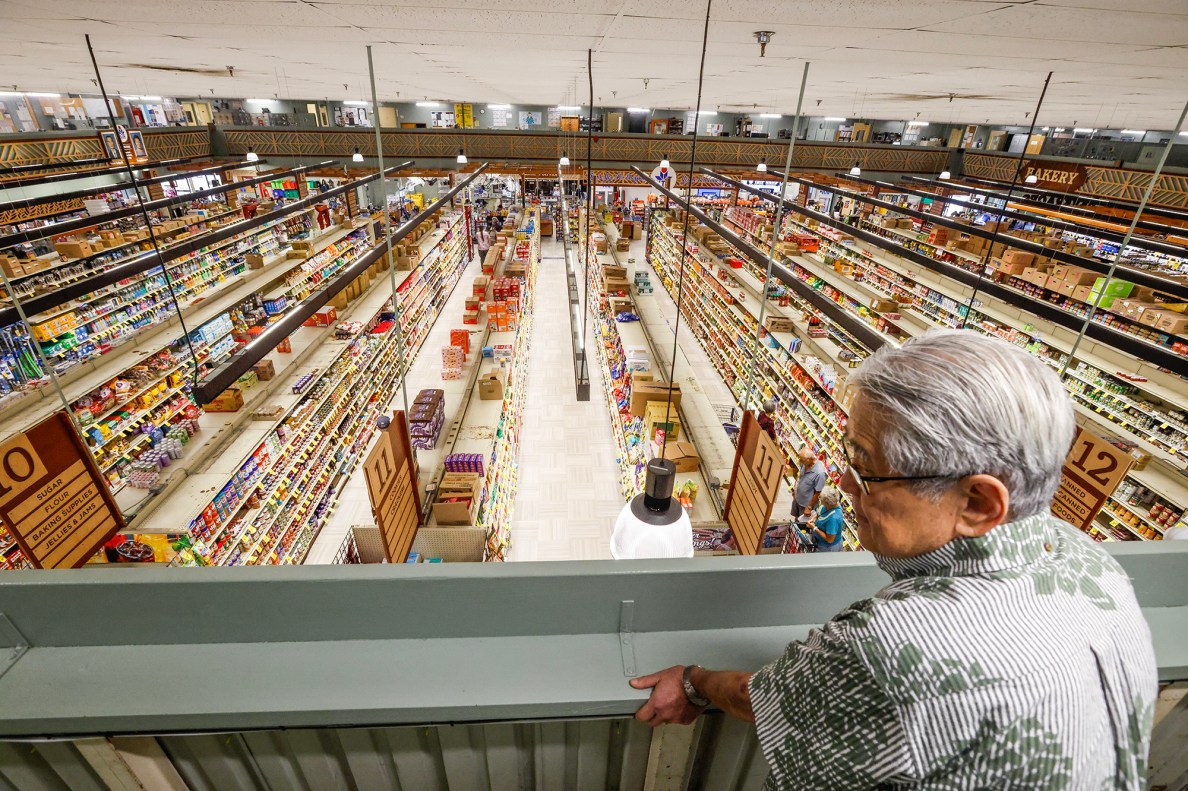
What did it take for Derek Kurisu to get a job at KTA? He had to prove he could haul a 100-pound bag of rice.
With the manager watching, he hoisted one of the hefty woven sacks and carried it fifty feet. The job was his.
That was in 1968, when Kurisu was still in high school. Except for a stint on Oʻahu during college, he has worked at the grocery company ever since. Now 74, he is its executive vice president tasked with managing local suppliers, sourcing, product development and community relationships.
“My employee number is 11,” he told me with a chuckle.
KTA has become a lifelong attachment for Kurisu, and the same holds true for thousands of Big Island families. For many of them, it begins in childhood — shopping for poi, bitter melon or natto with Tūtū, Popo or Obāchan — and carries on into adulthood and old age, only for the cycle to repeat.
With so many national brands shaping the retail landscape of Hawaiʻi, KTA is an outlier. It’s where “local” isn’t a marketing ploy, where shoppers aren’t confronted with punchy marketing copy about heritage or artisanship.
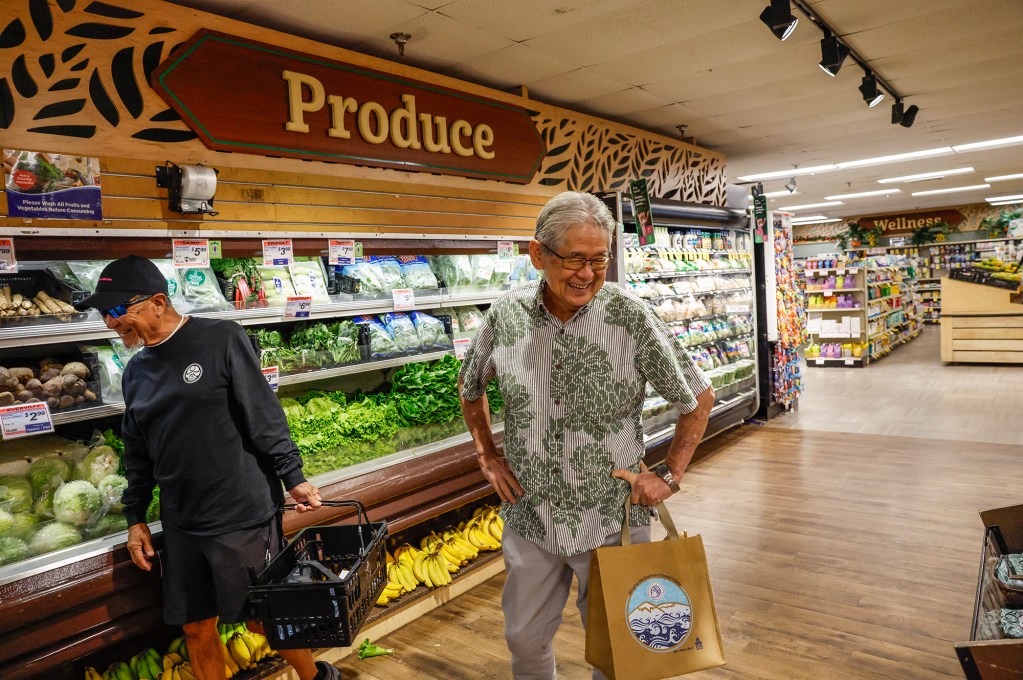
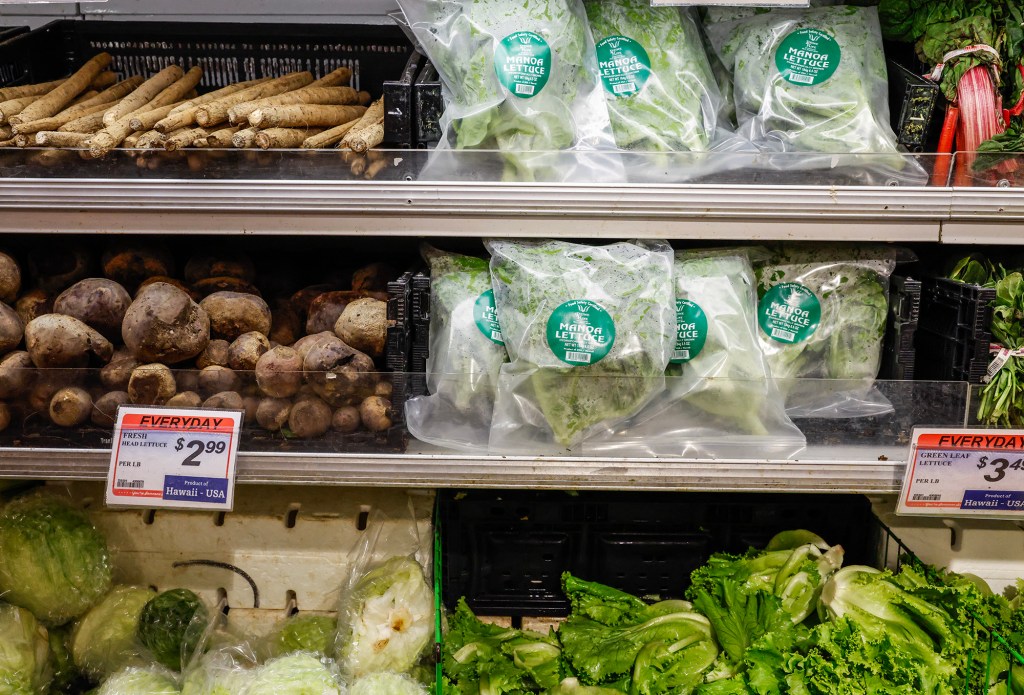
KTA, which has stores only on the Big Island, is loved for selling local delicacies and ingredients — the sort of things you’d struggle to find at Target or Walmart.
People come back, I suspect, because it feels like one of those increasingly rare places where, against the odds, ordinary Hawaiʻi life persists.
Kurisu, who was born in the historic sugar town of Hakalau on the Hamakua Coast, is grounded in that ordinary life.
“I grew up on a sugar plantation where everybody worked together, helped each other as one big family. I try to incorporate the same kind of philosophy in our company.”
For many KTA customers, the generational connection runs deep. Pohai Montague-Mullins, a retired teacher at Ke Kula ʻO Nāwahīokalaniʻōpuʻu, said she was raised by her mother on food bought from KTA. Now her children feed their children from the store’s shelves.
“It’s a gathering place,” she told me. “I can go to Target and Walmart, and I’ll never see anybody I know. I go to KTA, I see eight people.”
Navigating Storm After Storm
Part of KTA’s improbable success is that it started out as a mom and pop store, 110 years ago. Back then, Hawai‘i was filled with groceries like KTA. A small fraction of them survive to this day.
Koichi and Taniyo Taniguchi founded the company in Hilo in 1916 to serve workers from the plantations. In 1939, they expanded to another Hilo location.
Yet it wasn’t until the 1950s and ’60s that the store grew into a modern supermarket chain. Through the 1980s and into the 1990s it expanded to six locations and eventually launched its Mountain Apple Brand, which sells Hawaiʻi-grown and made products.
The company’s rise hasn’t come without considerable headwinds, including the 1946 and 1960 tsunamis. The former destroyed KTA’s original storefront. The latter nearly killed one of its owners.
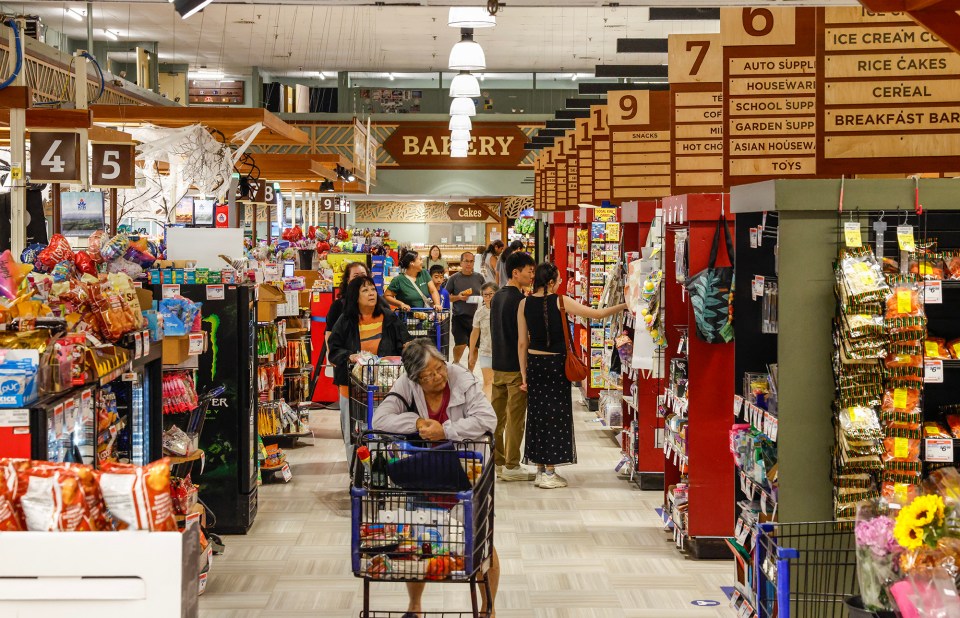
Then came another inundation: the arrival of national chains and big-box stores with their low prices and massive scale.
KTA survived them too. In fact, at a time marked by the closure of local businesses — most recently, Tamashiro Market — KTA is growing, if slowly and deliberately. Today they have seven markets and a pharmacy and employ more than 800 people.
In response to some of my recent columns, feisty commenters accused me of being nostalgic for a Hawaiʻi that no longer exists. Move on, they prodded, things change, get over it.
But don’t get me wrong. This ode to KTA is not out of a longing for some old Hawaiʻi, one now wrecked by Walmart or Whole Foods or tourists. It instead comes from frustration that our country as a whole feels increasingly placeless, where huge national companies flatten out local and regional cultures.

Ideas showcases stories, opinion and analysis about Hawaiʻi, from the state’s sharpest thinkers, to stretch our collective thinking about a problem or an issue. Email news@civilbeat.org to submit an idea or an essay.
Those big-box stores that set up shop in Hilo over the last thirty years stock the same Dove soap, Band-Aids, bananas, Cheerios, Colgate toothpaste, and thousands of products that they do in Beavercreek, Ohio, Surprise, Arizona or any other corner of the union.
The problem of uniformity is particularly acute in the grocery world. Today, just four companies — Walmart, Kroger, Aldi and Albertsons — own a third of all American grocery store locations.
What’s more, between 1990 and 2019, the 20 biggest retailers more than doubled their control of food sales in America.
This trend is visible elsewhere across our economy, too. How many independent pharmacies, bookstores, hotels, media outlets or hardware stores remain in the islands?
This is the environment in which KTA, still owned by the same family, has thrived.
So, how have they done it?
Sourcing Local, Getting The Price Right
As Kurisu sees it, prices matter. Adapting to a changing market matters.
But more than anything, the company’s success comes from building trust with customers over the decades. It is based on how KTA treats them and the experience they get shopping there. In other words, where Target is anonymous, KTA is personal.
Also essential: what products the stores stock and their focus on local sourcing.
Its produce section is one example. 95% of KTA’s leafy vegetables are grown in the islands, as are its papayas, flowers and bananas.
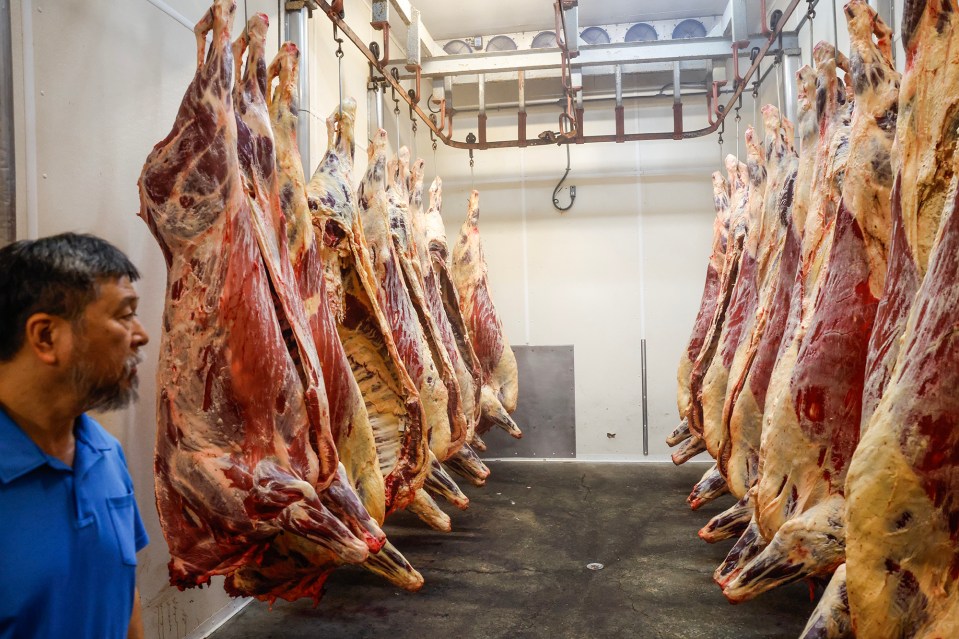
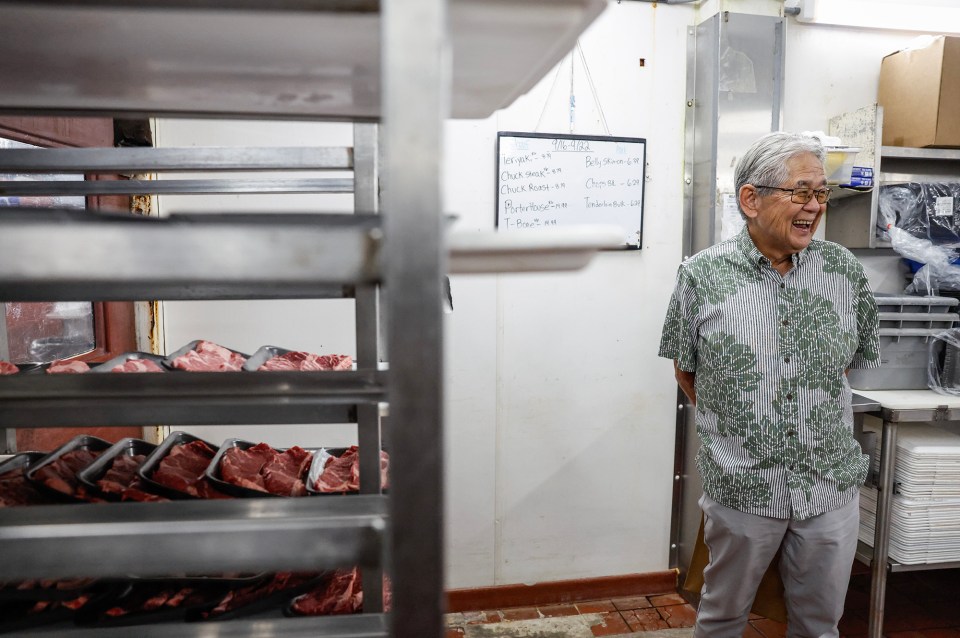
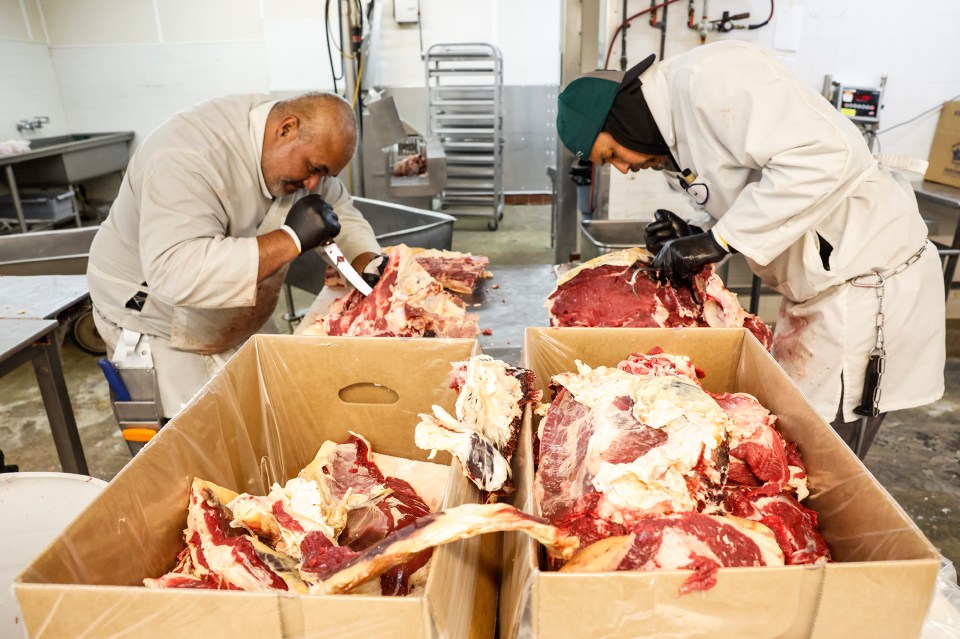
It also sells local fish and Hilo-made tofu. More than half of its beef comes from Hawaiʻi cattle farms.
It even carries milk from local dairy cows, a considerable feat since the 1982 heptachlor scandal — when the Department of Health found pesticides used on pineapple tops fed to dairy cows — almost wiped out production.
Another pillar is KTA’s links to and a sense of obligation to the Big Island’s economy. Some of its suppliers, Kurisu told me, have been working with the grocery company for four generations.
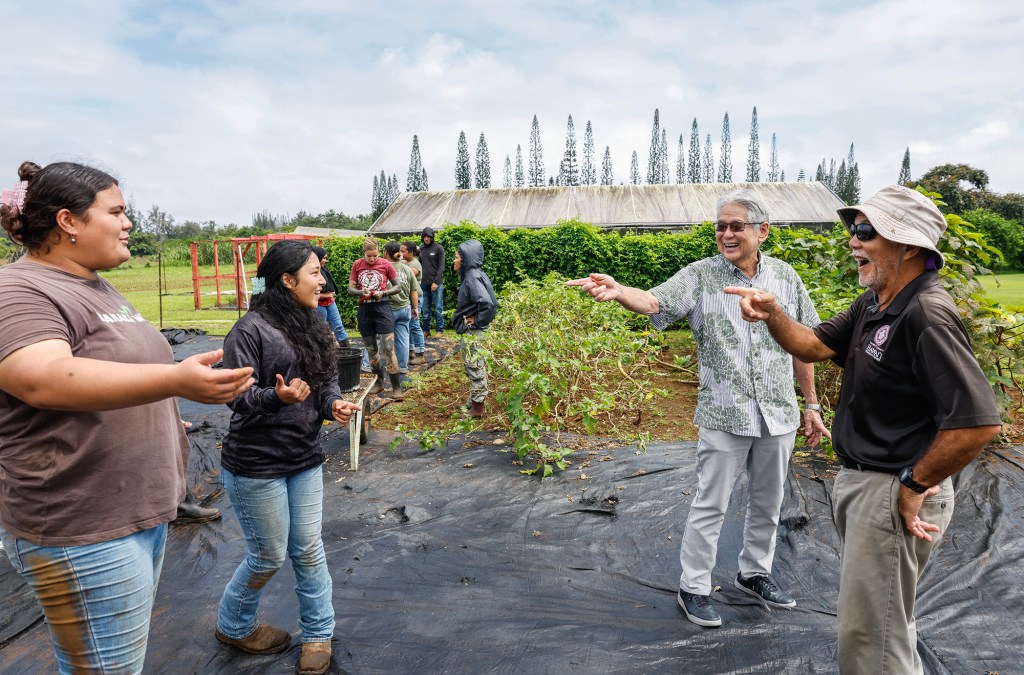
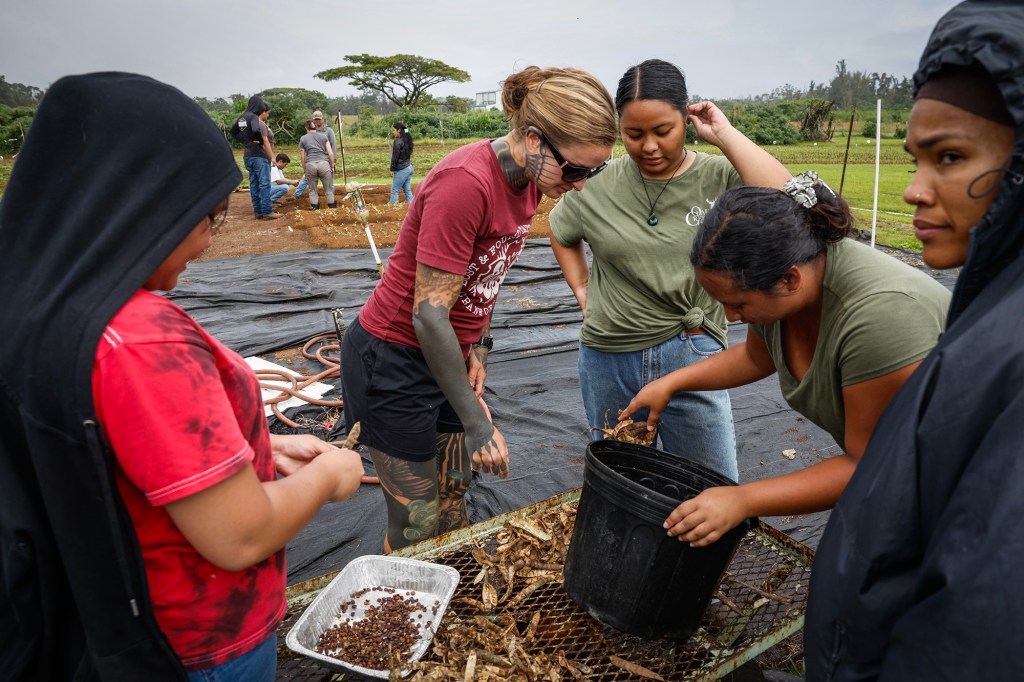
KTA also works closely with the Hilo community, especially when it comes to food security. Kurisu collaborates with Lew Nakamura, professor of agriculture at Hawaiʻi Community College, and has supported Nakamura’s programs that give students hands-on training in sustainable farming.
“It is really important for me to make sure that we can grow our own food locally,” Kurisu said.
Kurisu even plans to open a hydroponic farm within at least one of KTA’s stores, further bolstering the local food movement and the young people who will carry it forward.
This is KTA’s formula, and it seems to be working.
Can it be replicated elsewhere in Hawai‘i’s economy? Maybe, maybe not.
What matters in the long run is that this grocery chain is a bright spot of local resilience and a bulwark against the great homogenization of our country. So long as it exists, the monoculture hasn’t won.
Once, on a trip to Hilo, my Norwegian brother-in-law declared KTA to be his favorite grocery store in the world.
That’s high praise. In Scandinavia, it’s perfectly ordinary for stores to sell Atlantic salmon cured in dill, langoustines, wild mushrooms and even game.
In Paris, where I live, supermarkets sell fine chardonnay, artisan butter and fresh oysters.
Yet like my brother-in-law, I prefer KTA.
Nowhere else have I encountered a grocery where so much local life unfolds. As you’re picking strawberry papayas, you hear people running into old friends, talking about kids and grandkids, cracking jokes with the braddahs behind the poke counter. While that might happen at say, the Whole Foods in Kāhala, many shoppers there seem to rush through the store, girding themselves for an eye-popping grocery bill at the end of the expedition.
What makes any town special is its particularities, the weird and wonderful things its residents do and eat and say.
With the internet and mass travel, our world is far smaller and less distinctive. And life is a hell of a lot less interesting without those quirks.
We ought to celebrate those corners of the world that resist the trend, where something singular yet ordinary can still exist.
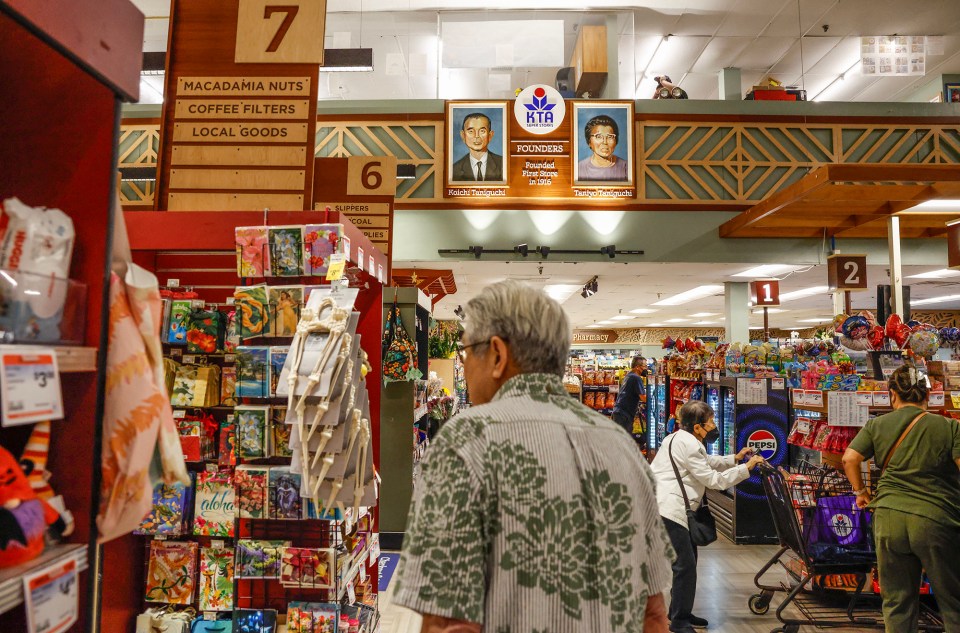
As Kurisu walks through the aisles, people often ask him when he’ll retire. He’s not planning on leaving anytime soon.
“I feel a sense of obligation because I’ve worked with so many employees,” he told me. Since KTA’s founding, more than 13,000 people have worked at the chain.
“They sacrificed their lives. The Taniguchi family sacrificed their lives to make KTA what it is today.”
