Election Day In Hawai‘i: Behind The Scenes Of Civil Beat’s Coverage
After writing more than 400 stories and sorting through hundreds of candidate questionnaires, our big day is here. Turnout seems low, but there are important ballot measures and national results will also matter. We’ll be tracking it all.
It’s election day and this year is shaping up to be a real nail-biter, with a handful of high-profile races in which Republicans and Democrats appear locked in a virtual tie. The stakes are high and the outcome is simply too close to predict.
You probably know this by now: None of those races are in Hawai‘i.
Without any close statewide contests this year, it’s easy to dismiss the elections here as something of a yawn fest. But there are serious issues on the ballot locally — and Hawai‘i has much at stake in the outcome of swing state races as well. And covering them has kept us very busy all summer and into the fall.
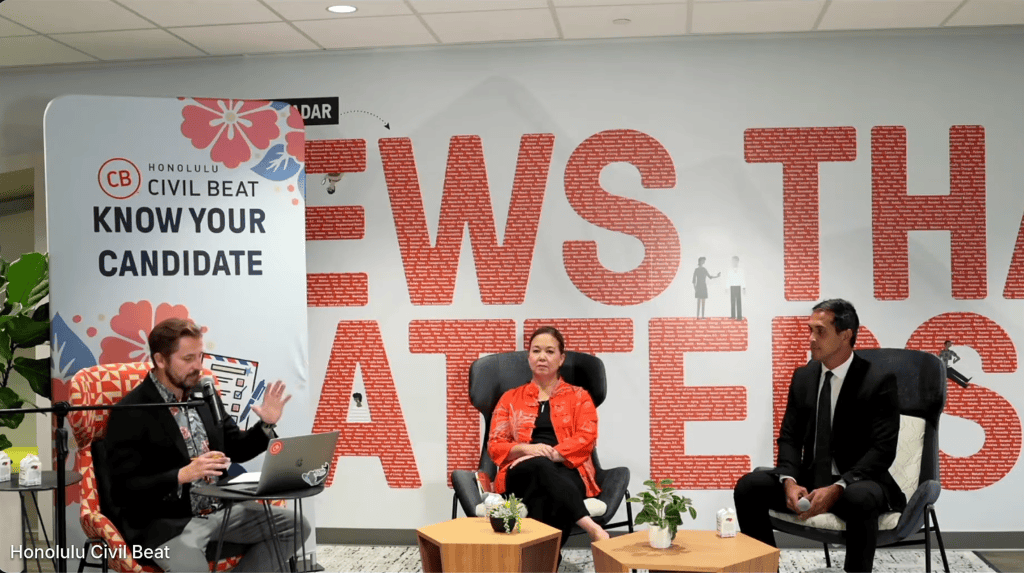
Civil Beat has published 434 stories about the 2026 election, but if you’re looking for some inspiration before heading to cast your ballot, a good place to start is with this list of 10 races we will be watching today. The Maui mayor’s race and a state constitutional amendment to allow counties to set up special tax districts to finance infrastructure for housing development are top of the list.
We’re keeping an eye on national races too. Civil Beat’s Washington, D.C. correspondent Nick Grube is particularly interested in whether state Sen. Brenton Awa, who is challenging two-term incumbent U.S. Rep. Jill Tokuda, outperforms other Republicans on the federal ballot. Awa is not expected to win but he is one of more intriguing politicians in the state, adept at garnering attention. He was the talk of Hawai‘i after his impassioned speech on the opening day of the 2025 Legislature.
Will that translate to votes?
Grube will also be paying close attention to those nail-biter swing state races. If the House or Senate flip to the Democrats, he will be tasked with figuring out the implications for Hawai‘i. One prospect: Sen. Brian Schatz of Hawaiʻi could become the #2 guy in the Senate, if Democrats take that chamber.
Inside The Newsroom
Before Hawai‘i’s switch to all-mail voting, elections were a late-night affair in local newsrooms, with editors and other reporters typically waiting for a call from a journalist stationed at the Capitol to say another round of results had been posted. Those tallies came in three “printouts” throughout the night and the results could change dramatically.
That meant reporters and editors often worked until well past midnight, fueled by an unhealthy amount of often-cold pizza (an election night tradition that we don’t question).
In this last primary, the vast majority of votes cast were sent by mail and were included in the first report, released to the media soon after polls closed. The second update changed little and there was no third update — meaning our work was done well before the midnight deadline of old.
Will that hold true tonight? In the first few elections after Hawai‘i switched to a universal mail system, election officials were woefully unprepared for the rush of voters who came at the end of election day to cast their ballots in person at a voter service center. This led to wildly long lines and a much later night.
With so many uncertainties this year about the postal service, will there be a late wave of in-person voters? It’s a question most CB editors want to nail down so we can do our core job of scheduling (including for that pizza). To err on the safe side, we will have reporters and photographers out checking on voter service centers throughout the day.

More Transparency Needed
Deadlines play an important role in campaign finance transparency. Voters want to know how much money candidates are raising, how they’re spending it and — most importantly — where that money is coming from. Reporters focus on digesting that information for readers.
Hawai‘i has strong laws about what county candidates must disclose. But not so much when it comes to when they have to share that information. There are different rules for when different candidates have to file — sometimes even for candidates in the same race.
The competitive race to fill the Kahului seat on the Maui County Council, in which voters narrowed in the August primary down their top two candidates to advance to the general in November, gave the public several opportunities to see the flow of campaign cash along the way. Candidates filed disclosures in July, August, September and October.
In races with only two candidates who automatically advance to the general election, however, primary election reports are not required.
That was the case with a historically close Maui County Council race, which left voters in the dark about candidates’ funds for most of the race. Incumbent Tom Cook is trying to fend off Kelly King to continue to represent South Maui.
As a result of the automatic move to the general, the public got a look at Cook’s campaign finances on Jan. 23, and then again on Sept. 30 — just a couple weeks before the Nov. 3 general election mail-in ballots went out. King, as a candidate who filed her nomination papers before April 25, filed a report April 24 before she’d raised or spent any money, and then didn’t file anything again until Sept. 24.
No laws were broken. And it used to be worse — lawmakers have added reporting requirements in recent years after public outcry. But it makes voters’ — and reporters’ — jobs harder.
By The Numbers: Election Q&As
218: Number of candidate surveys published by Civil Beat this year
70%: Percentage of 2026 candidates who sent their responses by our deadline
2,616: Number of questions answered
First off the mark: For the record, the first candidate to fill in their candidate Q&A was (drum roll please … ) Kalehua Kaʻōpua, a candidate for State House District 45.
Award for candidates singing from the same hymn sheet: Kauaʻi council members on the topic of feral cats. All of them basically dodged a direct answer about that political hot potato.
Our Man On The Scene
Civil Beat Politics Editor Chad Blair wrote his dissertation on the 1994 election between Ben Cayetano, Frank Fasi and Pat Saiki, and has covered every state election since. Blair points out that he’s now been covering politics in the state longer than our interns have been alive.
Here’s a photo of him from 2010, on the night that Neil Abercrombie, a former U.S. congressman, won the Democratic Primary for governor.

He’s clocked a lot of hours (and added a few grey hairs) since this picture was taken, so we thought we’d ask him to weigh in on how elections have changed in the last two decades.
Q. What’s the most compelling election night you’ve covered and why?
A. It was the 2002 primary, when Democrat Ed Case gave Lt. Gov. Mazie Hirono a close race to succeed Ben Cayetano, weakening her against Republican Linda Lingle in the general election. That started Case’s rise in local politics and almost ended Hirono’s. Politics aside, it was good for Hawaiʻi to be shaken up and be forced to govern in a bipartisan fashion, at least for a spell.
Q. What’s changed the most about covering elections or elections themselves since your first time covering election results?
A. The rise of social media and the advent of AI is changing elections in ways that we are only truly beginning to understand. While fake news and lies have always been with us, its speed and sophistication are truly astonishing. It comes as the American public has dumbed down and is unable to apply critical thinking skills to tell the difference between fact and fiction.
Q. What’s something you look forward to or dread about tonight?
A. I truly hope most of the ballots are turned in by 7 p.m. and that few are still waiting in line to vote. Otherwise, that will push my night back and keep me from enjoying a cold beer until after I have filed my stories.
Not Too Late
If you’re reading this before 7 p.m. and haven’t voted yet, it’s not too late — even if you aren’t registered. Same-day voter registration is available at voter service centers. Those registered can vote through mail, ballot dropoff or in-person. Visit the Office of Elections website for more information about where and when locations are open.
If you’re planning to vote but haven’t filled out your ballot yet, we’ve also put together a full guide to the ballot that you can access here.
Civil Beat reporters Matthew Leonard and Nick Grube, and editors Jessica Terrell, Nathan Eagle and Chad Blair contributed to this story.