

Fireworks: Hawaiʻi Fireworks Reforms Put Enforcement Onus On Police
For years, law enforcement agencies said the law held them back from effective fireworks prosecutions. A reform measure awaiting the governor’s OK counts on them to step up.
On New Year’s Eve 2023, two hours before midnight, a Honolulu police officer saw a Kalihi resident launch an aerial firework and observed it exploding in the sky.
The officer got the man’s information, issued him a citation and sent the case to the Honolulu prosecuting attorney’s office where it swiftly ended the way these cases always do, court records show.
“The State of Hawai‘i declines further prosecution herein,” Deputy Prosecuting Attorney Florence Nakakuni wrote in a court declaration.
For years, Hawaiʻi law enforcement agencies have complained the state’s laws make it too difficult for them to hold illegal fireworks users accountable.
Now those claims will be put to the test.
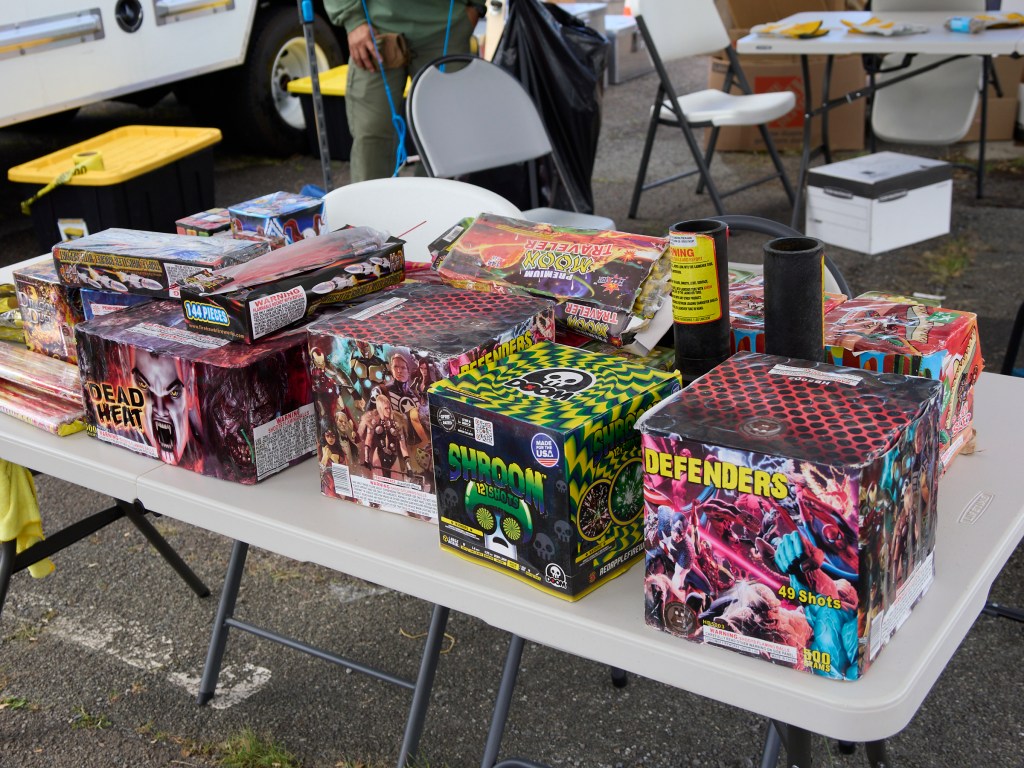
Lawmakers have approved a fireworks reform measure, written in collaboration with the Attorney General’s office, that gives law enforcement the power it asked for. It awaits Gov. Josh Green’s signature.
Going forward, law enforcement agencies will be out of excuses, said Bruce Albrecht, a licensed fireworks operator.
“Now I think they’ve gotten the system that they wanted,” said Albrecht, the operations director of Hawaii Explosives & Pyrotechnics, Inc. “You can no longer complain that it’s too hard to take somebody to trial, and so there’s no point even filling out a police report.”
Among other changes, police would be able to ticket unauthorized fireworks users in much the same way they issue traffic citations, with a lower standard of proof than the usual criminal case.
Impetus for the legislation was the New Year’s Eve fireworks blast this year that killed six and injured some 20 people, after years of handwringing over how to tackle illegal fireworks. The incident made people feel unsafe in their own homes, Rep. Scot Matayoshi, who introduced the bill, told Civil Beat.
“You can no longer complain that it’s too hard to take somebody to trial, and so there’s no point even filling out a police report.”
Bruce Albrecht, operations director of Hawaii Explosives & Pyrotechnics, Inc.
“We weren’t sure if our neighbor had what amounts to a bomb in their garage that could not only affect them, but could affect us too,” he said. “I remember going to sleep that night and thinking, ‘You know, I know there’s a house a street back that has a bunch of illegal fireworks. Am I going to wake up in a house fire? Are my kids going to be OK?’ It was a really terrifying situation.”
Injuries and deaths from illicit explosives have been creeping up in the last decade and surged last year, even before the tragedy took lives, including a 3-year-old boy. Unauthorized pyrotechnics have been able to proliferate unchecked as police failed to arrest violators and prosecutors dismissed the cases they were given.
In the last two years, a Civil Beat review found, a total of 50 citations resulted in just two convictions and two misdemeanor pleas, despite a state task force focused on the problem.

“Nothing was getting done, and the fireworks kept going off night after night after night,” Chinatown resident Lynne Matusow said.
Hawaiʻi Attorney General Anne Lopez acknowledged that the fireworks laws have been problematic. Police and prosecutors had to prove how much explosive material someone ignited, she said, which was hard to do once it had already exploded.
“It’s very difficult to actually bring charges and convict somebody,” she told the Civil Beat editorial board this week, “because of the amount of forensic expert testimony that was required.”
The changes should make a real difference, she said.
“We’ve gotten rid of several of those things,” she said, “and those were real roadblocks to being able to do this.”
Illegal Fireworks Users To Be Ticketed, Fined
The key piece of legislation that passed, House Bill 1483, would make it easier for law enforcement to target fireworks violators, including by lowering the standards for investigations and creating new types of violations.
Ticketing people for illegal fireworks will be similar to issuing traffic citations. Those who shoot off fireworks of 5 pounds or less will be subject to a $300 fine.
It will be a civil citation, not a criminal one, so police won’t necessarily need neighbors or explosives experts to testify in court or send fireworks fragments to a lab to be tested. They’ll only have to prove that someone shot off a firework higher than 12 feet by a preponderance of the evidence — a lower standard than the “beyond a reasonable doubt” threshold used in criminal cases.
Meanwhile, criminal laws against setting off fireworks remain on the books but will be expanded and strengthened. Legal definitions were clarified with simpler language that the attorney general’s office said will make cases easier to prosecute.
A weeklong series looking at some of the state’s most pressing issues and what lawmakers are doing to address them.
- Environment: Bolder Action Needed To Protect Hawaiʻi’s Environment
- Native Hawaiians: Help With Housing Continues To Elude The Hawaiian Community
- Invasive Species: Hawaiʻi Primes Itself To Battle Biosecurity Threats
- Education: Hawaiʻi’s Working Families Need More Support
- Insurance: Will Reforms Stabilize Hawaiʻi Condo Insurance Costs?
- Housing: Lawmakers Fund More Housing, Not Special Treatment for Locals
- Progress Report: Neighbor Islands Need More State Support On The Job Front
- Progress Report: A Series Of Child Abuse Deaths Failed To Spur Major Reform
There will be new prohibitions against setting off fireworks in what the attorney general called sensitive areas: large swaths of the islands that include any public street and within 1,000 feet of hospitals, churches and homes.
Some violations will incur higher penalties too, to deter bad actors.
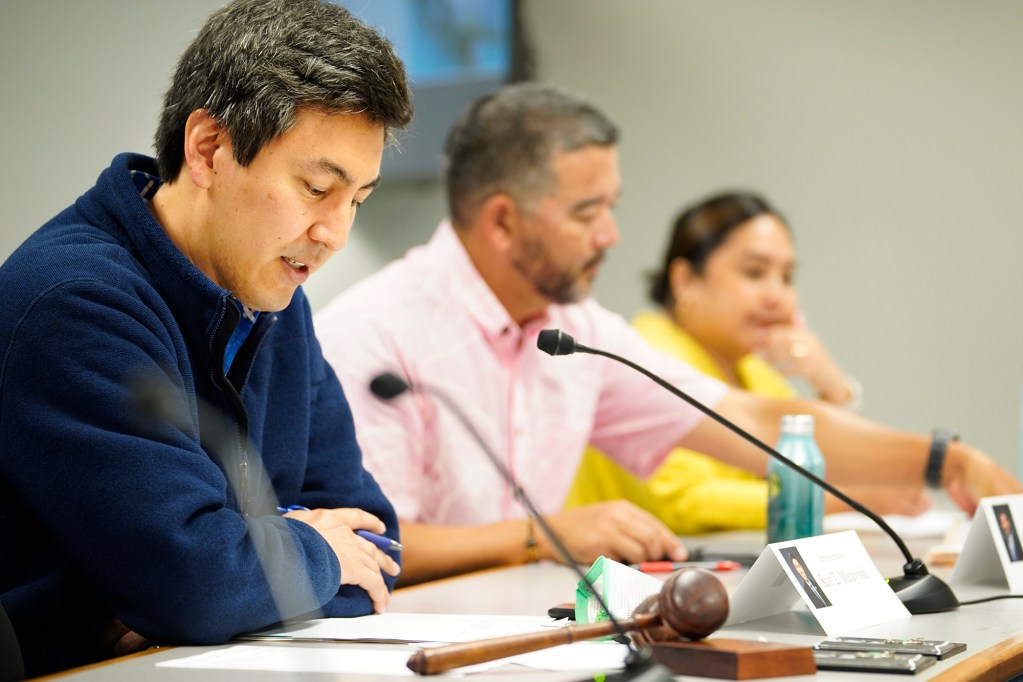
“Right now, people are doing it with impunity, because there’s no consequence, right?” Matayoshi said.
“Everyone knows it’s illegal, but people think, ‘I don’t see anyone getting busted. No one’s getting prosecuted. No fines are being issued.’ Once those fines start rolling out, and once people start getting busted in state operations in very public ways, I think people are going to get the message.”
Public Defender Sonny Ganaden, though, is skeptical of the new legislation. In his view, police already had the tools they needed to go after fireworks violators.
“We already have civil and criminal penalties for violations,” he said. “I just don’t understand why they need to change the law when it’s clear that there’s been a lack of enforcement, and it’s not having to do with the severity of penalties.”
Additional bills that passed will give law enforcement more tools and resources to tackle the issue.
The Hawaiʻi Department of Law Enforcement is set to receive $500,000 to conduct sting operations on Oʻahu, and $2 million to set up an explosives laboratory, via House Bill 806.
House Bill 550 would allow police to use drones to surveil public areas for fireworks violations.
And Senate Bill 222 extends the work of the state’s Illegal Fireworks Task Force through 2030, with annual progress reports to the Legislature.
“I want the market to be chilled,” Matayoshi said, “so that people are concerned that there may be actual consequences to violating these laws and will be less likely to purchase the firework as well.”
The governor has until July 9 to sign or veto the legislation.
Some other measures failed to cross the finish line this year, including an effort to create a random inspection program for shipping containers at the port with fireworks-sniffing dogs, which died early on in the session via Senate Bill 1226 and Senate Bill 227, which would have established an illegal fireworks enforcement division within the Department of Law Enforcement.
Big Displays Will Still Require Resources To Prosecute
Despite this year’s fireworks reform effort, challenges will remain when it comes to prosecuting the use of display fireworks, which are professional-grade aerials.
That is still a criminal infraction that requires evidence beyond a reasonable doubt to secure a conviction. Those cases will still require forensic expertise and testimony from experts and witnesses, Matayoshi said.
In other words, they’ll continue to present the same obstacles law enforcement has been struggling with for years.
However, Honolulu deputy prosecutor Mark Yuen said he is hopeful that the threat of higher penalties will serve as a deterrent to potential bad actors.
“There’s more risk involved if you’re going to do it,” said Yuen, the chief of the screening and intake division.
Short of prosecution, police can still cite and fine people for shooting off displays, according to Matayoshi.
“We’re going to prosecute them as far as we can with the evidence we have,” he said. “So if we don’t have the evidence for the felony B, because the mortar is long gone, I believe we can still issue the citation and at least hit them with some kind of fine.”
As reform measures play out, Ganaden noted other factors are at play. With President Donald Trump’s tariffs, imports from China — which manufactures fireworks — have plummeted.
“There are cultural issues happening that are bigger than law here,” he said.
Matusow said around New Year’s, she can see fireworks from her Chinatown lanai shooting off from the direction of Alewa Heights. The test of this year’s legislation will come at the end of this year.
“Hopefully,” she said, “it’ll be quieter.”
Civil Beat’s community health coverage is supported by the Atherton Family Foundation.
Civil Beat’s reporting on the Hawaiʻi State Legislature is supported in part by the Donald and Astrid Monson Education Fund.

