

Insurance: Will Reforms Stabilize Hawaiʻi Condo Insurance Costs?
New bill establishes state insurance and loan programs after years of false starts, allowing the government to serve as the insurer of last resort for condo associations.
Marcia Kimura needs help with her condo insurance. The 71-year-old retiree this year saw her association fee increase $71 a month because of rising insurance rates. It’s a lot for Kimura, whose income amounts to Social Security payments of about $865 per month.
“I can’t go on indefinitely paying that increase,” said Kimura, who says she’s hoping to get a graphic design or writing gig to help her make ends meet.
Across Hawaiʻi, rising insurance premiums have been exacerbating the state’s already severe housing affordability problems, with a convergence of issues poised to make it worse. Rising sea levels, wildfires and hurricanes associated with climate change, the collapse of the 12-story Champlain Towers South Building near Miami Beach in 2021: all of these have highlighted insurance risks in coastal areas.
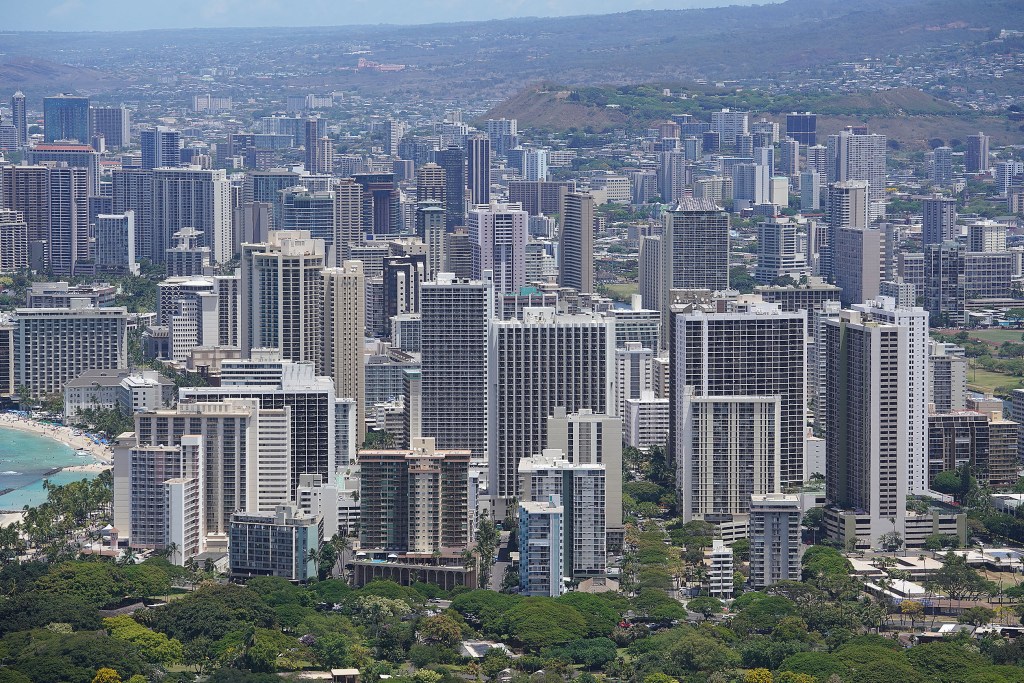
There’s also a more mundane factor: Honolulu’s stock of older buildings in need of costly upgrades.
The deadly fire at the Marco Polo Building in 2017 – a building at the edge of the corridor of aging high-rises that includes Kimura’s place – drew attention to the lack of sprinkler and fire safety systems in the towers that dominate the skyline from Mōʻiliʻili to Waikīkī and Ala Moana.
Condo owners have borne the weight of all of this through increased insurance costs. Many have faced an impossible choice: pay steep assessments to cover the cost of sprinkler systems and years of deferred maintenance in hopes of lowering insurance premiums, or continue to put off maintenance and face high insurance bills.
This past session, after years of delay, lawmakers took steps to help condo residents like Kimura, passing a bill to help stop the premium increases that have plagued the roughly 294,000 Hawaiʻi residents living in homes governed by 2,000 condo, townhome and homeowners associations.
Kimura testified in support of the bill. So did the banking, mortgage, real estate and insurance industries and AARP.

If signed by Gov. Josh Green, the measure will enable existing government entities to serve as insurers of last resort for condo associations and provide low-cost loans for maintenance and repairs needed to reduce risks to insurers.
The bill seeks to entice financial institutions that currently serve as lenders of last resort in distressed communities to provide loans for condo associations. It also calls for a study to see what more the state, with a limited budget, can do within a multi-billion-dollar insurance market that’s driven by dynamic market forces.
- Environment: Bolder Action Needed To Protect Hawaiʻi’s Environment
- Native Hawaiians: Help With Housing Continues To Elude The Hawaiian Community
- Invasive Species: Hawaiʻi Primes Itself To Battle Biosecurity Threats
- Education: Hawaiʻi’s Working Families Need More Support
- Fireworks: Hawaiʻi Fireworks Reforms Put Enforcement Onus On Police
- Housing: Lawmakers Fund More Housing, Not Special Treatment for Locals
- Progress Report: Neighbor Islands Need More State Support On The Job Front
- Progress Report: A Series Of Child Abuse Deaths Failed To Spur Major Reform
Sen. Jarrett Keohokalole, chairman of the Senate Commerce and Consumer Protection Committee, said lawmakers have been working for three years to put the measure together. Many legislators needed time to understand a complex system, and any bill needed buy-in from private industry.
Nonetheless, Keohokalole said, legislators knew their constituents couldn’t keep waiting.
“We knew we were really going to hear it from the public,” he said, “if we did not have some answers.”
Bill Establishes Insurance And Loan Programs
The measure seeks to address problems facing condo owners in multiple ways, said Rep. Scot Matayoshi, chairman of the House Committee on Commerce and Consumer Protection.
One step is to amend existing laws to enable two existing entities, the Hawaiʻi Property Insurance Association and the Hawaiʻi Hurricane Relief Fund, to underwrite insurance risks that standard insurers won’t cover.
The issue is not so much that associations can’t get insurance; it’s that many have to turn to the unregulated market, which Matayoshi called a free-for-all.
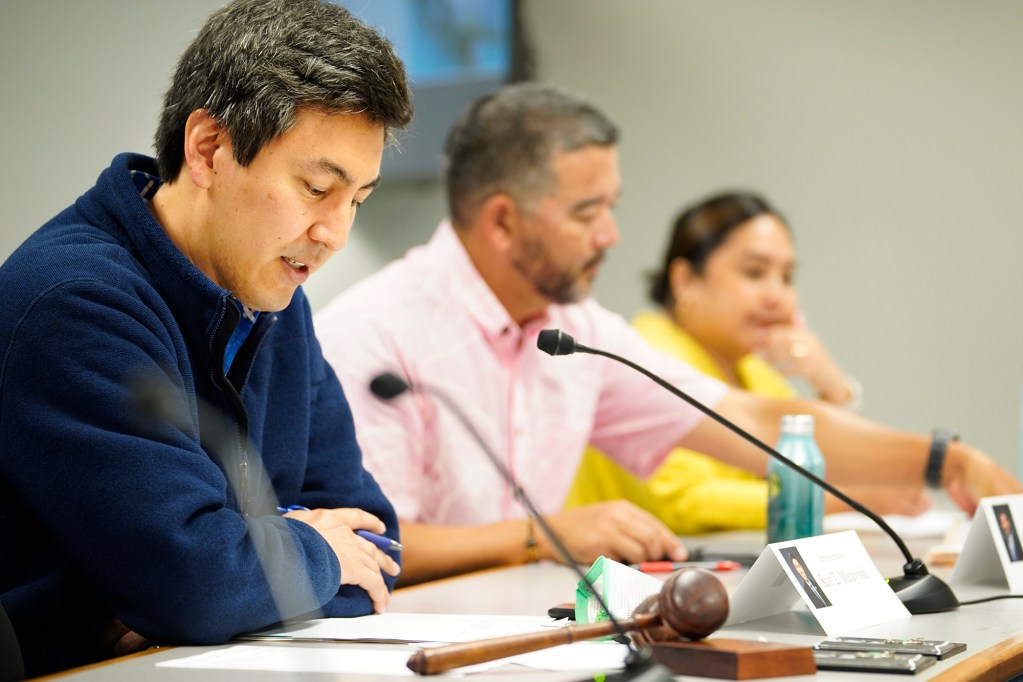
“It’s the Wild West out there,” he said. “It should provide relief for those that are stuck on secondary insurance.”
The property insurance association, currently an insurer of last resort in lava zones, has been given $30 million to set up shop. The hurricane relief fund, set up to stabilize the market after Hurricane ʻIniki in 1992, still has $175 million.
The insurance program targets condominiums at least four stories high.
Another provision sets up a loan program, run through the existing Hawaiʻi Green Infrastructure Authority, to provide low-cost financing or refinancing for maintenance or repair projects. A major issue facing condo associations, he said, is the need to upgrade building-wide water pipe systems that cause massive damage when they fail.
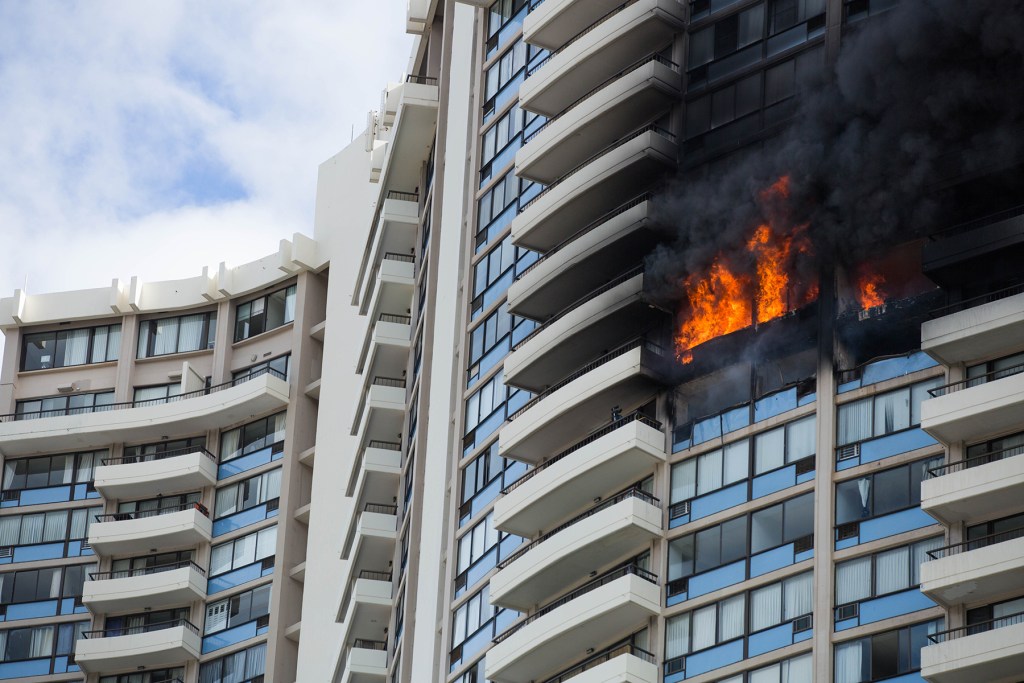
Insurers typically don’t like to cover buildings with aging pipes. A lack of fire sprinklers is another issue that can drive up premiums, Matayoshi said.
While replacing pipes and installing sprinklers can lower insurance premiums, Matayoshi said, such upgrades are expensive. And costs get passed to owners in the form of special assessments or increased condo association fees. The idea is to have a loan program to lower borrowing costs.
The Legislature’s $20 million appropriation for the loan program represents a pilot effort, he said.
Yet another provision calls for creating a second source of loan money. It sets up a reserve fund to entice federally funded Community Development Financial Institutions, which provide loans in economically distressed communities, to make loans to condo associations for repair and maintenance projects.
The purpose of the loan funds, Matayoshi said, is addressing not just the high premiums, but the underlying cause.
“What can we do to correct the whole problem?” he said.

For people like Jillian Anderson, a member of the Waikīkī Neighborhood Board, correcting the whole problem is vital. Many in her condo-dense neighborhood have borne the brunt of the increased premiums.
So has she. Anderson was hit this year with a special assessment amounting to $350 per month for seven months to pay for extra hurricane insurance on top of her condo association fee.
Anderson said this really stings for people on fixed incomes. But even for people without tight budgets, she said, the added insurance costs represent an increase in the cost of living without any tangible benefits.
While some have said the insurance market is already starting to stabilize, Anderson said she hasn’t heard about any relief for household bottom lines.
“I haven’t really heard of anyone getting a letter saying their insurance is going down,” she said. “It’s going to take a lot for them to lower their rates from where they are now.”
“Hawaiʻi’s Changing Economy” is supported by a grant from the Hawaiʻi Community Foundation as part of its work to build equity for all through the CHANGE Framework.
Civil Beat’s reporting on the Hawaiʻi State Legislature is supported in part by the Donald and Astrid Monson Education Fund.

