

How The Māmaki Tea Industry Shut Down A Bill Regulating Its Products
Opponents of the measure said the bill would hurt the industry it was intended to help.
This story has been updated to include comments from the bill’s sponsor.
It was a grassroots effort that many did not expect to succeed: Hawaiʻi farmers mobilizing to stop the governor from signing a bill that had made it through House and Senate committee hearings without a single “no” vote.
The bill was meant to protect Hawaiʻi’s māmaki tea industry, but many farmers and distributors believed it would inadvertently hurt the fledgling industry.
“We talked to pretty much anyone who would listen,” said Malie Sarsona, co-founder of Waimea Herb Co., a major māmaki producer. “I had everyone reach out over and over again.”
State and local political leaders commended the farmers for their efforts, Sarsona said, but told them it might be too late to stop legislation with such strong support.
Instead, on Friday, the māmaki bill ended up on Gov. Josh Green’s intent-to-veto list.

“It was really amazing to see our farmers speak up,” said Sarsona, who sells 100% māmaki tea, plus blends using herbs like chamomile, lavender and bergamot. She also runs a māmaki nursery that sells young plants to about a dozen Big Island farmers, who grow the plants to harvest and sell the produce back to Waimea Herb Co.
“We’re a small voice,” she said. “But if we all speak up, people have to listen.”
The bill’s sponsor, Kirtsin Kahaloa, said the measure wasn’t intended to hurt the industry,
“The intent was never to harm any blenders from doing business in Hawaiʻi,” she said in a text message. “It was to protect indigenous tea, Māmaki. And protect the plant.”
Bill Sailed Through Legislature
A non-caffeinated tea endemic to Hawaiʻi, māmaki has traditionally been used as a Native Hawaiian medicinal herb. In recent years, it’s turned into a budding cash crop, offered at fancy hotels and as ready-made drinks and sparkling teas, often flavored with ingredients like mint, ginger and lavender.
This year, Kahaloa stepped in with a māmaki bill to help the “growing agricultural commodity.” The idea was to head off potential counterfeiters who might grow māmaki elsewhere but sell it as Hawaiian māmaki. Hawaiʻi coffee farmers have been struggling with counterfeiters for more than a decade.
According to Kahaloa’s bill, only packages containing 100% māmaki grown in Hawaiʻi would be able to use the word “māmaki.” Tea makers also couldn’t use words like “Hawaiʻi” and “Hawaiian” or Hawaiian imagery or place names unless 100% of the tea or dried leaves “were cultivated, harvested, and dried in the State.”
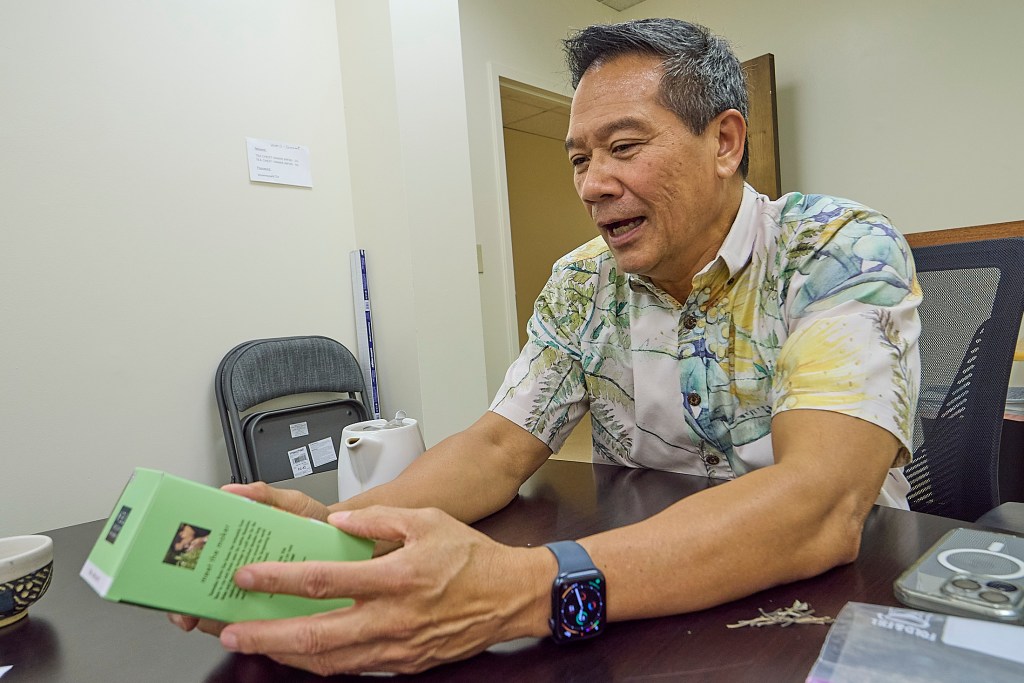
The measure sailed through five hearings. Supporters included the Hawaiʻi Farm Bureau; Hawaiʻi Food + Policy, which gives college students and young farmers experience in civic engagement, and the Hawaiʻi Farmers Union United, which represents small farmers and ranchers.
The Hawaiʻi Department of Agriculture expressed its strong support, writing that the bill “provides māmaki tea the protection afforded to other valuable agricultural crops like coffee and macadamia nuts.”
Only when the measure reached its last hearing, before the Senate Ways and Means Committee, did māmaki industry types get wind of what was going on.
The issue wasn’t that the bill protected Hawaiʻi grown māmaki from counterfeiters. Rather, it was that the bill as written would ban using the word “māmaki” on packages containing additional leaves of any kind — such as mint, rosehips, lavender and other tea varieties — if all the leaves in the tea blend weren’t grown and processed in Hawaiʻi. Many of the typically added ingredients aren’t produced here on a large scale, producers and farmers said.
Despite testimony sounding these alarms from the Hawaiʻi Food Industry Association and Byron Goo, the founder of Tea Chest Hawaiʻi, the measure passed out of the Legislature — the only no vote came during a the bill’s final reading, from Sen. Glenn Wakai — and ended up on Green’s desk.
‘It Was For The Community To Survive’
Sarsona started mobilizing after reading a Civil Beat article about the bill. She and her farmer-partners grow only māmaki, she says, so in theory they wouldn’t be hurt. But retail customers often want māmaki blended with other flavors, she said, so the bill would kill that market and the farmers would have fewer buyers.
“It wasn’t about just us surviving,” she said, “it was for the community to survive.”
Among those she reached out to was Kelly Sanders of One ʻOhana Under Aqua Farms. Sanders runs a 2-acre farm on his own property, where he’s planted māmaki along with taro and purple sweet potatoes. He also works with another landowner and has other expansion plans in the works.
Sanders says he’s invested “tens of thousands of dollars” in the ventures and was outraged when he heard about the bill, which he said could kill buyers like Sarsona.
“I just want to be on the farm,” Sanders said. “I don’t want to be in public, but if I have to speak out, I will.”

Sen. Tim Richards remembers hearing Sanders speak at a town hall meeting in Waimea and said he agreed with him.
“The long and short of it is that it was one of those unintended consequences” to prohibit labeling tea as māmaki if the tea contained any other, flavor-enhancing leaves not grown in Hawaiʻi, Richards said.
The bill was well-intentioned, Richards said, but he acknowledged lawmakers simply missed language that creates the unintended consequence. He said he’s promised to work with farmers on a new bill next session if Green follows through with his intended veto.
Sarsona and her peers also appealed to Green, sending samples of their tea to his office
“We were sending boxes of tea to his office, saying, ‘This is us again. Please don’t destroy us,'” she said.
The governor is not required to veto every bill indicated on the intent-to-veto list, but can’t veto a bill that is not included. The list is meant to provide more time to discuss bills on the list. Green has until July 9 to veto bills on his list.
The governor’s spokesperson, Makana McClellan, said Green would stand on his veto statement, which says, “Prohibiting the labeling of products composed of less than 100% māmaki tea as ‘māmaki’ ignores the economic contributions of and impacts to producers who mix or process māmaki with other herbs, undermining producers who support local māmaki farmers while meeting broader demand.”
“Hawai‘i Grown” is funded in part by grants from the Stupski Foundation, Ulupono Fund at the Hawai‘i Community Foundation and the Frost Family Foundation.
Correction: This story has been updated to include information about the vote tally on the final reading of the bill before the full Legislature.

