Taxes Will Drive Agenda Of Hawaiʻi Lawmakers In Coming Session
Federal actions cloud the revenue picture. Immigration, marijuana and energy issues also loom.
When state lawmakers begin the 2026 legislative session Jan. 21, they will be forced to navigate some unusual and unwelcome political risks. That’s because Gov. Josh Green and the county mayors seem poised to press for action on touchy tax issues that could prove to be perilous in an election year.
Green, for example, is suggesting the state may have to pause some provisions of the huge and popular state income tax cuts that lawmakers approved and Green signed into law in 2024. The governor now seems inclined to hold off on or even cancel those tax cuts for at least some Hawaiʻi residents.
While he did not mention the cuts directly when he submitted his supplemental budget request to the Legislature on Dec. 22, his administration expressed concern over reduced state revenue largely due to the Trump administration’s policies on tariffs and entitlements. Green’s supplemental budget, which covers fiscal year 2027 that begins July 1, accordingly does not call for a significant increase in spending.

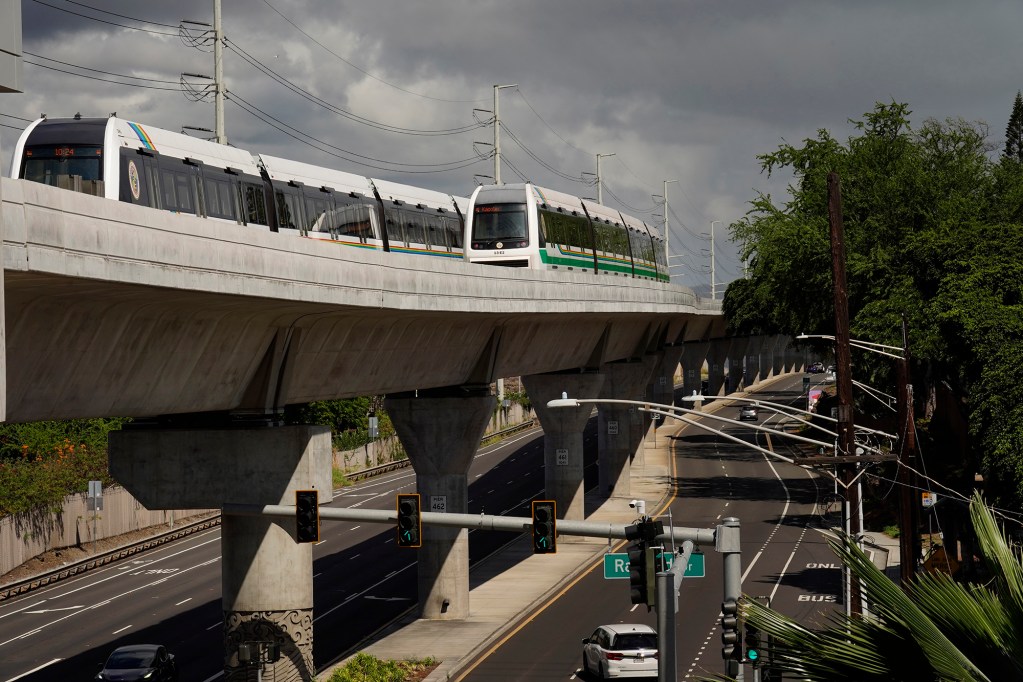
The mayors, meanwhile, are focused on a separate but equally controversial issue. They want the Legislature to extend the half-percent excise tax surcharge now slated to expire at the end of 2030. That surcharge provides funding for the Honolulu rail system as well as housing and transportation projects on the other islands.
Apart from those hot-button tax issues, lawmakers are also expected to mull strategies for pushing back on Trump’s immigration crackdown and to consider a proposal to finally ask Hawaiʻi voters if they want to legalize recreational use of marijuana.
Lawmakers are also eying Green’s abrupt embrace of liquefied natural gas as an energy source for Hawaiʻi, a plan some believe runs counter to the Legislature’s mandate that the state transition to all-renewable fuels for electricity generation in the next 20 years.
House and Senate majority leaders will provide details of their respective agendas on opening day, as will the governor when he delivers his State of the State address Jan. 26. The deadline for introduction of all new legislation, including bills on perennial issues such as crime, education, housing, homelessness, agriculture and transportation, is Jan. 28.
Legislative priorities, however, may shift depending on the state’s next Council on Revenues economic forecast expected Wednesday, along with another possible shutdown of the federal government this month. In an indication of those worries and others, the University of Hawaiʻi Economic Research Organization last month predicted a mild recession, a continuing downturn in tourism and job losses in a number of sectors in 2026.
Tax Cuts Come Home To Roost
The income tax cuts approved by Green and the Legislature in 2024 are expected to cost the state a total of more than $7 billion in lost revenue over the next six years, according to data from the state Department of Taxation. The tax cuts were supposed to make Hawaiʻi more affordable for struggling working families, but critics have been worried about the cost.
Now Green is estimating the state will lose another $3 billion over the next six years because of actions by the federal government including tariffs, reductions in federal grants and an expected economic slowdown. Evolving federal policies have presented “new complexities” for all states, according to the supplemental budget’s executive summary.
That all points to tough budget years ahead, and Green has said he “will not be surprised at all” if the state is forced to tap its emergency budget reserve fund — also known as the “rainy day fund” — for hundreds of millions of dollars to cover the cost of government operations.
Another strategy for balancing the budget, the governor said, would be to revisit the 2024 state income tax cuts to pause or limit at least some of them. Green said in November the state must deliver on the scheduled tax relief for low-income families, but said tax cuts for wealthier residents may be deferred.
On Dec. 16, Green said on “Spotlight Now” that leading lawmakers seem supportive of his proposal.
“I’ve had many meetings with them,” Green said. “We all see this as necessary.”
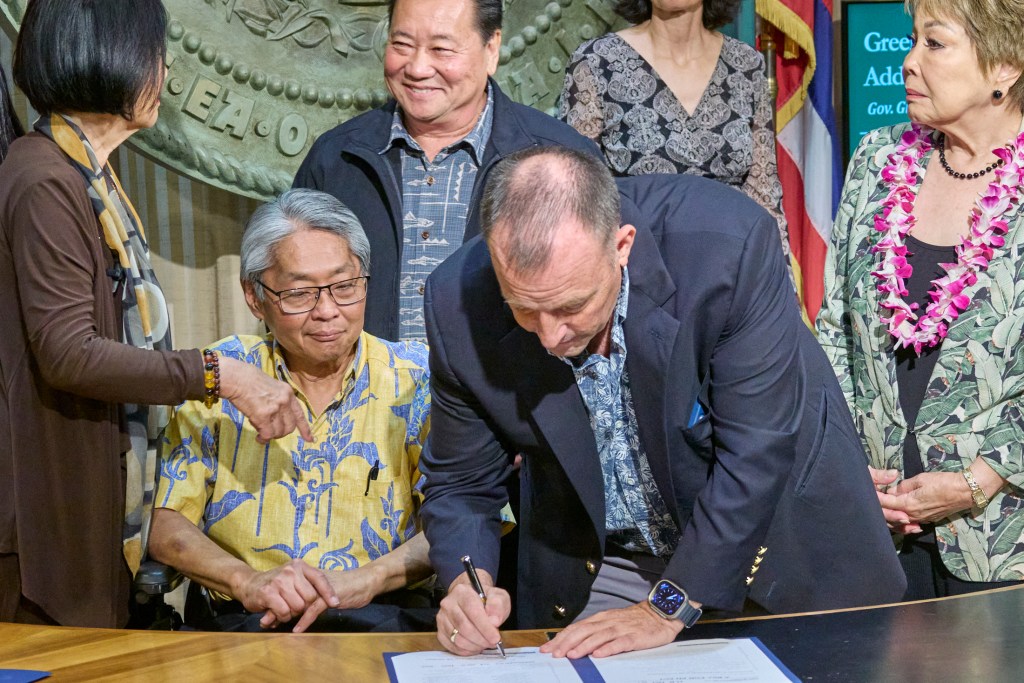
House Speaker Nadine Nakamura, the leading House Democrat, told Civil Beat the issue is “on the table,” given the fiscal situation and the federal cuts. “We’re having similar discussions” about the state income tax cuts, she said.
The federal government provides 18% to 19% of total state revenue, Nakamura said, and no one knows how much the federal government may cut from that. “So, we have to look at all options because at the end of the day we have to come up with a balanced budget.”
Senate President Ron Kouchi told Civil Beat that Senate leaders asked the administration for data on how deferring the income tax cuts for people at different income levels would play out, but have not heard back. He said lawmakers must figure out how to balance the state budget long term, but “the mission is to help out the neediest in the community, so it’s got to be something that does not put the most vulnerable at risk.”
“It’s a hard one to deal with, I’m not denying that,” Kouchi said, “but I think we’re going to have to deal with it.”
Tinkering with the tax cuts is certain to trigger some election-year criticism of House and Senate Democrats, who unanimously voted in favor of the tax cut bill and in some cases campaigned on the issue in 2024.
“It’s ridiculous,” said House Republican Minority Floor Leader Diamond Garcia. “It’s ridiculous because you’re reneging on a promise that was made just last year, and they didn’t even allow time for it to fully implement and bring relief that you originally promised.”
When the tax bill passed, the ruling Democrats bragged it was the largest income tax cut in state history, Garcia said, and now they blame Republicans as they back away from the tax package.
He questioned how the federal government has caused a $3 billion state budget shortfall.
“Where are the receipts for that?” he asked. “The tax cuts bring immediate relief to all residents here in Hawaiʻi — rich and poor, middle class, everybody — and everybody needs relief.”
A ‘Rail Tax’ To 2055?
A mayoral proposal to have the Legislature extend the excise surcharge for rail may prove even more controversial, and more difficult to pass in an election year.
The excise surcharge on Oʻahu provides most of the funding for the $10 billion Honolulu Skyline project, but the tax surcharge was not supposed to be permanent.
The Honolulu surcharge was originally approved by the Legislature in 2005 and was supposed to expire at the end of 2022. Lawmakers extended it in 2015 and then again in 2017 to raise more money as costs soared for the still-unfinished rail project, and also allowed the other counties to impose similar surcharges for their own projects.
The surcharge is now scheduled to expire at the end of 2030, but the mayors want to extend it to 2055. For Honolulu that would provide additional billions of dollars to extend the rail line from Kakaʻako to Ala Moana Center or beyond.
But lawmakers may have other ideas. The Legislature has been reluctant to permanently hand over the excise tax surcharge to the counties for rail or other county uses in part because the state may need that money for its own purposes, such as financing improvements in public education.
“I think there’s a lot of competing interests for the use of the those funds,” Nakamura said.
That includes plans to expand preschool education statewide, efforts to address a billion dollars in deferred maintenance on state facilities, and the urgent need to develop more affordable housing, she said.
Kouchi said he has not seen the mayors’ proposal, and wondered how they justify an extension to 2055.
“That would be coupled with, where are the state finances going to be?” he said.
Kouchi said he supported two previous extensions of the excise tax surcharge, but thought the last extension was the end of it, “and then the projections wound up being woefully short.”
“Based on how they missed, they have the onus on them to try to justify why these numbers now are going to be correct,” he said.
John Hart, communications professor at Hawaiʻi Pacific University, said the excise tax is widely understood to be regressive, meaning it weighs more heavily on lower income people because it consumes a larger share of their income than wealthier people. That could spur some controversy.
“If we are worried — as the governor says — about people going hungry, isn’t an excise tax one of the worst things we could do?” Hart asked.
The Honolulu rail project is a controversial subject many lawmakers try to avoid, Hart said. Public opinion has always been sharply divided on the project, he said, and its decade of delays and multibillion-dollar cost overruns haven’t helped.
“I could see a lot of people heading for the hills on this,” Hart said.
Green’s plan to defer the tax cuts may be easier to sell politically, Hart said, especially if the tax cuts are still allowed to take effect for lower income residents but deferred for wealthier taxpayers.
“I think if that’s the case, you won’t see a lot of people shedding tears about people who made over $250,000 having to pay a little more money,” Hart said. That would also address concerns that surfaced in 2024 that wealthy taxpayers will benefit the most from the tax cuts.
Marijuana On The Ballot?
Other issues lawmakers plan to address range from housing and immigration to marijuana and state energy policy.
House Judiciary and Hawaiian Affairs Committee Chairman David Tarnas said he will advance a bill to ask Hawaiʻi voters to amend the state constitution to legalize recreational use of marijuana.
Tarnas and Nakamura both believe most Hawaiʻi voters want to end the prohibition on cannabis for adults, but the Legislature has so far been unwilling. Nakamura said some Oʻahu lawmakers in the House have opposed legalization, while neighbor islanders have been more open to the idea.
The state Senate passed a bill in 2024 to legalize marijuana use for people 21 and older, but then-House Finance Committee Chair Kyle Yamashita killed the measure. A similar bill was approved by two House committees before it died.
Tarnas said he will ask his colleagues this year to allow the voters to decide the issue via a proposed constitutional amendment.
“This is kicking this particular policy decision — very selectively — to the public for a decision,” he said.
A two-thirds votes in both the House and the Senate would be required to put the issue on the ballot this year, and Kouchi said that may be possible in the Senate. The Senate voted 19-6 in favor of legalization in 2024.
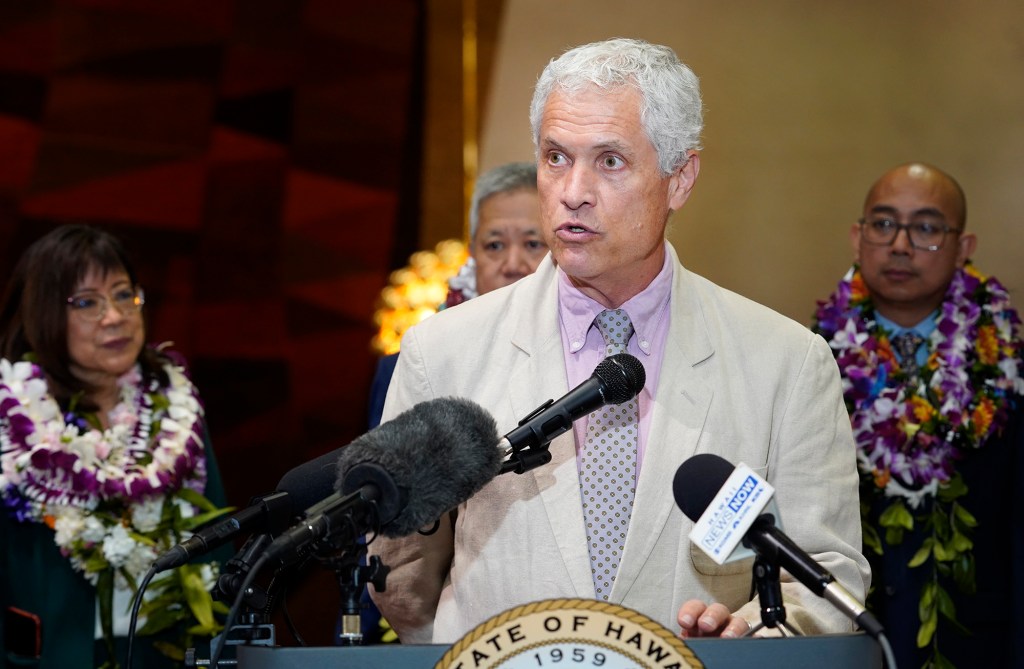
Tarnas also said he wants to push back on the federal immigration crackdown, and will propose several bills to do so.
He plans to introduce legislation to address concerns about Immigration and Customs Enforcement officers who have been operating without badges and who wear masks, and also to limit the ability of state and local law enforcement to cooperate with ICE.
“We want to push as far as we can go and still be able to defend ourselves in court,” Tarnas said. “I’m hoping to come up with a bill that I feel good about that the (attorney general) would be willing to defend in court, because I know we’re going to be sued right away.”
Importing Liquefied Natural Gas
Lawmakers are also raising questions about Green’s announcement last year that the state has a tentative deal with a Japanese company to bring liquefied natural gas to Hawaiʻi. That would likely involve a multibillion-dollar investment, and Sen. Chris Lee predicts it will cost ratepayers more in the long run.
Lee said the LNG plan also appears contrary to the 2015 mandate by lawmakers that the state generate 100% of its electricity from renewable sources by the end of 2045. Lee introduced the bill that created that mandate a decade ago
“The whole idea behind that was to get off our dependence on imported fuels so that we can sustainably produce our own, have better energy security and resiliency, and ultimately be able to control costs for local residents that are right now outside of our control,” Lee said.
He said he has not seen specifics yet on what Green is proposing, but the plan seems to be committing Hawaiʻi to decades more of exporting cash to import fossil fuels.
“I don’t know that those two things align with the intent of the law that was passed,” Lee said. “I would imagine the law would have to be changed.” Meanwhile, he said, renewable power has become “infinitely cheaper” than it was a decade ago.
Senate Consumer Protection Committee Chair Jarrett Keohokalole told Civil Beat that LNG is “a huge issue,” and said he isn’t clear yet how the administration intends to move forward with its plans.
The Legislature is scheduled to adjourn May 8, with many legislators focused over the summer on the Aug. 8 primary election. Green and Lt. Gov. Sylvia Luke are also running for second and final four-year terms.
Civil Beat Politics Editor Chad Blair contributed to this report.