

How Kaua‘i’s Mayoral Candidates Plan To Tackle Trash
Boosting recycling and other diversion efforts are top priorities while the Garden Isle gets its new landfill up and running.
Curbside recycling is shaping up to be a major theme in the race for Kaua‘i’s next mayor with both candidates supporting the concept, but only one is committed to implementing it while the other is wary of its high costs and prefers a more holistic waste diversion strategy.
Kaua‘i County Council members Bernard Carvalho Jr. and Mel Rapozo are running to replace Kaua‘i’s term-limited mayor, Derek Kawakami, who is running for lieutenant governor in the November general election.
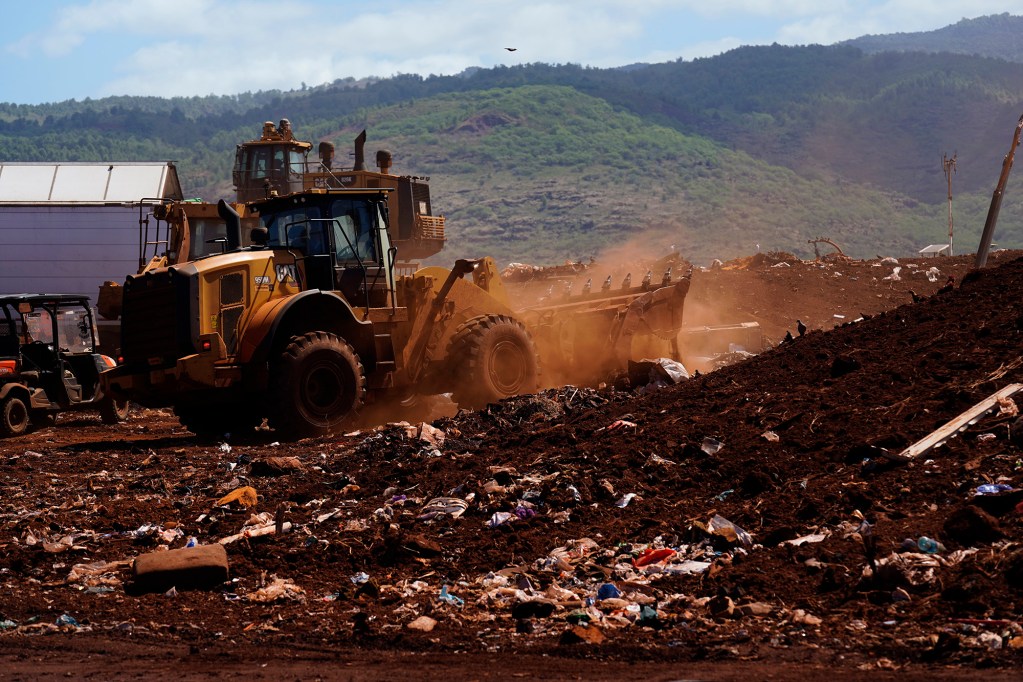
They agree that the county needs to step up its solid waste diversion efforts and support increased recycling, reducing food waste and getting a new landfill up and running. They also agree that solid waste is a crisis with the county racing the clock to plan and build a new landfill — an effort that is expected to take 10 years — on Mā‘alo Road in Hanamā‘ulu while the 73-year-old Kekaha landfill nears capacity.
But Rapozo and Carvalho have different ideas about how to get there, and what aspects should be prioritized along the way. In the meantime, planning is underway for the Kekaha landfill to undergo its seventh expansion to buy more time, which may cost as much as $43 million. That expansion will extend the facility’s capacity to roughly 2040 and is undergoing environmental review.
Curbside Recycling
In July, the County Council unanimously adopted a resolution introduced by Rapozo and council member Fern Holland urging the county administration to implement curbside recycling and develop an operational and financial implementation plan.
Carvalho said that while he supports curbside recycling, he’s concerned about the high costs to pursue it, especially when it’s only expected to increase the county’s diversion rate by 2% or 2,500 tons, according to a 2025 curbside recycling report for the county.
Currently, the county’s overall diversion rate is roughly 43%, according to Allison Fraley, the county’s solid waste division chief. The division spends $6.77 million annually on waste diversion programs, which include residential drop bins placed around the island, plus specialized programs for vehicle, appliance, scrap metal and green waste recycling.
A $57.2 million materials recovery facility would need to be built to sort the collected recyclables, and the county would need to hire more staff and purchase trucks and carts to fully implement curbside recycling. After that, a weekly curbside recycling service would cost $15.5 million annually, according to the 2025 report.
Per household, that comes out to $747 per year for curbside recycling, Fraley said. That’s based on the assumption that all 20,745 existing residential refuse collection customers participate. Those customers currently pay $120 or $216 per year for their regular trash pickup, depending on the size of their garbage carts.
The county during Carvalho’s first full four-year term as mayor conducted a year-long curbside recycling pilot that served 1,300 homes in Līhu‘e and Puhi. About 54% of eligible households put their recycling carts out for collection, which occurred every other week, and overall, the program collected 220 tons of recyclables, most of which was paper products.
High costs were also a concern back then and a reason why the pilot was not made permanent, Carvalho said.
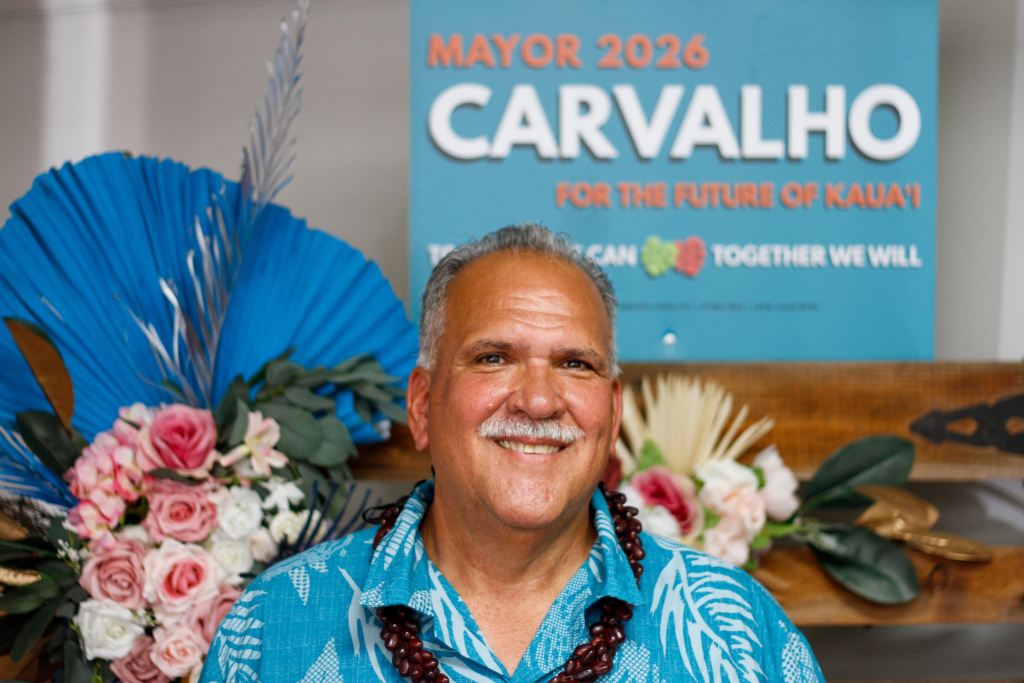
Rapozo, who is making his third run for mayor, said curbside recycling would be foundational to his solid waste strategy, which will heavily emphasize limiting the amount of trash sent to the landfill.
“The only way we can accomplish that is by having a very aggressive diversion strategy, which includes curbside recycling, and making it very convenient for the residents,” he said.
He added that he’d like to see a report on how to make curbside recycling work financially, as well as an all-encompassing analysis of what the costs would be if the county did not pursue curbside recycling.
“The cost of not doing curbside recycling, in my opinion, is significantly more than it is if we implement it,” he said.
Rapozo said the county would likely have to seek outside funding to help shoulder the costs of curbside recycling. The general fund already subsidizes some of the true costs of providing residential trash pickup, Fraley told the council at its July 29 meeting.
The county’s 2025 curbside recycling report envisioned county workers providing the curbside collection service. Fraley told Civil Beat that’s because the county can’t contract out a service that’s already been performed by county workers under its contract with United Public Workers. County refuse drivers collected curbside recycling during the 2011 pilot.
Rapozo added that while he would want to prioritize the UPW employees, he’d be open to amending the contract since staffing has been challenging for regular residential trash pickup. UPW endorsed Rapozo for mayor earlier this summer.
Other Types Of Waste Diversion
Carvalho, Kaua‘i’s longest-serving mayor, has a multi-phase plan to address solid waste. He emphasized that he’s not saying no to curbside recycling, but he’d rather look into the many ways that waste can be diverted and reduced before pursuing such a costly option.
“I want to dive into these areas and really develop a solid team to look at these and say what kind of resources and benefits (exist),” he said. “I think it’s important for me as mayor to assure that we address each of these areas.”
The first phase is to strengthen recycling requirements for hotels, resorts, restaurants, grocery stores and large retailers. He’d also like to see more food waste be diverted from the landfill, such as through programs to send leftover food from hotels to the island’s homeless community or to kūpuna in need.
According to the county’s waste characterization study, which was completed in 2016, about 10% of the garbage disposed of at the Kekaha landfill is food waste. Nearly 24% of trash at the landfill is construction and demolition waste. It’s the largest category of trash and includes materials like concrete, asphalt and lumber. Carvalho said he’d like to see that waste be better diverted.
Other phases of his plan include looking at the county’s Pay As You Throw and residential drop bin programs. He said he wants to see if there’s any improvements that could be made to them and also measure their results.
Implemented in 2015 while he was mayor, the county’s Pay As You Throw program is meant to encourage more trash diversion and reduction by requiring residents to pay higher rates for larger residential trash pickup carts.
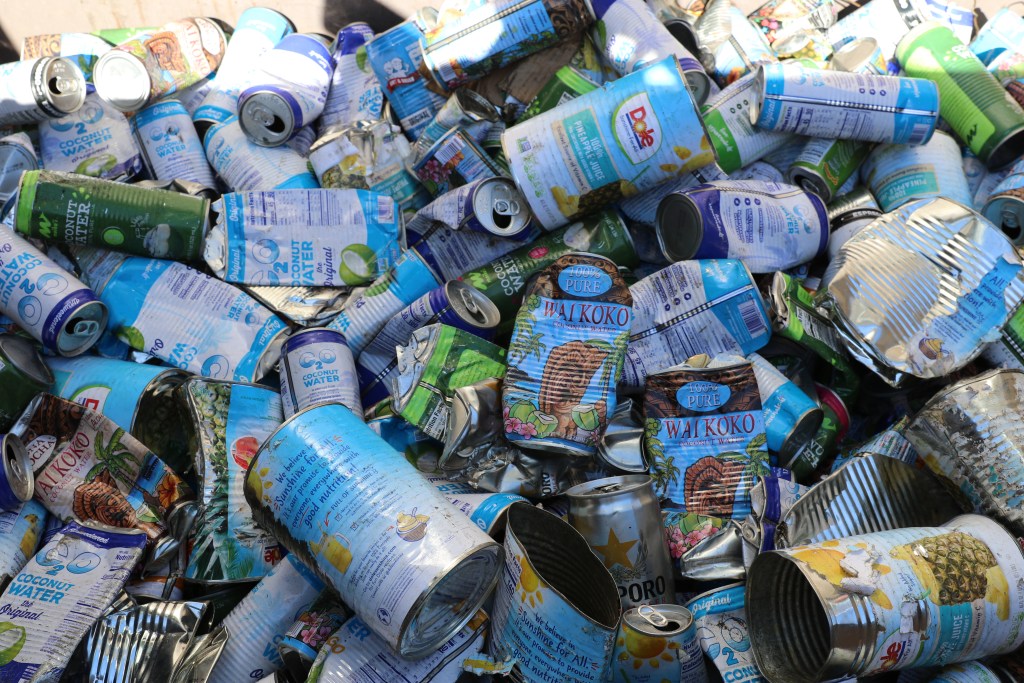
The residential drop bin program consists of eight bins placed around the island for residents to dispose of certain plastics, aluminum, steel cans, cardboard, glass and mixed paper. The county pays Garden Isle Disposal roughly $1.1 million a year to rent the bins, haul the loads, separate the collected material and then market it.
Much of Carvalho’s plan emphasizes collaboration and coordination among both his administrative team and with private stakeholders. He acknowledges that he doesn’t have all the details yet but that he’d focus on getting the right data and team to help make decisions and that he’s open to more ideas.
“I’m willing and open to listening,” he said.
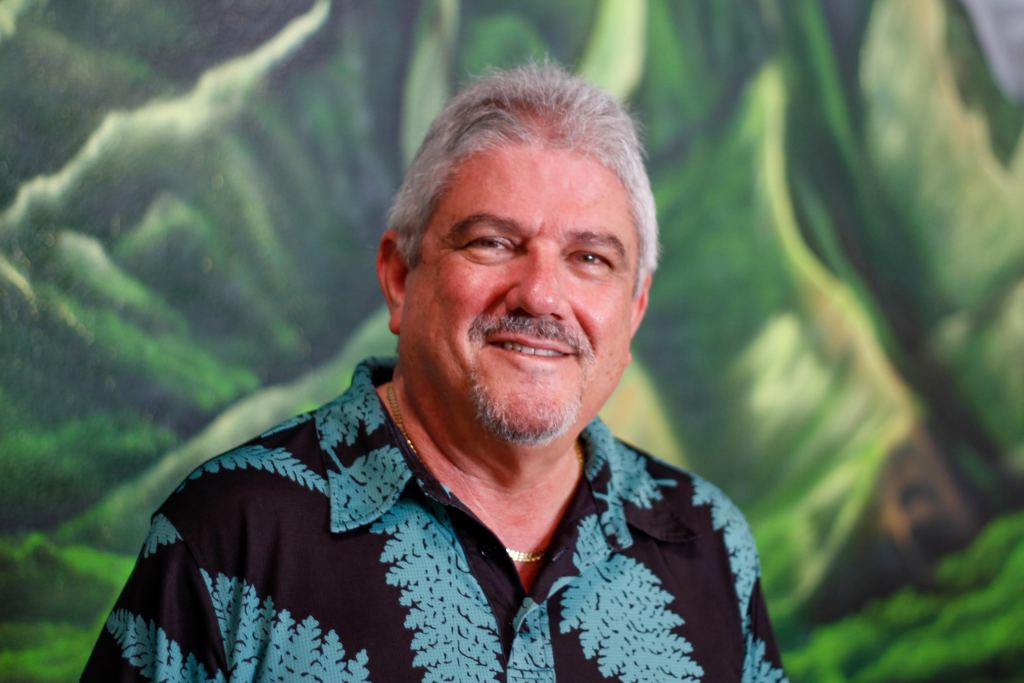
Part of Rapozo’s solid waste plan is to create a task force made up of different industries and folks like Zero Waste Kaua‘i. That group would consider available waste diversion and reduction options and come up with recommendations.
While he recognizes that the county has studied various solid waste issues and received recommendations for decades, he said the purpose of his task force is to use local expertise and see what options are available that may not have been considered or pursued in the past.
One possibility is looking at how retailers and others who bring cardboard boxes to the island can be responsible for sending them back out.
He also supports subsidizing food waste composting businesses. He was a customer of Compost Kaua‘i’s curbside composting service before the business shut down this spring and sees food waste diversion as a low-hanging fruit.
An updated waste characterization study is currently being conducted by the state. Rapozo said that getting the updated study is vital to Kaua‘i’s ability to plan for its solid waste.
Should he be elected mayor, he said he will treat solid waste, as well as wastewater, as emergencies.
“It needs to rise to that level of urgency and resources because that is such a vital component,” he said. “And right now, we don’t have a plan right now, and it’s scary.”
Fraley told Civil Beat the Solid Waste Division plans to add 1.5 million cubic yards of vertical disposal space to the Kekaha landfill, conduct the necessary studies and planning for the new landfill in Hanamā‘ulu, and continue its existing diversion programs.
In an emailed statement, Alden Alayvilla, a communications officer in the mayor’s office, added that the county is carrying out its 2021 Integrated Solid Waste Management Plan, which is a 10-year roadmap shaped by public meetings and a public hearing. He added that the new landfill is the long-term solution. The Mā‘alo Road site was selected after three siting studies conducted over 20 years and ranked highest on community-based criteria.
Concerns About The New Landfill
When it comes to the new landfill, Rapozo is not convinced that Mā‘alo is the right location.
Fraley and county engineer Troy Tanigawa told the council at an Aug. 5 committee meeting that the county has had verbal discussions with the state Department of Land and Natural Resources, the current landowner, about the county acquiring the site for its new landfill, which would sit on 270 acres that would be developed in phases and have a lifespan of roughly 200 years.
Rapozo said the county can’t pursue financing without owning the land. The county also rejected the site in 2021 after the Federal Aviation Administration and state Department of Transportation Airports Division raised concerns about the landfill possibly leading to increased bird strikes at the Līhu‘e Airport.

“There’s a lot of obstacles that need to be overcome before we can even move forward with Mā‘alo,” he said. “And then what will Mā‘alo be? Will it be a landfill? Will it be a sorting facility?”
He doesn’t have an alternate location in mind, which is why he emphasizes waste diversion. He has concerns about the facility’s environmental impact and that state and federal partners have not yet confirmed that the county has satisfied the bird strike issue.
“We’re so far behind the eight ball, it’s going to require attention at its highest priority for the administration,” Rapozo said.
Fraley told the council that the county is working with the FAA and HDOT to do continual monitoring of the Mā‘alo site to ensure aviation safety. The county also must do other updated studies since the site’s environmental impact statement was done in 2018.
Reducing Garbage
Some residents are happy to see that the two mayoral candidates support increased waste diversion. Sabrina Day, president of Zero Waste Kaua‘i, said Kaua‘i needs solid, measurable goals and strong leadership to see them through.
In 2011, the Kaua‘i County Council adopted a resolution urging the county to divert 70% of its waste by 2023. Day said she’d like to see the next mayor set a new diversion target.
JoAnn Yukimura said she wants to see the county build a materials recovery facility and implement curbside recycling. She’s the chair of Zero Waste Kaua‘i’s curbside recycling committee and served as Kaua‘i’s mayor from 1988 to 1994 and spent 22 years as a council member. She and Rapozo both lost to Carvalho in the 2008 mayoral race.
She also wants to see county leadership develop a more coordinated waste diversion plan and create a more sustainable and circular solid waste system. Incremental landfill bans, she said, could be placed on certain construction and demolition wastes to enable the private sector to increase its capacity to recycle those materials.
During Zero Waste Kaua‘i’s July 29 mayoral candidate forum, Carvalho and Rapozo said they support expanding restrictions of mattresses, rechargeable batteries and construction waste from the landfill and increasing the state HI5 Bottle Redemption program deposit fee from 5 cents to 10 cents. Kaua‘i’s 2021 Integrated Solid Waste Management Plan recommended that the county consider expanded commercial landfill bans and increasing the HI5 deposit to encourage more waste diversion.
Both candidates also said they’re not currently interested in waste-to-energy, which would involve burning garbage to generate electricity.
Kaua‘i County has discussed and studied waste-to-energy over the decades, but it’s capital-intensive and requires a large stream of garbage, which Kaua‘i doesn’t have, Fraley told Civil Beat. Over the last 10 fiscal years, the amount of trash processed annually at the Kekaha landfill has hovered between 81,500 tons and nearly 93,000 tons.
On O‘ahu, most residential and commercial trash is disposed of at its H-POWER facility and produces up to 10% of the island’s electricity. However, there are times when the City and County of Honolulu faces steep financial penalties for not sending enough trash to the facility.
“If O‘ahu can’t have enough trash, how on earth would our tiny island, in comparison, be able to generate enough trash?” Day said.
Kaua‘i County is soliciting proposals for alternative technologies and is waiting for applicants to provide more information about their finances and technology. Fraley said an evaluation committee is looking at the applications, but her division is unable to publicly share more information about the applicants and their technologies until a contract is set to be awarded. The Solid Waste Division would need to get county council approval to fund it.
“What we’re doing right now is just making sure that if there is something that could be pursued, that we will pursue it,” she said.
During the primary election, Rapozo received 40.6% of the vote, followed by Carvalho’s 30.6%. The two will square off in the Nov. 3 general election.

