

HECO Blackout: Half Of Molokaʻi May Lose A Summer’s Fish And Game
The utility plans to cut power for eight hours a day over much of the next week to upgrade its grid.
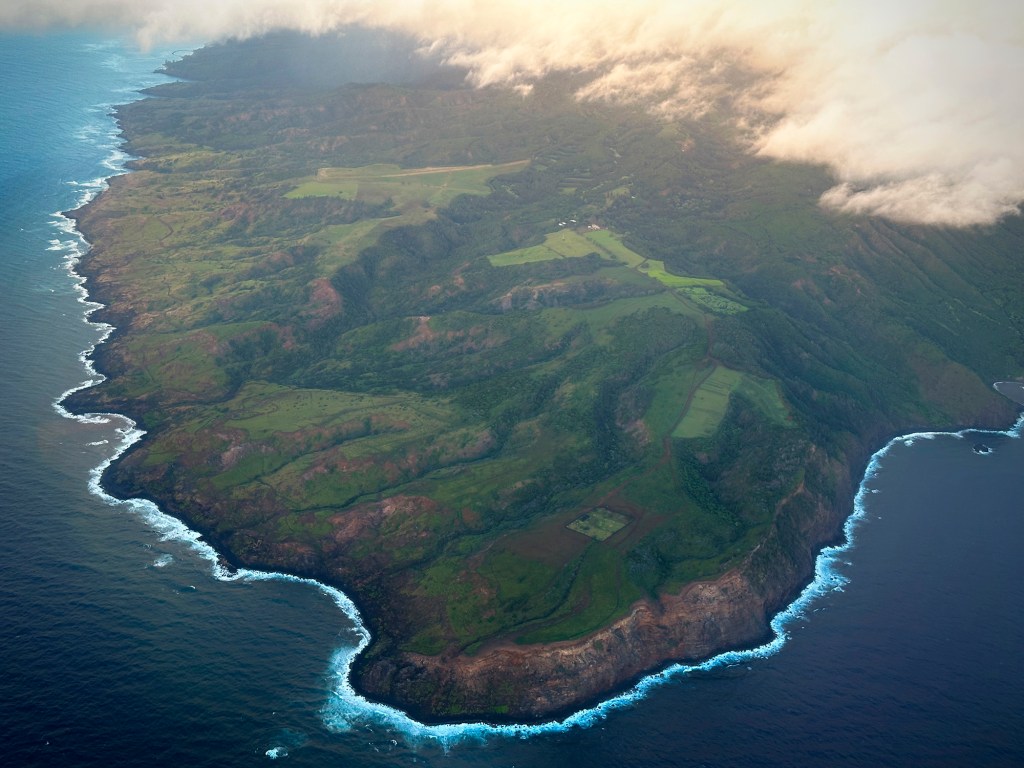
Living off the land and ocean is a way of life on remote Molokaʻi, where a high percentage of residents are Native Hawaiians who spend summers hunting, fishing and farming to stockpile food for the year.
Subsistence living isn’t simply a way to perpetuate traditional culture but also a necessity on an island where groceries are expensive and the nearest Costco is on Maui.
Now residents of half the island say their food stocks are at risk because of a six-day, eight-hour-per-day, planned power outage that Hawaiian Electric Co. announced last month for the east side of the Friendly Isle. The company says it needs to upgrade the island’s grid to help prevent wildfires.
Residents say they’re all for the upgrades, but have proposed various ways for HECO to change its work schedule to give them more time to prepare and mitigate food spoilage.
“We’re just asking for them to accommodate us a little,” said Leilani Chow, a member of the Molokaʻi Clean Energy Hui, an organization of community groups.
In an emailed response to Chow on Wednesday, HECO rejected the community’s proposals, citing technical, safety and logistical reasons. The work is scheduled to start on Saturday.
“It felt like them saying, ‘Too bad, so sad, we’re going to keep doing it,’” Chow said.
Michael Colón is director of energy for the Ulupono Initiative, which, among other endeavors, invests in sustainable energy solutions to benefit communities. Ulupono has supported HECO on some fronts, including a proposal to raise rates for customers on Oʻahu, Maui and the Big Island. The Molokaʻi blackout is a different story.
“We’re talking about people who are extremely vulnerable,” Colón said. “We’re so appalled by what we’re hearing.”
HECO says the blackout is necessary.
“This project is about public safety,” said Darren Pai, a HECO spokesman. “With extreme weather events increasing, we are taking urgent action to reduce the risk of wildfires on Molokaʻi. This project will also improve service reliability and make maintenance and repairs easier and quicker.”
Work Is Aimed At Preventing Wildfires
The challenges on Molokaʻi reflect the broader challenge HECO faces trying to restore its aging, multi-island grids. Even before the 2023 Maui wildfires that killed 102 people and destroyed much of Lahaina, HECO was aware of the grid’s vulnerability to hurricanes and tropical storms.
To address that, the company put forward a $190 million plan to strengthen infrastructure — funded in part by federal taxpayers — in 2021. The Maui fires led HECO to shift focus from hurricanes to wildfires. As part of that work, on Molokaʻi, the company plans to replace wiring installed over half a century ago.
“The work involves changing out aging, brittle copper wires that can break easily and potentially cause fire ignitions and replacing these lines with durable, sturdier aluminum conductors, as well as replacing poles that have been identified for upgrades,” Shayna Decker, director of government and community affairs for Molokai and Maui, wrote in Wednesday’s email to Decker.
The company plans to replace 8 miles of power lines and upgrade 27 poles, Pai said.

One of the issues for Molokaʻi residents, Chow says, is that they had relatively little time to prepare. HECO sent out letters to affected customers on Sept. 11 and followed up with a series of emails starting Sept. 16, but Chow said many residents didn’t fully understand what was about to happen until HECO held a virtual webinar last week.
Even if people had been fully informed weeks ago, she said, there’s simply not enough propane for generators and other emergency supplies on the island to supply the roughly 600 households to be affected.
HECO’s Decker wrote that the notices were more than adequate.
“Customers started to receive notifications up to three weeks in advance followed by a series of reminders,” Decker said. “This is more advanced notice than typically provided for scheduled outages.”
Decker also pointed to state guidance recommending people keep supplies on hand for emergency power outages that can happen with no notice, including “14 days of food, water, medical needs and other back-up resources for power and communications.”
“We’re a very special place and need unique solutions.”
Leilani Chow, Molokaʻi Clean Energy Hui
In addition, HECO deliberately timed the blackout to coincide with the fall break at the island’s public school. That avoids disrupting classes, but puts added stress on families, Chow said.
The hui proposed a number of options to lessen the impact, including pushing the outages back to later 2026 or early 2027 to give people more time to prepare. Spreading the work over 12 days and limiting the outage to four hours a day would help prevent venison and fish from thawing and spoiling in residents’ freezers.
Those sorts of changes could eliminate much of the financial burden on households — estimated by the hui at $1,555 per family — and avoid having kids at home with no power during a school break.
HECO said it couldn’t accommodate the requests. Fire mitigation is a priority for the company, the work couldn’t be done in four-hour shifts for technical safety reasons and trucks and linemen from other islands were already in place to do the work, Decker said.
HECO is also providing a generator to a local restaurant and market, which will serve as a “customer hub,” with cell phone charging stations and Internet access.
Chow stressed the community supports HECO’s grid improvements, but said what might work on another island isn’t working on Molokaʻi, given its largely subsistence-based lifestyle and economy.
“We’re a very special place,” she said, “and need unique solutions.”

