

Case, Tokuda Win Easily As Democrats Take House, Senate
Democrats will seek to provide a check on President Donald Trump during his final two years in office.
Hawaiʻi’s Democratic incumbents easily won reelection Tuesday in their bids to return to Congress in 2027, this time as members of the majority party.
U.S. Rep. Jill Tokuda led her Republican challenger, state Sen. Brenton Awa, 65.2% to 29.3%, while U.S. Rep. Ed Case was ahead 70.2% to 20.1% over his GOP opponent Adriel Lam, according to a second round of results from the Hawaiʻi Office of Elections. This included the mail-in ballots processed statewide through Monday as well as all the in-person voting from service centers statewide.
Awa conceded the race soon after the early results came out. He joked that “Hawaiʻi voters didn’t want to see me go” and suggested he may run for Honolulu mayor, a nonpartisan seat, in two years.
Tokuda and Case’s victories come as Democrats won seats across the country to retake the majority in the House and Senate, aiming to place a check on President Donald Trump during his final two years in office. By 9:30 pm Tuesday in Hawaiʻi, Democrats had already been declared victors of 224 seats in the House and 54 in the Senate.
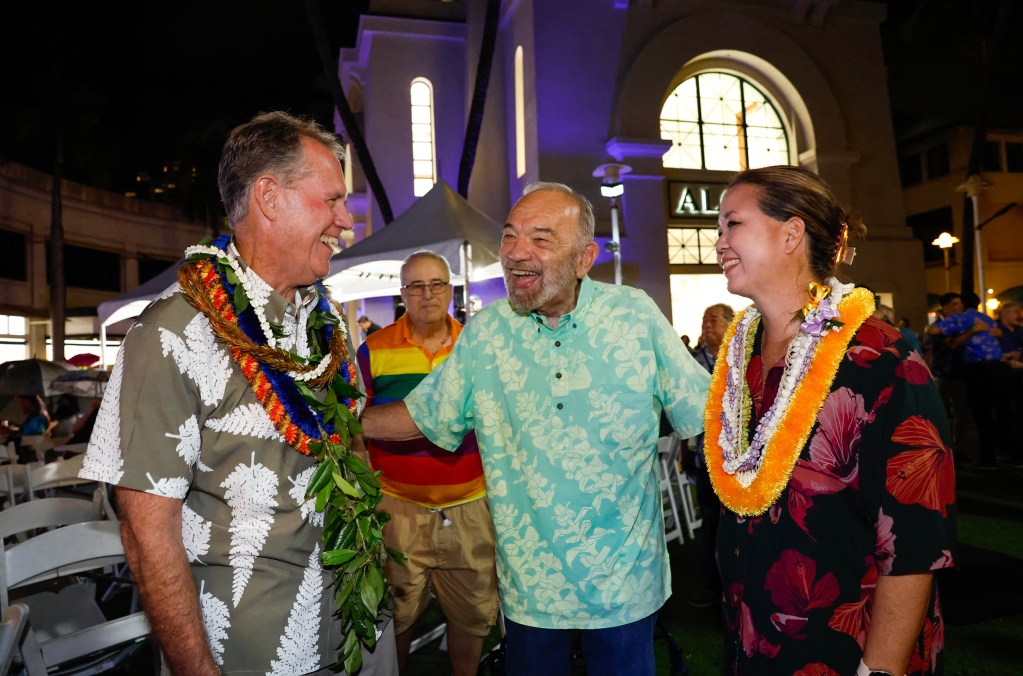
Tokuda’s race against Awa for Hawaiʻi’s 2nd Congressional District was viewed as the more intriguing of the two contests in large part because of Awa’s ability to garner attention via social media and the fact that as the Senate’s minority leader he had a resume that lent him instant credibility as a viable candidate.
The race, however, never lived up to expectations.
Awa pitched himself as a bridge to the Trump administration and vowed to serve only a single two-year term to help the islands navigate the president’s final two years in office. Housing Native Hawaiians, he said, would be his top priority. If he had won, Awa would have been just the third Native Hawaiian to represent the islands in Congress since statehood.
Tokuda, meanwhile, ran a frontrunner’s campaign and barely engaged with Awa aside from a Civil Beat candidate forum in October, in which she seemed far better prepared than her opponent. She leaned heavily on her record of congressional accomplishments, including her response to natural disasters and her efforts to pass legislation that reduces the tax burden on disaster survivors, including victims of the 2023 Maui wildfires.
Both Tokuda and Awa had made affordability a centerpiece of their campaigns.
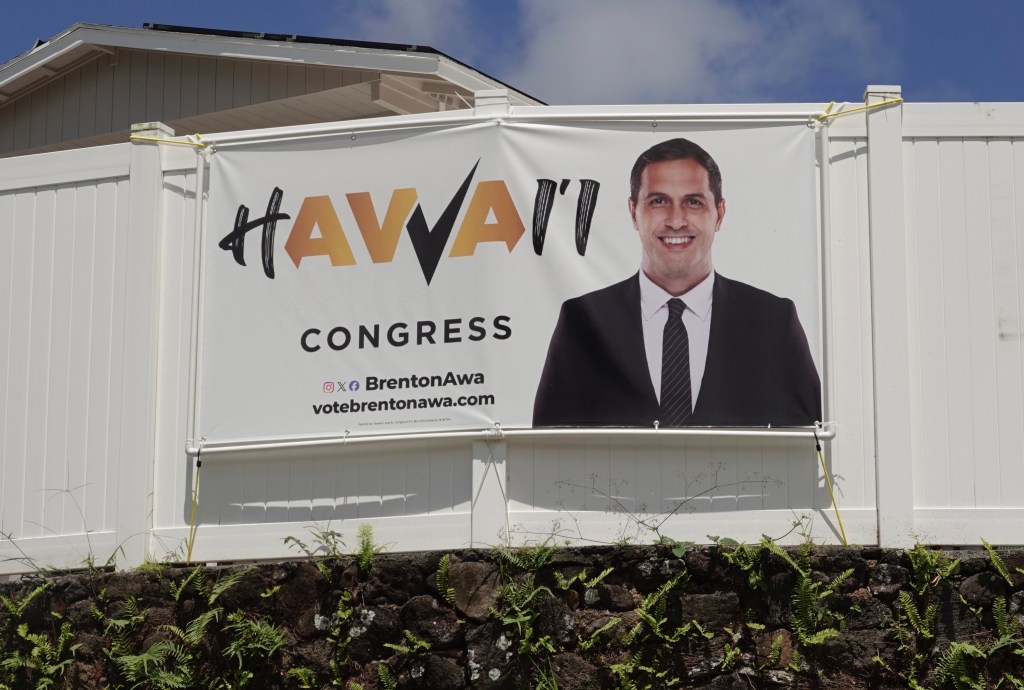
Tokuda easily outpaced Awa in terms of fundraising while he focused on running a more grassroots campaign. Federal records show Tokuda’s campaign spent about $1 million during the election cycle compared to $120,000 by Awa.
While both candidates openly worried about the possibility of outside money coming into the race, especially given the national Republicans’ outsized fundraising advantages, those fears never materialized.
A Fifth Consecutive Term
Case, 74, easily won reelection for a fifth consecutive term representing Hawaiʻi’s 1st Congressional District, which covers urban Oʻahu. A moderate Democrat, Case faced a feisty challenge in the August primary from state Sen. Jarrett Keohokalole. But after easily defeating him, he had a clear run to another term.
His pitch throughout the campaign was built largely around his experience in Washington and his seat on the House Appropriations Committee, where he helps decide how federal dollars are spent. He’s said that bringing federal resources back to the islands will continue to be a top priority for him.
Asked ahead of Tuesday what he thought would happen if Democrats took both houses, Case said he anticipated Democrats would launch congressional inquiries into the administration and use their bully pulpit to amplify their message. He said he would support impeachment again if the facts called for it.
But he warned Democrats to use their newfound power responsibly, harkening back to what happened after the 2018 wave election when Case said some of his colleagues went “hog wild” pushing legislation and ideologies that didn’t align with most of mainstream America.
“Inside two elections we had given the majority away again,” Case said. “I’m going to try to make sure that doesn’t happen. We need to come up with actual solutions that are widely supported.”
Case faced several opponents in the general election, including Lam, a retired U.S. Army officer who has run unsuccessfully for state and federal office before. He also beat out two other challengers, including Jordan Conley, a Green Party candidate who had received 3.2% of the vote and Nathan Berning, an anti-abortion activist from the mainland, who had earned 1.2% by the second round of returns.

