

At Issue In Tokuda Vs. Awa: Who’s Better for Native Hawaiians?
The rivals in this seat for Congress are both focused on Native Hawaiian homesteads, but have differences on that and several other issues.
U.S. Rep. Jill Tokuda has attended enough Hawaiian homestead lease awards to know the unfortunate reality of what comes next for some families. A beneficiary who waited a lifetime to get off the waitlist tells her they have no successor because their children don’t have enough Native Hawaiian blood to inherit the property.
“That’s heartbreaking, it’s absolutely heartbreaking,” Tokuda said. “And I know in my heart that’s not what Kūhiō wanted.”
When elected in 2022, Tokuda vowed to amend the Hawaiian Homes Commission Act — first championed by Prince Jonah Kūhiō Kalanianaʻole a century ago — to lower the Native Hawaiian blood quantum requirement for successorship from one-quarter to 1/32.
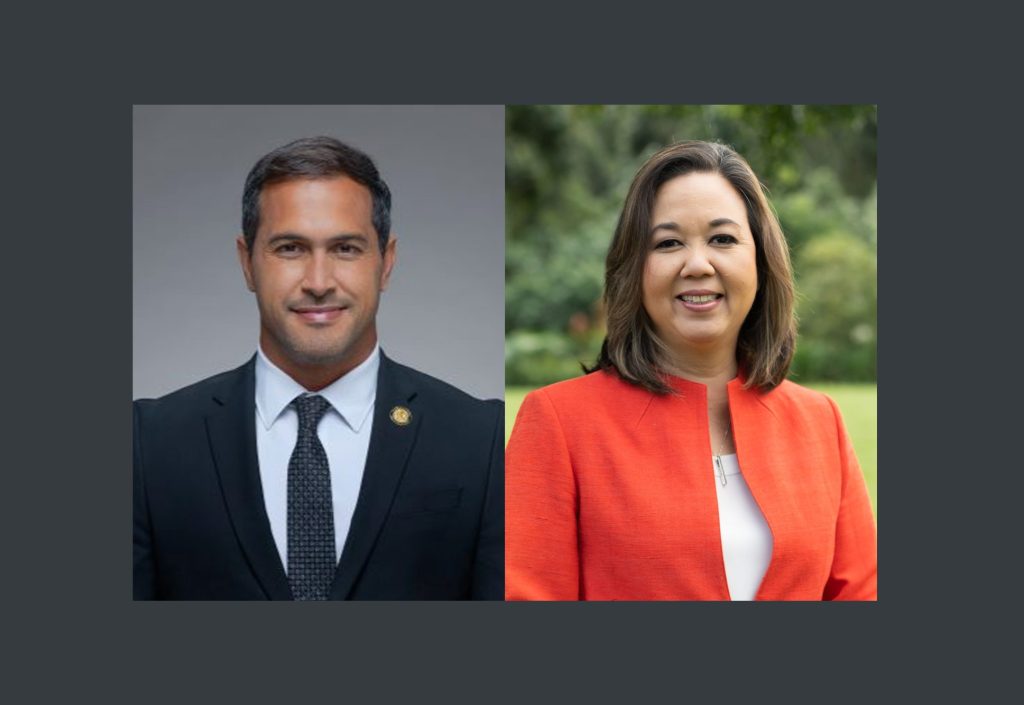
Although she introduced legislation in her first term, she says now is not the time to push it given hostility from the Trump administration and other conservative groups targeting Native Hawaiian programs. Reopening it in the current political climate could backfire, she fears.
“The timing is everything,” Tokuda said. “Is there a potential that it will be distorted in a way that would be actually negative?”
Her opponent in the November election disagrees. Waiting is more harmful, said Hawaiʻi State Sen. Brenton Awa, who is Native Hawaiian. If elected, he said his top priority would be to lower blood quantum requirements so that more people don’t lose their homes.
“If that is not fixed, then the waitlist is a sham,” Awa said. “We’re not housing Hawaiians. We’re temporarily sheltering them.”
Voters will ultimately decide whose approach is better when they cast their ballots in the coming weeks. But their choice goes beyond Native Hawaiian homesteads.
Awa is attempting to make history as the first-ever Republican to represent Hawaiʻi’s 2nd Congressional District, which encompasses rural Oʻahu and the neighbor islands. A former KITV News anchor with an unconventional approach to politics, Awa has consciously distanced himself from the Democratic establishment that has long controlled the levers of power in Hawaiʻi and eagerly boasts of his more than 1,000 “no” votes in the Legislature.
He’s running a grassroots campaign that’s defined by a self-imposed term limit: He’s pledged to serve just one term to help Hawaiʻi cope with the final two years of Donald Trump’s presidency. While he’s described politics as a “shitty job,” Awa has framed his run as a calling to combat the state’s crushing cost of living and make the islands more livable for locals.
Part of his argument is that Hawaiʻi’s delegation — which is all Democrats — needs more ideological diversity so that it can better advocate for the islands’ interests.
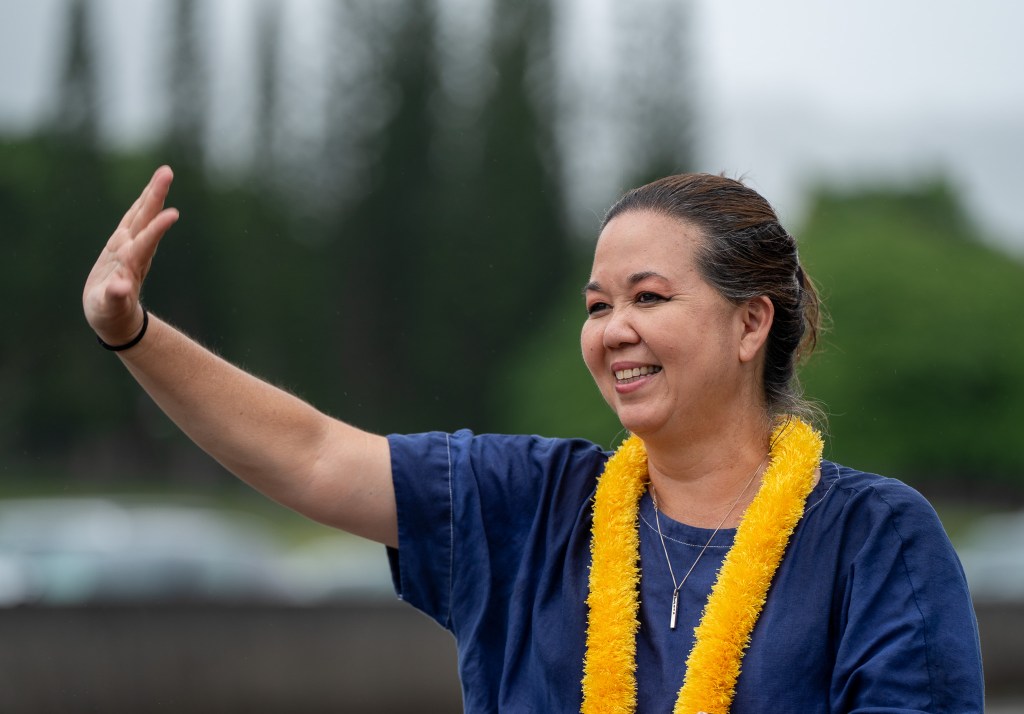
Squaring off against him is Tokuda, a two-term Democratic incumbent, who seeks to provide a steady hand and predictable leadership in a district that saw her immediate predecessors abandon their seats to run for president or exit Washington altogether.
Since taking office, Tokuda’s tenure has been defined by her response to natural disasters, from the 2023 Maui wildfires to more recent storms that have ravaged local communities, destroying homes, taking lives and even unearthing human remains.
Like Awa, she’s made affordability a centerpiece of her campaign and serves on the House Democrats’ cost of living working group focused on lowering the price of goods and groceries. She has co-sponsored legislation to keep land in local hands by stopping private equity firms and large corporate investors from buying up single-family homes and farmland. She also championed tax relief for disaster survivors, including those on Maui.
She’s said that anyone who claims they can come to Washington to work with Trump or change his mind is delusional.
John Hart, professor of communication at Hawaiʻi Pacific University and longtime observer of island politics, said the matchup between Tokuda and Awa stands out because – unlike Hawaiʻi’s other congressional contest in CD-1 — “at least it’s a race.”
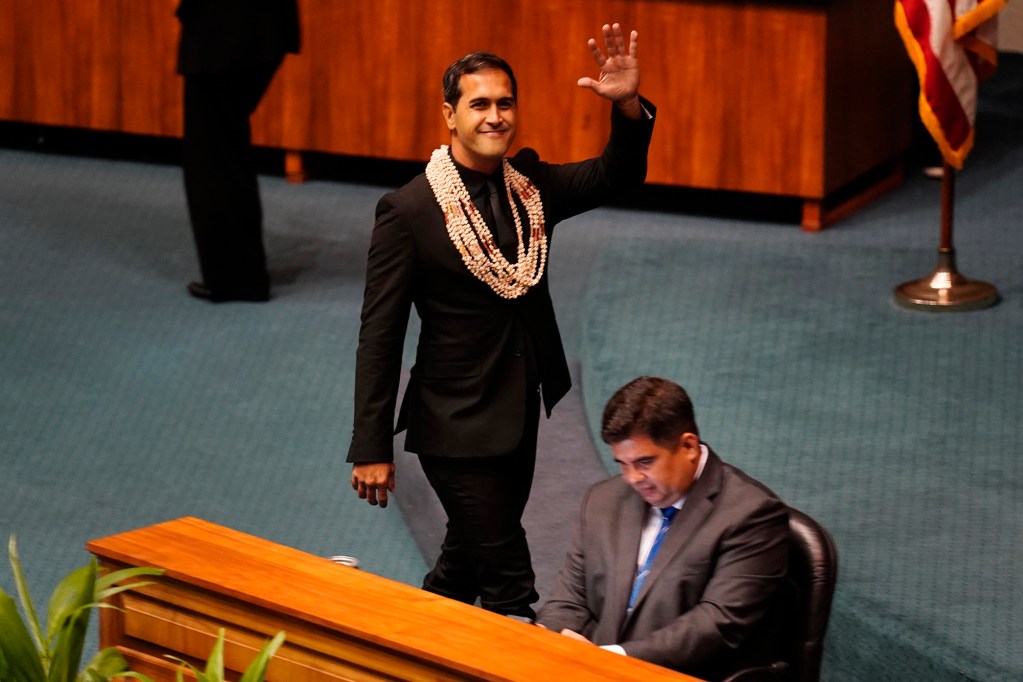
It’s not because he thinks Awa can win. “It’s a long shot,” he said. Rather, it’s because Awa is a likable, media-savvy candidate with a visible ground game running against an incumbent who’s not particularly high profile.
“His biggest problem is that he’s Republican,” Hart said. “If he had a D after his name, he’d be pretty dangerous.”
Awa is certainly better than Tokuda at drawing attention to himself, Hart said.
After a local man assaulted a Maui tourist for throwing a rock at an endangered monk seal, Awa prepared and shared a video of himself on the Senate floor offering a “Mister Ambassador of Aloha” commendation to the man. His post was shared nearly 150,000 times and received more than 2.6 million likes.
On Instagram alone, Awa has five times the followers of Tokuda even when considering both her congressional and campaign accounts.
“I think everyone knows what they’re getting with Jill, but if you would point to landmark legislation, there’s nothing to point to there,” Hart said. “You don’t have a Title IX, or anything that the average voter is going to associate her with other than her general progressive, Democratic philosophy.”
What Does It Mean To Be Effective?
Tokuda pitches herself as someone who already understands how Washington works and knows how to get things done on behalf of Hawaiʻi, citing the bills she’s passed, an effectiveness ranking in the top 10 of Democrats and her participation in bipartisan caucuses focused on everything from rural healthcare and broadband to coffee production.
She even credits the Congressional Coffee Caucus, which she co-chairs, with getting coffee exempted from Trump’s tariffs.
She wants voters to view her as “authentically present.” She said she averages 50 to 60 neighbor island visits a year, and has responded to numerous disasters, including wildfires, earthquakes and hurricanes.
“What’s really missing from a lot of politics is authenticity. People don’t know who they can trust,” Tokuda said. “People want to know at a time when they’re struggling right now that they’re going to get someone who cares about them, who’s fighting for them and who understands what they are going through.”
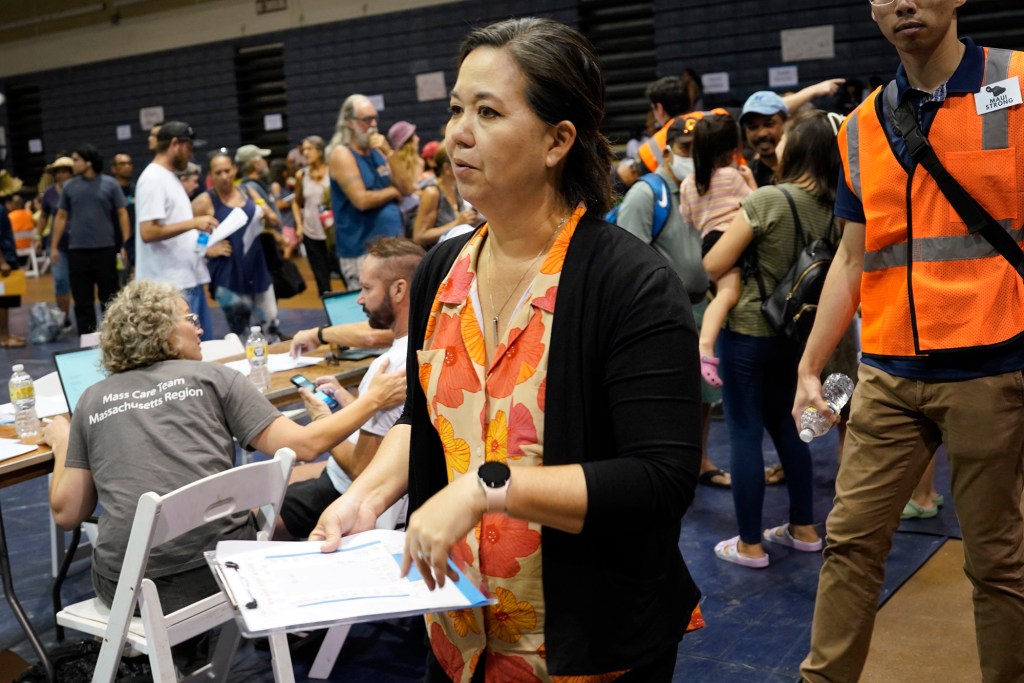
Two of her key accomplishments were born out of catastrophe. She successfully passed a bill to study whether Lahaina, the site of one of the deadliest wildfires in U.S. history, should be deemed a National Heritage Area through the National Park Service. She also helped usher through legislation to ensure that disaster relief and settlement payments for survivors, including victims of the 2023 Maui wildfires, would remain tax-exempt and that certain losses not covered by insurance could be claimed as deductions.
Another highlight, she said, was renaming a post office on the Big Island after Lt. John Kuulei Kauhaihao, a Native Hawaiian soldier killed in Vietnam. While these are among the easiest bills to pass in Congress, Tokuda said it was important for her to recognize a “non-politician, everyday hero” for their sacrifice.
“It’s one thing to say things, it’s one thing to do things and to produce,” Tokuda said. “And I don’t believe that that’s what you’ll get on the other side of this ticket.”
Awa said he doesn’t measure himself by the number of bills he’s passed, in part because he doesn’t think any lawmaker should take sole credit for work that dozens of colleagues vote on. He’s also a member of the minority party in a Democratically controlled legislature, and he said House leaders have blocked his bills ever since he publicly criticized one of their members and refused to apologize.
In his four years in office, he said he’s passed only one piece of legislation — a bill that allows businesses to round to the nearest 5 cents — but even that required a workaround. Awa said his minority office ghostwrote the bill and gave it to a constituent to pass on to a Democratic state senator, who then introduced it under his own name.
“These are examples of how far we have to go to get things done,” Awa said. “Our bones are made on the outside solving problems.”
Instead, Awa has focused on hands-on projects in his district. He has planted roughly 470 food trees along state highways in Kahaluʻu and Haleʻiwa, including ʻulu, mountain apple, banana and coconut, so passersby can pick fruit for themselves. He’s paid for much of the upkeep from his Senate office budget, buying a riding mower, weed whackers and fertilizer.
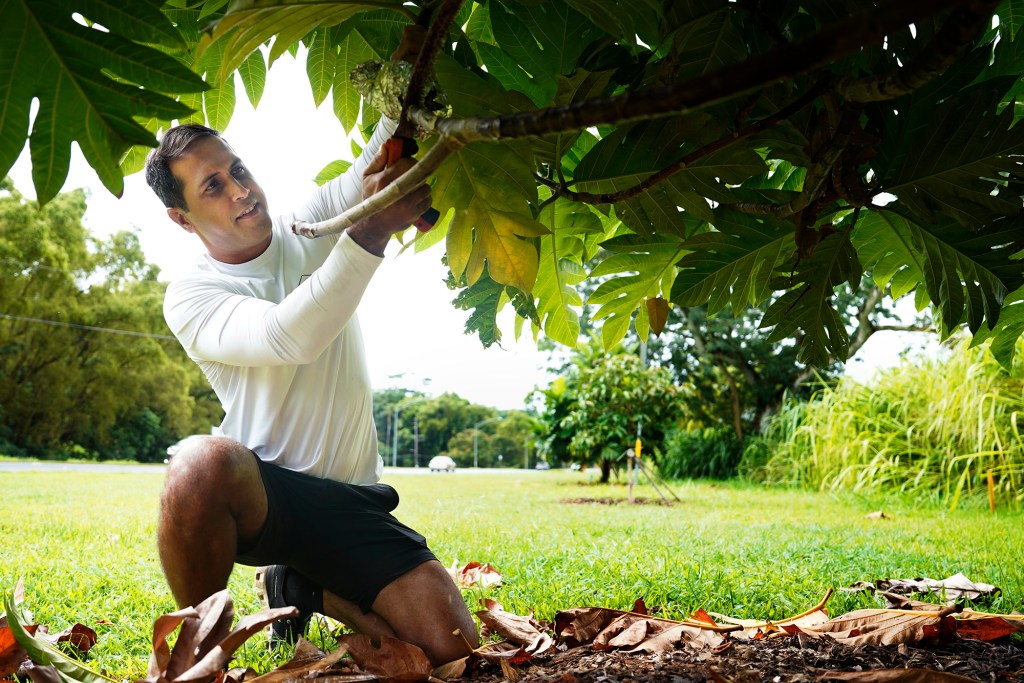
He also claims credit for persuading officials to fix a decade-old leak at Dillingham Airfield that spilled millions of gallons of water.
At its core, Awa describes his approach to politics as hyperlocal, so much so that he declared that people who weren’t born and raised in the islands shouldn’t hold public office.
“If you’re not born and raised, you should not be leading because if you’re not born and raised you ain’t looking out for the people born and raised,” Awa said. “You’re looking out for people wherever you came from. You’re influenced from outside, and I don’t care how much you learn.”
He then walked back the statement to say that that was just his opinion rather than a proposal.
Raised in Kaʻaʻawa, Awa now lives with his family because he can no longer afford a place of his own on his $74,000 Senate salary. He said his campaign slogan — The Home Team — is as much of a nod to Hawaiʻi’s housing crisis it as it is to his Native Hawaiian heritage.
“It’s fundamental,” Awa said of his ancestry. “It’s my base. It’s who I am. I look at things in a Hawaiian way.”
Differences On Blood Quantum
The political and legal affronts to Native Hawaiian-serving programs and institutions have been top of mind for Tokuda and Awa. But as with lowering the blood quantum requirements for successorship, they disagree about the best way forward in a climate Tokuda says is plainly “anti-Native Hawaiian.”
Given the hostility, said Tokuda, it’s critical for Hawaiʻi’s delegation to remain vigilant, play defense and protect what’s there, including by fighting the administration’s attempts to eliminate funding for Native Hawaiian programs.
Awa, meanwhile, says that the delegation hasn’t been doing enough.
“The president changed all the locks and our keys don’t work anymore, but being in the club, I have the key to get into that club,” Awa said. “Send me up there. A Hawaiian in their own party can fight them.”
Awa has been blunt about what he hopes to accomplish as a lawmaker: Housing every Native Hawaiian. In addition to tackling blood quantum requirements he’d one day like to see every Native Hawaiian qualify for the program regardless of that measurement.
“If you got a drop of Hawaiian blood,” he said, “you should get land.”
Tokuda, however, still doesn’t support such a proposal. She added that she doesn’t think that’s a conversation that should start with her either.
“Until beneficiaries come to the point and a consensus that they want to remove all blood quantum, I don’t think we should even be discussing it,” she said. “It’s a grossly premature discussion when I’ve got folks with the blood dying on the waiting list right now.”

