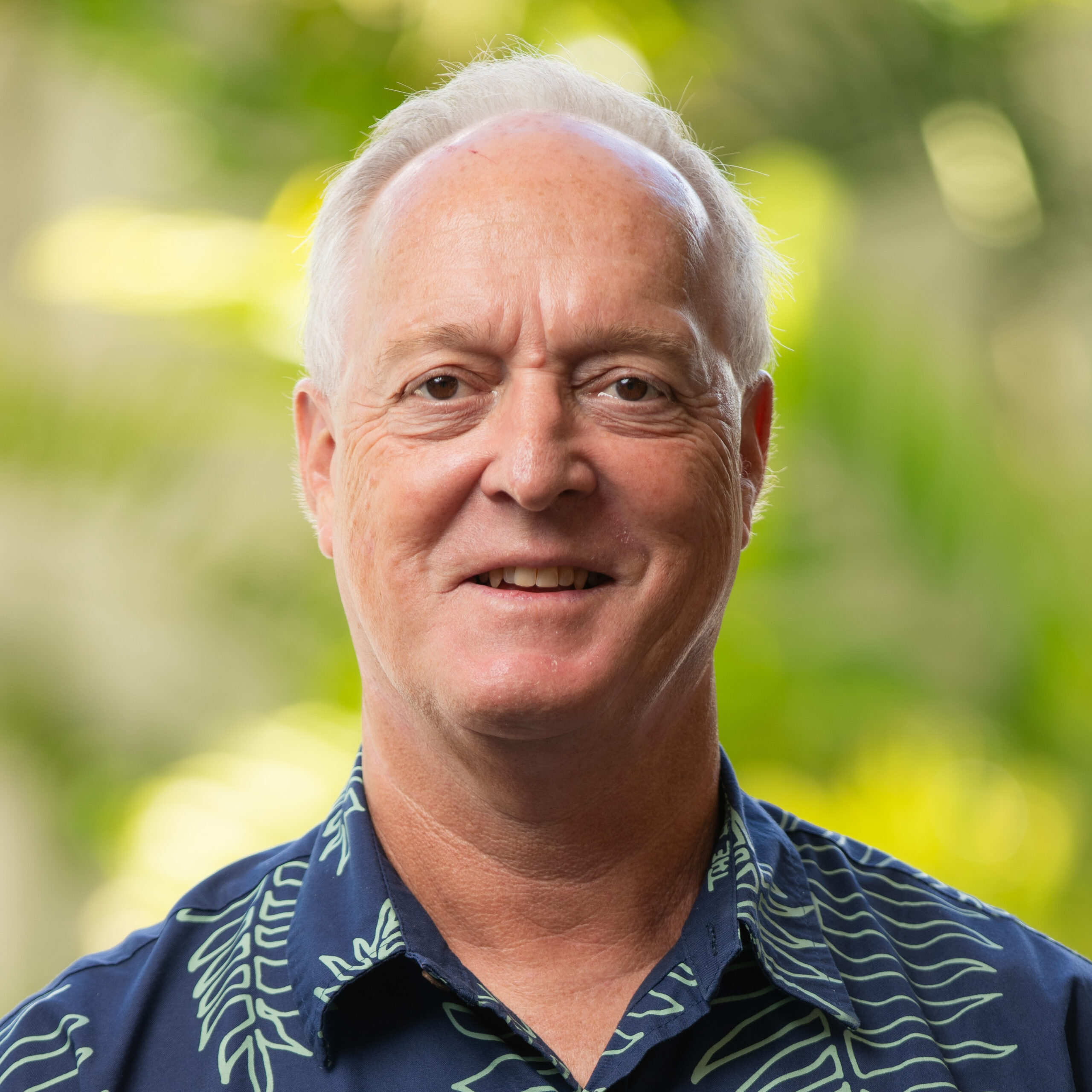
Green And Kawakami Swamp Opponents To Win Governor, Lt. Gov.
Green won easily with more than 72% of the vote, giving him another four years as governor. Kauaʻi Mayor Derek Kawakami won election to the LG’s job.
Democratic incumbent Gov. Josh Green and his running mate Kauaʻi Mayor Derek Kawakami staged a blowout victory over a pair of little-known Republicans in Tuesday’s general election, with the Democrats pulling in almost three-fourths of the statewide vote.
The most recent tally of the voting released Wednesday morning showed Green and Kawakami with 72% of the vote, while Republicans Gary Cordery and Daniel Anthony lagged far behind with 26.1%. That count included nearly 366,000 in-person and mail-in ballots.
Green, 56, easily won reelection to claim another four years as governor, and the general election puts Kawakami in a good position to run for governor if he chooses in 2030. Green will complete his second term and must leave office that year.
This was the second long-shot run for governor for Cordery, 66, but he is still not well known to most voters. He is running in a state that has not elected a Republican governor since Linda Lingle won a second term 20 years ago, and Green essentially ignored Cordery this year. He rebuffed repeated calls to debate his GOP challenger.
Despite that relatively low-key campaign, Green won the general election race for governor by the largest margin of victory in state history.
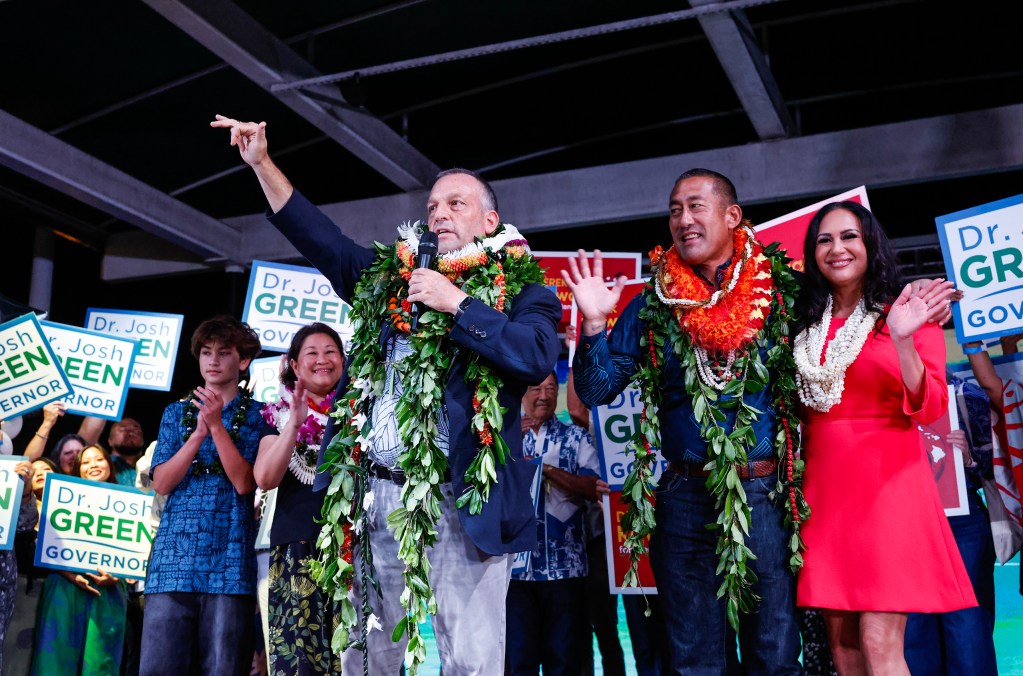
After the first returns were released, Green told Hawaiʻi News Now in an interview from Aloha Tower that he and Kawakami are already a team because they have worked together as county mayor and state governor for years.
“I’m so grateful to have this partner,” Green said of Kawakami. “People are going through tough times, and we want to be a team that helps anyone who would welcome it. So, we’re just grateful beyond belief, we’ve bonded over these years, and now we’re just confident we can lead the state forward in ways that have never been done before.”
Anti-incumbent sentiment among mainland voters has been simmering this year because of high inflation and soaring housing costs, and Hawaiʻi has those same problems in spades. But the national discontent did no political harm to the Green campaign, said Robert Perkinson, an American studies professor at the University of Hawaiʻi Mānoa.
President Donald Trump’s unpopularity has been dragging down the Republicans nationally, Perkinson said, which likely helped Green in heavily Democratic Hawaiʻi. Green ranked among the nation’s most popular governors in polling done last year.
Locally, Green had to cope with the deadly Lahaina wildfire in 2023 that killed more than 100 people as well as flooding and hurricanes. He also had to navigate an ongoing state government corruption scandal that forced Democratic Lt. Gov. Sylvia Luke to abandon her reelection campaign earlier this year.
Again, Green emerged unscathed. He faced no serious opposition from his fellow Democrats this year — which is rare in Hawaiʻi gubernatorial politics — and won the Aug. 8 Democratic primary with almost 82% of the vote.
The governor’s background as a physician has also given him “unique legitimacy to be a crisis manager, and man, has he faced a lot of crises,” Perkinson said. The governor has also mastered the new media ecosystem, where people get much of their information from online videos or social media.
“I think his communication style in this fractured media environment is a big strength,” Perkinson said.
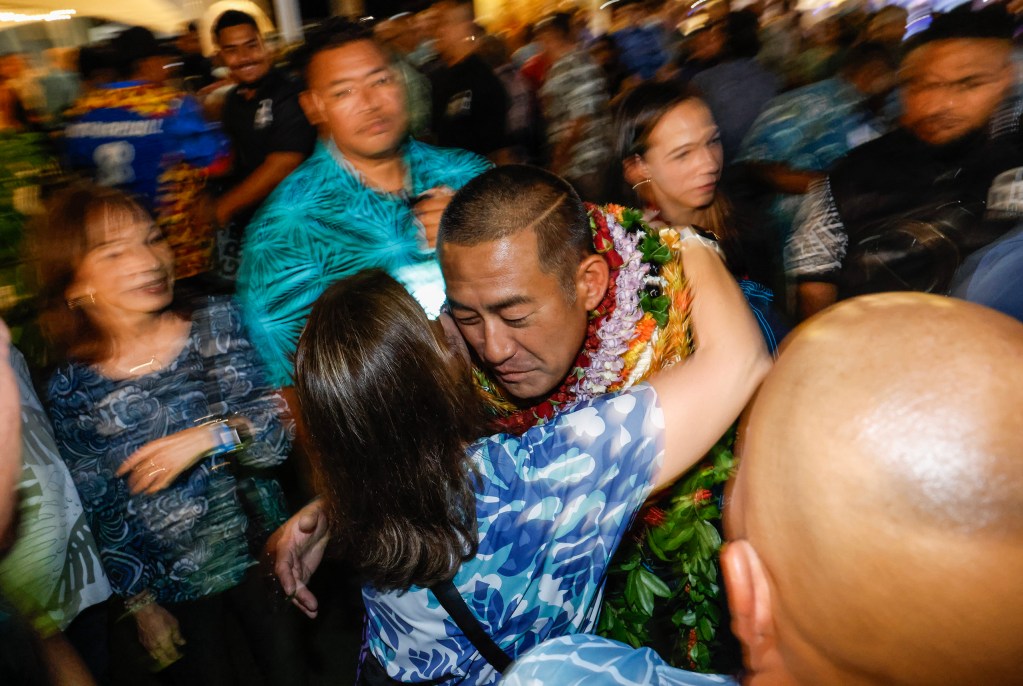
Green had a seasoned campaigner for a running mate in Kawakami, who also has already built a political base on Kauaʻi. Kawakami is a former Kauaʻi County councilman, a former state representative and a two-term Kauaʻi mayor.
Kawakami defeated state Rep. Della Au Belatti in the primary election with a huge boost from a super PAC called For A Better Tomorrow, which spent more than $2 million on an advertising blitz supporting him. That PAC is backed by Pacific Resource Partnership, a consortium of the 6,000-member Hawaiʻi carpenters union and more than 250 contractors statewide who employ them.
The pair of Democrats faced Cordery and lieutenant governor candidate Daniel Anthony, but the GOP campaign never gained much traction. Neither Cordery nor Anthony, who is an artist and a farmer, has held public office before.
During the campaign this year Cordery focused on Hawaiʻi’s sky-high cost of living that has been hammering Hawai‘i residents and forcing many to leave the state, but it is unclear how many voters heard that messaging. Cordery raised only $430,800 for the campaign, which was not nearly enough to counter a flood of advertising on behalf of the Democrats.
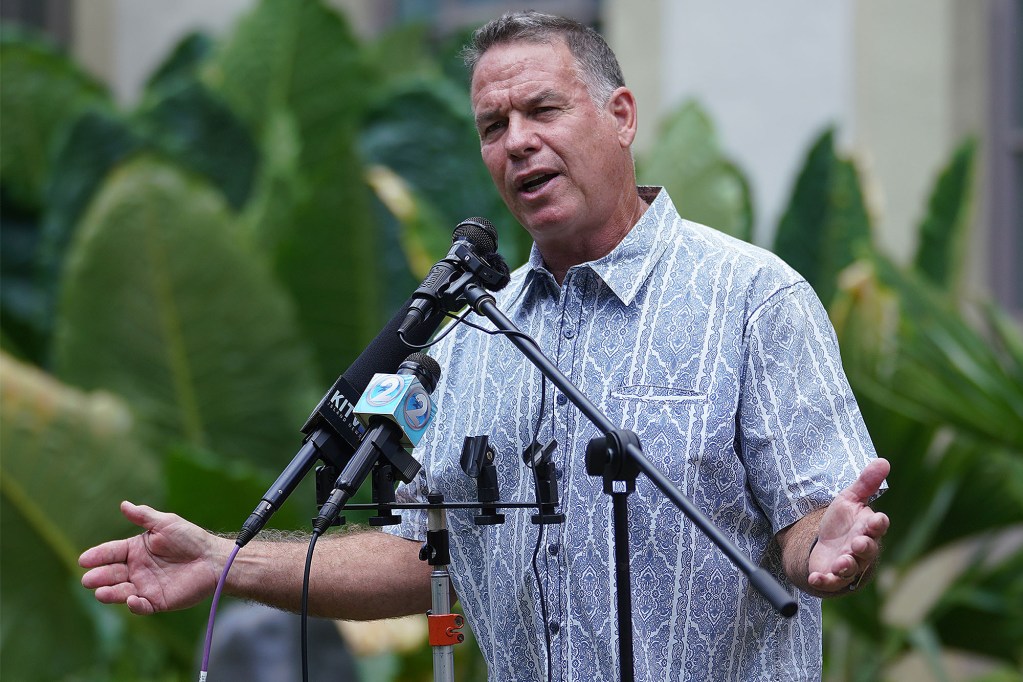
By comparison, Kawakami raised more than $1.3 million for this year’s campaign, while Green raised $3.9 million. Perhaps even more importantly, the Democrats benefited from a surge of television and online advertising by the independent super PAC For A Better Tomorrow that was designed to promote Kawakami’s campaign.
Green also signed into law the largest state income tax cut in Hawaiʻi history in 2024, which Perkinson said may have helped undercut a major issue the Republicans have relied on in the past.
Recent polling by Morning Consult found Green had a 57% approval rating among registered Hawaiʻi voters in the weeks leading up to the election, with just 31% disapproving of the governor. But the Green team’s lead in the vote totals in early returns went well beyond what the polling data suggested.
Data released Wednesday morning showed the Green-Kawakami ticket won by a margin of nearly 46 percentage points over Cordery and Anthony. That amounts to the largest margin of victory in a general election gubernatorial race since statehood.
The previous record was set in 2018, when Democratic Gov. David Ige with Green running for lieutenant governor secured 61.4% of the vote. The Republican team of Andria Tupola for governor and Marissa Kerns for lieutenant governor received just 33%, giving the Democrats a margin of victory of about 28 percentage points that year.