


When No One Is Watching, Part 4 of 4
The witness was clearly uncomfortable.
For many years after he was molested by his foster father, he said, he told only one person what had happened — his girlfriend.
And now here he was in a Zoom deposition for a civil lawsuit with three attorneys and a court reporter, being asked to describe it all in detail.
One of his foster brothers, known in court documents as John Roe 121, had asked him to testify as part of his lawsuit against their foster father, John Teixeira, and the state Department of Human Services. JR claimed that Teixeira had sexually abused him, and had asked others to back him up.
In halting, broken sentences, the man recounted how when he was 11 or 12, Teixeira invited him to sleep in his bed in their Waimānalo home.
“And then all of a sudden I just know that he was like — he had tried to do it orally, forcing me,” the deposition witness recalled.
“He tried to perform oral sex on you?” the attorney asked.
“Yes,” the witness replied.
The 2022 deposition was part of a reckoning two decades in the making.
In the 1990s and 2000s, the state had relied on Teixeira to take in boys who it said no one else would accept, nearly 60 in all by his own count.
JR decided to act after hearing a radio ad from a law firm about a Hawaiʻi law that allowed child sex abuse victims to file suit even if the statute of limitations had run out.
He alleged that a state caseworker dropped him off with Teixeira one day in 1998 and barely checked in on him again, leaving him to fend for himself in a home where much older boys and his foster dad preyed upon him.
He started contacting some of his foster brothers to see if they, too, would come forward.

He also talked to the mother of Rahiem Morris, a former foster boy who committed suicide in 2020, a year or more after he agreed to testify in JR’s lawsuit.
Rahiem had fled Teixeira’s home as a teenager, telling police that Teixeira had punched him in the mouth. Over the years, he said, Teixeira had beaten him with sticks, extension cords and hangers.
Rahiem’s mother, Sharon Fernandez-Thomas, had kept his ashes in her apartment, and JR said money from the settlement could help pay for his remains to be buried. But she said she was too despondent about her son’s death to do anything.
Meanwhile, his campaign was opening up a rift among the former foster boys.
Several denied that anything had ever happened, according to one former foster boy.
“Trust me, I have a mouth on me,” said Chris Longaker, one of Teixeira’s first foster boys. “If something was going on, I don’t deal with that shit.”
JR “called everybody, all the boys who grew up with him,” Longaker said. “Some said, ‘If I see you, I’m going to hurt you for even asking me to lie about that.’”
Longaker dismissed the lawsuit as “a money grab.”
Teixeira himself saw it the same way. JR, he told Civil Beat in a May phone interview, had been so much trouble as a boy that he was tempted to return him to the state.
“But I kept him and didn’t give up and now he does this?” he asked.
Teixeira, who denies physically or sexually abusing his foster sons, told Civil Beat that he would speak to his lawyer about talking in greater depth. In September, a reporter and photographer traveled to the Big Island and contacted him again, but he declined another interview, citing the recent accidental death of one of his other former foster sons.
Civil Beat retraced JR’s steps, reaching out to many of the other former foster boys, too. Longaker and one other, James Pitts, responded.
Pitts said he found himself torn.
He said he was never victimized sexually. But in retrospect, he saw signs that others were. For instance, he said he and the other boys found it strange that Teixeira apparently shared a bed with a former foster son who had aged out of the system at 18.
So when JR got in touch to talk about the lawsuit, “certain things fell into place.”
Still, when JR asked him to testify, Pitts declined. He had not witnessed anything himself. “I didn’t want to get in the middle of it,” he said.
But two other former foster boys did have stories to tell.
‘They Just Drop You Off And Fuck, That’s It’
The witness in the 2022 Zoom deposition said “fuck” or “fucking” 129 times in 90 minutes and repeatedly threatened to log out.
Despite his rage, he pieced together an account of his experience as Teixeira’s foster son.
He said he was removed from his biological family at the age of 9 because his father was beating him. A few years later, he ended up at Teixeira’s home in Waimānalo.
He said he was first unnerved by Teixeira kissing him on the mouth in a way that didn’t seem at all fatherly.
The night Teixeira invited him to sleep with him, the witness said, the former foster boy who had aged out of the system, then 18 or 19, was also in the bed and awake. After Teixeira crawled under the blanket and tried to perform oral sex, the witness said he ran from the room.
The same thing happened a second time, he said, after Teixeira invited him into the room to watch a movie.
After these two incidents, the witness said, he was sleeping in a living room one evening in front of the TV when he woke up to find a man who’d been introduced to him as Teixeira’s cousin groping him.
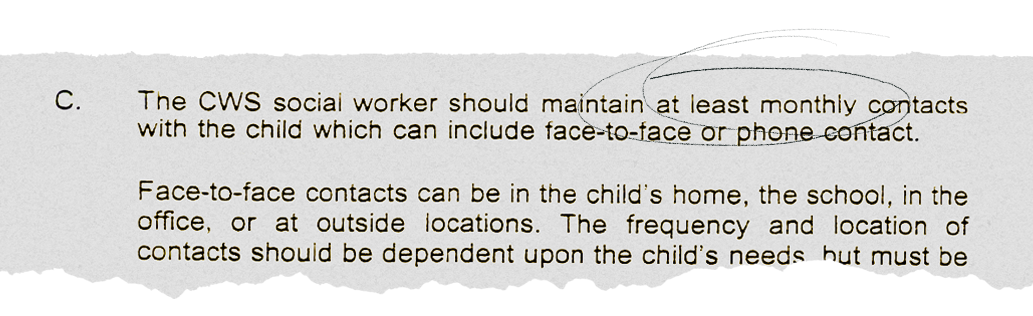
He said he told no one about any of the three incidents because, like other Teixeira foster boys, he rarely saw a state social worker even though the state requires them to make contact once a month. He said he saw his social worker only twice: when she dropped him off at Teixeira’s, and when she picked him up at a detention home to return him there.
Children who are taken from their parents and put in foster care must go through Family Court, where they are represented by court officials known as guardians ad litem. These officials get to know the children and advocate for their best interests.
But the witness said he didn’t even know what a guardian ad litem was.
“I would remember if there was somebody who actually cared and came around and was like ‘Oh, how are you doing?’” he said.
Years Of Silence
Instead of confiding in anyone, he ran.
“I started sneaking out the window,” he said, living on the streets when he wasn’t locked up at the Hawaii Youth Correctional Facility. He began stealing cars, and once swiped a check from Teixeira to buy one. As an adult, he did prison time.
Though he was not asked about this in his deposition, other documents show that he remained silent in 2003 during an investigation of whether Teixeira had molested him. Hoku Freitas, another foster boy, had made that accusation.
But the witness, then 16, told an investigator that Hoku was wrong, nothing had happened.
It took him years to be able to even tell his girlfriend. “I had to build the courage and admit to her that something like that did happen,” he said.
When JR contacted him about the lawsuit, he said, he confided the truth and agreed to be deposed. After that, foster brothers who used to get together with him for dinner no longer picked up the phone.
“They don’t want to say ‘hi’ because of what’s going on with this,” he said.
He had no financial stake in the outcome of JR’s litigation. But he hoped recounting his experience would let him put it to rest. If it hadn’t come out in the lawsuit, he said, “I would have probably just let it eat me up.”
The deposition didn’t seem to have the desired effect, especially when he was questioned by Frank O’Brien, Teixeira’s attorney. At one point, O’Brien asked if he got an erection when his foster father took his penis into his mouth.
“You are a fool, Mr. O’Brien,” the witness said. “No, you are a fucking fool.”
He said he would rather have been beaten up by his own father every day than for the state to have sent him to endure life with Teixeira.
“They just drop you off and fuck, that’s it … ,” he said. “And yeah, OK, I appreciate it. I had a fucking roof over my head. Great, but what kind of fucking roof is that if it leaks?”
‘My Mom Still Doesn’t Know About This’
A second deposition witness said he was victimized when he was 12 or 13 not by Teixeira, but by the former foster boy who shared Teixeira’s bedroom.
He got scared and told Teixeira’s mother, who told Teixeira. But he said Teixeira told him not to tell his biological mother, who had lived nearby and apparently requested her son be placed with him.
He never did.
“For 22 years, my mom still doesn’t know about this,” he said.
Nor did he report it to anyone else. He testified that if he had a state social worker, he didn’t remember ever seeing the person. And like the first witness, he did not know what a guardian ad litem did, much less remember having one.
The state eventually returned him to his mother. But he left home, started living with friends and using methamphetamine, and served 11 or 12 years in prison on various theft charges.
At long last, at a court reporter’s office in Hilo on April 19, 2022, Teixeira had to respond to the accusations.
For years, his main occupation had been caring for foster boys. He got monthly checks from the state for each one, usually more than the standard foster rate because they had been deemed difficult to care for. His monthly payment for JR, for instance, was $1,099.
“They came with it because of how bad they were to begin with and no one else would take them,” he said in the deposition.
He also made money from breeding chihuahuas and lovebirds, and had tried to start a business training and selling horses. The boys helped with all of these enterprises.
But in 2006 or so, he took in his last foster boy.
As the boys were aging out of the system, Teixeira found other occupations. He worked as a meatpacker in Paʻauilo for several years before the tendons in his hand were sliced in an accident with a knife.
He remodeled homes, and drove a bobcat for Meadow Gold dairy, but got hurt on that job as well when the vibrations from a weed eater damaged the nerves in his arms.
In 2007, he had borrowed $236,000 to pay for a house in Kurtistown where he moved with the boys.
But he stopped making payments in 2010. By 2015, he owed more than $300,000 and the bank foreclosed. He bought a 540-square-foot, one-bedroom place in Mountain View, where he moved with the last remaining foster boy, developmentally disabled and by then an adult.
At the time of the 2022 deposition, he said he had a part-time job taking care of a 92-year-old woman and her 14 dogs. For three years, he said, he’d been doing her shopping and banking.
As for the allegations of sexual abuse, he denied them all.
Instead, he said, it was plaintiff JR, sent to live with him at the age of 8, who was a sexual aggressor. The boy “acted out sexually from the day he was placed,” he said.
JR poked other boys in the buttocks and said, “ziggy you,” Teixeira said. He punched a boy 10 years his senior in the testicles and kept “whipping out” his penis and bragging about how big it was. And he gave one of his foster brothers a wedgie.
Four or five months after JR arrived, Teixeira said he even called a police officer to come and talk to him.
JR, he said, “was always a bully.”
As for the former foster boy who lived in his room, Teixeira said he did not share the bed, but slept on the floor.
Far from abhorring him, Teixeira said, several of the boys stayed in close touch as adults. The one who shared his room had a stroke at a young age and called him every day, asking for advice about a conflict with his girlfriend.
Even JR had called him from behind bars several years earlier, he said, to tell him he’d met someone in jail who wanted to talk to Teixeira about a stunt horse.
Teixeira said JR told him he loved him and that he responded, “I love you, too. Take care. And when you come out, let me know.”
That was the last time he talked to JR, he added.
JR remembers calling Teixeira to bail him out of jail, but says he doesn’t recall telling him he loved him.
The first deposition witness said he, too, communicated with Teixeira as an adult. One time he asked for his help moving his stuff, and his former foster father agreed.
The witness said he had no one else to turn to.
‘I Was A Punk, And He Broke Me’
One former foster boy who felt particularly strongly about Teixeira’s innocence was Chris Longaker.
“He was a very caring person,” Longaker said. “Don’t get me wrong, he had his rules … No girlfriends until you’re out of high school. That simple, I don’t want you guys thinking about girls, I want you guys to worry about studying.
“Come home, work on the ranch, work with horses, clean the yard, keep the house clean and we’re good.”
After Longaker came home drunk one night, Teixeira merely assigned him to clean horse stalls in the heat with a hangover the next day.
“I was a punk, and he broke me,” Longaker said.
As an adult, Longaker said, he split with his live-in girlfriend in China and fell into a deep depression. With no job or money, he showed up at Teixeira’s with only a backpack.
“That man opened his door to me,” he said. “I didn’t work, I didn’t do nothing. He supported me.”
Longaker told Teixeira’s lawyer O’Brien that he was willing to pay his own way to fly from the mainland to testify, but he said O’Brien told him to hold off. Instead, Longaker wrote a letter of support and had it notarized.
It turned out to be unnecessary. In July 2023, Teixeira reached a confidential out-of-court settlement.
The state Department of Human Services, which had long championed Teixeira as an ideal foster parent, filed a motion saying that in spite of the settlement, it still wanted to be able to minimize its own liability by arguing that it was his fault.
DHS was left as the sole defendant.
An Expert Assessment
It wasn’t enough for JR to show that other boys had been sexually abused. He needed someone to assess whether the state had been negligent in failing to prevent it.
So his lawyers hired an expert witness.
Francesca LeRúe has master’s degrees in public administration and social work, with 31 years of experience, including in leadership, management and training.
For JR’s case, the California expert witness reviewed thousands of pages of records. Just the list of them ran to 17 single-spaced pages.
Several of the boys ran away from Teixeira’s foster home, some repeatedly. That should have led to questions.
Francesca LeRúe
Teixeira was being paid extra for taking in boys who were deemed by a psychologist to be difficult to care for, with complex needs and behaviors. And yet, the single, unmarried man had had no special training, LeRúe said in a deposition.
What’s more, state social workers did not meet with JR once a month by phone or in person, as required at the time by the Child Welfare Services procedures manual.
JR “was eight years old, so it would have been incredibly important to meet with him,” LeRúe testified, to gain his trust in case something bad happened.
That was particularly true because he was placed in a foster home where at least three of the much older boys had documented histories of sexualized behaviors. JR later alleged that two of these boys, and one other, also sexually abused him.
In 2003, when Hoku Freitas reported that the first deposition witness had been molested by Teixeira, the state failed to do a thorough investigation, LeRúe said. It would have taken time to get the boys to open up. But the report gives no indication of how long the investigator spent with each of them.
Several of the boys ran away from Teixeira’s foster home, some repeatedly. That, too, should have led to questions, LeRúe said.
“There’s children who run to something or someone,” she testified, “or from something or someone.”
Why, she asked, did the state not question why JR refused to move with Teixeira, who by then was his legal guardian, from the Waiʻanae Coast to the Big Island? What had made him decide he could no longer live with the custodian endorsed by the state?
Rahiem Morris, too, had refused to live with Teixeira after alleging he had been beaten by him.
The state applauded Teixeira for helping out former foster boys who had aged out of the system. But LeRúe saw that as evidence of bad outcomes — they needed food or a bed because they hadn’t found their footing as adults.
“Several of the children who resided for years under Mr. Teixeira’s care and supervision ended up homeless and incarcerated,” she wrote.
For one of the former foster boys — Rahiem — she noted that the outcome was “an early death.”
The Judgment
The state and JR started working with a mediator to reach a settlement in late 2022. But by early 2024, the two sides announced that they were at an impasse. There would be no out-of-court settlement.
Instead, Circuit Court Judge Kevin Morikone presided over a three-day trial in April 2024 in which he, rather than a jury, would weigh the evidence.
JR testified, as did his CWS caseworker and Pamela Silva, who had investigated the 2003 Hoku Freitas accusations. A clinical psychologist talked about the effects of trauma on JR.
Sandy Van, whose home next to Teixeira’s had provided a refuge for the boys, testified about flying to the Big Island to help Rahiem after he reported being hit by Teixeira and bringing him back to Oʻahu to live with her. She said she had witnessed Teixeira hitting two other boys.
In its closing argument, the deputy attorney general representing the state sought to undermine JR’s credibility by pointing out what he said were inconsistencies in his story.
JR failed to prove that he was not visited by his social worker, who kept written notes that she didn’t always enter into the computer, the deputy attorney general argued.
The state had long championed Teixeira as an ideal foster parent.
Now, the lawyers said, “It is the State’s position that Mr. Teixeira should be held more accountable than the State because he was physically present in the home with the Plaintiff and the other boys. Mr. Teixeira was in a position where he should have seen what was going on and should have controlled the situation.”
In August, the judge issued his written opinion.
He found that Teixeira had started sexually assaulting JR within the first week of his arrival, at the age of 8, by grabbing his genitals through his clothing. That evolved into Teixeira reaching into his foster son’s pants to masturbate him.
It happened about 100 times over four or five years, he wrote. And, when JR was 12, Teixeira had tried to perform oral sex on him.
Three of the older boys had also victimized JR, the judge said.
“The only witness to testify claiming the absence of sexual abuse in the Teixeira foster home was Defendant John Teixeira,” Morikone wrote. “His testimony is unpersuasive and lacks any credibility in light of the considerable testimony” of JR and the two deposition witnesses.
“Life for a young boy in the Teixeira foster home was a struggle for survival akin to ‘Lord of the Flies,’” he wrote, in reference to the novel about marooned boys creating a brutal society. “The older boys were abusive and Defendant Teixeira, an abuser himself, failed to protect younger boys from them.”
The state, he wrote, placed JR in a home so dangerous that if it had found that same set of circumstances in a child’s birth family, it likely would have removed that child.
When Hoku Freitas made his accusation in 2003, the judge found, the CWS investigator didn’t even look into the allegation that Teixeira had in the past shared his bedroom with a foster boy, or that he got mad when the boy showed an interest in girls.
Morikone said that Teixeira did not have enough training or oversight.
“He had far too many children in his care with significant unmet needs which posed a danger to themselves and others,” he wrote.
And the state failed to check in on the boys, so they had no one to confide in. In short, he found that the state had been derelict in its duties and grossly negligent.
He awarded JR damages totaling $495,000.
Teixeira has never faced criminal charges for the abuse. One Hawaiʻi law makes it a Class A felony to sexually abuse a victim under the age of 14 “continuously.” The perpetrator must commit three or more acts of sexual contact or penetration over time.
The law has no statute of limitations.
Has Anything Changed?
During the years that Teixeira was still fostering boys, the federal government issued a review of Hawaiʻi’s child welfare programs. It turned out that the many failures occurring in Teixeira’s home were all too common throughout the state.
Two decades later, they still are.
In just short of half the 95 cases sampled in the most recent Annual Progress and Services Report, for instance, the state failed to adequately assess the risks to children in their homes or foster placements. The report, released in 2024, is an update on the state’s efforts to meet federal child welfare goals.
Caseworkers weren’t seeing families often enough to assess the risks, the report said. In five of the sampled cases, despite evidence, caseworkers did not substantiate allegations of maltreatment. In another three, caseworkers didn’t do enough to address known risks.
They didn’t always visit children at home or try to see them alone, where they felt free to confide.
Documented abuse in foster homes is extremely uncommon. Yet Hawaiʻi’s rate, 0.5%, was still above the national standard of 0.3% in the 2023 state fiscal year.
When maltreatment did occur, whether in the child’s birth family or foster care, the state failed to meet its own timeframes for making face-to-face contact with the victim in almost 30% of cases.
By one measure, the number of monthly visits to children in foster care improved, but at 83% was still well short of the national standard of 95%.
A different metric, based on both children in foster care and those monitored by CWS while still living with their biological parents, was based on a sample of cases to get an idea of both the number and quality of monthly visits.
About 45% of these sampled cases fell short of goals. The conversations were too brief or didn’t occur in places where the children could open up. Or they happened less than once a month.
In two cases, the children were never seen.
In 60% of sampled cases, the state failed to do enough to ensure that children in foster care had visits with their biological parents and siblings, the report found. Sometimes, the child never saw their mother and father.
In even more cases — 65% — the state failed to do enough to maintain positive relations between foster children in their families through measures other than visits.
The overall number of foster children has dropped considerably since Teixeira’s day, from 5,207 to 1,959 in two decades. And the state’s performance in many categories has improved over the years.
But as CWS continues to contend with a huge number of unfilled jobs in its workforce, in the most recent year the numbers in several categories related to child safety went in the wrong direction.
Still Trying To Find Peace

JR started working as a carpenter six or seven years ago and finds it a relief to occupy his mind with hammering and sawing.
“But then, as soon as I’ve got to come home and I’ve got nothing but time, that’s the hardest,” he said.
He tries to distract himself with videos on his phone or listening to island music. He has a hard time trusting people. At the trial, he testified that he doesn’t like crowds and prefers to stand with his back against a wall.
“I know a lot of people, but I don’t have a lot of friends,” he said.
During the trial, a doctor testified that JR suffers from PTSD, major depressive disorder and other conditions. He has a hard time sleeping, which he blames on the time he was woken up in his lower bunk bed and forced by an older boy to perform sexual acts.
He fantasizes about hunting down pedophiles and hurting them.
A couple of times his girlfriend has touched him in a way that reminded him of how he was victimized, and he could not tamp down his anger. He avoids certain places — Waimānalo, the H3 highway, where he was molested.
Did winning the lawsuit help?
“Not really,” he said.
Though he plans to invest the money, he realizes how ephemeral it is — he could spend it in a couple of months if he chose.
“I’m sure it will be helpful, but not compared to what I went through,” he said. “I’m still going to live with my problems as long as I live.”
Catch up on what you’ve missed in this series: When No One Is Watching
How We Did These Stories
To report and write these stories, Civil Beat relied on thousands of pages of documents, including those that became public in a civil lawsuit filed by a plaintiff known as “John Roe 121,” who we call JR in the stories.
Among those court files were summaries of confidential Hawaiʻi Department of Human Services memos, file notes, assessments and communications in the cases of JR and other foster boys under the care of John Teixeira, as well as state child welfare policies from the time.
Several of the key players, including Teixeira himself, were deposed in the lawsuits. Civil Beat examined these transcripts, as well trial testimony from expert witnesses, state officials and John Roe 121.
Civil Beat interviewed JR, as well as other former foster boys and their relatives, witnesses and experts. We also obtained and reviewed related police reports, court records in several separate cases, property records, business records, probation files, an autopsy, social media and stories published over the years by other media outlets.
We reviewed reports written by the state and by federal regulators measuring the performance of Hawaiʻi’s child welfare system.
The stories do not name the individuals who were victims of sexual abuse in keeping with Civil Beat policy. Others were found by the judge in the civil lawsuit to have abused younger children, but because they were never charged in criminal court, they are not named.
Civil Beat’s investigation into foster care received support from the Fund for Investigative Journalism.
When No One Is Watching examines a foster home rife with sexual and physical abuse for two decades as a case study of dysfunction in Hawaiʻi’s child welfare system.
Reporting by John Hill. Illustrations by Will Caron. Photography by Kevin Fujii. Graphics and art direction by April Estrellon. Project editing by Amy Pyle and Jessica Terrell.
