

When No One Is Watching, Part 2 of 4
In 2003, the state got a report that something had gone wrong in the foster home of John Teixeira.
Teixeira had won a reputation as a master of handling boys with traumatic histories at his Waimānalo home, where he put them to work caring for horses and chickens and chihuahuas.
The state was so impressed by what seemed to be his miraculous influence that it kept sending him boys who would have been difficult or impossible to place elsewhere. By Teixeira’s account, he would take in nearly 60 over the course of two decades.
But now a boy who had lived there alleged to the state Child Welfare Services that Teixeira was sexually abusing one of his other foster sons.
? To keep up with this series and other Civil Beat coverage, sign up for our daily newsletter:
The accuser — 17-year-old Hoku Freitas — was now in a different foster home after running away. He reported that Teixeira would suck the nipples and grope the penis of the then-14-year-old boy, now 16.
So the state set out to investigate.
It was a chance for CWS to reconsider the rosy picture it had painted of Teixeira and to discover the many stories about physical and sexual abuse beneath the surface — older boys victimizing the younger ones, and Teixeira abusing some of them himself.
But that’s not what happened.
‘His Response Was Shock. Disbelief, Even Tearful’
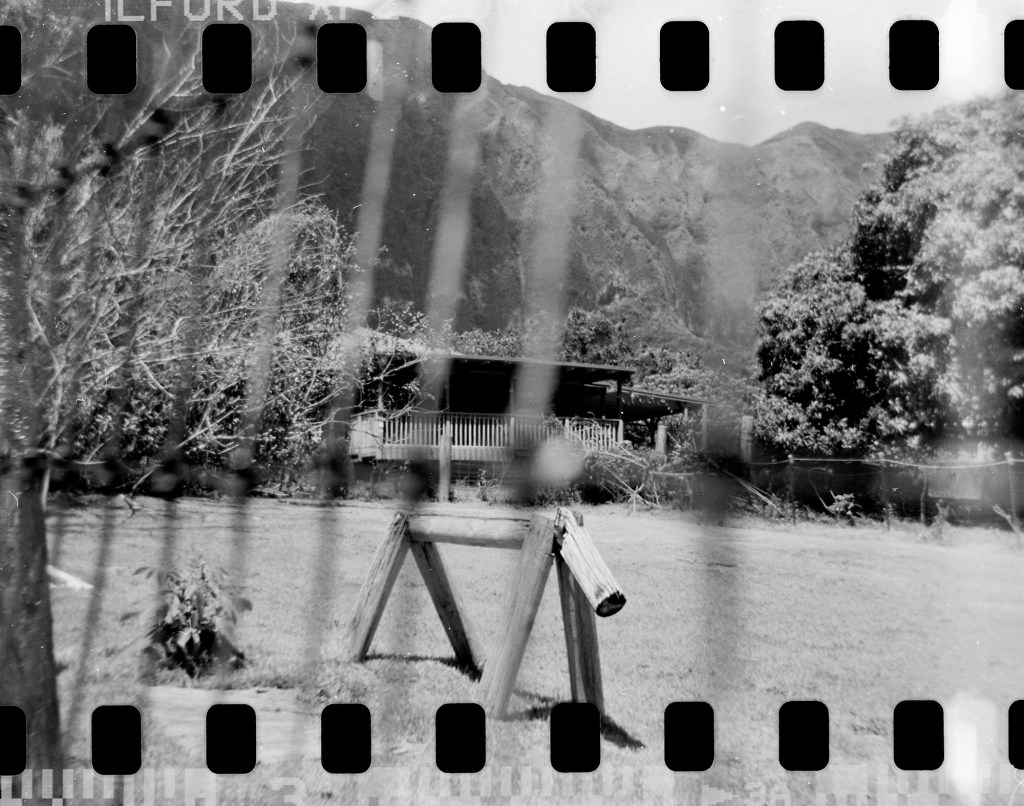
Teixeira had recently moved with his passel of boys to a new location in Waimānalo. Ham’s Flats was a horse stable in the part of town where the coastal plain starts to rise toward the sheer wall of the Koʻolau Range, affording a view of a thin sliver of the ocean to the east. The three ridges of Olomana loom just to the north.
There is almost no traffic — Kalanianaʻole Highway, a mile-and-a-half makai, is a faint buzz. It’s the kind of place where strangers who step out of their cars can expect a dog somewhere to pick up their scent and start barking.
Everything about the property says horses, from corral fencing stacked in a pile to the stables and other structures protected from the elements by corrugated metal roofs. Teixeira had been a horseman all his life and made riding and caring for horses the focus of his home.
The accuser, Hoku Freitas, and his younger sister Catalina had ended up in foster care several years earlier because of their parents’ drug problems.
Catalina Freitas-Estores remembers as a little girl cowering under a house, her stomach rumbling with hunger, as a CWS social worker enticed her out with some candy.
One day, Catalina was taken out of her classroom at August Ahrens school in Waipahu and told that she and Hoku were being moved to Waimānalo. Hoku would be living with John Teixeira, and Catalina would be nearby with Teixeira’s mother, Sylvia.

Hoku ran away from that new home 10 months later, when he was 14.
Two and a half years would pass before he made his accusation. Hoku had been living on the street with his brother much of that time, Teixeira would later say in a court deposition. After he ended up in a detention home, CWS asked Teixeira if he would take Hoku in again.
But around that time, Hoku reported to a Honolulu police officer that he had run away two years earlier because Teixeira molested children, according to a report an expert witness wrote based on CWS documents as part of a later lawsuit. Teixeira had been planning to move to the Big Island with the boys for several months. Hoku said he was afraid that, there, they’d be so isolated that if something happened, he wouldn’t be able to get away.
Hoku said that Teixeira had shared his bedroom with a foster boy, who had since aged out of the system at 18, and got mad when the teen showed an interest in girls.
The Department of Human Services, which oversees CWS, said in a memo that one reason an investigation was warranted was because the boys came from traumatic backgrounds and were vulnerable to further abuse.
The memo also cited poor boundaries and structure in the Teixeira home.
“His response was of shock, disbelief and even tearful,” Silva wrote. “He reports only wanting the best for his foster children.”
If the allegations turned out to be true, it said, “Mr. Teixeira’s actions/behaviors are indicative of a perpetrator who uses control and manipulation of others for his own sexual gain/gratification.”
The memo said the investigation should look into what was going on with all eight boys living there — five foster children and three former foster boys for whom Teixeira had become the legal guardian.
The investigator, Pamela Silva, interviewed the boy who had allegedly been molested. He denied anything had happened to him or to the other boys. All the others said the same.
Teixeira, too, denied it all.
“His response was of shock, disbelief and even tearful,” Silva wrote. “He reports only wanting the best for his foster children.”
Teixeira called the alleged victim, 14 at the time in question, a “macho manly type” who would probably beat up anyone who tried to molest him.
Silva talked to social workers and the other foster children, who consistently reported that, though Teixeira could “get loud,” he has been “a supportive foster father and has taken in many difficult boys.”
She did not, however, talk to the former foster boy who still shared Teixeira’s bedroom. She said later that the summary she received did not include the allegation that the boy slept in Teixeira’s bed.
Silva, meanwhile, found Hoku less than credible. Maybe he made up the report just because he didn’t want to go back to Teixeira’s home for other reasons.
The case was closed.
What The Boys Wouldn’t Say
That was far from the whole story.
Several of the boys would change their stories in a lawsuit two decades later. They said they rarely or never saw state caseworkers or anyone they could trust to disclose what was happening in the Teixeira household.
Would they feel safe telling secrets to an investigator they didn’t know? The answer was no.
One of the boys who, according to the report, said nothing had happened would file a 2019 suit against Teixeira and the state alleging the opposite. A judge would find that Teixeira had sexually assaulted this boy, “John Roe 121,” 100 times — starting well before Silva’s investigation.
And the boy who was the subject of Hoku’s report, who denied he had been victimized?
He would say in a deposition in that same lawsuit that by the time he talked to the investigator, Teixeira had in fact sexually abused him. His foster dad had kissed him in a sexual manner, he said, and twice took his penis into his mouth.
The state’s failure to heed the warnings was just one of the breakdowns that allowed maltreatment to continue unchecked in the Teixeira household. Social workers neglected to visit the foster boys every month, as required. They weren’t getting the services they needed — one said he didn’t see a doctor, dentist or therapist in the year he spent with Teixeira. And the state was allowing one man to supervise too many children.
Isolated from their families and unaware of the identities of their state guardians, the boys had nowhere to turn.
Their predicament was a microcosm of the state system’s failures. The federal government published a review of Hawaiʻi’s child welfare system that found many of the very same problems in 2003 — the same year Hoku Freitas made his report of abuse.
A New Kid
The roster of foster boys in the Teixeira home was constantly in flux.
Some stayed for only a few days, others for months. For some, it would be their home until aging out of foster care, or even beyond.
One of these was Rahiem Morris.
Rahiem’s dad had a drug problem. He separated from the boy’s mother. Then the mother, Sharon Fernandez-Thomas, was arrested for contacting her husband’s new girlfriend, violating a court order.

She pleaded no contest and was sentenced to community service. And CWS took Rahiem, who was 4, severing her parental rights.
Then Rahiem’s mother remarried, moved to the mainland and lost track of him.
He was a “mamma’s boy” who always hung onto her and cried a lot — but a good kid who respected his elders, Fernandez-Thomas said in an interview with Civil Beat. Other people, too, were struck by how polite he was.
Rahiem’s first foster home was with his aunt, his mother’s sister. When the sister died, state caseworkers had to find another home for Rahiem. They chose Teixeira.
John Roe 121 — JR — remembers Rahiem arriving at Teixeira’s in 2002, the year before Hoku’s accusation. He was only 9, much younger than some of the other boys, and small for his age.
At some point, he started to call himself David, because he had heard that it meant “strength,” according to an expert witness in JR’s later lawsuit who reviewed the state’s foster care files. It actually means “beloved,” but the biblical story of David slaying the giant Goliath would have resonated with a small boy facing adversity.
Rahiem was competitive and it showed when the boys played football, JR told Civil Beat. And he would turn out to be the best rider of all the Teixeira foster boys, relishing being in the saddle at speeds that would have caused the other boys to squeeze their thighs against the horse’s flanks to slow it down.
“He had balls of steel,” JR said.
Rahiem had been through a lot in his short life, but Teixeira prided himself on his ability to handle troubled boys.
Three months after Rahiem arrived in Waimānalo, according to an entry in CWS’s social worker logs, Teixeira took him off the antidepressant drug Zoloft “and just worked with him.”
In 2004, Teixeira became Rahiem’s legal guardian.
A Refuge
That same year, Teixeira became acquainted with a woman who would over the next several years provide a refuge for the boys — JR and Rahiem in particular — and catch glimpses of their lives.
Sandy Van bought her first horse at Ham’s Flats, where Teixeira was living with the boys and caring for the horses. She was there every day, riding and looking after her horse. And she started to get to know the boys.
“They were hungry for attention and care,” she would later testify in JR’s lawsuit.

Van lived about four miles away in Enchanted Lakes, and had a son of her own who was only a couple of weeks younger than JR. The boys would come on the weekends, two at a time, and play in her swimming pool.
“I enjoyed having them,” she testified. “My son enjoyed having them, and they enjoyed the time away from the farm.”
Three years after meeting, in 2005, Teixeira and Van came up with a plan to move from Waimānalo to Waiʻanae. They would start a business, called Teixeira Performance Horses, to train and sell horses.
They bought a 2-acre property that included two houses. Teixeira and the boys would live in the bigger one, giving them more room than they had in Waimānalo, and Van would live in the smaller one.
Catalina Freitas-Estores was still living with Teixeira’s mother Sylvia in Waimānalo, and they would make frequent trips to Waiʻanae. In addition to the horses and chihuahuas, Teixeira and the boys were now also raising love birds to sell to pet stores.
“We would go to rodeos for Uncle John and support him,” Freitas-Estores said.
A Model Foster Dad?
From the outside, it all looked idyllic.
Soon after Teixeira and the boys moved to Waiʻanae, the Honolulu Advertiser featured him in a Father’s Day story as an example of men who accept parenting roles “they may never have imagined.”
“In Waiʻanae, John Teixeira, a single parent, has taken on seven difficult teenage boys as guardian and foster father — the latest in a string of 58 foster children to whom he’s become dad over the past 20 years,” the article said.
Teixeira told the reporter, “We have our own ranch now with five horses, and the boys participate in horse shows. The kids just respond to the animals. That’s my ace. They start loving the animals.”
He described the new horse arena he was building, and said that foster boys who were now grown up still came for visits and asked for help with their own children.
“I’m still Dad,” he said, “and when they need help you still help them.” When the state “walks away,” he said, “the parent doesn’t. We’re here for life.”
It wasn’t the first time that Teixeira had been held up publicly as a parenting model. Three times, he had won an annual outstanding volunteer award from the state for bringing horses to foster parent picnics and letting the children ride.
Each time, his foster boys would attend a big dinner and get to meet governors and first ladies.
That public image didn’t jibe with what was happening behind closed doors.
Van would later testify that, even from her house 100 yards away, she would hear Teixeira yelling and cursing and calling the boys stupid.
“It was pretty much a daily occurrence,” she said.
Social workers neglected to visit the foster boys every month, as required
At Teixeira’s house, she would sometimes see furniture, including a big-screen television, that had been broken, apparently during arguments.
And “at least twice,” she testified, she had seen Teixeira strike foster boys on the face with his open hand, hard enough to leave marks on their cheeks.
In 2007, a couple of years after the glowing article about Teixeira, one of the foster boys reported to CWS that Teixeira had slapped him more than once, that other boys in the household were also hit, and that Teixeira ridiculed him and encouraged the other boys to pick on him, according to the later expert witness report in JR’s 2019 lawsuit.
The expert witness said she found no evidence that either of those reports was formally investigated.
When the boys came home from school in the afternoons, they would often crowd into Van’s home, where she was working.
“I would see them in the living room, and it would be wall-to-wall boys, playing video games, watching TV,” she testified. “And I always found it surprising that they would rather be in the close confines every day after school than be at their own, much larger home.”
As in Waimānalo, the boys took turns staying with Van. She provided a refuge.
But she testified that she told no one about seeing the boys being hit.
The Boxing Gym
These were not isolated incidents. A judge would later find in JR’s lawsuit that Teixeira physically abused his foster boys.
By now in his mid-teens, JR was getting big enough to defend himself. Back in Waimānalo, the last time Teixeira tried to molest him as they were driving to the feed store in a van, he said he pushed his hand away as it inched up his leg and said “I’m not one weak little kid anymore.”
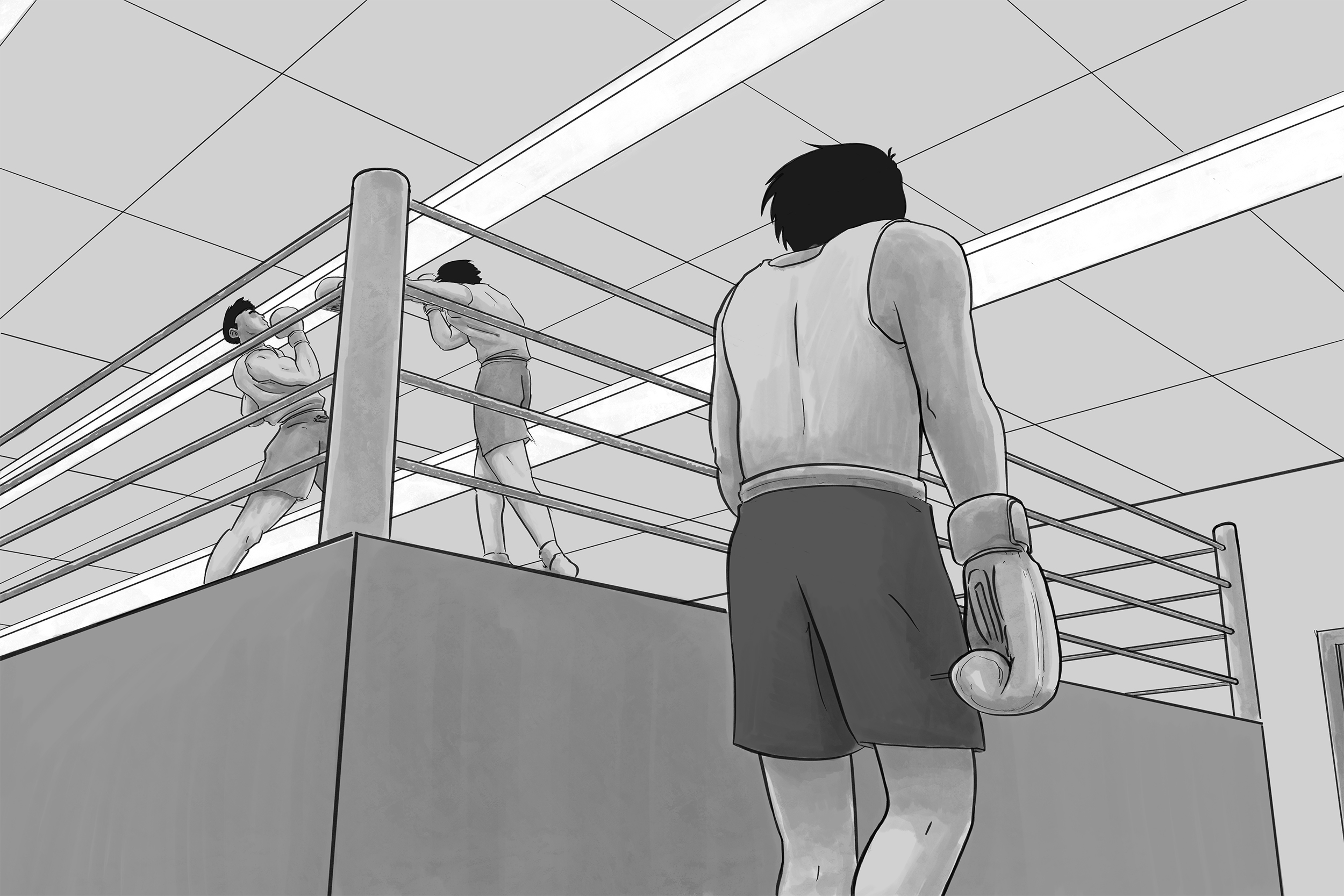
In Waiʻanae, he spent most of his time at the boxing club, schooled by the man he came to consider a mentor, Fred “Pops” Pereira. He’d go there straight from school and not head home until 8 p.m. He got into the habit of running 10 miles a day, five days a week.
“I had a lot of anger,” JR said. “I just wanted to be recognized. I wanted to be somebody.”
The club attracted other teenage boys from similar situations. “That was their outlet and it was my outlet,” he said.
Eventually, JR moved in with “Auntie Sandy.” Her own son had started attending a private school in town and was staying with his father during the week.
“It was just a relief to not even be in the same home” with Teixeira, he said. “I knew he was right across the property, but I felt safer. I felt better.”
He calls it “the best time of my life growing up with John.”
And soon he’d be even farther away from his legal guardian.
In 2007, Teixeira decided to move with the boys to the Big Island, to a house he bought in Kurtistown, near Hilo.
JR, in his senior year of high school, didn’t want to go, and says that Teixeira was happy to leave him behind with Van.
A Call For Help
One of those who ended up making the move was Rahiem.
But one day, Van got a call from a woman on the Big Island whose son had become friends with Rahiem. She had just made a surprising discovery: Rahiem had been secretly living in her home for a week.
He said he didn’t want to go back to Teixeira’s. His legal guardian had been beating him, and if he was forced to go back, he said he would just run away again. Rahiem had given Van’s number to his friend’s mother.
Years later, JR said Rahiem told him there was another reason he ran. One day, Teixeira allowed him to get behind the wheel of their car. But as they were driving, Teixeira started rubbing Rahiem’s leg and running his hand up toward his crotch, much as he had years earlier with JR himself.
In 2008, Van flew to the Big Island and took Rahiem to the police station in Hilo so he could make a report.
Rahiem told the police that Teixeira had struck him three times in the face with his open hand, bloodying his lower lip. It wasn’t the first time. Teixeira had hit him with hangers, extension cords and sticks.
Police arrested Teixeira and he was charged with abuse of a family member. But nine months later, for reasons not fully explained in the record, the Big Island prosecutor’s office would drop the case.
In the meantime, CWS got involved, and a caseworker asked Van if she would be willing to take Rahiem, who by then was 15.
She agreed, and Rahiem moved back to Waiʻanae to live with her and JR. She had only one conversation with a social worker.
“It was very brief,” Van testified later. “I don’t think she even came into the house.”
Van said she tried to tell the social worker that she didn’t think the boys were being treated right in Teixeira’s home.
She testified that she vividly recalls the social worker’s response.
“When you’re looking for a foster home for teenage boys, you take what you can get.”
Come back tomorrow for Part 3: When No One Is Watching
How We Did These Stories
To report and write these stories, Civil Beat relied on thousands of pages of documents, including those that became public in a civil lawsuit filed by a plaintiff known as “John Roe 121,” who we call JR in the stories.
Among those court files were summaries of confidential Hawaiʻi Department of Human Services memos, file notes, assessments and communications in the cases of JR and other foster boys under the care of John Teixeira, as well as state child welfare policies from the time.
Several of the key players, including Teixeira himself, were deposed in the lawsuits. Civil Beat examined these transcripts, as well trial testimony from expert witnesses, state officials and John Roe 121.
Civil Beat interviewed JR, as well as other former foster boys and their relatives, witnesses and experts. We also obtained and reviewed related police reports, court records in several separate cases, property records, business records, probation files, an autopsy, social media and stories published over the years by other media outlets.
We reviewed reports written by the state and by federal regulators measuring the performance of Hawaiʻi’s child welfare system.
The stories do not name the individuals who were victims of sexual abuse in keeping with Civil Beat policy. Others were found by the judge in the civil lawsuit to have abused younger children, but because they were never charged in criminal court, they are not named.
Civil Beat’s investigation into foster care received support from the Fund for Investigative Journalism.
When No One Is Watching examines a foster home rife with sexual and physical abuse for two decades as a case study of dysfunction in Hawaiʻi’s child welfare system.
Reporting by John Hill. Illustrations by Will Caron. Photography by Kevin Fujii. Graphics and art direction by April Estrellon. Project editing by Amy Pyle and Jessica Terrell.
