

Kaua‘i Needs Food Independence. Mayoral Candidates Differ On Achieving That
Addressing the island’s aging infrastructure is also a top issue for those hoping to lead the Garden Isle.
Creating a county agriculture department, changing zoning to better enable farmer housing and increasing the efficiency of the island’s food pantries are among the ways Kaua‘i’s mayoral candidates want to improve food production on the island.
All six candidates running to replace Kaua‘i’s term-limited mayor, Derek Kawakami, agree that the island’s outdated infrastructure and reliance on imported food are top issues, though they have different ideas for solving them.
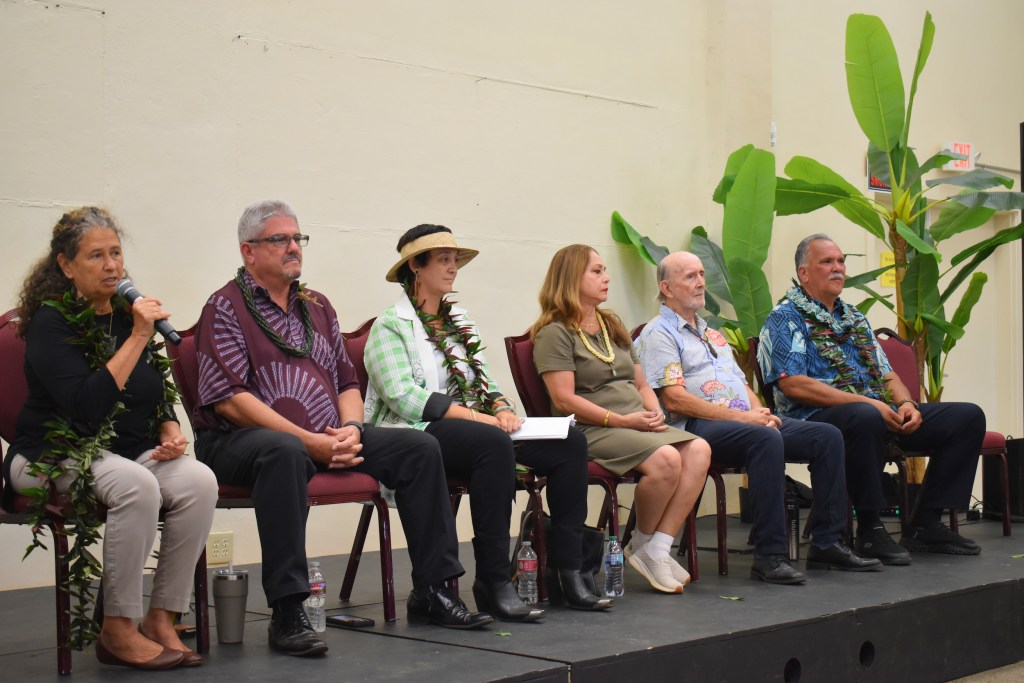
“We are the Garden Island, folks, and yet we don’t have that many gardens,” Council Chair Mel Rapozo said at a weekend forum hosted by Mālama Kaua‘i, a nonprofit that focuses on food security. “We need to really expand agriculture.”
Rapozo and current council member Mayor Bernard Carvalho, Jr. — once Kaua‘i’s longest-serving mayor — have a significant fundraising lead over the other four candidates: council member Felicia Cowden, businessman Megeso-William Denis, Catholic Charities Kaua‘i Community Director Laura Lindsey and Michaela Widener, who works at the Beach House in Po‘ipū.
Kawakami won his first term in 2018 with $518,315 in total contributions — over 2.5 times more than Rapozo, a former Kaua‘i police officer who raised the second largest amount in that race. The popular mayor is now running for lieutenant governor.
Expanded Agriculture
Candidates agree that increasing the island’s food production is essential for making life on Kaua‘i more affordable and helping the island become less reliant on tourism and outside imports. The state imports an estimated 85% to 90% of its food.
Denis said Kaua‘i should be producing all the food it needs, but recognizes that more available agricultural land, food distribution centers, trained farmers and housing are needed to support that. He also said each moku — or island district — should have community gardens.
“I believe in total food independence and stop depending on food from outside sources,” he said. “We should be exporting our foods, and this plan should not take until 2030. It should start today.”
He was referring to Mālama Kaua‘i’s Food Access Plan 2030. Denis ran for mayor in 2022 and describes himself on his campaign website as a former Fortune 500 company and small business executive.
Carvalho, who served as Kaua‘i’s mayor from 2008 to 2018, echoed a similar statement, saying one of his sustainability initiatives resulted in a 75-acre agriculture park in Kīlauea.

Lindsey, a mother of 14 who ran for the Office of Hawaiian Affairs in 2024, said expanding agriculture also means stocking food pantries with larger amounts of healthy foods and increasing their efficiency.
Widener, a mother of two, said the county should invest in government-supported grocery stores with attached commercial kitchens. She also advocated for a closed-loop system where gardeners and farmers grow food for the stores, residents buy the food and food scraps are picked up and composted for use by farmers.
If elected, Rapozo, who ran unsuccessfully for mayor in 2018 and 2008, said he would like to create a department of agriculture within the county, though he recognizes the move would need voter approval via a charter amendment. Maui County formed a county agriculture department in 2022 after getting voter approval.
Kaua‘i only has one full-time employee focused on agriculture within the Office of Economic Development. Having a standalone department would give the county more bandwidth to increase farming opportunities, Rapozo said.
Cowden has served on the County Council since 2018 and wants zoning laws to be changed so that farmers can build shared homes on agricultural land where a family or multiple individuals can have a central kitchen and share farm tools and equipment.
Infrastructure Woes
Candidates also discussed the county’s infrastructure challenges, including its century-old water system. In 2025, the county unveiled a $1.3 billion plan to overhaul the system.
“We can’t keep building with an obsolete infrastructure without it blowing up in our face at some point,” Widener said.
Solid waste was a priority for Carvalho and Rapozo. Carvalho said his administration had helped identify the new landfill site at Ma‘ālo Road in Hanamā‘ulu. Rapozo said the county should implement curbside recycling to help decrease its waste.
“We’re in a crisis right now because of the failure to act over the last 20 years,” he said.
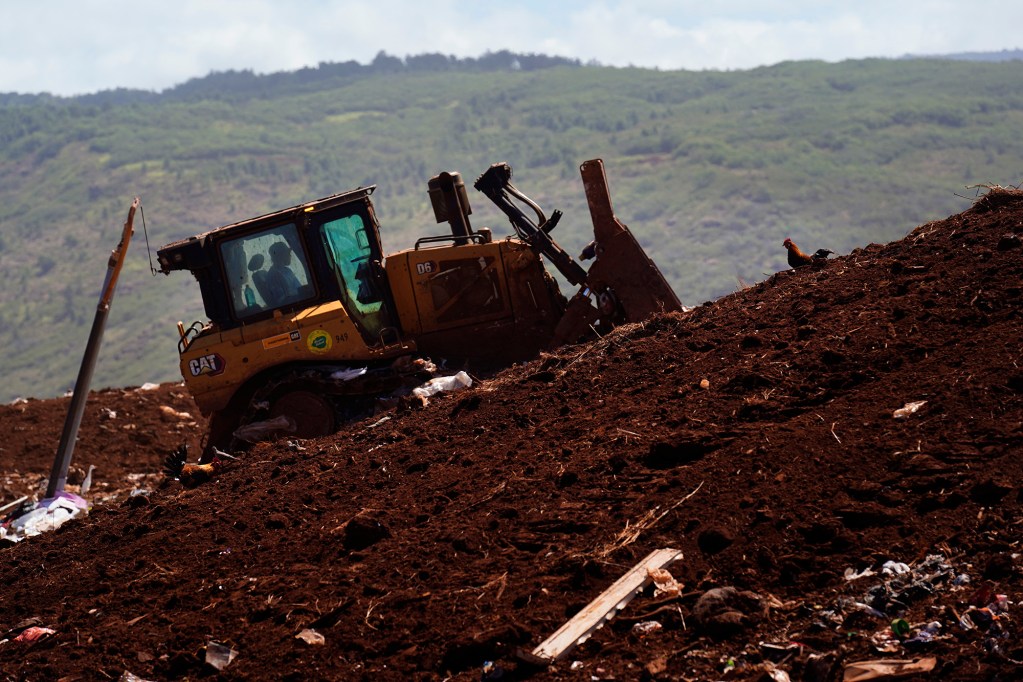
The county studied curbside recycling last year and deemed it not economically feasible. A county report released last June found that it would cost $15.5 million a year — roughly $65 per household per month — to start a weekly curbside recycling program and develop and operate a material recovery facility. Curbside recycling only diverts 2% more than what’s already being diverted.
When it comes to housing, Cowden said the county has done a good job of adding more units, but it’s also pushed the capacity of the island’s infrastructure.
“The biggest challenge that we have is we’re pushing everybody off the island, and we won’t even have a workforce left,” she said. “We have to fix it.”
Carvalho said the county needs to focus more on gap housing, which targets households that make too much to qualify for low-income housing but too little to afford market-rate homes.
“I’m a grandpa now,” he said. “I got six grand babies, and we want to make sure that they can stay home and we can enjoy them.”
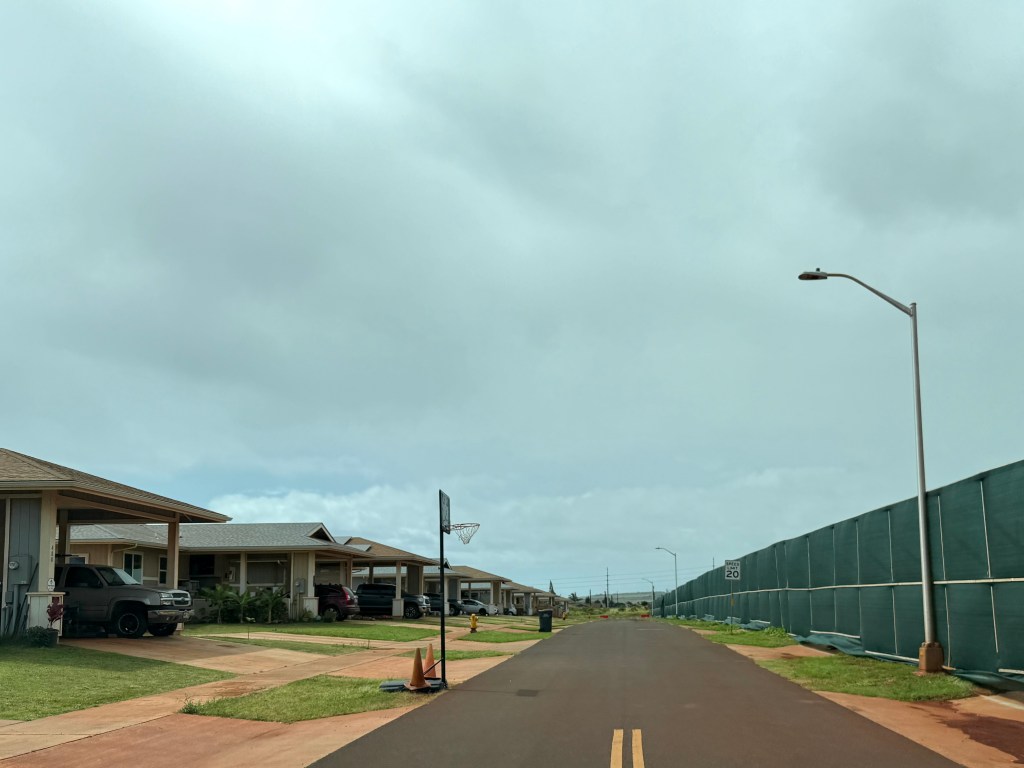
Lindsey argued that Kaua‘i hasn’t treated its housing situation like a true crisis, despite calling it one for decades. She advocates for more options to help families, such as a county loan program to help homeowners expand their houses or add additional dwelling units for multi-family living.
“We don’t want to just create a whole community of renters,” she said. “I want all of you to live and thrive and grow and give every opportunity to the next generation.”
For Denis, housing comes second to improving the island’s economy and cost of living. More needs to be done to develop the local workforce, keep more spending on the island and help businesses thrive, he said.
Government Operations
Some of the mayoral candidates lamented Kaua‘i’s slow permitting process, saying it needs to be simplified.
“We gotta really look at our entire permitting process and how everything is structured internally,” Carvalho said.
Lindsey said she’d like to see a county satellite office so West Side residents don’t have to go farther than Hanapēpē for government services. Cowden said she would focus on meetings and communication with the various department heads.
Listen To The Mayoral And Council Forums
Recordings of last weekend’s mayoral and council candidate forums are available on Kaua‘i Community Radio’s midterm elections page.
Short notice was an issue during budget deliberations this year. Some council members were taken aback by the administration’s addition of $5.2 million into its supplemental budget request to purchase an industrial parcel to relocate its auto shop. Such large changes usually don’t occur so late in the process, so some members felt like they were rushed to decide.
Rapozo would like to create an office of accountability that constituents could call and be routed to the right agency. The mayor would receive regular reports on outstanding responses to help keep departments accountable to residents.
Kaua‘i voters will narrow down the field of six mayoral candidates to two during the Aug. 8 primary.
Civil Beat’s reporting on Kauaʻi is supported in part by a grant from the G. N. Wilcox Trust.
“Hawai‘i Grown” is funded in part by grants from the Stupski Foundation, Ulupono Fund at the Hawai‘i Community Foundation and the Frost Family Foundation.

