This year under the new leadership of Executive Editor-in-Chief Amy Pyle, Shootz!, our weekly photo blog, went from random, interesting photos left out of writers’ stories to full-blown photo essays.
This was quite the challenge seeing as I might have photographed seven photo essays in 36 years as a photojournalist. In the month of May, I photographed seven alone.
Some of my favorite photographs of the year fell short of being incredible visuals. But the message captured meant more than the aesthetics.
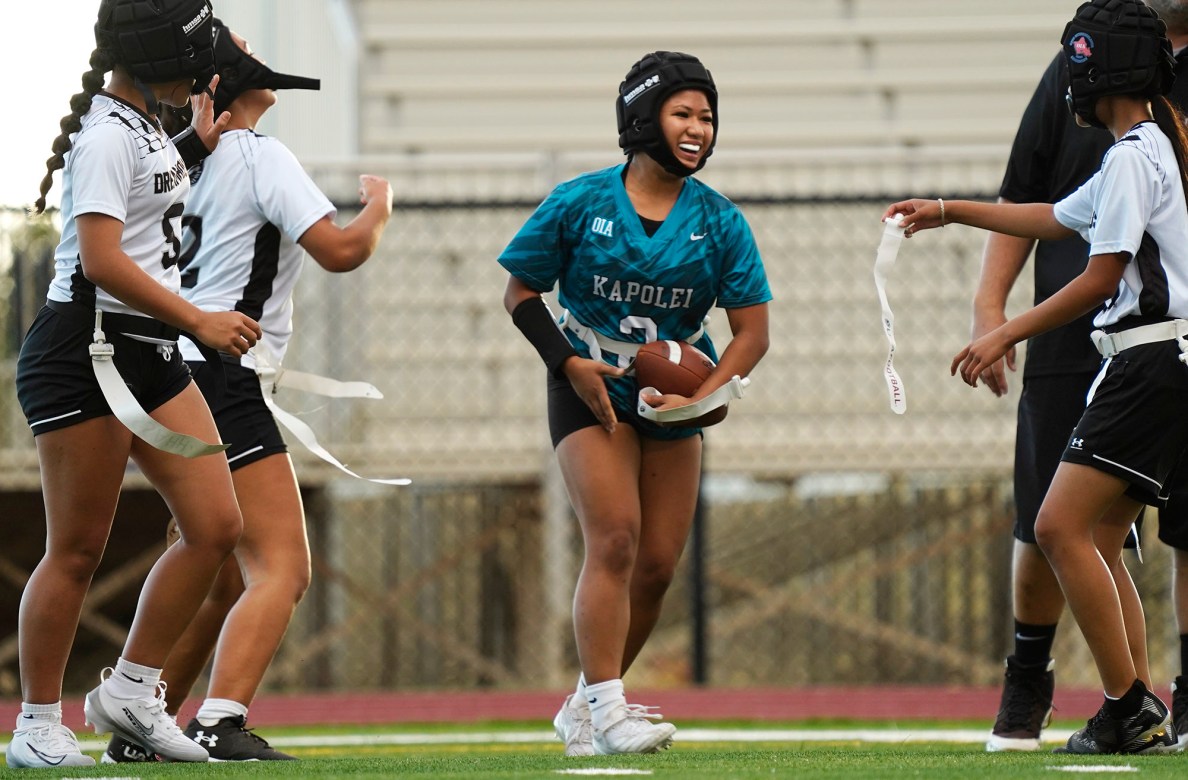
Take for example the first high school girls varsity flag football game in Hawaiʻi. The Aloha State became the 14th state to elevate girls flag football to the competitive varsity level.
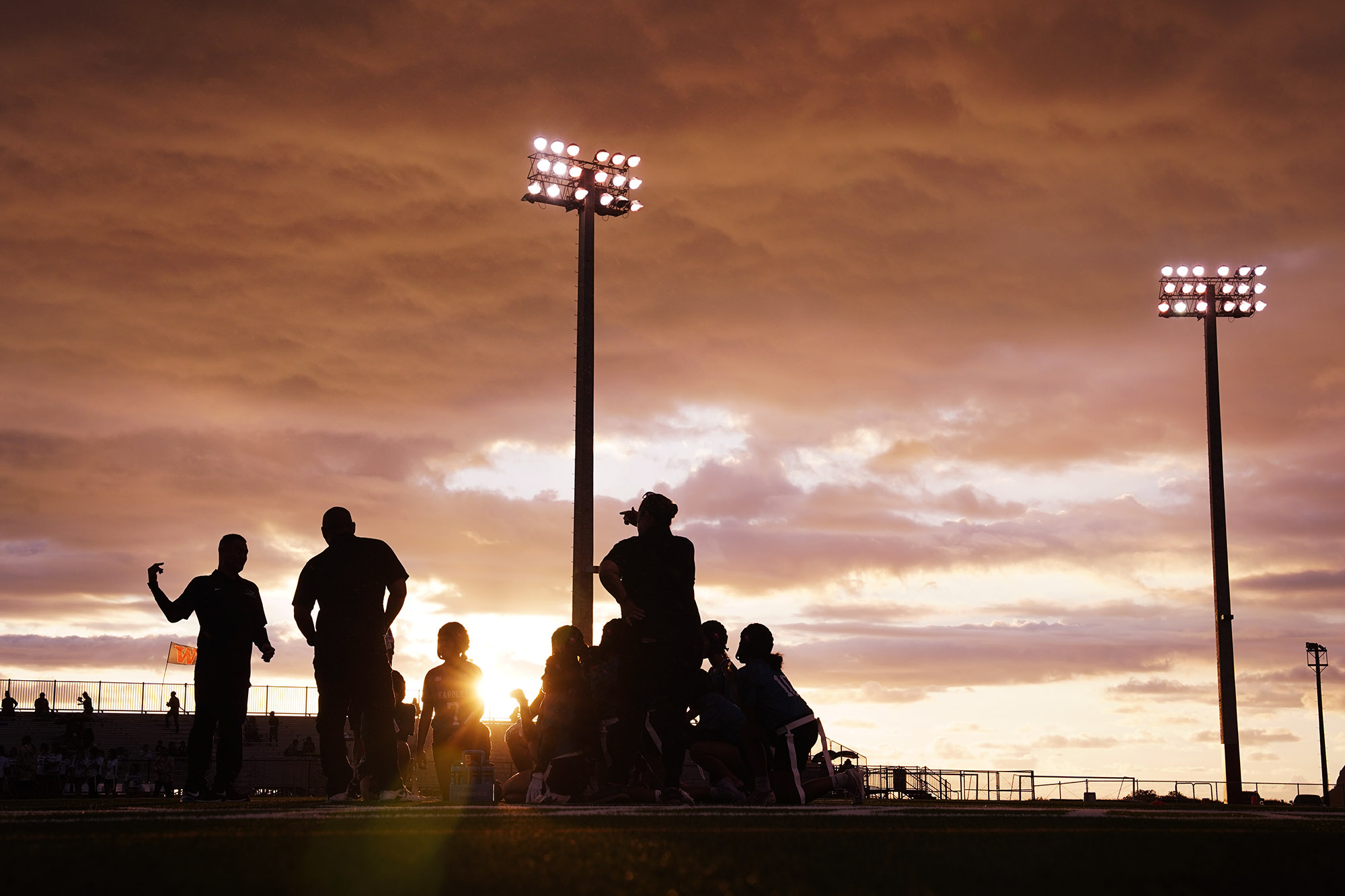
My big takeaway from the historic inaugural game, however, was how the competitors treated each other with respect, kindness and humor.
A moment when body language said everything in a photograph: March 19, when the Maui Police Commission re-instated Chief John Pelletier after his abrupt dismissal by the mayor for being named in a civl lawsuit for his alleged involvement in a sex scandal with musical artist Sean “Diddy” Combs.

The ongoing eruption of Kīlauea since the day before Christmas Eve 2024 continues to show Pele’s enduring power. Some lava fountains have reached 1,500 feet. I caught the 16th episode April 2, which peaked at approximately 700 feet.

On April 15, Honolulu Mayor Rick Blangiardi held a news briefing to invite lawyers to do pro bono work for the homeless. The city tried to clear A’ala Park near Chinatown of those living on the streets in advance of the event, with limited success.
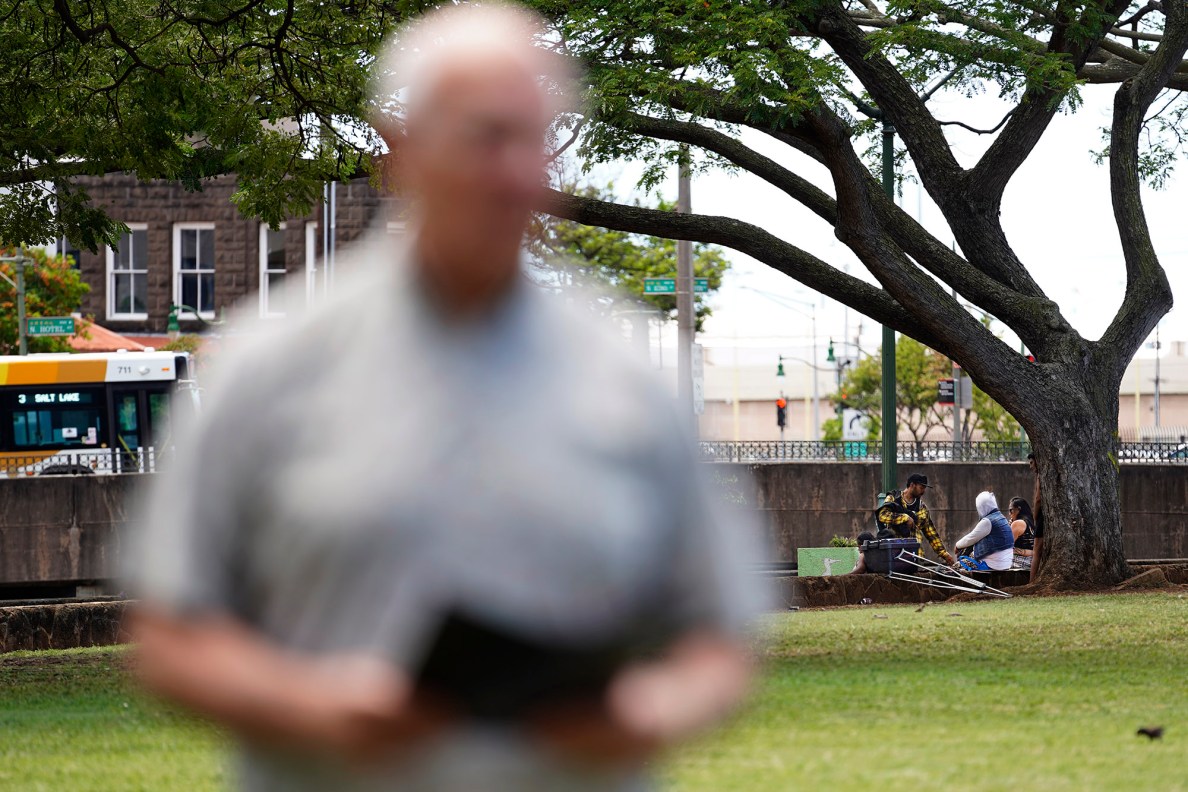
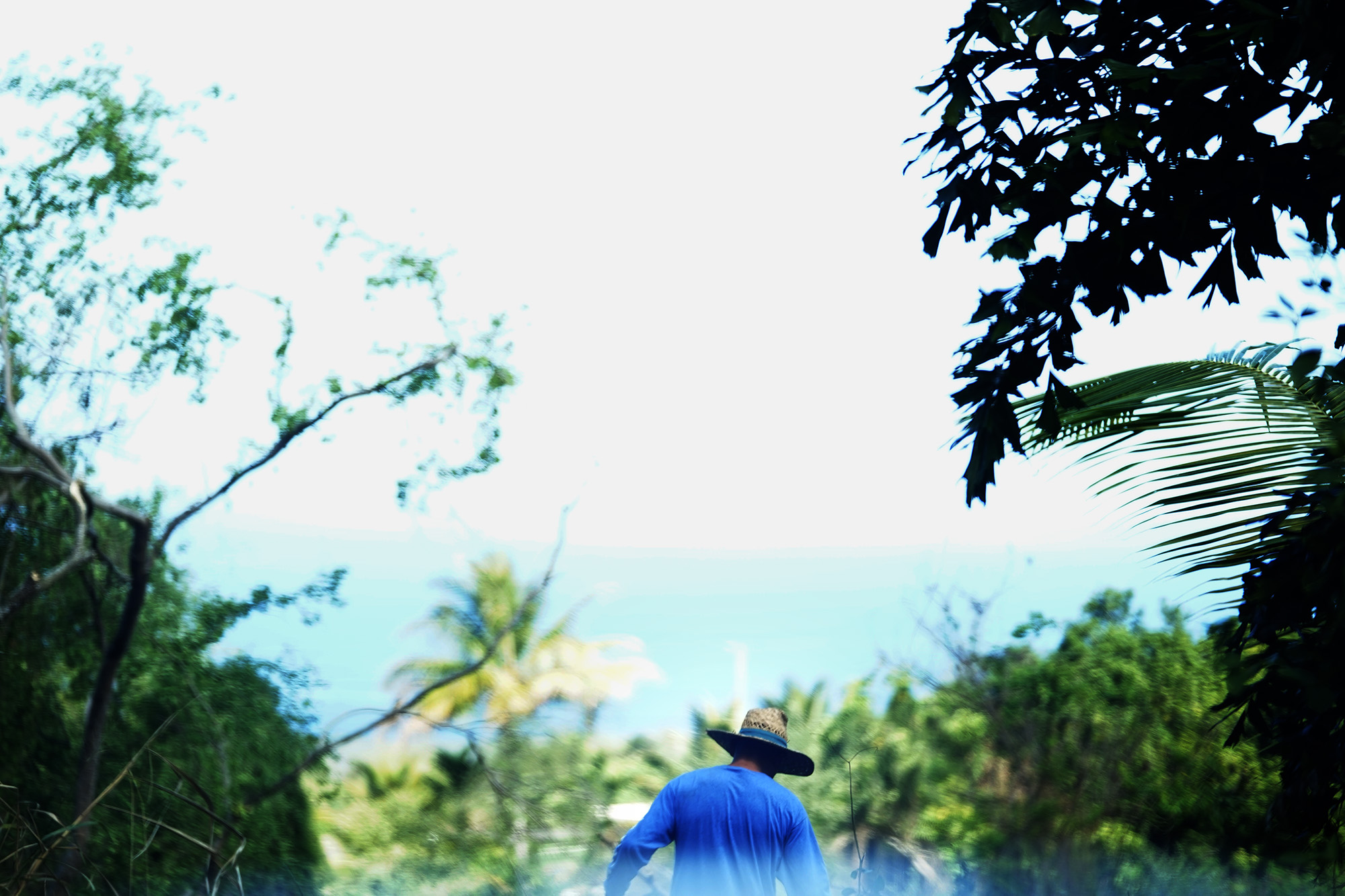
As the Trump administration began sweeping immigration raids and removal, reporter Jeremy Hey and I travelled to Hawaiʻi island, where many of the arrests have been made for alleged immigration infractions. We connected with one of his subjects, who walked away calmly but quickly down the hill toward thick vegetation as we departed. This photograph as we left spoke volumes to me: an emotional cloud of fear despite the clear skies.
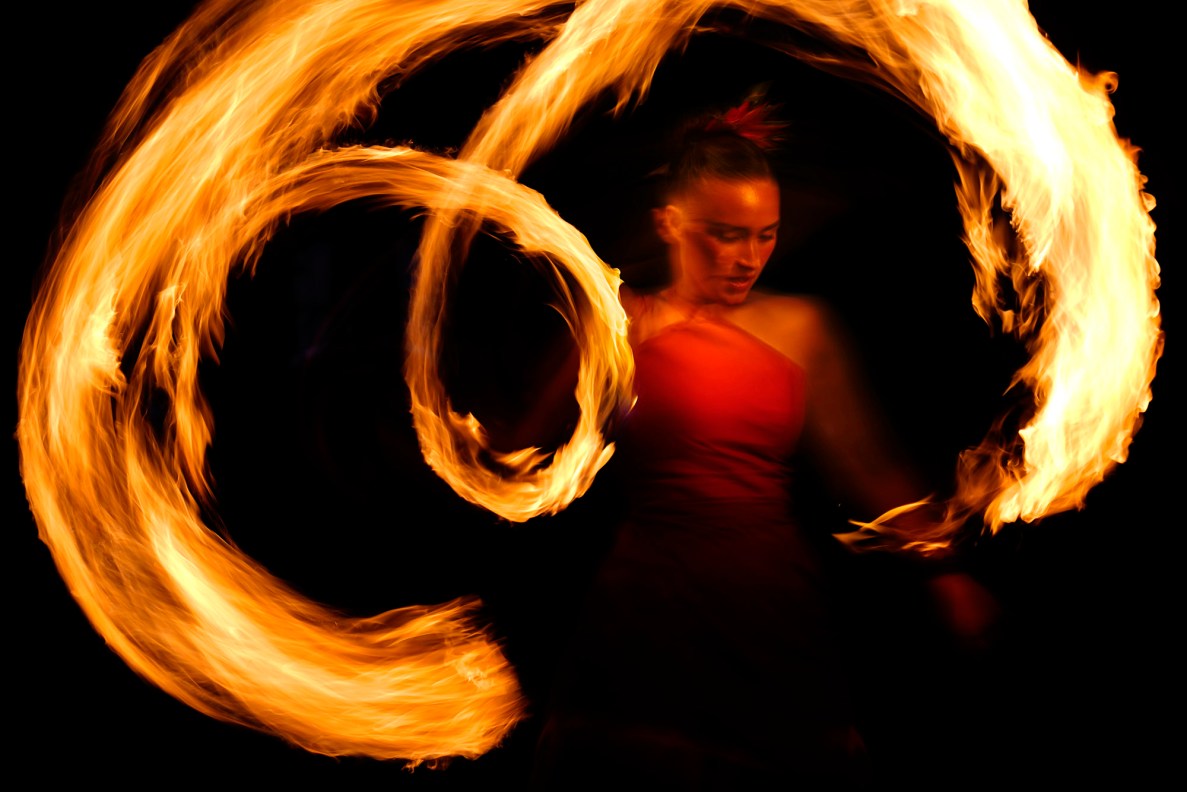
On May 14, the Polynesian Culture Center hosted the World Fireknife Championships. Spectacular, but a challenge to photograph!
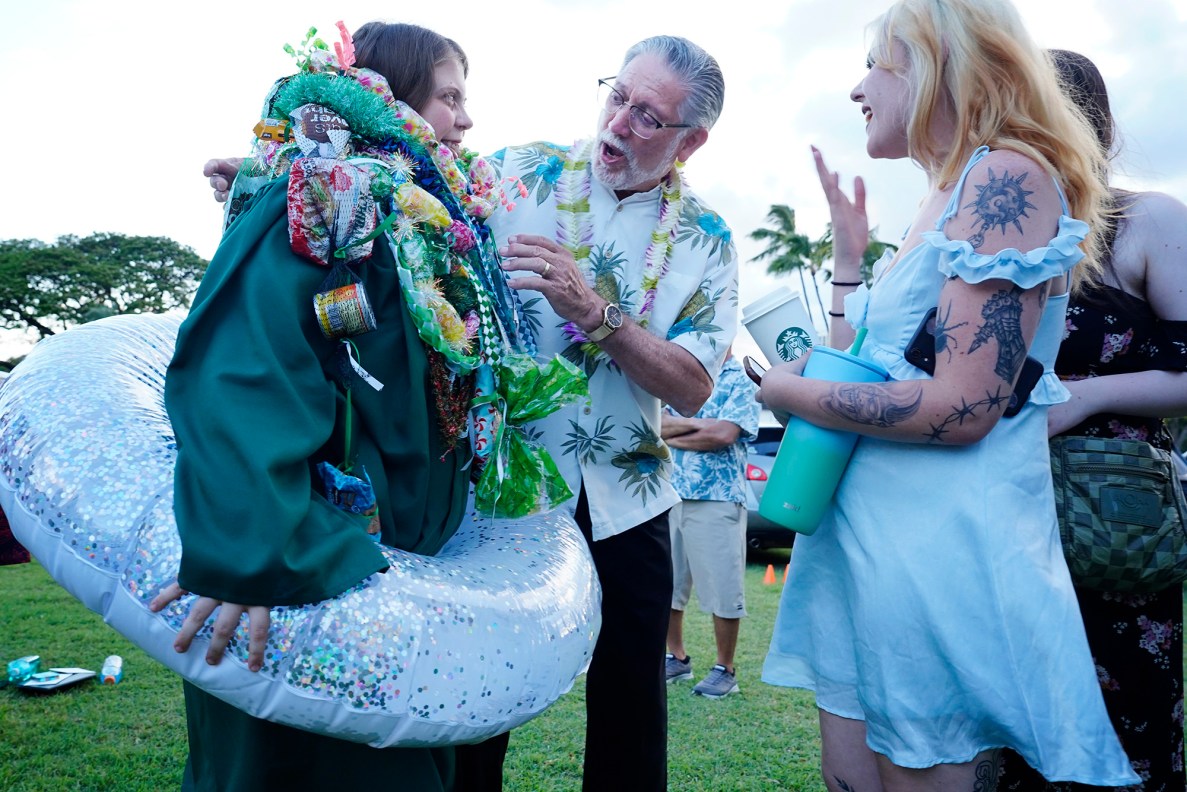
Just like my writing colleagues’ use of written quotes, a photojournalist’s visual report represents a quote in time, like the May 28 photo below. Capturing special moments in a fraction of second drives me as a photojournalist. This moment depicts the Hawaiʻi School for the Deaf and the Blind principal’s reaction at graduation and the “thank you” gesture from the graduate’s sister.
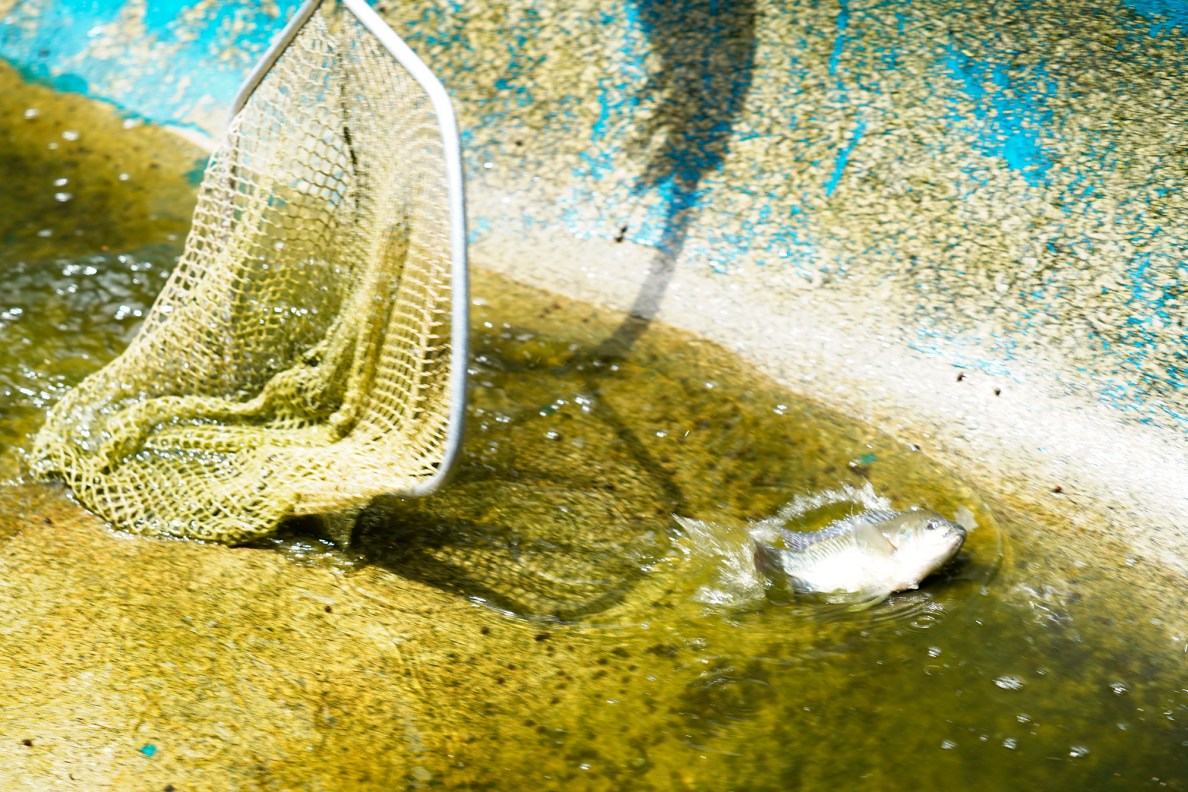
Our shift to full-on, storytelling photo essays was in full swing by mid-2025. This photo makes me laugh as the poor little tilapia keeps an eye on the net. Despite the fish brain telling it to flee for survival, the Hawaiʻi Fish Company is actually trying to save it and move it to clean out its tank.
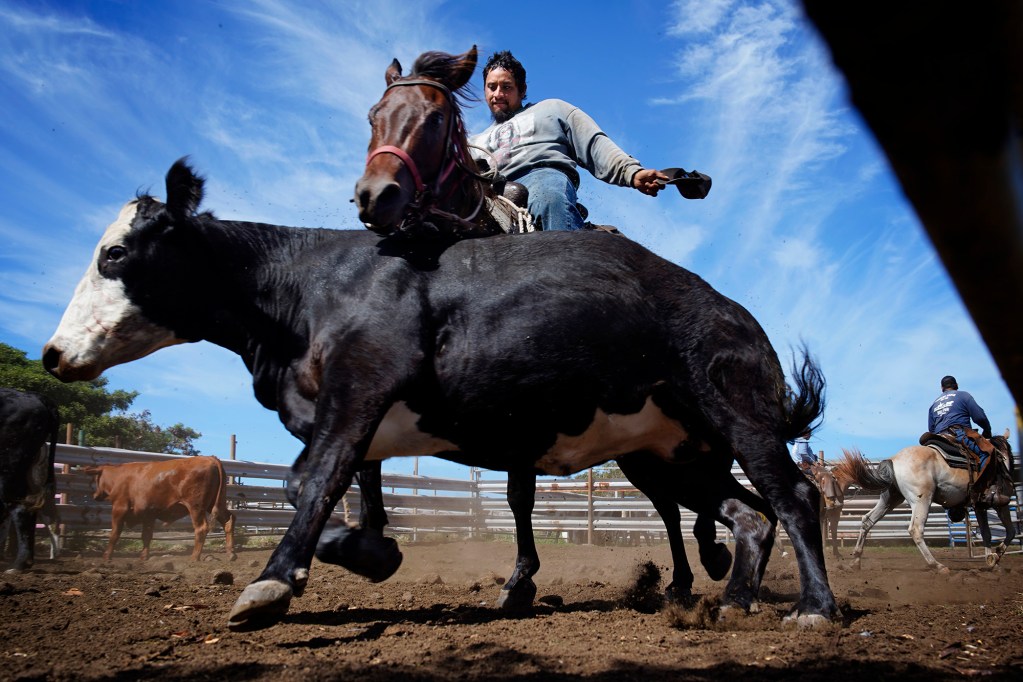
In late June, reporter Thomas Heaton and I returned to Kuahiwi Ranch on Hawaiʻi island. I spent decades in Texas and photographing many rodeos and ranchers, but I’d never captured a photo like this paniolo and his horse moving a cow.
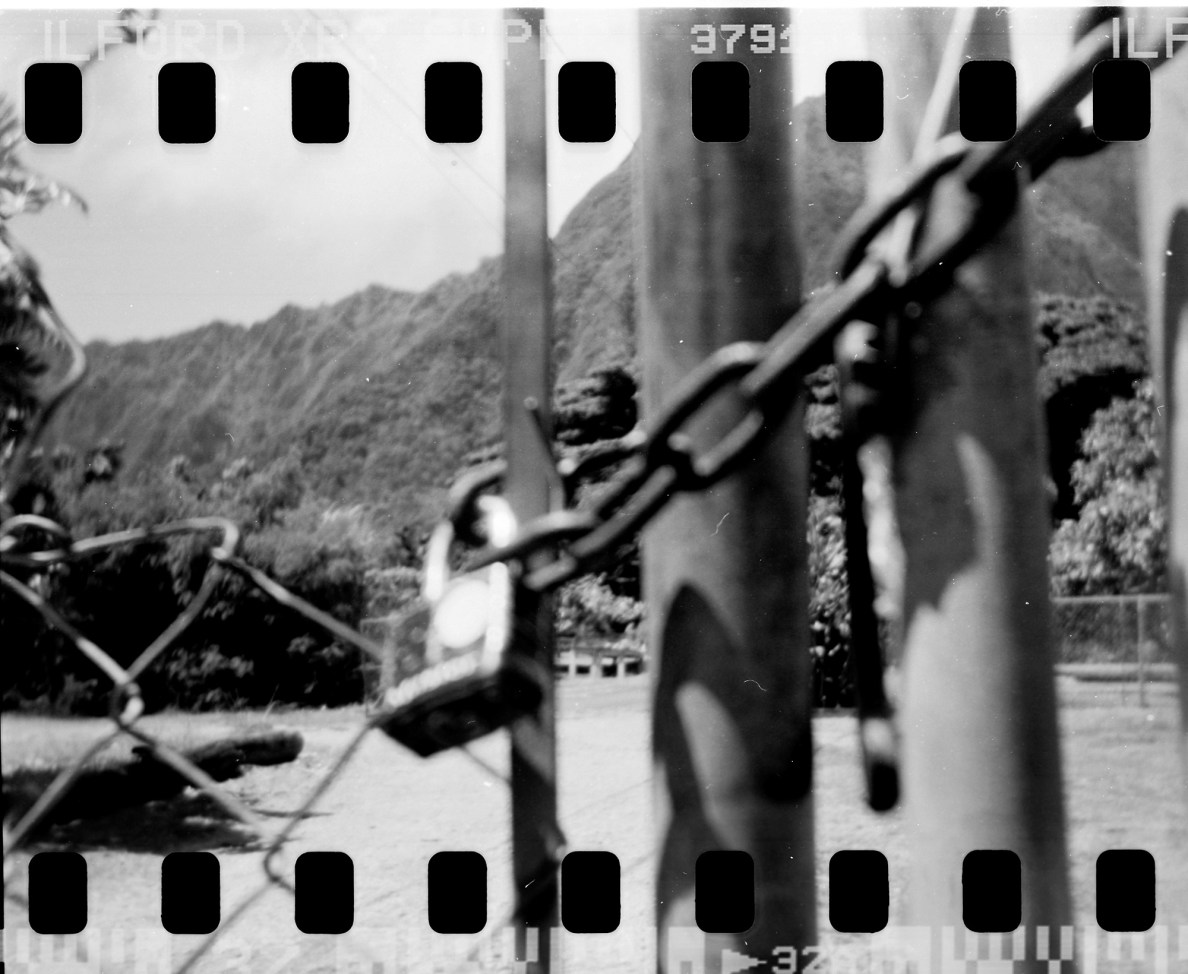
Around this time, I started working on photographing a heavy project for Investigations Editor John Hill about an alleged serial child abuser who was allowed to flourish in the state system of foster parenting. Without being able to photograph the person in question and to protect the privacy of the victims, I was tasked with creating visuals for the project. I came up with using a toy camera, with the wrong size film —yes, actual analog film to create the images. The four-part series called, “When No One Is Watching,” was illustrated through the collaboration of our designer, a cartoonist and myself.
Photojournalists are forbidden from setting up or creating a photograph to represent a point in time. If a story fails to lend itself visually, a passive voice must be used for our readers to connect with a subject. When all other efforts to document something in real time fails, we make portraits, like Aleeka Morgan who’s left in the dark about her case with the Hawaiʻi Civil Rights Commission. The National Press Photographers Association awarded this third place in the monthly regional “clip” contest for portraits.

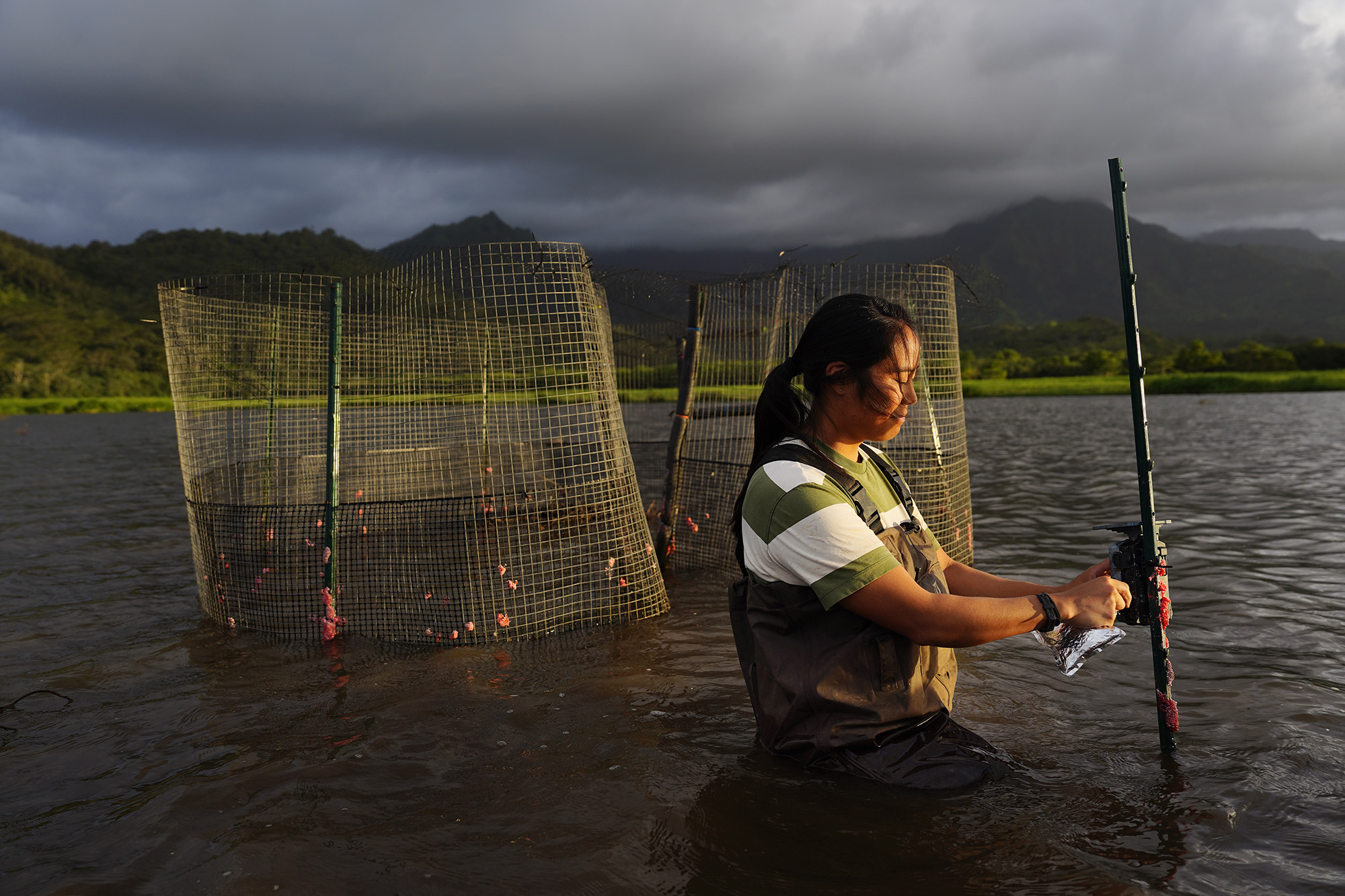
Photography’s “golden hours” are around sunrise and sunset. The absolute worst time of day to photograph outside with natural light is noon, but that time can be stretched to 10 a.m. to 2 p.m., when the sun is overhead and harsh. Here, the setting sun hit just right as biologists Carly Kano and Mairin Murphy set up traps to try and capture Kōloa Maoli (native Hawaiʻian ducks) on Kauaʻi to move some to Oʻahu. Unfortunately, no ducks this season were captured for transfer, but the light, beautiful location and company were great.
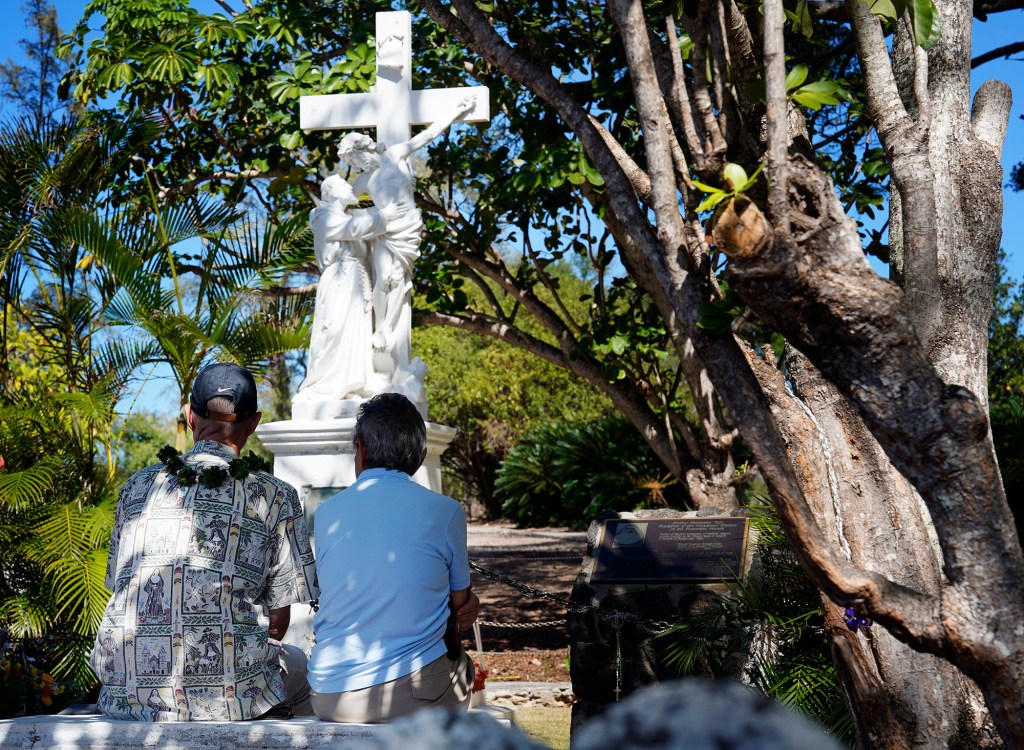
On Sept. 18, Kalaupapa Saints Tour brought the first tour to the Molokaʻi peninsula since Covid-19 closed it. The home where Hansen’s Disease patients were sent to isolation spoke to my soul. As a young child, my father, a third-generation American of Japanese ancestry, his siblings and parents were imprisoned at Manzanar in California without due process of the law, much like the patients afflicted with Hansen’s Disease who were sent to Kalaupapa under King Kamehameha V.
Below, Seawind Tour & Travel founder and CEO Randy King and Sister Alicia Damien Lau sit in front of Mother Marianne’s grave. Sister Alicia of the Sisters of St. Francis of the Neumann Communities belongs to the same order as Mother Marianne. She was canonized as Saint Marianne Cope in 2012 for her work at Kalaupapa. Father Damien of Molokaʻi was also canonized a saint. Hawaiʻi’s only two saints spent their lives devoted to the people of Kalaupapa.
Another interesting day started with an assignment to photograph cesspools affecting Waimea beaches. On this morning, the subject I was photographing invited me into an outrigger canoe to paddle with his Kawaihae Canoe Club. It was my second time to paddle a wa’a. I might have found another sport to fall in love with.

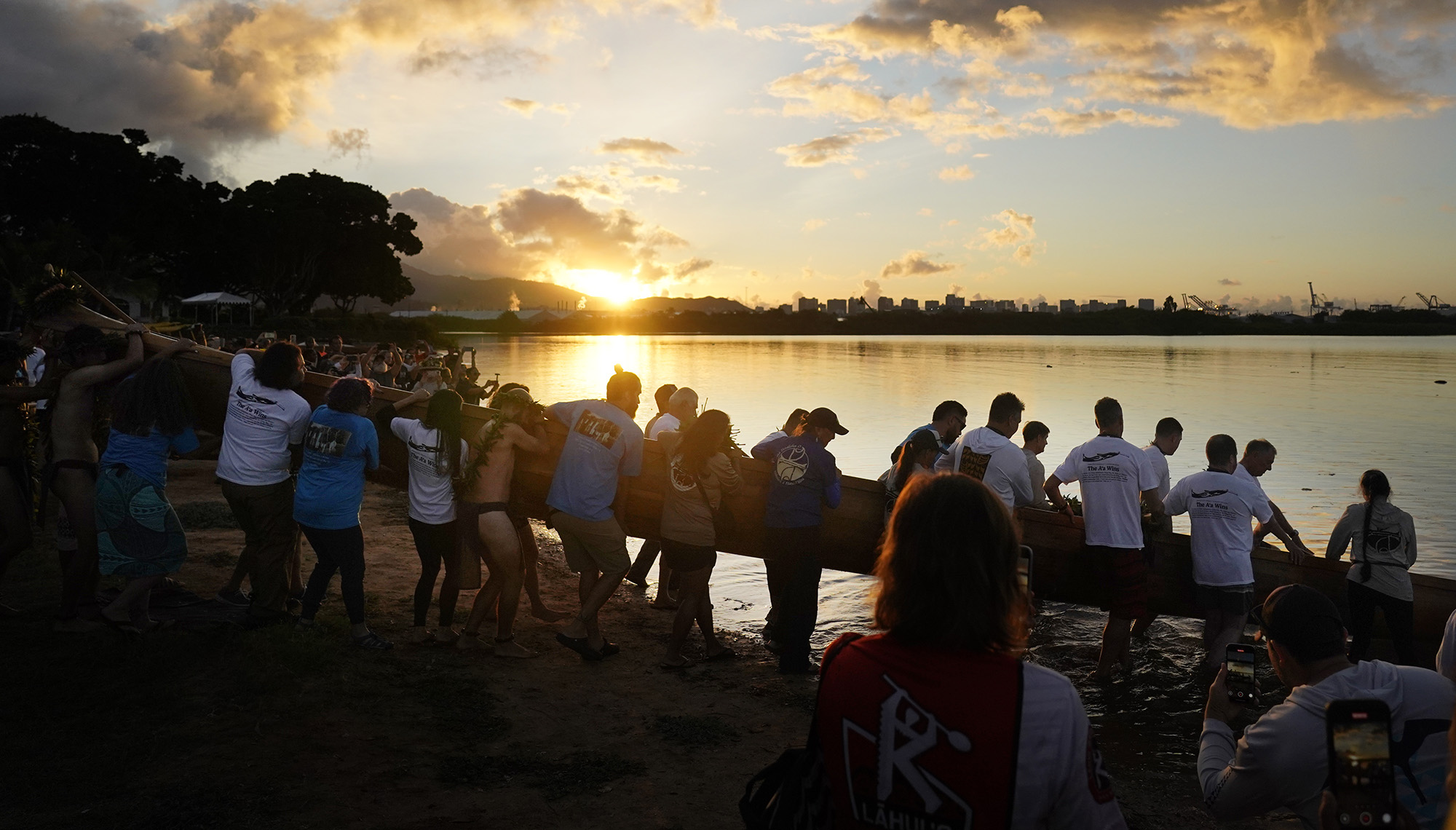
On Nov. 8, Prince Kūhiō’s 123-year-old koa racing canoe, the A’a, returned to the ocean.
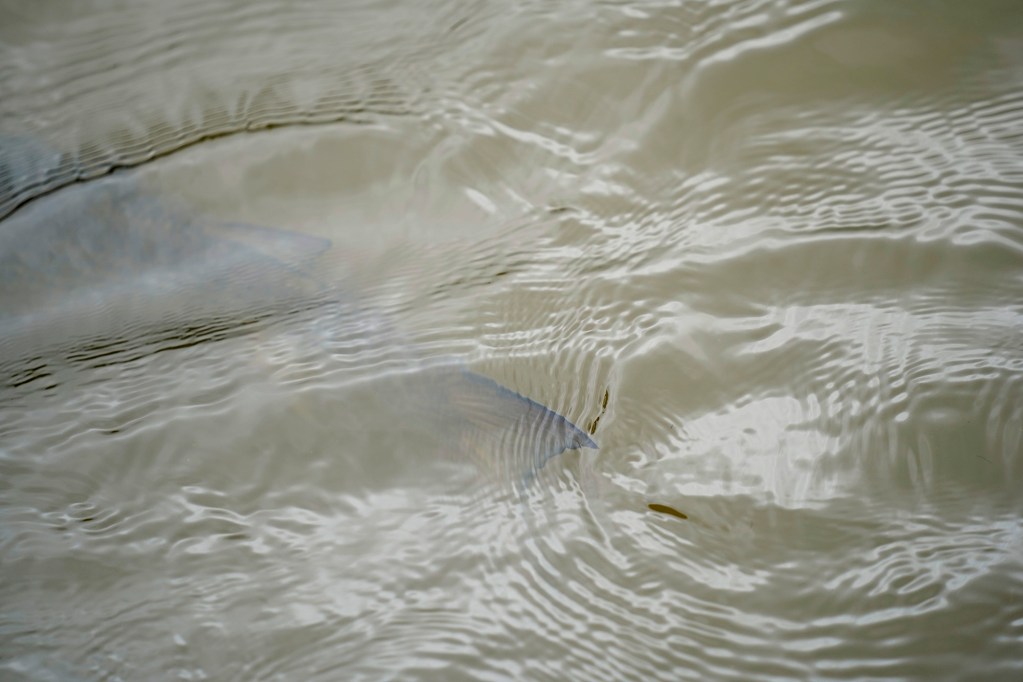
Two days later, from gliding across the surface of the kai to swimming, an ‘anea or mullet plies the He’eia loko i’a where wai (fresh water) enters the fishpond. Paepae O He’eia and other agriculture lands invited the DLNR and BWS to see how downstream farms are struggling to thrive because of the lack of fresh water in the He’eia Stream.
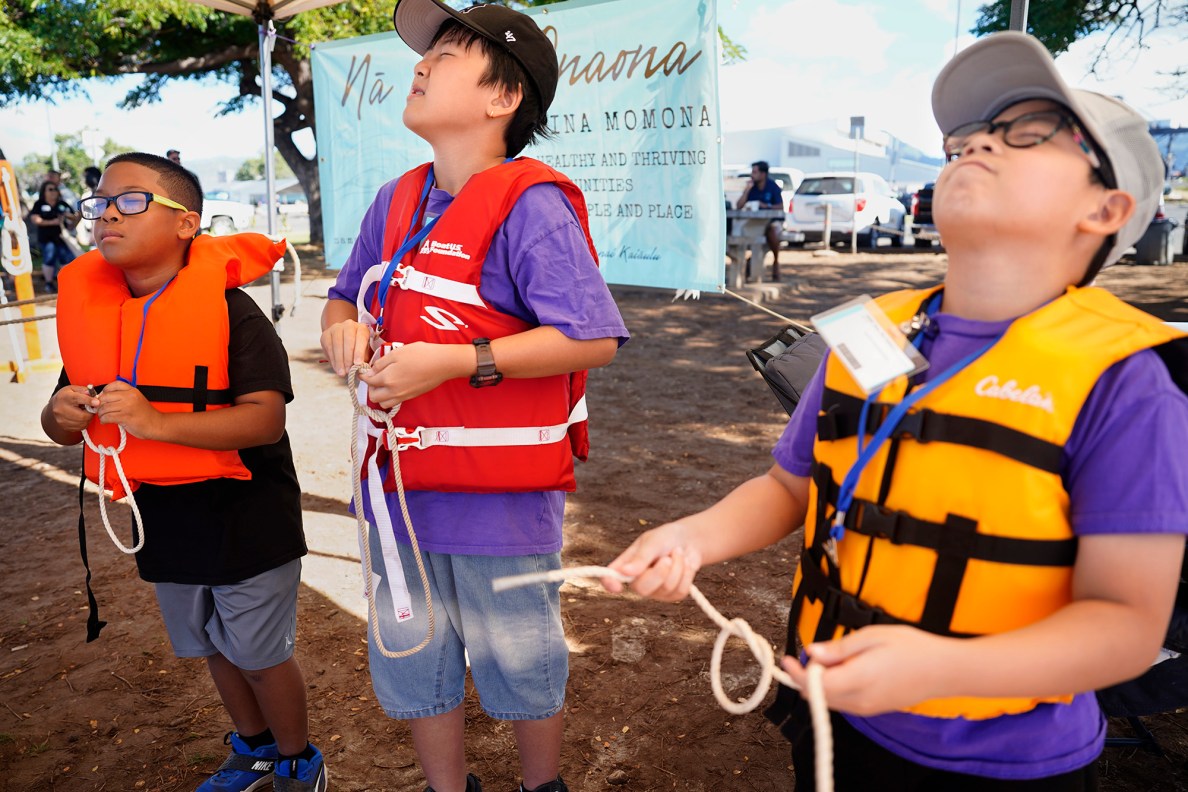
In early December, it was fun to spend a morning at the Ho‘ākea Honolulu hands-on learning and experiential event on Sand Island. The weeklong teaching event centered around traditional Hawaiian navigation and voyaging canoes.
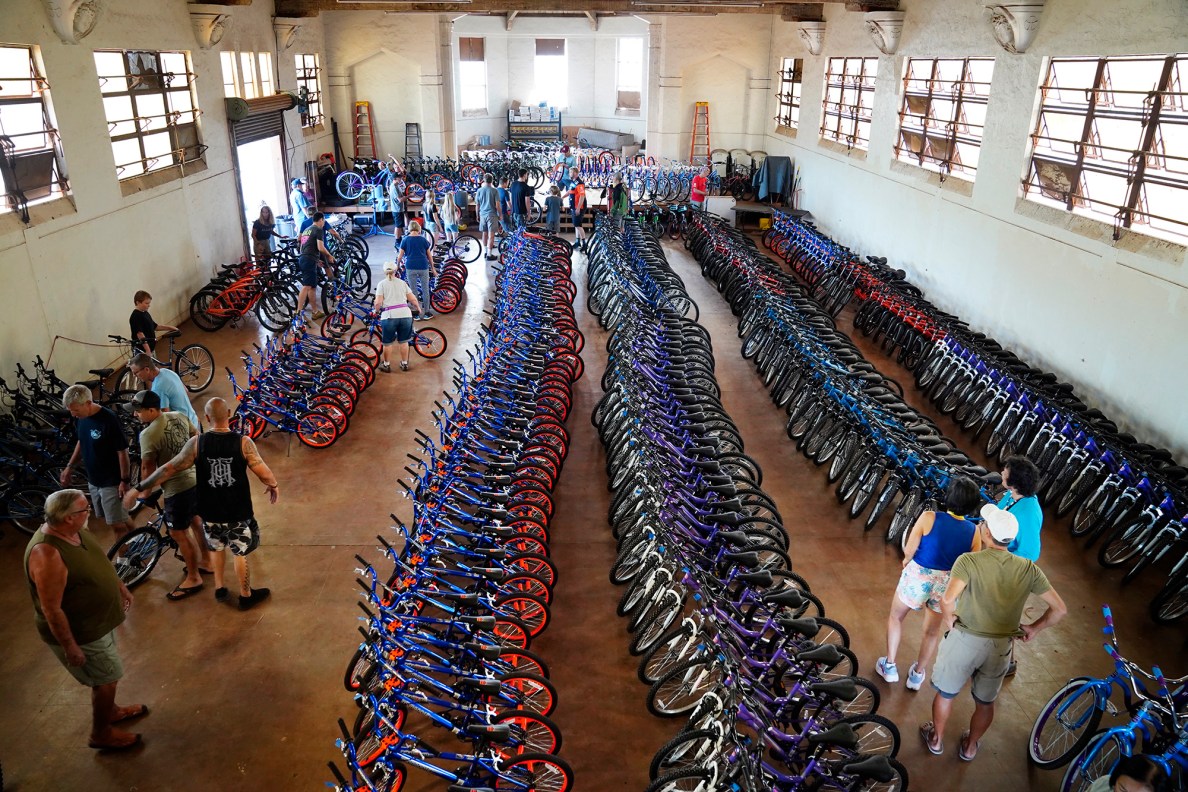
Another heartwarming event took place on Maui. Photographing volunteers showing up to build almost 500 bicycles for the annual Jim Falk’s Christmas Kids Bike Build giveaway demonstrated the strength of a giving community. The Maui businessman buys the bikes. Krank Cycles Maui’s mechanics and owner guide volunteers through the bike-building process. Trilogy Excursions donates a catamaran and crew to transport bikes to other Maui County islands. It’s beautiful to witness a community coming together to bring joy.
If the past two years set a precedent, we’ll host the third annual photojournalism pau hana in our Kaimukī office in the coming months. Please come, bring your ʻohana, friends and questions and enjoy my favorite hazy IPA and Spam musubi with us for a talk story evening about news photography.
May your photos in 2026 be sharply focused, exposed and composed to your liking.