Audio: Listen to the accompanying podcast for this article. To hear more, subscribe to Stemming The Tide on your favorite podcast app.
AUWAHI, MAUI – The first doe dies before the sun ascends over the hills of southern Maui.
A .45-caliber air rifle fires
and, with a thwack of metal on flesh, the deer scampers before hitting the ground behind a tree. The trigger was squeezed by 10-year-old Fisher Betts. It’s his first deer of the day, shot from fewer than 100 yards from where his dad parked their truck.
The suppressed rifle is silent enough to prevent startling more than 200 other deer grazing the hillside, but powerful enough to down the spotted ungulate.
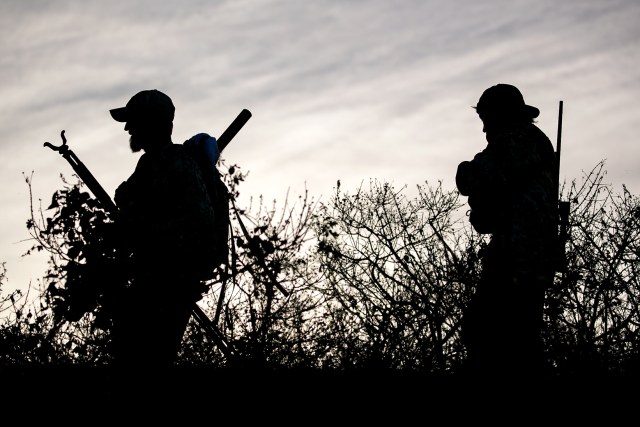
Fisher and his father Hunter Betts, 37, make a whispered plan with their friend and hunting partner Troy Helmer, 60, after the first kill. Helmer splits off, following the basin-like topography from north to south, hoping the deer catch wind of him and flee toward Betts and Fisher. Father and son push in the opposite direction, into an overgrown gulch and upward into the southern hills.
“If you use that air rifle, they’re not going to get spooked,” Helmer said before he left. “If you go up and use that other gun, we’re done.”
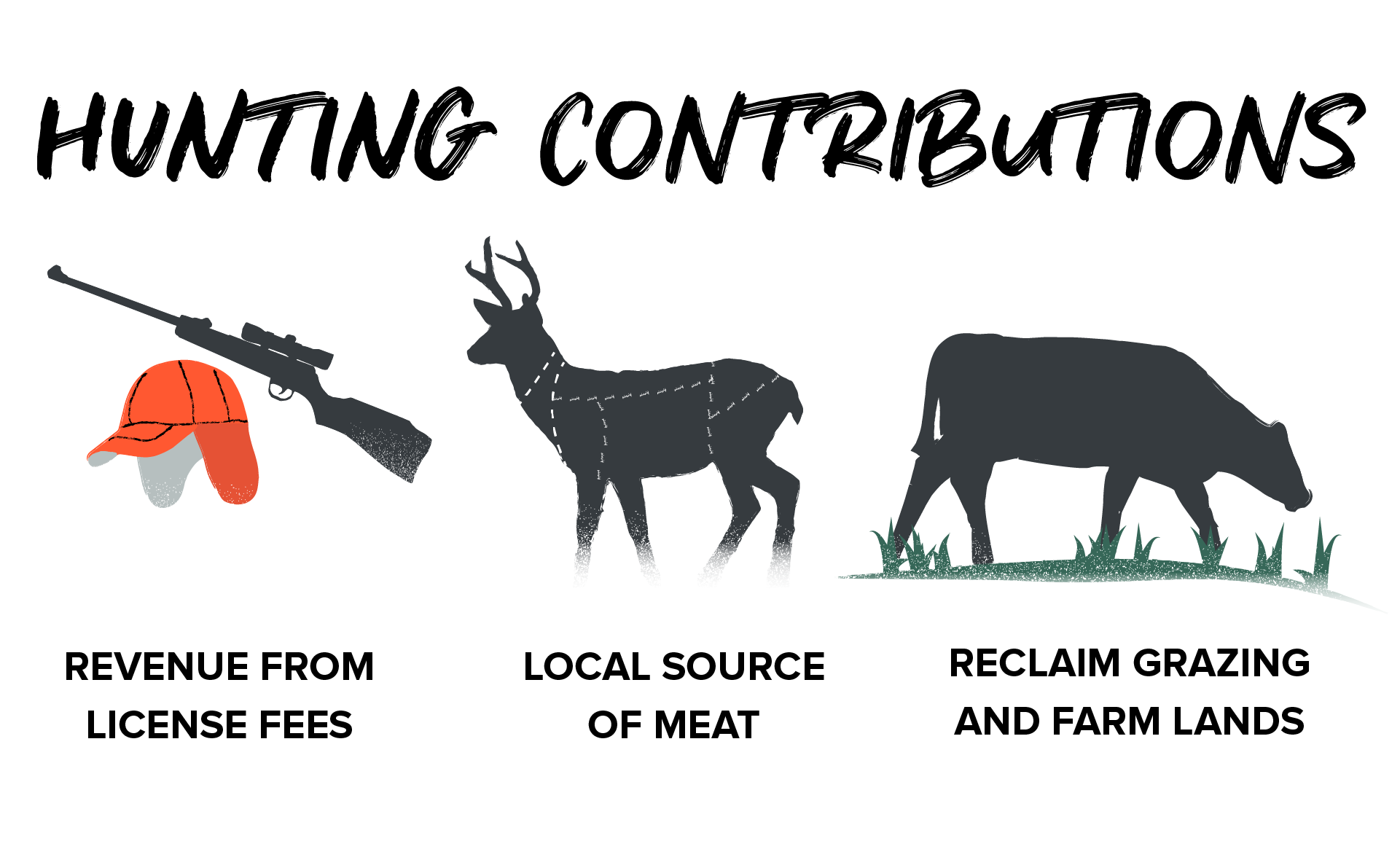
For these camouflaged folk, hunting and fishing is as ordinary as grocery shopping and serves the same function. They harvest hundreds of pounds of meat from these deer each year, feeding their families and communities. Helmer rarely buys any meat at all from a store.

They also contribute to solving an at least $1 million annual burden on Maui’s environment and broader food system: Inflated deer populations are destroying watersheds, eating away farmers’ crops and stealing cattle forage. While hunters and the wider community won’t support eradication — a thorny issue environmentalists have confronted while attempting to protect Maui’s imperiled ecosystems — they all acknowledge the exploding deer population needs better management.
And hunters are itching to play their part in keeping the deer in check.
Overwhelming Axis Power
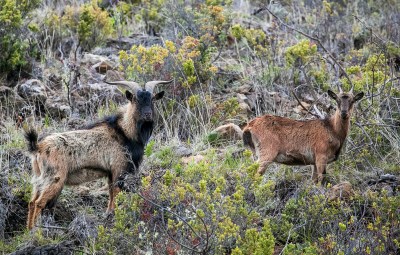
Axis deer have been in Hawaii since they were gifted to King Kamehameha V in 1867 and released on Molokai. Originally from South Asia, three males and six females were introduced to Maui in 1959 and, since then, sporadic estimates have illustrated a spotty picture of what is going on with the population.

One recent assessment, done by ungulate management company KIA Hawaii, found that in the 147,483 acres between Ulupalakua and Paia, there were 46,743 deer. Maui County’s Department of Housing and Human Concerns funded the study, completed this year. Conservative population estimates now sit at approximately 60,000.
Maui County has been attempting to address the problem for years, forming its first axis deer task force in 1996. A new one was created near the end of 2021, with members from state and county agencies and large landowners trying to find solutions.
Meanwhile, Betts and Helmer estimated they saw 250 deer in about four hours of hunting on a recent Tuesday morning last month.
A plentiful deer population does not equate to easier hunting though, Betts says. More deer means more eyes and more ears – a more alert herd as a whole.
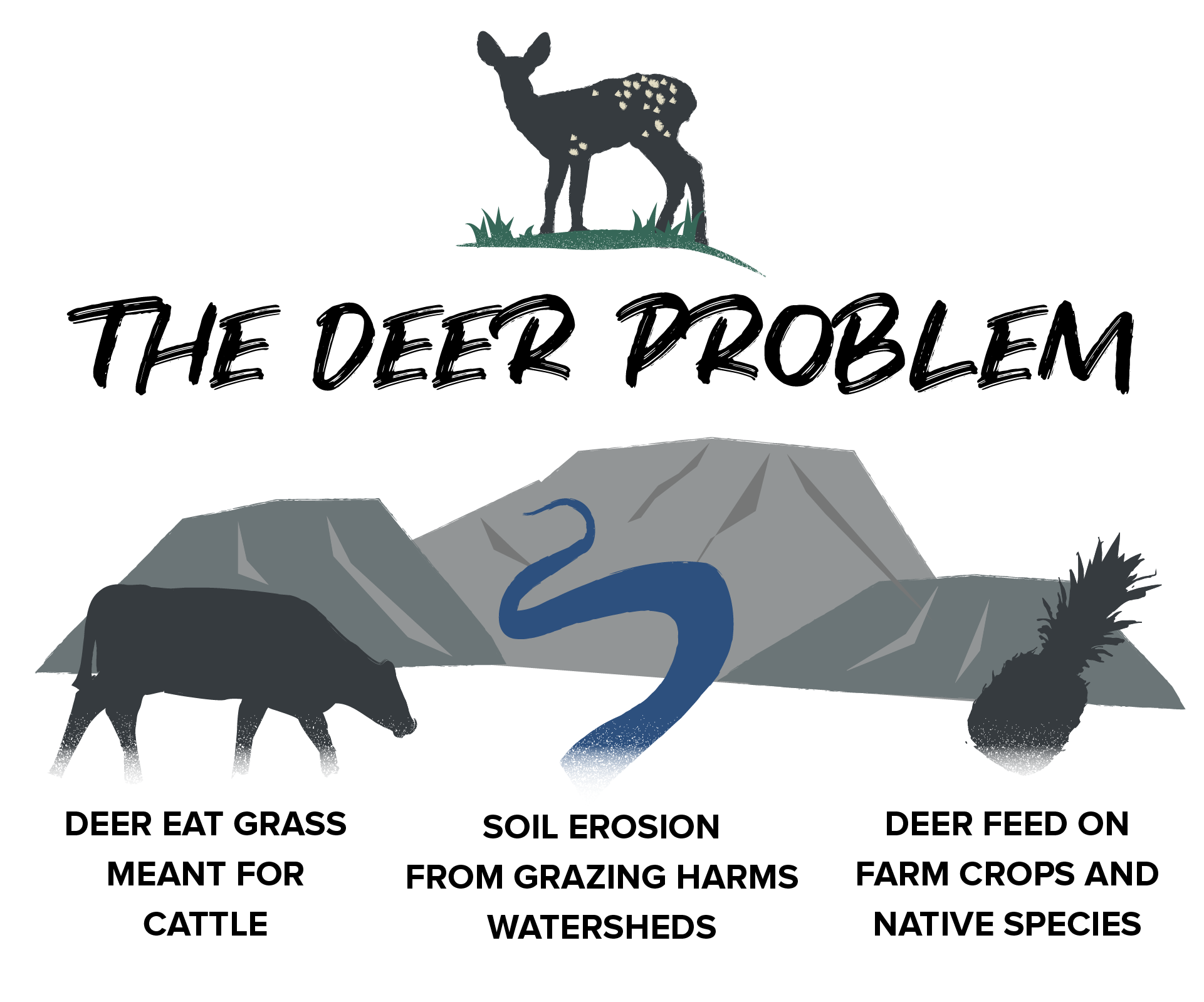
The saturation of deer is also terrible for Hawaii’s watersheds, as they feed indiscriminately and breed incessantly, affecting Maui’s already blighted water system.
Deer gnaw away plants, which damages the land’s ability to store water, leading to drier climates and inflaming the droughts Maui has been facing the past few years. The county is facing a severe drought now, during a typically wet season, which ultimately affects the county’s municipal and domestic water supply. The state Commission on Water Resource Management recently voiced its concerns.
“Streams that are normally gushing with water are barely flowing,” Deputy Director Kaleo Manuel said in a release earlier this month. “This is deepening our already grave concerns about the effects of seasonal drought on water supplies.”
That water supply affects wild vegetation that deer eat and there are already National Weather Service reports of deer impinging on agricultural lands as food becomes scarce.
A recent aerial survey of the roughly 30,000-acre Haleakala Ranch – also done by KIA Hawaii – found 8,400 deer roaming its pastures, according to Haleakala General Manager Greg Friel. That takes away the primary food source for about 1,400 cattle on the ranch.

Friel says the animals have compromised Haleakala’s concerted effort to increase its grass-fed beef operation, which relies upon herding cattle into designated grassy pastures while others regrow, to ensure a consistent source of food is available.
“The grazing program is shot,” Friel said. “The deer come and go as they please because the standard fences don’t keep them out.”
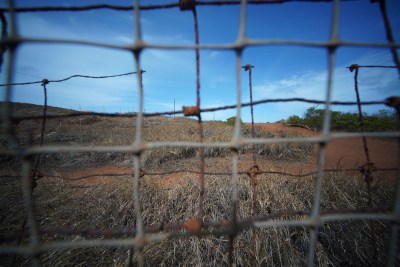
Now, the ranch is focusing on tall, ungulate-proof fencing but is hampered by supply chain issues fueled by the pandemic. Friel says he is still awaiting a shipment ordered last year.
That’s on top of the added cost of such fencing. It’s about $20-per-foot to fence the 6,000-acre parcel, almost 9.5 square miles.
Taking Aim
Betts freezes a few hundred yards from the ranch house, across a gulch and through a thicket. Up ahead, a doe stands motionless. He passes his son the air rifle.
Fisher takes his second shot of the day. It misses.
Betts takes the rifle and fires. The deer bounds behind some thicket. It bucked before it ran, signifying a good shot, Betts tells his son.
Closer up, cherry red bubbles spume from the doe’s hide, not far from its front legs: a lung shot, an ethical kill in hunting terms.

Betts says he typically disembowels deer in place and carries the carcass out. He hangs them in his 6-by-12 foot walk-in fridge for two weeks before eating and sharing. This time, given the bounty and distance to his vehicle, he butchers in place.
“And just be forewarned,” Betts said. “Don’t be surprised if there’s a baby inside here.”
This time, there wasn’t.
Managing The Herd
Axis deer populations are predominantly female; bucks mate with several does at a time, and most does first breed after one year. Males might mature by then, but generally need to be fully grown to compete with others in the mating season.
Chital, known locally as axis deer, originally hail from South Asia where their populations are moderated by everything from tigers to crocodiles. But in Hawaii there are no natural predators.
In South Asia, about 48% of axis deer do not make it past a year old, according to wildlife biologist Steven Hess.

A recent study by Hess, which was used to inform the management of Maui’s deer, cited a “modest” estimate of 20 deer per square kilometer (about 250 acres) within its catchment area. He says there are almost certainly more deer than that.
The population inflates by 20% to 30% each year, which is in line with the county’s culling needs, as up to 30% of the herd needs to be killed just to keep the population stable, according to Hess’s estimates.
“Hunting is the only kind of mortality that’s imposed on the population and if that’s a selective removal of males, then that’s after they’ve already bred,” Hess said.
That is simply because of the way that people hunt: The bigger the deer, the larger the antlers, the more attractive it is. But it’s counterproductive for control, Hess says.
Axis deer reach trophy status when their antlers span 30 inches.
Although Betts and Helmer appreciate a trophy, they don’t usually hunt for something to adorn their homes. It’s more about filling their fridge with a local source of protein while spending time in nature with friends and family.
Puzzle Pieces
Betts is not even halfway through harvesting the meat before Fisher sounds the alarm: a train of deer, bucks at head and toe of the pack.
He ditches the carcass and beds down with a .270-caliber rifle about 20 yards north.
Fisher’s shot thunders, the slug audibly running through the animal. The rest of the herd flees.
“Oh, you hit him,” Betts said.
“Yeah, I got him,” Fisher responds. “That’s a nice buck.”
It clambers down the hill, injured, 240 yards away. The pair know it was hit but don’t know where.
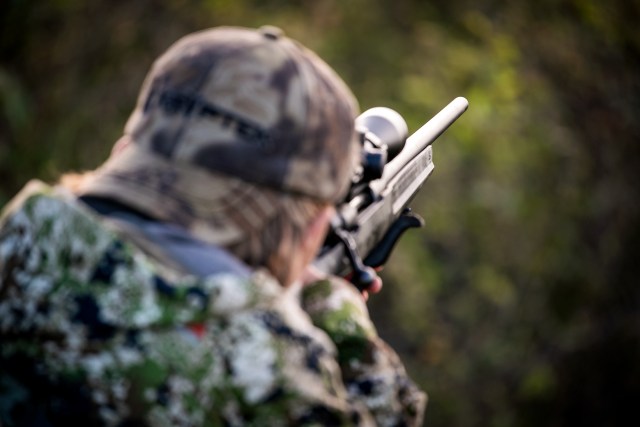
Betts hurriedly finishes butchering the second doe, thanks the animal and tosses its skeletal and visceral remains into a bush — a meal for the feral pigs. He proceeds up the hill.
It takes another two shots to kill the deer, which eventually dies in a precarious position in the brush, but it’s a six-point buck and enough to feed the family for a month at least, the hunters say.
Helmer has rejoined the group and butchers the buck, noting the pigs, goats and several herds of deer he spotted along his route.
He thanks the animal before hiking the meat out.
The trio have an acute sense of place when they hunt: They see things a non-hunter misses, from animal tracks to certain smells. In 2019, Helmer’s tracking skills led to the rescue of Amanda Eller, who was lost in a Maui forest for 17 days. He helped rescue crews find her near one of his pig hunting spots.
But they are part of a small crowd.
There were just 10,608 Hawaii residents with hunting licenses in 2021, according to U.S. Fish and Wildlife statistics. There are 15.2 million licensed hunters nationally.
Getting A Trophy
Betts and hunting buddy Helmer are against dedicated trophy hunting, despite admittedly enjoying a good buck.
“I’m not an anti-wallhanger kind of hunter,” Helmer remarked before the hunt.
In fact, the walls of his house are zoological: taxidermy salmon, pigs, a couple of lynx, goats and deer. One hallway is lined with the tusky maws of wild boars.
“The bucks are cool, but I mean, at the same time, you can’t eat the horns,” he said.
But not everyone thinks that way — many out-of-state hunters are willing to spend thousands to come to Hawaii just to get an axis buck with an attractive set of antlers.
Last year, visitors to Hawaii spent just short of $140,000 on almost 1,300 licenses and tags — almost double since 2016, according to FWS.
Arrow One Ranch, in central Maui, charges $3,200 to hunt a trophy buck. A “meat hunt,” which includes two does, goes for $1,200. The ranch declined an interview.
But earning money on hunting an invasive species that plagues the land seems disingenuous to Betts and Helmer.
“It’s like a double-edged sword,” Helmer said. “They’re making money. They’re also complaining. You know, I mean, it is not really fair.”

Haleakala Ranch’s herd of cattle is its breadwinner, so having 1,400 fewer cattle because of invasive deer hurts the ranch’s bottom line. But an agreement with KIA Hawaii, the ungulate management company that recently surveyed its land, fills some of the financial deficit.
KIA Hawaii is run by Jake Muise, who also officially founded Maui Nui Venison in 2017, a company that sells the deer meat locally and across the country while also giving some to food banks. He pays ranchers, per pound, for the meat harvested on their land with his 16-strong harvesting team.
Haleakala and Ulupalakua ranches have a significant portion of their culling done by Muise’s outfits, as well as their own staff, friends and family.
The harvesting team shoots and butchers 3,000 to 4,000 deer annually on Maui and has so far killed about 20,000 animals, according to Muise.
Annual harvests will increase to 15,000 in the coming years because the outfit has doubled its butchery capacity and tripled its freezer space in a new central facility. This will yield more space for more subscribers – in addition to its hospitality customers and food bank beneficiaries – which are expected to increase to 8,000 from 1,000.
By Muise’s calculations, there would be 58,000 more deer on Maui if he wasn’t able to access ranch lands, accounting for the number of does culled.
“The ranch sees benefits of reduced populations and some cash flow,” Muise said. He would not say how much he paid per pound. “It’s not a lot, but … it’s creating value out of a liability, essentially.”
Because axis deer are crepuscular, active during twilight hours, Muise’s team works in three-hour windows, using thermal imaging and drones to locate deer in grasses up to 6 feet high.
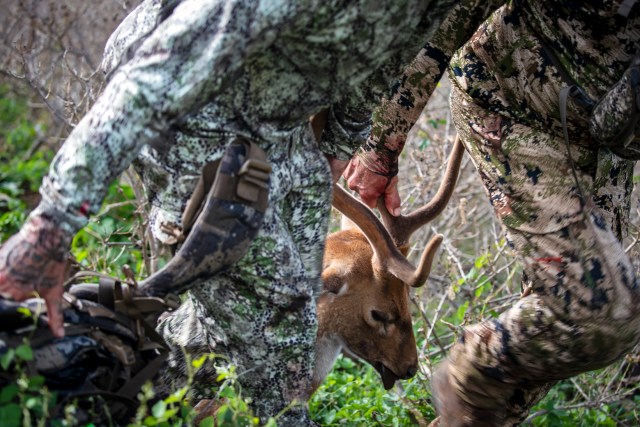
Every deer faces a headshot before being butchered and sold on the market, with each step overseen by U.S. Department of Agriculture inspectors who also monitor the nighttime harvests.
Muise describes it as “harvesting,” as opposed to “hunting,” because there’s no sport in the endeavor. His team systematically pluck the deer from the pasture.
“It’s definitely not hunting, that’s for sure,” Muise said.
Still, hunters like Betts and Helmer, who is president of the Maui Hunters and Sportsmen’s Club, feel short-changed. They see themselves as part of the solution to the overpopulation problem, for ranchers and the general public, but unable to participate to the extent they might because of lack of access.
Maui is dominated by private land owners who are generally opposed to footing liabilities associated with hunting on their land, especially if someone gets hurt or dies.
Helmer has had his own run-ins with private landowners. He is not legally allowed to own a rifle because he was found guilty of poaching on Ulupalakua Ranch in the late 1990s. He went to prison in 1998 for six months and is now only allowed to hunt with a bow.
Still, Helmer’s pickup has a sticker in its window: “Give Us Axis.”
By “Axis” he means “access,” and they are one and the same in his world.
He says if landowners are willing to ensure his club can use their land for hunting, he would be able to secure insurance for the club and they could sign agreements with landowners, relieving them of any liability.
“You saw my stickers,” Helmer said. “It doesn’t say, ‘give me axis.’ It says, ‘give us axis.'”
In his fight to get more land for hunting, he is applying to be the county game commissioner for hunting, but his past life remains a hurdle.
“I have a feeling that my felonies are going to screw me up,” Helmer said.
For Betts, it’s an obvious solution.
“Let (hunters) have access to the ranch. Let it be restricted, you know,” Betts said. “Of course, there’s got to be a system with checks and balances and to make sure everybody’s doing shit right. But then you’re helping the community and you help the ranchers.”
But for Haleakala Ranch, the way to ensure their liability is protected is by letting only Muise’s outfits and their own circle of employees and contacts hunt and control populations — not open it up to the public.
“They have to be sponsored because one of us is responsible for that hunting party,” said Friel. “I don’t know if you’ve been in public hunting areas. I mean, it’s pretty risky sometimes.”
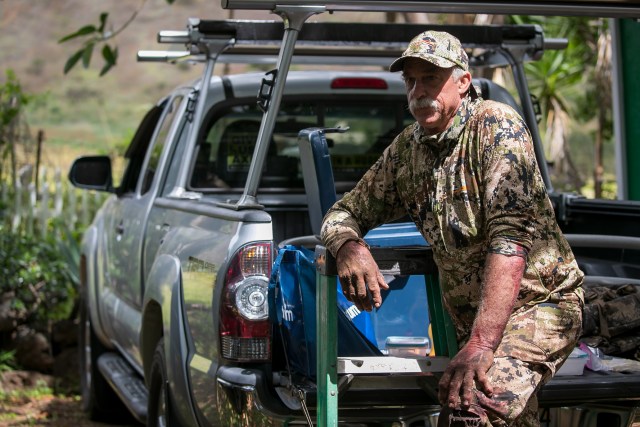
Helmer reaches into his pickup’s bed and opens an icebox, extracting containers and ziplock bags of meat. There are two types of sausage and some sliders — all venison he hunted and prepared earlier.
Most of the wild-harvested meat ends up on the plates of kupuna or family or friends or members of Helmer’s church. It’s the same for Betts: some for his fridge, the rest for friends.
And they have no complaints about the meat.
“This is how we eat,” Helmer said. “I’d rather eat that than go to the store.”
“Hawaii Grown” is funded in part by grants from the Ulupono Fund at the Hawaii Community Foundation and the Frost Family Foundation.
Civil Beat’s coverage of Maui County is supported in part by a grant from the Nuestro Futuro Foundation.
Sign up for our FREE morning newsletter and face each day more informed.

About the Author
-
Thomas Heaton is a reporter for Civil Beat. You can reach him by email at theaton@civilbeat.org.
16 years ago, Civil Beat did not exist.
Civil Beat exists today because thousands of readers like you read, shared and donated to keep our stories free and accessible to all. Now we need your support to continue this critical work.
Give now and support our spring campaign to raise $100,000 from 250+ donors by May 15. Mahalo for making this work possible!
More Stories In This Special Report
-
Part 1Hawaii’s Food System Is Broken. Now Is The Time To Fix It
-
Part 2PODCAST: What Will It Take For Hawaii To Grow More Of Its Own Food?
-
Part 3How One Local Food Program Is Helping Hawaii’s Farmers And Families
-
Part 4Can You Make Money Being A Farmer In Hawaii? 2 Farmers Explain How They’re Doing It
-
Part 5Worker Co-ops Can Lead The Way To A Healthier And More Just Economy
-
Part 6Embattled Agribusiness Corporation Has Powerful Friends
-
Part 7Hawaii Has A Lot Of Agricultural Land. Very Little Of It Is Used For Growing Food
-
Part 8These 2 Companies Are Putting Big Money Into Hawaii’s Agricultural Future. Will Their Bets Pay Off?
-
Part 9Beefing Over Control Of Hawaii’s Meat Processing Industry
-
Part 10Senate Panel Kills Beef Bill
-
Part 11Hawaii Farmers Need Better Data To Make Decisions
-
Part 12Big Island Finfish Farm Hopes To Lead The Way In Sustainable Aquaculture
-
Part 13Hawaii Farmers Need Land. State Efforts To Help Aren’t Working
-
Part 14PODCAST: This Kauai Nonprofit Has A Plan For Creating More Demand For Local Food
-
Part 15This Program Helped Big Island Farmers And Families. Now It’s Out Of Cash
-
Part 16Seed Diversity Is Vital To The Future Of Food
-
Part 17Fewer Farmers Are Growing Hawaii’s ‘Miracle Food’ Taro Despite Growing Demand
-
Part 18Made In Hawaii? This Innovative Startup Can Help You Promote Your Product
-
Part 19‘Fake Farms’ Are Squeezing Out Serious Agriculture Potential In Hawaii
-
Part 20Online Platform Lets Low-Income Shoppers Buy Local Farm Products
-
Part 21How Addressing Hawaii’s Affordable Housing Crisis Could Help Farming Efforts
-
Part 22How The Westside Is Restoring The Coconut Tree As A Food Source In Hawaii
-
Part 23How People Across Hawaii Are Creating Spaces To Grow Their Own Food
-
Part 24PODCAST: Two Ideas For How To Build More Housing For Hawaii Farmers
-
Part 25How Hawaii Squandered Its Food Security — And What It Will Take To Get It Back
-
Part 26Hawaii’s Food Hubs Find Strength In Numbers
-
Part 27A Maui Farmer’s Dream: Where Food, Not Fences, Separates The Homes
-
Part 28PODCAST: Lessons from Hawaii’s Successful Battle With The Avocado Lace Bug
-
Part 29Want Hawaii To Be Less Dependent On Imported Food? Change Your Diet
-
Part 30How To Enter The Civil Beat Recipe Challenge
-
Part 31The Fight Over Hawaii’s ‘Important Agricultural Lands’
-
Part 32Small Oahu Landowners Say They Were Blindsided By Ag Land Plan
-
Part 33Plan For Hawaii’s ‘Important Agricultural Lands’ Is On Hold Pending An AG Opinion
-
Part 34Some Hawaii Farms Want To Keep Feeding Locals — Even As Tourism Returns
-
Part 35Maui’s Got A Brand New Ag Department. Now What?
-
Part 36Do We Want More Local Food Or Cheaper Power? Two Hawaii Priorities Conflict
-
Part 37The State Does A Lot To Help Farmers In Hawaii. But It’s Not Enough
-
Part 38PODCAST: Hawaii’s Complicated Relationship With European Honey Bees
-
Part 39It’s Time For The DOE To Take The Lead On Food And Education
-
Part 40Raising Chickens Became More Than A Hobby For Some During The Pandemic
-
Part 41Hawaii’s Embattled Ag Agency Finally Moves Wahiawa Center Forward
-
Part 42Climate Change Is A Big Problem For Farmers In Hawaii
-
Part 43Can Urban Farming Solve Hawaii’s Food Crisis?
-
Part 44PODCAST: What To Feed Animals During A Pandemic? Pigs And Chickens Are Pickier Than You Think
-
Part 45Saving Hawaii’s Banana Industry ‘One Good Banana’ At A Time
-
Part 46Accelerator’s New Venture Fund Is Helping Ag-Based Companies Expand
-
Part 47How The Hunt For The Perfect Sweet Potato May Help Hawaii Farmers
-
Part 48Attorney General OKs Honolulu’s Process To Designate Important Ag Lands
-
Part 49Can Hawaii Agriculture Get Back Its Political Clout?
-
Part 50A New Chicken Farm Wants To Reduce Hawaii’s Dependence On Imported Eggs
-
Part 51Hawaii’s Avocado Farmers Are Bracing For A New Threat
-
Part 52Christmas Trees And Lucky Soup: Hawaii Wishes For A Biosecure Holiday
-
Part 53How Solar Farms On Mountain Slopes Could Help Hawaii Meet Food Sustainability Goals
-
Part 54There’s A Lot More To Hawaii’s Cacao Industry Than Making Chocolate
-
Part 55Hawaii Schools Are Buying Less Local Food During The Pandemic
-
Part 565 Ways To Help Hawaii Farmers In 2022
-
Part 57Lawmakers Plan To Revive Old Bills For Future Of Food And Farming
-
Part 58Why Hawaii Needs To Rethink Efforts To Increase Local Food Production
-
Part 59One Way To Counter The Ill Effects Of Hawaii’s Invasive Species: Eat Them
-
Part 60Report: Limited Funding, Staff Could Delay DOE Effort To Meet Food Sustainability Goal
-
Part 61Hawaii Is Beefing Up Its Potential To Produce More Meat Locally
-
Part 62A New Crop Of Farmers Is Helping Hawaii Grow More Food
-
Part 63Will This Bureaucratic Tug Of War Over Hawaii’s Ag Lands Finally End?
-
Part 64Hawaii DOE Wants Kids To Say: ‘Mom, I Had The Greatest Meal At School Today’
-
Part 65Here’s How These Ka‘u Kids Are Learning Outside Of The Classroom
-
Part 66What Is The Future Of Hawaii’s Farming? Some Say Sheep
-
Part 67The Hawaii Ag Department Clipped Poultry’s Wings. But Why?
-
Part 68Ka‘u Coffee Farmers Grab Land — And Control Of Their Futures
-
Part 69This Ancient Hawaiian Plant’s Popularity Has Soared. Not Everyone Is Pleased
-
Part 70Hawaii Needs Good Soil To Grow More Food. Here’s How That Can Happen
-
Part 71Lawmakers Advance 5 Bills That Could Settle Debate Over Ag Land Management
-
Part 72State Agencies Were Tasked With Buying More Local Food. Can Hawaii Supply It?
-
Part 73‘Our Fish Are Dying’: This Hawaii Couple’s Experience With State Ag Land Management Has Been Terrible
-
Part 74Food Safety Audits Could Hamper Hawaii’s Efforts Toward More Food Production
-
Part 75Lawmaker Calls For Investigations Of State Ag Park Program
-
Part 76Legislature Advances Bill To Legalize Sale Of Raw Milk Among Other Farm Measures
-
Part 77The Deer Population Is Devastating Maui. Hunters Want To Help
-
Part 78Effort To Transfer State Agricultural Land Survives Latest Hurdle
-
Part 79Drones Can Take Farming To Another Level. But Hawaii Is Lagging
-
Part 80‘Business As Usual’ For The Embattled Agribusiness Development Corporation?
-
Part 81What Seaweed Can Tell Us About Our Environment In Hawaii
-
Part 82Is Fencing The Future Of Hawaii’s Native Ecosystems?
-
Part 83This Mental Health Team Hopes To Help Hawaii’s Farmers Help Themselves
-
Part 84What Will The New Minimum Wage Mean For Hawaii’s Farmers?
-
Part 85Lettuce Joins Short List Of Local Ingredients Served In Public Schools
-
Part 86Hemp Farmers Are Fed Up With Government Regulations Hampering The Industry’s Potential
-
Part 87Small Farmers Are Finding Innovative Ways To Get Their Food To Market
-
Part 88Could Hawaii Become A Technology Hub For Agriculture?
-
Part 89Can An Ancient Hawaiian Fishpond Turn A Profit?
-
Part 90Hawaii’s Extreme Drought Is Forcing Ranchers And Farmers To Get Creative
-
Part 91Hawaii’s Crumbling Water Systems May Finally Be Getting Some Badly Needed Repair Money
-
Part 92Involving Farmers Is The Key To Innovation And Better Ag
-
Part 93‘It’s All Connected’: Hawaii’s First Large-Scale Food Waste Composter Touts A Host Of Benefits
-
Part 94Long-Awaited Maui Ag Department Set To Be Finally Up And Running This Week
-
Part 95Farmers Want Action From Hawaii Governor Candidates, Not Lip Service
-
Part 96Ige Intends To Veto Healthy Soils Program. Advocates Say That’s Misguided
-
Part 97Hawaiian Fishponds Are Rebounding In The Face Of Rising Seas And Invasive Species
-
Part 98How Much Should Hawaii Discount Electric Rates For High-Tech Farmers?
-
Part 99Widespread Power Outage Left Thousands Of Trout Dead At This Maui Farm
-
Part 100‘People Are Really Struggling’: Hawaii Food Banks Scramble To Meet Increased Demand
-
Part 101A Major Overhaul Of Honolulu Land-Use Rules Has Been Quietly Advancing. Now, Some Say Not So Fast
-
Part 102Catherine Toth Fox: Buy More Locally Grown Food. It’s Worth The Extra Cost
-
Part 103This New Dairy Owner Says Local Cows Can Bring Down Hawaii’s Milk Prices
-
Part 104A New Sense Of Urgency Is Driving Nonprofits To Grow More Local Food In Hawaii
-
Part 105A ‘School Within A School’ Is Building Community And Food Security In Hana
-
Part 106Innovations In Ancient Aquaculture Could Bring Striped Mullet Back To The Dinner Table
-
Part 107AgTech Is Hawaii’s Ticket To Diversification
-
Part 108‘It’s Not Just About The Plants’: A Hawaii Educator Unearths Life Lessons In A High School Garden
-
Part 109How The Candidates For Maui Mayor Would Shape Food Security And Agriculture
-
Part 110This Local Cocktail Aims To Boost Hawaii Agriculture
-
Part 111A Local Nursery Wants To Make A Native Tree Hawaii’s Choice For Christmas
-
Part 112Catherine Toth Fox: How Botanists Are Trying To Spur A Limu Rebound In Hawaii
-
Part 113USDA Improves Insurance Programs For Farmers, Ranchers
-
Part 114Maui Trout Farmer Is Closing Up Shop After A Rough Year
-
Part 115Hawaii Farmers Struggle As Worldwide Macadamia Market Goes Nuts
-
Part 116Wahiawa’s New ‘Ad Hoc Mayor’ Has The Vision And The Power To Help His Hometown
-
Part 117Farmers And Ranchers Buoyed By New Contingent Of Food-Focused Politicians
-
Part 118Hawaii Plans To Update Its Noxious Weeds List. Local Environmentalists Aren’t Waiting
-
Part 119Kauai Fishermen Bring Deep-Sea Shrimp Back To The Dinner Table
-
Part 120Maui County Considers Leasing Land On Lanai That Larry Ellison ‘Won’t Have A Say In’
-
Part 121Leeward Community College Has Big Plans For Training A New Generation Of Food Innovators
-
Part 122Is Your Cup Of Kona Real? Coffee Growers Want Hawaii To Do More To Protect The Brand
-
Part 123How Philippine Gardening Culture Inspired Efforts To Promote Food Security In Hawaii
-
Part 124Half Of Hawaii’s Younger Farmers Battle Depression. Here’s What Researchers Are Doing
-
Part 125Hawaii’s Farms Are Small And Hard To Sustain. Can Tax Incentives Help?
-
Part 126Indigenous Management Of Hawaii’s Fishponds Is Getting A High Tech Upgrade
-
Part 127Hawaii Ag Director Plans To ‘Go Big’ If Confirmed
-
Part 128Hawaii Needs To ‘Double Down’ On Biosecurity, Experts Say
-
Part 129Kauai Is Making A Blueprint To Meet ‘Huge Desire’ For Local Food
-
Part 130‘Eggflation’ Puts Hawaii Egg Prices On Par With Mainland Imports
-
Part 131Subsistence Or Business? More Local Producers Will Need To Bite The Bullet On Food Safety As Demand Grows
-
Part 132Oahu Hotels Have Deep Pockets And Now More Local Food Is On Their Shopping Lists
-
Part 133Lanai’s Only Farmers Market Vanished During The Pandemic And Now Locals Want It Back
-
Part 134Catherine Toth Fox: Ag Microgrants Are A Great Way To Support Local Food Production
-
Part 135DOE Hopes A $35 Million Kitchen In Wahiawa Will Improve School Lunches And Give Farmers A Boost
-
Part 136Peter Savio’s New Farming Development Is Unconventional But Locals Still Want In
-
Part 137Oahu’s Pig Farmers Want To Change The Conversation On Food Security
-
Part 138Hawaii Senate Committee Green Lights New Ag Director Sharon Hurd
-
Part 139DOE Looking Into Financial Records Of Kailua School Composting Program
-
Part 140Reviving Hawaii’s Meat Inspection Program Could Also Take Aim At Axis Deer
-
Part 141An Innovative Kauai Farm Project May Depend On Saving A 100-Year-Old Reservoir
-
Part 142Oahu Land Crunch Leads Aloun Farms To Expand Acreage On Fertile West Kauai
-
Part 143Q&A With Rep. Jill Tokuda: Hawaii Speciality Crops Need Support In The New Farm Bill
-
Part 144Destructive Beetle Could Thrive If Natural Disaster Strikes
-
Part 145Hawaii DOE Has Returned Millions Of Dollars That Could Have Bought Local Food
-
Part 146A Lauded Summer Food Program Has Restarted But Rural Kids Could Miss Out Due To USDA Rules
-
Part 147Coconut Rhinoceros Beetles Make Landfall On Kauai
-
Part 148State’s Embattled Ag Corporation Has Chance For A Reset As It Seeks New Leadership
-
Part 149Maui County Is Trying To Bring Relief To Farmers And Ranchers During Times Of Drought
-
Part 150Hawaii Farmers Could Use Some Help Landing Grants That Would Boost Farm Operations
-
Part 151Plan B: State Turns To Pigs To Devour Oahu’s Invasive Beetle Problem
-
Part 152A Struggle For Control Of Hawaii’s Beef Industry Is Playing Out On Safeway Shelves
-
Part 153Hawaii Kava Growers Hope To Convince Food Regulators It’s Safe To Eat
-
Part 154Critics Call For More Oversight Of Hawaii’s Largest Egg Producer
-
Part 155Maui’s Food Waste Is Causing A Big Problem. Now, Some Residents Are Tackling It Themselves
-
Part 156Invasive Species Are Rampant On Oahu And Stakeholders Are Calling Out DOA
-
Part 157Feral Pigs Are Increasingly Running Wild In Some Oahu Neighborhoods
-
Part 158USDA Program Helps Hawaii Farmers Offset High Shipping Costs
-
Part 159Big Island Farmers Held Back A Fire Until Help Arrived: ‘It Could Have Been Another Lahaina’
-
Part 160Maui’s Fire And Winds Also Took A Toll On Farmers And Ranchers
-
Part 161Fast-Growing And Fire-Resistant Grasses Are Flourishing In Hawaii
-
Part 162Hawaii’s Aquaculture Industry Is Set To Boom But It Needs State Help
-
Part 163Lack Of Native Seeds Spurs Federal Plan To Replant Fire-Loving Invasive Grasses
-
Part 164State Ag Agency On Track For Stricter Control Of Invasive Pests
-
Part 165Hawaii’s Weak Biosecurity Is Threatening Maui’s Recovery Efforts
-
Part 166Hawaii Education Department Takes ‘Big First Step’ To Increase Local Food In Schools
-
Part 167Hawaii Hemp Growers Don’t Want To Be Regulated Like Marijuana
-
Part 168Hawaii Keeps Losing State Biosecurity Workers As Invasive Species Gain Ground
-
Part 169Lawsuit Alleges Two State Entities Improperly Hired Their Leaders Behind Closed Doors
-
Part 170Maui Has An Axis Deer Problem. So The State Has Put A Price On Their Tails
-
Part 171Hawaii Lawmakers Want To Make Fish Farming A Bigger Industry. But How?
-
Part 172Hawaii Ranchers Want More Land Transferred To The State Agriculture Department
-
Part 173The Game Management Advisory Commission Was Created To Be The Voice Of Hawaii’s Hunters. Is Anyone Listening?
-
Part 174The Hawaii Department Of Education Is Nowhere Close To Meeting Its Mandate To Buy More Local Food
-
Part 175Taxpayers Are On The Hook For $1.25 Million After The State Failed To Provide Water To An Oahu Farmer
-
Part 176Oahu’s Construction Waste Could Become Food For Crops At A New Kapolei Facility
-
Part 177Federal Farm Census Shows Hawaii’s Agriculture Is Still In Decline
-
Part 178Hawaii Farmers Need More Help Accessing Funding
-
Part 179Losing North Kohala’s Irrigation System Was ‘Catastrophic.’ Will It Ever Be Fixed?
-
Part 180The Hawaii DOE Has Defaulted On Rent Owed To Another State Agency
-
Part 181Retired State Ag Official’s Return To The Agency Has Critics Concerned Over Conflicts Of Interest
-
Part 182Hawaii Wants Home Cooks To Play A Bigger Role In Growing The State’s Food System
-
Part 183Cattle Are A Major Source Of Greenhouse Gas Emissions. Hawaii Seaweed Could Change That
-
Part 184Honolulu Bill To Rein In Fake Farms Threatens Real Ag Enterprises
-
Part 185Hawaii Ag Agency Won’t Get All The Money Slated For Pest Management After All
-
Part 186Is Growing Your Own Food Considered Agriculture? Hawaii County Says No
-
Part 187Naka Nathaniel: Hawaii Needs More Young Farmers
-
Part 188Hawaii’s Last Dairy Is Under Fire For Allegedly Violating Environmental Law
-
Part 189Naka Nathaniel: Hawaii’s Ag System Needs An Overhaul To Promote Food Independence
-
Part 190UH Starts Raising Marine Animals In Manoa To Grow Hawaii’s Aquaculture Industry
-
Part 191Coconut Rhinoceros Beetles Deal Fatal Blow To Hawaii Palm Trees
-
Part 192Hawaii Farmers Unite For More Ag Agency Funding
-
Part 193Is Drag Racing A Good Way To Till Soil? This State Farmland Tenant Says So
-
Part 194As Rhinoceros Beetles Spread, State Board Bolsters Pest Control Powers
-
Part 195Most Hawaii Schools Have Gardens — But Few Kids Can Eat What They Grow
-
Part 196Glut? Shortage? Hawaii Farmers Navigate A Tricky Taro Market
-
Part 197Dole’s Wahiawa Dam Is A Hazard. Now The State Is A Step Closer To Buying It
-
Part 198You Thought $9 For A Dozen Eggs Was Bad? Bird Flu Might Make It Even Worse
-
Part 199Hawaii Farmers Face Risk of Crime Daily. Is A Killing Enough To Spur Reform?
-
Part 200Hawaiʻi Agriculture Department Loses Another Deputy
-
Part 201Invasive Species In Hawaiʻi: Lawmakers Float New Plan As Urgency Mounts
-
Part 202Hawaiʻi’s Fishing Industry Wants You To Know Where That Fresh Ahi Came From
-
Part 203Ravenous Beetles Go Urban, Preying On Honolulu’s Iconic Coconut Palms
-
Part 204Lee Cataluna: Why Are We Sacrificing Sustainability For More Housing?
-
Part 205No Pen? No Problem. Hawaiʻi Is Moving Its In-Flight Arrival Forms Online
-
Part 206This Plant Can Power Grids, Planes, Poultry And Cattle. Hawaiʻi Isn’t Sold
-
Part 207Like The French And Champagne, Hawaiʻi Farmers Want Protections For Poi
-
Part 208Latest USDA Cuts Will Harm Hawaiʻi’s Food Security, From Farmers To Kids
-
Part 209Hawaiʻi’s Imperiled Milk Industry Has A Rare Chance To Grow
-
Part 210Kauaʻi Billionaire Wants To Sell Prime Ag Land. The State Might Buy It
-
Part 211Hawaiʻi Farmers And Ranchers Face $46 Million In Federal Funding Cuts
-
Part 212New Ag Park Aims To Let Kauaʻi Farmers ‘Just Focus On Farming’
-
Part 213Hawaiʻi Consumer Advocate Pushes Back Against Young Brothers’ Rate Hike
-
Part 214Invasive Species: Hawaiʻi Primes Itself To Battle Biosecurity Threats
-
Part 215Data Dive: GMO Seed Companies In Hawai‘i Earn More Money With Less Land
-
Part 216Bill To Guard Against Imitation Hawaiian Tea Could End Up Hurting Industry
-
Part 217Agricultural Crime Remains Rife Across Hawaiʻi As Security Lags
-
Part 218How The Māmaki Tea Industry Shut Down A Bill Regulating Its Products
-
Part 219What Is Farming? Hawaiʻi Moves To Broaden Allowed Agricultural Uses
-
Part 220Green Tells Hawaiʻi Tea Farmers Not To Worry About New Labeling Law
-
Part 221Farming Dispute On North Shore Highlights Zoning Challenges
-
Part 222As Mainland Egg Prices Drop, Waialua Fresh Eggs Invests In Hawaiʻi
-
Part 223With Wild Fish Stocks Dwindling, Congress Considers Backing Aquaculture
-
Part 224East Honolulu’s Last Undeveloped Valley Faces Uncertain Fate
-
Part 225Molokaʻi Residents Fight To Keep Coconut Rhinoceros Beetle Off Their Island
-
Part 226Immigration Raids Throw Long Shadow Over Big Island Coffee Harvest
-
Part 227Hawaiʻi DOE Starts Year With Unprecedented School Meal Shortages
-
Part 228Poor Protection Of Molokaʻi From Invasive Beetles Called An Emergency
-
Part 229Invasive Beetles Are Overrunning Oʻahu. Could New Methods Offer Relief?
-
Part 230Waiʻanae Goes All In With New $17M Facility To Boost Food Security
-
Part 231Half Of UH Students Struggle To Get Food
-
Part 232Hawaiʻi DOE Wants Another $30M For A Facility That Hasn’t Been Built
-
Part 233Another Destructive Beetle Is Spreading, Killing Hawaiʻi’s Trees
-
Part 234This Hawaiian Fishpond Is Nearly Restored. All That’s Missing Is Fresh Water
-
Part 235Hawai‘i Farmers Are Investing In Tech To Protect Property And Livestock
-
Part 236Hawaiʻi Launches New Online Data Portal About Invasive Species
-
Part 237When Disaster Strikes, Can Hawaiʻi Feed Itself? More Prep Is Needed
-
Part 238Hawaiʻi Wants To Bring Home The Bacon Again — Literally
-
Part 239Hawaiʻi Farmers Are Fighting To Keep Their Soil From Flushing Out To Sea
-
Part 240Will Bailey: A Quiet Redesign Helped Hawaiʻi Farms Get Past The Paperwork
-
Part 241Hawaiʻi Residents Are Keeping A Keen Eye On Invasive Species
-
Part 242Oʻahu’s Sugar Canals Decay As State Acquisition Lags
-
Part 243As Palm-Killing Beetles Spread On Big Island, State Action Is Slow
-
Part 244More Local Food? These State Agencies Aren’t Buying It
-
Part 245The Success Of Hawaiʻi’s Food And Farm Bills Could Depend On One Thing
-
Part 246Inspectors Let ‘Lightly Infested’ Goods Into State. Lawmakers Want It To End
-
Part 247Push To Feed Hawaiʻi Kids More Local Food Is ‘Structural Disaster’
-
Part 248Kaua‘i’s Robinson Family Seeks To Evict Major Hawaiʻi Farm
-
Part 249Fake Farms Get Tax Breaks, But Hawaiʻi Can’t Stop Them Yet
-
Part 250Kirstin Downey: Saving An Important Historic Site Near ʻAiea
-
Part 251Hawai‘i Farmers Confront $11M In Flood Damage Without A Safety Net
-
Part 252Toxic Mud? North Shore Flooding Likely Diluted Pesticide Risk
-
Part 253Palm-Killing Beetle Found On Molokaʻi For First Time, Rediscovered On Maui
-
Part 254Wahiawā Dam Takeover: State Signs Off On Acquisition
-
Part 255How To Stop Your North Shore Farm From Flooding? Move, Developer Says
-
Part 256Honolulu’s Right To Food, A Trailblazing Proposal, Faces The Axe
-
Part 257Oʻahu’s North Shore: Where The Buffalo Roam?