
Audio: Listen to the accompanying podcast for this article. To hear more, subscribe to Stemming The Tide on your favorite podcast app.
Kamala Anthony has heard many stories about Kaumaui. Aunties and uncles from her Keaukaha community used to hang out and throw parties on the lush three-acre property in Hilo and she’d pass it a thousand times as she grew up down the street.
With grassy hills and gardens, Kaumaui’s most prominent feature is the intricate loko i‘a, or Hawaiian fishpond, framing the property. Anthony remembers the Okazaki family who used to live there, farming tilapia and mullet in the connected ponds and inviting their neighbors to come fish.

Anthony is the co-founder of Hui Ho‘oleimaluo, a nonprofit dedicated to the restoration of Hawaiian fishponds like the one at Kaumaui. They have been maintaining a nearby loko, Honokea, at Waiuli Beach Park since 2014.
Now, in partnership with Ka ʻUmeke Kaʻeo Hawaiian Language Immersion Public Charter School, they have set their eyes on Kaumaui, not just to restore the fishpond to its heyday, but to turn it into a community gathering place and outdoor classroom.

“Never in a million years did we think we’d be here,” Anthony said.
The resurgence to restore these almost forgotten spaces has strengthened due to the committed work of community stewards like Anthony. But the effort by the kia‘i loko, as the fishpond caretakers are called, has required more than understanding traditional practices. Managing a loko i‘a now requires an understanding of the modern challenges from invasive species and climate change to administration and funding.
Pre-Western contact, there were almost 500 loko i‘a across Hawaii. They are highly engineered aquaculture systems used to farm fish to support the entirety of an ahupua‘a, a traditional land division. Lawai‘a, or fishermen, fished not just for their own families, but for their community.
Centuries later, there isn’t a clear number as to how many active loko there are because most of them are degraded, due to hundreds of years of neglect and inaccessibility. Covered in mangrove, dilapidated walls and derelict ownership has led many of these once-productive food sources to disappear.
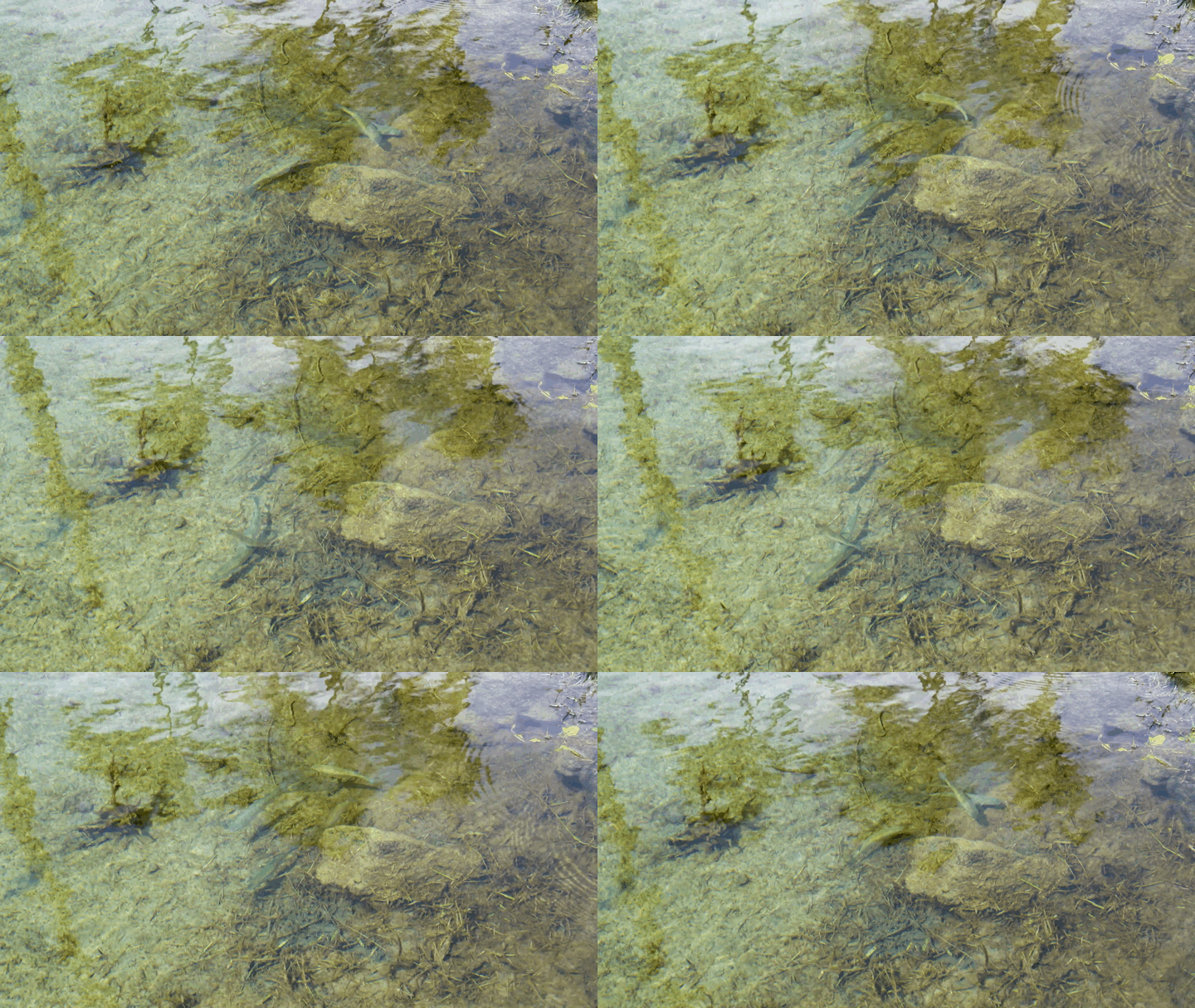
Anthony’s passion for fishponds came from a lifetime of loving where she is from. The vision of Hui Ho‘oleimaluo is “thriving communities through thriving ecosystems,” referring to a metaphor she uses for loko i‘a.
“A loko i‘a is a reflection of the community, so if it’s momona (abundant), that means that your community is abundant as well,” Anthony said.
She remembers attending an annual workshop of loko i‘a practitioners in 2017 that really solidified her team’s intentions for the Honokea and now Kaumaui fishponds. Facilitated by Kua‘aina Ulu Auamo, they learned from others doing the same work and felt empowered to continue their restoration efforts back home.
Brenda Asuncion, the Hui Malama Loko I‘a coordinator for KUA, says one of the biggest needs she sees is the administration and funding to run these kinds of community efforts.
“Most people that come to this work want to be outside, removing invasive trees and fish or rebuilding rock walls, you know?” Asuncion said. “They want to be in it.”
In her role, she acts as a link between the almost 45 loko i‘a in their hui, or group, creating spaces and facilitating conversations where they can learn from each other to accomplish the visions they have for their loko.
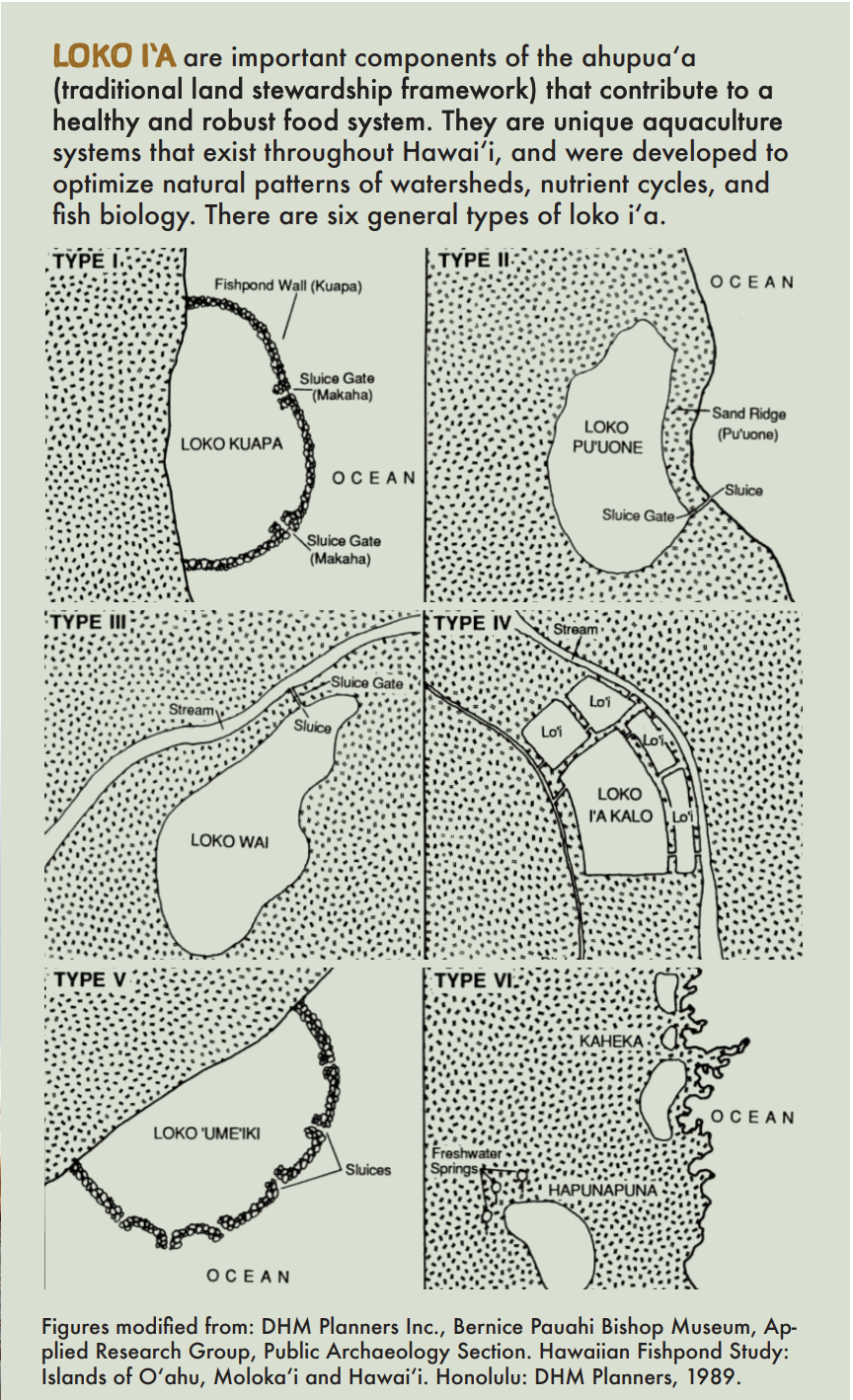
Every loko is unique and there are different varieties of fishponds depending on their location and water sources. Most efforts to restore these cultural resources come from small families or communities who want to take ownership of these places.
“Like many other Indigenous practices and knowledge, these were highly managed systems that required constant observation and expertise,” Asuncion said.
That deep understanding of place is something that Anthony and her co-founders, Nahoku Kahana and Manoa Johansen, are going through right now at Kaumaui. They know it’s important to let the loko and its environment tell them what it needs.
“Even though many of the sites have physically been lost, they can still teach us lessons about food production and the relationship to our environment,” Asuncion said.
Before her job with KUA, Asuncion was a summer volunteer with Paepae o He‘eia at the He‘eia Fishpond they care for in Kaneohe. While also getting her bachelor’s degree in biology at Occidental College, she learned more about how people relate to and manage their environment.
“The culture of loko and kia‘i loko has developed around that really close relationship with not only the things you’re wanting to grow, but also the elements and cycles they rely on,” Keli‘i Kotubetey said. He is one of the co-founders and the assistant executive director for Paepae O He‘eia.
Understanding what fish eat and the seasons that affect the environment around a loko are all what Kotubetey says will help to build an ideal home for the fish they farm. It’s all about engineering the perfect environment to feed the fish that will eventually feed you.
The He‘eia fishpond has been farmed for hundreds of years. Before Paepae O He‘eia started caring for it in 2011, one of the group’s mentors, Mary Brookes, had a tilapia farm in the ‘90s. And while the organization used to sell fish, they were at a crossroads after oxygen and bacteria problems caused fish to die off in their pens.
“Are we trying to emulate a modern aquaculture style or are we standing on the foundation our kupuna laid out for us?” Kotubetey said.
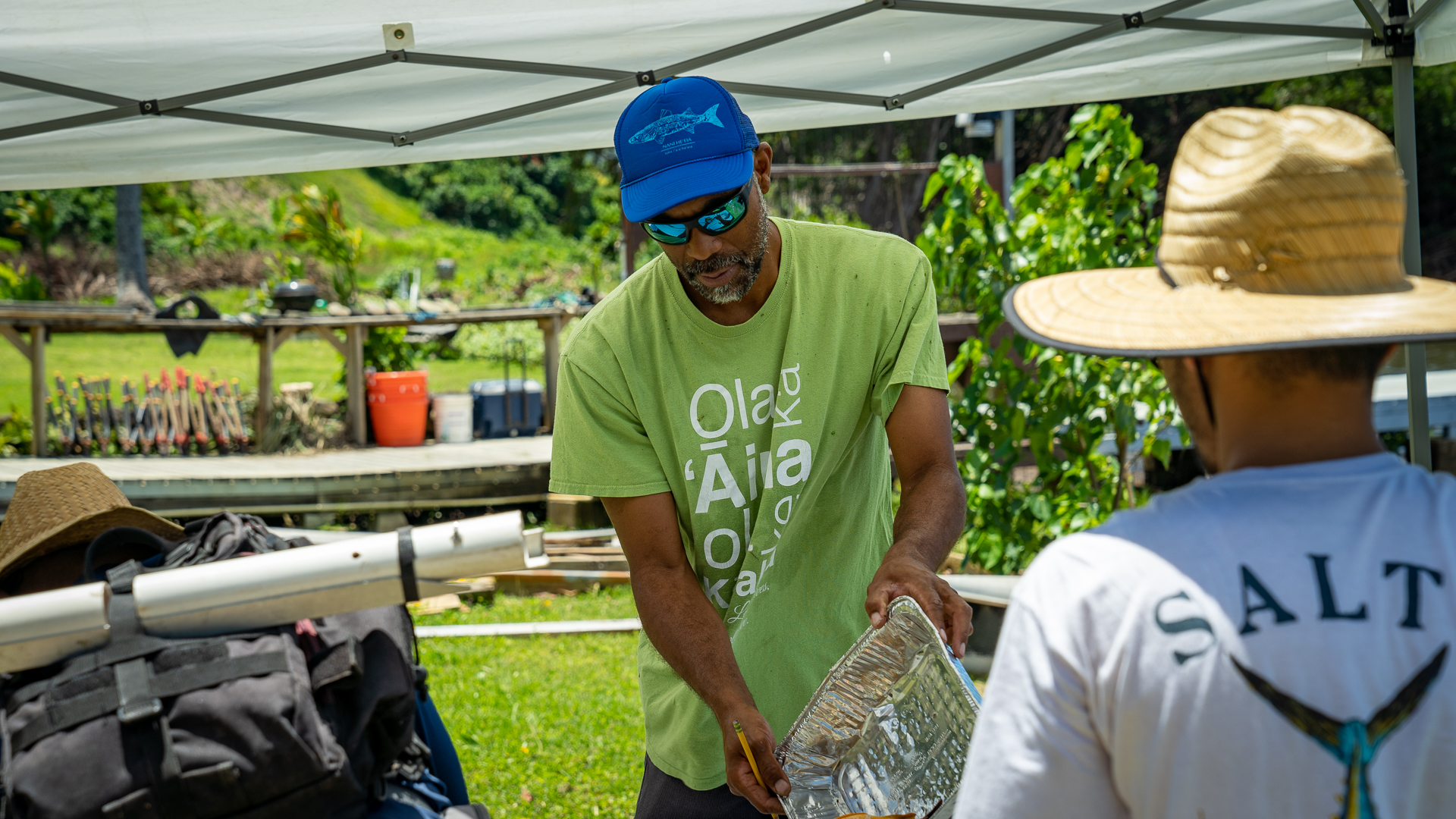
Currently, the organization sells an invasive crab and hosts La Holoholo days, inviting local residents to fish out predators like kaku, or barracuda, in their ponds. While invasive species continue to be a problem for most loko, another modern challenge they face is climate change.
Their understanding of place will morph as practitioners have to mitigate extreme weather conditions, like sea level rise, increased rainfall and groundwater contamination.

Anthony studied how climate change would affect primary productivity and hydrology in loko i‘a back in 2018 and Kotubetey says they experience firsthand what scientists have been forecasting.
In 2017, they couldn’t see a section of their pond’s wall because it was covered by 4 inches of ocean water due to big swells that knocked down their walls. For a nonprofit that relies on federal grants and volunteer work, it’s a huge resource drain to rebuild the pond’s structure against climate change.
“We’re going to get smashed by climate change makai but then we’re getting hammered up mauka too,” Kotubetey said.
Not only is climate change affecting the infrastructure of their pond, but also the cultural practice of loko. They know that they have to be flexible in their future planning to keep this practice going for the next generations.
Possible solutions include building loko walls higher, creating more channels into a loko to maintain a balanced saltwater-to-freshwater ratio, and maybe even building loko more inland.
This adaptation of a practice for today’s challenges is something kia‘i loko are already doing. Anthony says the caretakers will do what needs to be done for their families, friends and neighbors to be able to fish and feed themselves.
“We just want to live happy, healthy and sustainable lives,” Anthony said. “And it comes naturally for us to want that for our community.”
 Sign up for our FREE morning newsletter and face each day more informed.
About the Author

Help power essential news and information
More Stories In This Special Report
-
 Part 1
Hawaii’s Food System Is Broken. Now Is The Time To Fix It
-
 Part 2
PODCAST: What Will It Take For Hawaii To Grow More Of Its Own Food?
-
 Part 3
How One Local Food Program Is Helping Hawaii’s Farmers And Families
-
 Part 4
Can You Make Money Being A Farmer In Hawaii? 2 Farmers Explain How They’re Doing It
-
 Part 5
Worker Co-ops Can Lead The Way To A Healthier And More Just Economy
-
 Part 6
Embattled Agribusiness Corporation Has Powerful Friends
-
 Part 7
Hawaii Has A Lot Of Agricultural Land. Very Little Of It Is Used For Growing Food
-
 Part 8
These 2 Companies Are Putting Big Money Into Hawaii’s Agricultural Future. Will Their Bets Pay Off?
-
 Part 9
Beefing Over Control Of Hawaii’s Meat Processing Industry
-
 Part 10
Senate Panel Kills Beef Bill
-
 Part 11
Hawaii Farmers Need Better Data To Make Decisions
-
 Part 12
Big Island Finfish Farm Hopes To Lead The Way In Sustainable Aquaculture
-
 Part 13
Hawaii Farmers Need Land. State Efforts To Help Aren’t Working
-
 Part 14
PODCAST: This Kauai Nonprofit Has A Plan For Creating More Demand For Local Food
-
 Part 15
This Program Helped Big Island Farmers And Families. Now It’s Out Of Cash
-
 Part 16
Seed Diversity Is Vital To The Future Of Food
-
 Part 17
Fewer Farmers Are Growing Hawaii’s ‘Miracle Food’ Taro Despite Growing Demand
-
 Part 18
Made In Hawaii? This Innovative Startup Can Help You Promote Your Product
-
 Part 19
‘Fake Farms’ Are Squeezing Out Serious Agriculture Potential In Hawaii
-
 Part 20
Online Platform Lets Low-Income Shoppers Buy Local Farm Products
-
 Part 21
How Addressing Hawaii’s Affordable Housing Crisis Could Help Farming Efforts
-
 Part 22
How The Westside Is Restoring The Coconut Tree As A Food Source In Hawaii
-
 Part 23
How People Across Hawaii Are Creating Spaces To Grow Their Own Food
-
 Part 24
PODCAST: Two Ideas For How To Build More Housing For Hawaii Farmers
-
Part 25
How Hawaii Squandered Its Food Security — And What It Will Take To Get It Back
-
 Part 26
Hawaii’s Food Hubs Find Strength In Numbers
-
 Part 27
A Maui Farmer’s Dream: Where Food, Not Fences, Separates The Homes
-
 Part 28
PODCAST: Lessons from Hawaii’s Successful Battle With The Avocado Lace Bug
-
 Part 29
Want Hawaii To Be Less Dependent On Imported Food? Change Your Diet
-
 Part 30
How To Enter The Civil Beat Recipe Challenge
-
 Part 31
The Fight Over Hawaii’s ‘Important Agricultural Lands’
-
 Part 32
Small Oahu Landowners Say They Were Blindsided By Ag Land Plan
-
 Part 33
Plan For Hawaii’s ‘Important Agricultural Lands’ Is On Hold Pending An AG Opinion
-
 Part 34
Some Hawaii Farms Want To Keep Feeding Locals — Even As Tourism Returns
-
 Part 35
Maui’s Got A Brand New Ag Department. Now What?
-
 Part 36
Do We Want More Local Food Or Cheaper Power? Two Hawaii Priorities Conflict
-
 Part 37
The State Does A Lot To Help Farmers In Hawaii. But It’s Not Enough
-
 Part 38
PODCAST: Hawaii’s Complicated Relationship With European Honey Bees
-
 Part 39
It’s Time For The DOE To Take The Lead On Food And Education
-
 Part 40
Raising Chickens Became More Than A Hobby For Some During The Pandemic
-
 Part 41
Hawaii’s Embattled Ag Agency Finally Moves Wahiawa Center Forward
-
 Part 42
Climate Change Is A Big Problem For Farmers In Hawaii
-
 Part 43
Can Urban Farming Solve Hawaii’s Food Crisis?
-
 Part 44
PODCAST: What To Feed Animals During A Pandemic? Pigs And Chickens Are Pickier Than You Think
-
 Part 45
Saving Hawaii’s Banana Industry ‘One Good Banana’ At A Time
-
 Part 46
Accelerator’s New Venture Fund Is Helping Ag-Based Companies Expand
-
 Part 47
How The Hunt For The Perfect Sweet Potato May Help Hawaii Farmers
-
Part 48
Attorney General OKs Honolulu’s Process To Designate Important Ag Lands
-
 Part 49
Can Hawaii Agriculture Get Back Its Political Clout?
-
 Part 50
A New Chicken Farm Wants To Reduce Hawaii’s Dependence On Imported Eggs
-
 Part 51
Hawaii’s Avocado Farmers Are Bracing For A New Threat
-
 Part 52
Christmas Trees And Lucky Soup: Hawaii Wishes For A Biosecure Holiday
-
 Part 53
How Solar Farms On Mountain Slopes Could Help Hawaii Meet Food Sustainability Goals
-
 Part 54
There’s A Lot More To Hawaii’s Cacao Industry Than Making Chocolate
-
 Part 55
Hawaii Schools Are Buying Less Local Food During The Pandemic
-
 Part 56
5 Ways To Help Hawaii Farmers In 2022
-
 Part 57
Lawmakers Plan To Revive Old Bills For Future Of Food And Farming
-
 Part 58
Why Hawaii Needs To Rethink Efforts To Increase Local Food Production
-
 Part 59
One Way To Counter The Ill Effects Of Hawaii’s Invasive Species: Eat Them
-
 Part 60
Report: Limited Funding, Staff Could Delay DOE Effort To Meet Food Sustainability Goal
-
 Part 61
Hawaii Is Beefing Up Its Potential To Produce More Meat Locally
-
 Part 62
A New Crop Of Farmers Is Helping Hawaii Grow More Food
-
 Part 63
Will This Bureaucratic Tug Of War Over Hawaii’s Ag Lands Finally End?
-
 Part 64
Hawaii DOE Wants Kids To Say: ‘Mom, I Had The Greatest Meal At School Today’
-
 Part 65
Here’s How These Ka‘u Kids Are Learning Outside Of The Classroom
-
 Part 66
What Is The Future Of Hawaii’s Farming? Some Say Sheep
-
 Part 67
The Hawaii Ag Department Clipped Poultry’s Wings. But Why?
-
 Part 68
Ka‘u Coffee Farmers Grab Land — And Control Of Their Futures
-
 Part 69
This Ancient Hawaiian Plant’s Popularity Has Soared. Not Everyone Is Pleased
-
 Part 70
Hawaii Needs Good Soil To Grow More Food. Here’s How That Can Happen
-
Part 71
Lawmakers Advance 5 Bills That Could Settle Debate Over Ag Land Management
-
Part 72
State Agencies Were Tasked With Buying More Local Food. Can Hawaii Supply It?
-
 Part 73
‘Our Fish Are Dying’: This Hawaii Couple’s Experience With State Ag Land Management Has Been Terrible
-
 Part 74
Food Safety Audits Could Hamper Hawaii’s Efforts Toward More Food Production
-
Part 75
Lawmaker Calls For Investigations Of State Ag Park Program
-
 Part 76
Legislature Advances Bill To Legalize Sale Of Raw Milk Among Other Farm Measures
-
 Part 77
The Deer Population Is Devastating Maui. Hunters Want To Help
-
 Part 78
Effort To Transfer State Agricultural Land Survives Latest Hurdle
-
 Part 79
Drones Can Take Farming To Another Level. But Hawaii Is Lagging
-
 Part 80
‘Business As Usual’ For The Embattled Agribusiness Development Corporation?
-
 Part 81
What Seaweed Can Tell Us About Our Environment In Hawaii
-
 Part 82
Is Fencing The Future Of Hawaii’s Native Ecosystems?
-
Part 83
This Mental Health Team Hopes To Help Hawaii’s Farmers Help Themselves
-
 Part 84
What Will The New Minimum Wage Mean For Hawaii’s Farmers?
-
 Part 85
Lettuce Joins Short List Of Local Ingredients Served In Public Schools
-
 Part 86
Hemp Farmers Are Fed Up With Government Regulations Hampering The Industry’s Potential
-
 Part 87
Small Farmers Are Finding Innovative Ways To Get Their Food To Market
-
Part 88
Could Hawaii Become A Technology Hub For Agriculture?
-
 Part 89
Can An Ancient Hawaiian Fishpond Turn A Profit?
-
 Part 90
Hawaii’s Extreme Drought Is Forcing Ranchers And Farmers To Get Creative
-
 Part 91
Hawaii’s Crumbling Water Systems May Finally Be Getting Some Badly Needed Repair Money
-
Part 92
Involving Farmers Is The Key To Innovation And Better Ag
-
 Part 93
‘It’s All Connected’: Hawaii’s First Large-Scale Food Waste Composter Touts A Host Of Benefits
-
 Part 94
Long-Awaited Maui Ag Department Set To Be Finally Up And Running This Week
-
 Part 95
Farmers Want Action From Hawaii Governor Candidates, Not Lip Service
-
 Part 96
Ige Intends To Veto Healthy Soils Program. Advocates Say That’s Misguided
-
 Part 97
Hawaiian Fishponds Are Rebounding In The Face Of Rising Seas And Invasive Species
-
 Part 98
How Much Should Hawaii Discount Electric Rates For High-Tech Farmers?
-
 Part 99
Widespread Power Outage Left Thousands Of Trout Dead At This Maui Farm
-
 Part 100
‘People Are Really Struggling’: Hawaii Food Banks Scramble To Meet Increased Demand
-
 Part 101
A Major Overhaul Of Honolulu Land-Use Rules Has Been Quietly Advancing. Now, Some Say Not So Fast
-
Part 102
Catherine Toth Fox: Buy More Locally Grown Food. It’s Worth The Extra Cost
-
 Part 103
This New Dairy Owner Says Local Cows Can Bring Down Hawaii’s Milk Prices
-
 Part 104
A New Sense Of Urgency Is Driving Nonprofits To Grow More Local Food In Hawaii
-
 Part 105
A ‘School Within A School’ Is Building Community And Food Security In Hana
-
 Part 106
Innovations In Ancient Aquaculture Could Bring Striped Mullet Back To The Dinner Table
-
Part 107
AgTech Is Hawaii’s Ticket To Diversification
-
 Part 108
‘It’s Not Just About The Plants’: A Hawaii Educator Unearths Life Lessons In A High School Garden
-
 Part 109
How The Candidates For Maui Mayor Would Shape Food Security And Agriculture
-
 Part 110
This Local Cocktail Aims To Boost Hawaii Agriculture
-
 Part 111
A Local Nursery Wants To Make A Native Tree Hawaii’s Choice For Christmas
-
 Part 112
Catherine Toth Fox: How Botanists Are Trying To Spur A Limu Rebound In Hawaii
-
Part 113
USDA Improves Insurance Programs For Farmers, Ranchers
-
 Part 114
Maui Trout Farmer Is Closing Up Shop After A Rough Year
-
 Part 115
Hawaii Farmers Struggle As Worldwide Macadamia Market Goes Nuts
-
 Part 116
Wahiawa’s New ‘Ad Hoc Mayor’ Has The Vision And The Power To Help His Hometown
-
 Part 117
Farmers And Ranchers Buoyed By New Contingent Of Food-Focused Politicians
-
 Part 118
Hawaii Plans To Update Its Noxious Weeds List. Local Environmentalists Aren’t Waiting
-
 Part 119
Kauai Fishermen Bring Deep-Sea Shrimp Back To The Dinner Table
-
 Part 120
Maui County Considers Leasing Land On Lanai That Larry Ellison ‘Won’t Have A Say In’
-
 Part 121
Leeward Community College Has Big Plans For Training A New Generation Of Food Innovators
-
 Part 122
Is Your Cup Of Kona Real? Coffee Growers Want Hawaii To Do More To Protect The Brand
-
 Part 123
How Philippine Gardening Culture Inspired Efforts To Promote Food Security In Hawaii
-
 Part 124
Half Of Hawaii’s Younger Farmers Battle Depression. Here’s What Researchers Are Doing
-
 Part 125
Hawaii’s Farms Are Small And Hard To Sustain. Can Tax Incentives Help?
-
 Part 126
Indigenous Management Of Hawaii’s Fishponds Is Getting A High Tech Upgrade
-
 Part 127
Hawaii Ag Director Plans To ‘Go Big’ If Confirmed
-
 Part 128
Hawaii Needs To ‘Double Down’ On Biosecurity, Experts Say
-
Part 129
Kauai Is Making A Blueprint To Meet ‘Huge Desire’ For Local Food
-
 Part 130
‘Eggflation’ Puts Hawaii Egg Prices On Par With Mainland Imports
-
 Part 131
Subsistence Or Business? More Local Producers Will Need To Bite The Bullet On Food Safety As Demand Grows
-
 Part 132
Oahu Hotels Have Deep Pockets And Now More Local Food Is On Their Shopping Lists
-
Part 133
Lanai’s Only Farmers Market Vanished During The Pandemic And Now Locals Want It Back
-
 Part 134
Catherine Toth Fox: Ag Microgrants Are A Great Way To Support Local Food Production
-
 Part 135
DOE Hopes A $35 Million Kitchen In Wahiawa Will Improve School Lunches And Give Farmers A Boost
-
 Part 136
Peter Savio’s New Farming Development Is Unconventional But Locals Still Want In
-
 Part 137
Oahu’s Pig Farmers Want To Change The Conversation On Food Security
-
 Part 138
Hawaii Senate Committee Green Lights New Ag Director Sharon Hurd
-
 Part 139
DOE Looking Into Financial Records Of Kailua School Composting Program
-
 Part 140
Reviving Hawaii’s Meat Inspection Program Could Also Take Aim At Axis Deer
-
 Part 141
An Innovative Kauai Farm Project May Depend On Saving A 100-Year-Old Reservoir
-
 Part 142
Oahu Land Crunch Leads Aloun Farms To Expand Acreage On Fertile West Kauai
-
 Part 143
Q&A With Rep. Jill Tokuda: Hawaii Speciality Crops Need Support In The New Farm Bill
-
 Part 144
Destructive Beetle Could Thrive If Natural Disaster Strikes
-
 Part 145
Hawaii DOE Has Returned Millions Of Dollars That Could Have Bought Local Food
-
 Part 146
A Lauded Summer Food Program Has Restarted But Rural Kids Could Miss Out Due To USDA Rules
-
 Part 147
Coconut Rhinoceros Beetles Make Landfall On Kauai
-
 Part 148
State’s Embattled Ag Corporation Has Chance For A Reset As It Seeks New Leadership
-
 Part 149
Maui County Is Trying To Bring Relief To Farmers And Ranchers During Times Of Drought
-
 Part 150
Hawaii Farmers Could Use Some Help Landing Grants That Would Boost Farm Operations
-
 Part 151
Plan B: State Turns To Pigs To Devour Oahu’s Invasive Beetle Problem
-
 Part 152
A Struggle For Control Of Hawaii’s Beef Industry Is Playing Out On Safeway Shelves
-
 Part 153
Hawaii Kava Growers Hope To Convince Food Regulators It’s Safe To Eat
-
Part 154
Critics Call For More Oversight Of Hawaii’s Largest Egg Producer
-
 Part 155
Maui’s Food Waste Is Causing A Big Problem. Now, Some Residents Are Tackling It Themselves
-
 Part 156
Invasive Species Are Rampant On Oahu And Stakeholders Are Calling Out DOA
-
 Part 157
Feral Pigs Are Increasingly Running Wild In Some Oahu Neighborhoods
-
 Part 158
USDA Program Helps Hawaii Farmers Offset High Shipping Costs
-
 Part 159
Big Island Farmers Held Back A Fire Until Help Arrived: ‘It Could Have Been Another Lahaina’
-
 Part 160
Maui’s Fire And Winds Also Took A Toll On Farmers And Ranchers
-
 Part 161
Fast-Growing And Fire-Resistant Grasses Are Flourishing In Hawaii
-
 Part 162
Hawaii’s Aquaculture Industry Is Set To Boom But It Needs State Help
-
 Part 163
Lack Of Native Seeds Spurs Federal Plan To Replant Fire-Loving Invasive Grasses
-
 Part 164
State Ag Agency On Track For Stricter Control Of Invasive Pests
-
 Part 165
Hawaii’s Weak Biosecurity Is Threatening Maui’s Recovery Efforts
-
Part 166
Hawaii Education Department Takes ‘Big First Step’ To Increase Local Food In Schools
-
 Part 167
Hawaii Hemp Growers Don’t Want To Be Regulated Like Marijuana
-
 Part 168
Hawaii Keeps Losing State Biosecurity Workers As Invasive Species Gain Ground
-
 Part 169
Lawsuit Alleges Two State Entities Improperly Hired Their Leaders Behind Closed Doors
-
 Part 170
Maui Has An Axis Deer Problem. So The State Has Put A Price On Their Tails
-
Part 171
Hawaii Lawmakers Want To Make Fish Farming A Bigger Industry. But How?
-
 Part 172
Hawaii Ranchers Want More Land Transferred To The State Agriculture Department
-
 Part 173
The Game Management Advisory Commission Was Created To Be The Voice Of Hawaii’s Hunters. Is Anyone Listening?
-
Part 174
The Hawaii Department Of Education Is Nowhere Close To Meeting Its Mandate To Buy More Local Food
-
Part 175
Taxpayers Are On The Hook For $1.25 Million After The State Failed To Provide Water To An Oahu Farmer
-
 Part 176
Oahu’s Construction Waste Could Become Food For Crops At A New Kapolei Facility
-
 Part 177
Federal Farm Census Shows Hawaii’s Agriculture Is Still In Decline
-
 Part 178
Hawaii Farmers Need More Help Accessing Funding
-
 Part 179
Losing North Kohala’s Irrigation System Was ‘Catastrophic.’ Will It Ever Be Fixed?
-
 Part 180
The Hawaii DOE Has Defaulted On Rent Owed To Another State Agency
-
 Part 181
Retired State Ag Official’s Return To The Agency Has Critics Concerned Over Conflicts Of Interest
-
 Part 182
Hawaii Wants Home Cooks To Play A Bigger Role In Growing The State’s Food System
-
 Part 183
Cattle Are A Major Source Of Greenhouse Gas Emissions. Hawaii Seaweed Could Change That
-
 Part 184
Honolulu Bill To Rein In Fake Farms Threatens Real Ag Enterprises
-
 Part 185
Hawaii Ag Agency Won’t Get All The Money Slated For Pest Management After All
-
 Part 186
Is Growing Your Own Food Considered Agriculture? Hawaii County Says No
-
 Part 187
Naka Nathaniel: Hawaii Needs More Young Farmers
-
 Part 188
Hawaii’s Last Dairy Is Under Fire For Allegedly Violating Environmental Law
-
 Part 189
Naka Nathaniel: Hawaii’s Ag System Needs An Overhaul To Promote Food Independence
-
 Part 190
UH Starts Raising Marine Animals In Manoa To Grow Hawaii’s Aquaculture Industry
-
 Part 191
Coconut Rhinoceros Beetles Deal Fatal Blow To Hawaii Palm Trees
-
 Part 192
Hawaii Farmers Unite For More Ag Agency Funding
-
 Part 193
Is Drag Racing A Good Way To Till Soil? This State Farmland Tenant Says So
-
 Part 194
As Rhinoceros Beetles Spread, State Board Bolsters Pest Control Powers
-
 Part 195
Most Hawaii Schools Have Gardens — But Few Kids Can Eat What They Grow
-
 Part 196
Glut? Shortage? Hawaii Farmers Navigate A Tricky Taro Market
-
 Part 197
Dole’s Wahiawa Dam Is A Hazard. Now The State Is A Step Closer To Buying It
-
 Part 198
You Thought $9 For A Dozen Eggs Was Bad? Bird Flu Might Make It Even Worse
-
 Part 199
Hawaii Farmers Face Risk of Crime Daily. Is A Killing Enough To Spur Reform?
-
 Part 200
Hawaiʻi Agriculture Department Loses Another Deputy
-
 Part 201
Invasive Species In Hawaiʻi: Lawmakers Float New Plan As Urgency Mounts
-
 Part 202
Hawaiʻi’s Fishing Industry Wants You To Know Where That Fresh Ahi Came From
-
 Part 203
Ravenous Beetles Go Urban, Preying On Honolulu’s Iconic Coconut Palms
-
 Part 204
Lee Cataluna: Why Are We Sacrificing Sustainability For More Housing?
-
 Part 205
No Pen? No Problem. Hawaiʻi Is Moving Its In-Flight Arrival Forms Online
-
 Part 206
This Plant Can Power Grids, Planes, Poultry And Cattle. Hawaiʻi Isn’t Sold
-
 Part 207
Like The French And Champagne, Hawaiʻi Farmers Want Protections For Poi
-
 Part 208
Latest USDA Cuts Will Harm Hawaiʻi’s Food Security, From Farmers To Kids
-
 Part 209
Hawaiʻi’s Imperiled Milk Industry Has A Rare Chance To Grow
-
Part 210
Kauaʻi Billionaire Wants To Sell Prime Ag Land. The State Might Buy It
-
 Part 211
Hawaiʻi Farmers And Ranchers Face $46 Million In Federal Funding Cuts
-
 Part 212
New Ag Park Aims To Let Kauaʻi Farmers ‘Just Focus On Farming’
-
 Part 213
Hawaiʻi Consumer Advocate Pushes Back Against Young Brothers’ Rate Hike
-
 Part 214
Invasive Species: Hawaiʻi Primes Itself To Battle Biosecurity Threats
-
 Part 215
Data Dive: GMO Seed Companies In Hawai‘i Earn More Money With Less Land
-
 Part 216
Bill To Guard Against Imitation Hawaiian Tea Could End Up Hurting Industry
-
 Part 217
Agricultural Crime Remains Rife Across Hawaiʻi As Security Lags
-
 Part 218
How The Māmaki Tea Industry Shut Down A Bill Regulating Its Products
-
 Part 219
What Is Farming? Hawaiʻi Moves To Broaden Allowed Agricultural Uses
-
 Part 220
Green Tells Hawaiʻi Tea Farmers Not To Worry About New Labeling Law
-
 Part 221
Farming Dispute On North Shore Highlights Zoning Challenges
-
 Part 222
As Mainland Egg Prices Drop, Waialua Fresh Eggs Invests In Hawaiʻi
-
 Part 223
With Wild Fish Stocks Dwindling, Congress Considers Backing Aquaculture
-
 Part 224
East Honolulu’s Last Undeveloped Valley Faces Uncertain Fate
-
Part 225
Molokaʻi Residents Fight To Keep Coconut Rhinoceros Beetle Off Their Island
-
 Part 226
Immigration Raids Throw Long Shadow Over Big Island Coffee Harvest
-
 Part 227
Hawaiʻi DOE Starts Year With Unprecedented School Meal Shortages
-
 Part 228
Poor Protection Of Molokaʻi From Invasive Beetles Called An Emergency
-
 Part 229
Invasive Beetles Are Overrunning Oʻahu. Could New Methods Offer Relief?
-
 Part 230
Waiʻanae Goes All In With New $17M Facility To Boost Food Security
-
 Part 231
Half Of UH Students Struggle To Get Food
-
 Part 232
Hawaiʻi DOE Wants Another $30M For A Facility That Hasn’t Been Built
-
 Part 233
Another Destructive Beetle Is Spreading, Killing Hawaiʻi’s Trees
-
 Part 234
This Hawaiian Fishpond Is Nearly Restored. All That’s Missing Is Fresh Water
-
 Part 235
Hawai‘i Farmers Are Investing In Tech To Protect Property And Livestock
-
 Part 236
Hawaiʻi Launches New Online Data Portal About Invasive Species
-
 Part 237
When Disaster Strikes, Can Hawaiʻi Feed Itself? More Prep Is Needed
-
 Part 238
Hawaiʻi Wants To Bring Home The Bacon Again — Literally
-
 Part 239
Hawaiʻi Farmers Are Fighting To Keep Their Soil From Flushing Out To Sea
-
 Part 240
Will Bailey: A Quiet Redesign Helped Hawaiʻi Farms Get Past The Paperwork
-
 Part 241
Hawaiʻi Residents Are Keeping A Keen Eye On Invasive Species
-
 Part 242
Oʻahu’s Sugar Canals Decay As State Acquisition Lags
-
Part 243
As Palm-Killing Beetles Spread On Big Island, State Action Is Slow
-
 Part 244
More Local Food? These State Agencies Aren’t Buying It
-
 Part 245
The Success Of Hawaiʻi’s Food And Farm Bills Could Depend On One Thing
-
Part 246
Inspectors Let ‘Lightly Infested’ Goods Into State. Lawmakers Want It To End
-
 Part 247
Push To Feed Hawaiʻi Kids More Local Food Is ‘Structural Disaster’
-
Part 248
Kaua‘i’s Robinson Family Seeks To Evict Major Hawaiʻi Farm
-
 Part 249
Fake Farms Get Tax Breaks, But Hawaiʻi Can’t Stop Them Yet
-
 Part 250
Kirstin Downey: Saving An Important Historic Site Near ʻAiea
-
 Part 251
Hawai‘i Farmers Confront $11M In Flood Damage Without A Safety Net
-
 Part 252
Toxic Mud? North Shore Flooding Likely Diluted Pesticide Risk
-
 Part 253
Palm-Killing Beetle Found On Molokaʻi For First Time, Rediscovered On Maui
-
 Part 254
Wahiawā Dam Takeover: State Signs Off On Acquisition
-
 Part 255
How To Stop Your North Shore Farm From Flooding? Move, Developer Says
-
 Part 256
Honolulu’s Right To Food, A Trailblazing Proposal, Faces The Axe
-
 Part 257
Oʻahu’s North Shore: Where The Buffalo Roam?
-
 Part 258
One Of Hawaiʻi’s Most Lucrative Crops Might Surprise You
-
 Part 259
Beginner Farmers Need Look No Further Than West Kauaʻi
-
 Part 260
Honolulu Homeowners Turn To Goats, Sheep To Mow Yard Ahead Of Fire Season
-
 Part 261
Amid Funding Fears, Food And Farming Bills Fared Better Than Expected
-
 Part 262
Hawaiʻi Is Sending These Animals To The Mainland In Record Numbers
-
Part 263
Fine Print Reveals Who’s To Blame For North Shore Flooding — To An Extent
-
 Part 264
20,000 Tons Of Mud And Nowhere To Put It
-
 Part 265
Ranching Could Soon Come To An End On Moloka‘i. Paniolo Blame TB Testing
-
 Part 266
Kaua‘i Shrimp: Harvesting Pounds From Ponds To Help Feed Hawai‘i
-
 Part 267
Kaua‘i Needs Food Independence. Mayoral Candidates Differ On Achieving That
-
 Part 268
140 Kauai Coffee Jobs Saved Through New Land Lease Agreement
-
 Part 269
Public Or Private? The Future Of East Maui’s Water Is At Stake
-
 Part 270
Hawaiʻi Bets Millions That Students Will Eat Way More Eggs
-
 Part 271
Honolulu Honeybees Are Swarming. Yes, That’s A Good Thing
-
 Part 272
Palm-Killing Coconut Rhinoceros Beetle’s Discovery In Hilo Stokes Fear
-
 Part 273
Want To Plant A Community Garden in Honolulu? Get Ready To Wait A Decade
-
 Part 274
Community Control Of Kauaʻi Fishery Is Showing ‘Remarkable’ Results
-
 Part 275
As Flood Aid Trickles Out For North Shore, Southeast Asian Farmers Are Left Behind
-
 Part 276
Hawaiʻi Ag Leaders Planned To Oust Official Despite Public Praise
-
 Part 277
Farmers Wanted: Hawai‘i Tries To Fix Its Unique ‘Ulu Problem